Can Betta Fish See Colors
Betta fish do see colors, but not the same way humans do. Their vision is tuned to the bright, red‑orange spectrum, which helps them spot mates and rivals. Understanding their color perception lets you choose décor, lighting, and tank mates that reduce stress and boost their natural behavior.
Key Takeaways
- Betta eyes are adapted to bright, warm colors: Reds and oranges are most vivid to them.
- They have limited ultraviolet (UV) vision: Unlike many fish, bettas see very little UV light.
- Lighting matters: Proper aquarium lighting enhances color perception and overall health.
- Tank décor should use contrasting colors: This helps bettas recognize territory and reduces aggression.
- Stress reduction: Overly bright or chaotic color schemes can stress a betta.
- Age and health affect vision: Older or sick bettas may have poorer color discrimination.
- Understanding vision aids breeding: Knowing what colors attract mates can improve breeding success.
📑 Table of Contents
- Introduction: Seeing the World Through a Betta’s Eyes
- How Betta Vision Works
- What Colors Are Most Visible to Betta Fish?
- Lighting: Shaping the Betta’s Color Experience
- Tank Décor and Color Choices
- Behavioral Impacts of Color Perception
- Practical Tips for Enhancing Color Experience
- Age, Health, and Vision
- Conclusion: Seeing Your Betta’s World in Color
Introduction: Seeing the World Through a Betta’s Eyes
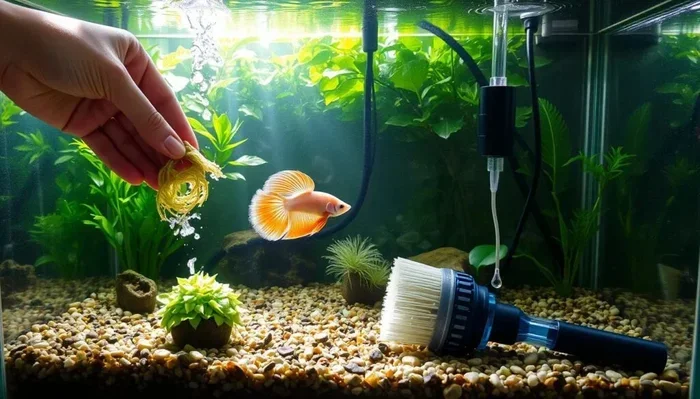
If you’ve ever watched a betta flare its fins and wonder what catches its eye, you’re not alone. Many hobbyists ask, can betta fish see colors? The short answer is yes, but their visual world is very different from ours. Betta fish (Betta splendens) have evolved in shallow, sun‑lit rice paddies of Thailand where bright reds and oranges dominate the landscape. Their eyes are built to spot those hues, which signal food, mates, and rivals.
In this article we’ll dive deep into betta vision, explore how color perception influences behavior, and give you practical tips for setting up a tank that respects their unique eyesight. By the end, you’ll know exactly why a red leaf or a blue background can make a big difference in your betta’s happiness.
How Betta Vision Works
Eye Structure and Photoreceptors
Betta fish have a relatively simple eye compared with mammals. Their retina contains two main types of photoreceptor cells:

Visual guide about Can Betta Fish See Colors
Image source: kobegakuin.ac.jp
- Rod cells: Sensitive to low light, helping bettas see in dim conditions.
- Cone cells: Detect color. Betta cones are most responsive to wavelengths around 560‑620 nm, which correspond to the red‑orange part of the spectrum.
Because they have fewer cone types than humans (who have three distinct cones for red, green, and blue), bettas experience a narrower color range. They see reds and oranges vividly, but greens and blues appear muted.
Depth Perception and Field of View
Betta eyes sit on the sides of the head, giving them a wide field of view—about 180 degrees. This panoramic vision helps them spot predators and rivals from almost any direction. However, the overlap in both eyes is small, so depth perception isn’t as sharp as it is for front‑facing eyes like ours.
UV Sensitivity (or Lack Thereof)
Many tropical fish can see ultraviolet light, which aids in finding plankton and recognizing mates. Betta fish, however, have limited UV perception. Their lenses filter out most UV wavelengths, meaning they rely more on visible colors, especially the warm tones present in their natural habitat.
What Colors Are Most Visible to Betta Fish?
Red and Orange: The Winners
Research shows that bettas react most strongly to red and orange objects. In the wild, male bettas display bright red fins to attract females and intimidate rivals. In captivity, a red décor piece can stimulate natural behaviors, encouraging flaring, courting, or territorial displays.
Visual guide about Can Betta Fish See Colors
Image source: huahansoft.com
Blue and Green: Subtle Hues
While bettas can detect blue and green, these colors appear less saturated. A blue background may look pale to a betta, but it can still serve a purpose—providing a calm contrast that reduces visual clutter.
Black and White: Contrast Over Color
High contrast patterns, like black spots on a white leaf, are easy for bettas to see. This is useful for hiding places and feeding stations. However, overly stark contrasts can also cause stress if they mimic aggressive signals.
Lighting: Shaping the Betta’s Color Experience
Natural vs. Artificial Light
In their native environment, bettas experience bright daylight that peaks at around 5000–6500 K. Replicating this with full‑spectrum LED lights helps them see colors as intended. Too cool (blue‑heavy) lighting can wash out reds, while overly warm (yellow‑heavy) light can hide blues.

Visual guide about Can Betta Fish See Colors
Image source: editorial01.shutterstock.com
Day‑Night Cycle
Betta fish benefit from a regular light cycle—about 10‑12 hours of light followed by 12‑14 hours of darkness. This mimics natural conditions and supports their circadian rhythm. If you’re curious about how bettas handle low light, check out our article on Can Betta Fish See In The Dark.
Adjusting Light Intensity
Start with moderate intensity (around 30‑40 lumens per gallon). If you notice your betta hiding more often, the light may be too bright. Conversely, a dim tank can make colors look dull, reducing stimulation.
Tank Décor and Color Choices
Choosing Plants and Backgrounds
Live or silk plants in deep green are fine, but they won’t appear as vivid as they do to us. Adding a few red or orange leaves (like Anubias or red velvet) gives your betta a pop of color it can truly appreciate.
Hiding Spots and Territory Markers
Use caves, PVC pipes, or driftwood with contrasting colors. A dark cave entrance against a light background signals a safe hideout. This visual cue helps reduce stress and territorial aggression.
Avoiding Color Overload
While bright décor can be stimulating, too many clashing colors can confuse a betta. Stick to a palette of 2‑3 main colors, focusing on reds and neutrals. A single bright accent (like a red flower) works better than a rainbow of objects.
Behavioral Impacts of Color Perception
Mating and Courtship
Male bettas flaunt their fins to showcase color intensity. Females are attracted to brighter reds, so if you’re breeding, ensure the tank includes red objects or lighting that enhances reds. This can improve spawning success.
Aggression and Territory
Betas interpret bright colors as signs of rivals. A red tank mate or décor can trigger flaring. If you keep multiple bettas (see our guide on Can You Keep Multiple Betta Fish Together), use neutral colors to minimize unnecessary aggression.
Feeding Responses
Betta fry are more likely to chase down food that contrasts with the background. A bright red feeding ring against a dark substrate can boost feeding efficiency, especially for picky eaters.
Practical Tips for Enhancing Color Experience
Tip 1: Use Red Accessories Sparingly
Place a single red ornament or a piece of red silk leaf near the feeding area. This draws attention without overwhelming the fish.
Tip 2: Choose Full‑Spectrum LEDs
Look for bulbs labeled “6500 K” or “full spectrum.” They render reds accurately, letting your betta see its own fins in true color.
Tip 3: Rotate Décor Occasionally
Changing the position of a red object once a month keeps the environment fresh and prevents habituation.
Tip 4: Monitor Your Betta’s Reaction
If you notice excessive hiding or stress, reduce bright colors and check water parameters. Poor water quality can also affect vision.
Tip 5: Test Light Placement
Place the light source at a 45‑degree angle to avoid glare on the water surface, which can distort colors for the betta.
Age, Health, and Vision
How Age Affects Color Detection
Young bettas have sharp vision and react strongly to color cues. As they age, lens clarity can diminish, reducing color discrimination. Regular health checks help catch cataracts early.
Health Issues That Impair Vision
Common problems like fungal infections on the eye, poor water quality, or vitamin A deficiency can blur vision. A balanced diet—including high‑quality betta pellets and occasional brine shrimp—supports eye health.
Conclusion: Seeing Your Betta’s World in Color
Understanding that bettas can see colors—especially reds and oranges—lets you create a tank that feels natural and engaging. By choosing the right lighting, décor, and color accents, you not only make your betta’s environment more beautiful but also promote healthier behavior, better feeding, and successful breeding. Remember, less is often more: a few well‑placed red items, proper full‑spectrum lighting, and a calm, contrast‑balanced backdrop will keep your betta thriving.
Now that you know can betta fish see colors, go ahead and give your finned friend a world of hues it can truly enjoy!
Frequently Asked Questions
Can betta fish see the same colors as humans?
Betta fish see reds and oranges vividly, but greens and blues appear muted. They lack the full three‑cone system humans have, so their color range is narrower.
Do bettas need special lighting to see colors?
Yes. Full‑spectrum LED lights (around 6500 K) reproduce natural daylight, helping bettas perceive reds accurately and stay healthy.
Will bright colors cause aggression in a betta?
Bright reds can trigger territorial displays. Use red accents sparingly, especially if you keep multiple bettas together.
How does age affect a betta’s color vision?
Young bettas have sharp color perception. As they age, lens clouding can reduce their ability to distinguish colors, so keep water clean and provide a nutritious diet.
Can I use colored substrate to stimulate my betta?
Yes, a dark substrate with a few bright red ornaments works well. It creates contrast without overwhelming the fish.
Do bettas see ultraviolet light?
Betta fish have limited UV vision compared to many tropical fish, so they rely more on visible colors, especially warm tones.