Male bettas cannot produce viable eggs on their own because they lack ovaries. What you may see as “egg‑like” structures are actually milt or bubble nests, not real eggs. Understanding this helps you avoid confusion and keep your fish healthy.
Key Takeaways
- Male bettas don’t have ovaries: they cannot create true eggs without a female.
- Bubble nests are often mistaken for eggs: males build them to protect fertilized eggs.
- Hormonal spikes can cause “pseudo‑egg” behavior: stress or water changes may trigger nest building.
- Breeding requires a healthy female: both parents must be in optimal condition for successful spawning.
- Observation tips: learn how to tell the difference between milt, bubbles, and real eggs.
- Tank setup matters: proper water parameters and hiding spots reduce stress and improve breeding success.
- Internal resources: see related articles on betta compatibility and care for more guidance.
📑 Table of Contents
- Introduction: Why the Question Pops Up
- 1. The Biology Behind Betta Reproduction
- 2. Common Misconceptions: “Eggs” That Aren’t Eggs
- 3. The Proper Breeding Process
- 4. How to Identify Real Eggs in Your Tank
- 5. Frequently Asked Questions About Male‑Only Egg Production
- 6. Practical Tips for Hobbyists
- Conclusion: The Bottom Line
Introduction: Why the Question Pops Up
If you’ve ever watched a male betta flare his fins and then notice a fuzzy, white mass hanging from the water’s surface, you might wonder, “Can a male betta fish lay eggs without a female?” The short answer is no, but the longer answer is full of interesting fish biology, common misconceptions, and practical tips for hobbyists.
Betta owners love the dramatic displays of color and behavior, and the mystery of “egg‑like” structures can be confusing. In this article we’ll break down the anatomy of a male betta, explain what he actually produces, and show you how to tell the difference between real eggs and the things he creates on his own. By the end, you’ll know exactly what to expect in your tank and how to create the best environment for a successful breeding pair.
1. The Biology Behind Betta Reproduction
Male vs. Female Anatomy
Male bettas have a simple reproductive system: testes that produce sperm (called milt) and a specialized organ called the suprabranchial organ that helps them build bubble nests. Females, on the other hand, possess ovaries that develop eggs. Without ovaries, a male simply cannot make eggs.
Visual guide about Can a Male Betta Fish Lay Eggs Without a Female
Image source: bettafishworld.com
What Is a Bubble Nest?
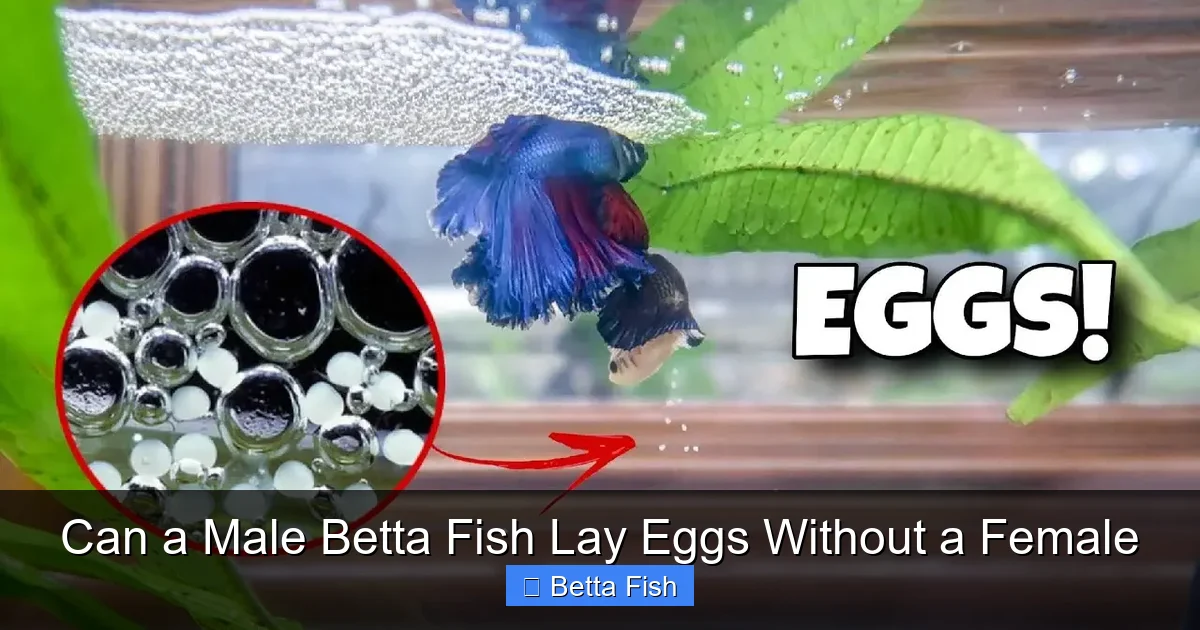
A bubble nest is a floating layer of saliva‑coated bubbles that a male constructs after he feels ready to breed. The nest looks like a cluster of white pearls and is often mistaken for a clutch of eggs. Its purpose is to hold fertilized eggs at the water’s surface, where they get more oxygen.
Hormonal Triggers
When water temperature rises (usually 78‑80°F / 25‑27°C) and day length increases, a male’s brain releases hormones that start the breeding cycle. These hormones make him more aggressive, cause his fins to flare, and stimulate nest‑building. However, the hormones do not give him the ability to produce eggs.
2. Common Misconceptions: “Eggs” That Aren’t Eggs
Milti‑Bubbles vs. Real Eggs
Sometimes, a male will release a small amount of milt that mixes with bubbles, creating a speckled appearance. New owners may think these are unfertilized eggs, but they are simply sperm‑laden bubbles that will dissolve quickly.

Visual guide about Can a Male Betta Fish Lay Eggs Without a Female
Image source: i.ytimg.com
Fungal or Bacterial Growth
In a dirty tank, white fuzzy growth can appear on the water surface. This is often a fungus or bacterial film, not egg material. Maintaining clean water and proper filtration helps prevent this confusion.
Stress‑Induced “Egg‑Like” Structures
When a male is stressed—by aggressive tank mates, sudden temperature changes, or poor water quality—he may over‑produce bubbles in an attempt to comfort himself. These extra bubbles can look like a clutch of eggs, but they have no reproductive value.
3. The Proper Breeding Process
Step‑by‑Step Guide to Successful Spawning
- 1. Condition the Pair: Feed both fish high‑protein foods (brine shrimp, bloodworms) for 1‑2 weeks.
- 2. Set Up a Breeding Tank: Use a 10‑gallon tank with soft, slightly acidic water (pH 6.5‑7.0) and plenty of plants or spawning mops.
- 3. Introduce the Female: Place her in a transparent divider for 24‑48 hours to let the male see her.
- 4. Remove the Divider: When the male starts building a bubble nest, gently lift the divider.
- 5. Spawning: The male will chase the female, leading to an “embrace.” The female releases eggs, the male fertilizes them, and then scoops them into the nest.
- 6. Post‑Spawn Care: Remove the female after spawning. The male guards the nest for 2‑3 days, then gently moves the fry to a rearing tank.
Why a Female Is Essential
The female supplies the eggs; the male supplies the sperm and the nest. Without the female’s eggs, the male has nothing to fertilize, and the nest remains empty. This is why the answer to “can a male betta fish lay eggs without a female” stays a firm “no.”

Visual guide about Can a Male Betta Fish Lay Eggs Without a Female
Image source: i.ytimg.com
4. How to Identify Real Eggs in Your Tank
Visual Cues
Real betta eggs are oval, about 1‑2 mm long, and have a translucent, slightly amber hue. They are usually found floating just beneath the bubble nest, not mixed within the bubbles themselves.
Behavioral Signs
After spawning, the male will guard the nest aggressively, fan the eggs with his fins, and occasionally pick up stray eggs in his mouth to reposition them. If you see this dedicated guarding, you are likely looking at real eggs.
Testing with a Net
Gently dip a soft net into the nest. Real eggs will roll off the net and sink slowly, while bubbles will pop and disappear.
5. Frequently Asked Questions About Male‑Only Egg Production
Can a male betta become “egg‑filled” from a previous breeding cycle?
No. After spawning, the male discards any remaining sperm and focuses on caring for the current clutch. He does not store eggs.
Do male bettas ever produce “pseudo‑eggs” for display?
They may create extra bubbles that look egg‑like, but these are not reproductive structures.
What if I see white specks after feeding?
Those are usually uneaten food particles or waste, not eggs. Clean the tank to avoid water quality issues.
Can water temperature affect nest building?
Yes. Warmer water (78‑80°F) encourages nest building, while cooler water slows it down.
Is it safe to keep a male alone if he builds a nest?
Absolutely. A solitary male will still build a nest as a natural behavior, even without a female present.
Do other betta species exhibit the same “no‑egg‑without‑female” rule?
All true bettas (genus Betta) share the same reproductive anatomy, so the rule applies across the genus.
6. Practical Tips for Hobbyists
Maintain Optimal Water Conditions
Keep temperature steady, use a gentle filter, and perform weekly 25% water changes. Good water quality reduces stress and prevents false nest‑building.
Provide Hiding Spots
Live plants, driftwood, or a spawning mop give the male a sense of security, encouraging proper nest construction.
Watch for Signs of Ill Health
If the male is lethargic, has faded colors, or shows fin rot, he may not be ready to breed. Treat any health issues before attempting spawning.
Use Internal Resources for Further Reading
For more on betta compatibility, see Can You Keep A Male And Female Betta Fish Together. If you’re curious about how to tell males from females, read How To Tell A Female Betta Fish From A Male. And for a deeper dive into the myth itself, check our article Can Male Betta Fish Lay Eggs Without A Female.
Conclusion: The Bottom Line
In short, a male betta cannot lay eggs without a female because he lacks the necessary reproductive organs. What you may see—bubble nests, milt‑filled bubbles, or fungal growth—are all normal parts of a male’s breeding routine, but none are true eggs. Understanding the difference helps you avoid confusion, keep your fish healthy, and set the stage for a successful breeding pair when you decide to introduce a female.
Remember, good water, proper nutrition, and patience are the keys to a happy betta. By respecting the biology of these beautiful fish, you’ll enjoy their vibrant displays for years to come.
Frequently Asked Questions
Can a male betta lay eggs if he’s been with a female before?
No. Even after a successful spawn, the male does not retain any eggs. He only provides sperm and nest‑building care.
What should I do if I think my male is laying eggs?
Check for the visual cues of real eggs and observe his behavior. Most likely you’re seeing bubble nest activity, which is normal.
Is it harmful for a male to build a bubble nest without a female?
Not at all. Nest building is a natural behavior and does not stress the fish when water conditions are stable.
Can water quality cause a male to produce extra bubbles?
Yes. Poor water quality can stress a male, leading him to over‑produce bubbles as a coping mechanism.
Do female bettas ever build bubble nests?
Females can create small nests, but they are usually less elaborate and not intended for breeding.
How long does a male guard the eggs after spawning?
The male typically guards the nest for 2‑3 days until the fry become free‑swimming, then he may resume normal behavior.

