Seeing your betta flop or stare motionless can be scary, but it isn’t always a death sentence. This article explains the main reasons a betta might look dead, how to tell if it’s truly a problem, and simple steps you can take to revive a stressed or ill fish.
Key Takeaways
- Stress vs. illness: Most “dead‑looking” behavior is stress‑related and can be fixed with water and tank tweaks.
- Water quality matters: Bad parameters are the #1 cause of lethargy; test and change water regularly.
- Check for disease: Look for signs like white spots, torn fins, or gasping to rule out infection.
- Temperature is critical: Betta fish need 76‑82°F; too cold or too hot will make them sluggish.
- Feeding habits help diagnose: A fish that won’t eat may be ill; try fasting, then offer small live foods.
- Observe behavior patterns: Floating sideways, hiding, or blowing bubbles can signal specific problems.
- Act fast: Early intervention often saves a betta that appears dead.
📑 Table of Contents
Introduction
Imagine you walk up to your betta’s bowl and see it lying motionless, its fins limp, eyes glassy. Your heart skips a beat and the first thought that pops into your head is, “Why is my betta fish acting dead?” It’s a common panic among new hobbyists, but the good news is that the “dead” look is often a symptom, not a verdict.
In this guide we’ll walk through the most common reasons a betta appears lifeless, show you how to tell the difference between a sleepy fish and a dying one, and give you practical, step‑by‑step fixes you can try at home. By the end, you’ll feel confident enough to act quickly and give your betta the best chance at a happy, healthy life.
1. Water Quality – The Silent Killer
Why clean water matters
Betta fish are incredibly sensitive to ammonia, nitrite, and nitrate spikes. Even a small amount of leftover food or a dirty substrate can raise toxin levels, causing the fish to become lethargic and appear “dead.”
Testing your water
- Use a liquid test kit to check ammonia, nitrite, nitrate, and pH weekly.
- Ideal parameters: ammonia = 0 ppm, nitrite = 0 ppm, nitrate < 20 ppm, pH = 6.5‑7.5.
Quick water‑change fix
If any parameter is out of range, perform a 25‑30% water change with conditioned water that matches the tank temperature. This often revives a fish that looks dead within an hour.
2. Temperature Trouble
What’s the right range?
Betta fish are tropical and thrive at 76‑82°F (24‑28°C). Water that is too cold slows metabolism, making the fish float motionlessly. Over‑heating can cause panic and rapid breathing.
Visual guide about Why Is My Betta Fish Acting Dead
Image source: pic2.zhimg.com
How to check and adjust
- Use a reliable aquarium thermometer.
- If temperature is low, add a small, adjustable heater or move the tank to a warmer room.
- For overheating, turn off direct sunlight and consider a fan or a cooler room.
Signs you’ve fixed it
Within 30‑60 minutes of correcting the temperature, the betta should start moving its pectoral fins and resume normal swimming.
3. Oxygen Levels – Is Your Betta Gasping?
Why oxygen matters
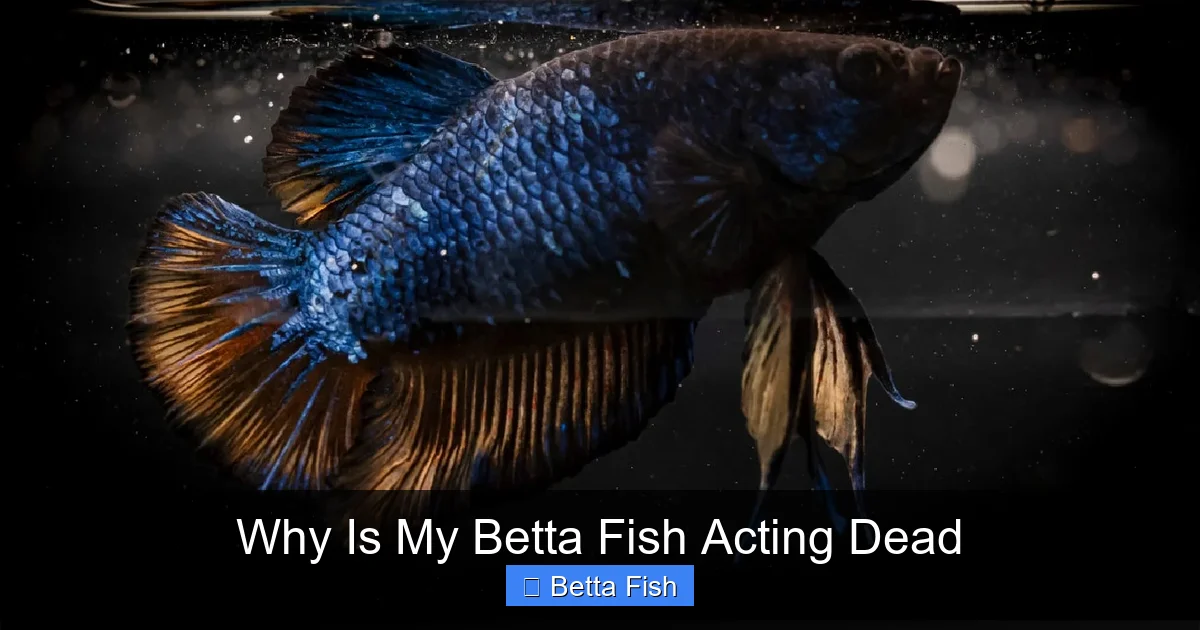
Stagnant water or a lack of surface agitation reduces dissolved oxygen. A betta that looks dead may actually be gasping for air at the surface.
Visual guide about Why Is My Betta Fish Acting Dead
Image source: buildyouraquarium.com
Simple aeration tricks
- Turn on a gentle air stone or a small powerhead.
- Make sure the water surface is not covered by a tight lid.
- Consider a “breathing break” – let the tank sit uncovered for a few minutes each day.
When to worry
If the fish continuously darts to the surface and flares its gills, it could be a sign of a serious respiratory infection. In that case, see the disease section below.
4. Disease and Parasites
Common illnesses that mimic death
Several diseases cause lethargy and a “dead” appearance:
- Ich (white spot disease): Tiny white dots on the body and fins.
- Velvet (gold dust disease): Fine gold‑colored dust on the skin.
- Fin rot: Frayed, discolored fins that may fall apart.
- Swim‑bladder disorder: Fish floats sideways or upside down.
Spotting the signs
Look closely at the fish’s body. If you see white spots, fuzzy coating, or torn fins, it’s likely an infection rather than simple stress.
Treatment basics
- Quarantine the fish in a separate hospital tank.
- Raise the temperature to 82‑84°F to speed up parasite life cycles.
- Use a broad‑spectrum medication like Maracyn or a copper‑based treatment, following the label carefully.
For a deeper dive on disease identification, read our article on Is My Betta Fish Dying.
5. Feeding Issues and Starvation
Why not eating matters
A betta that refuses food often becomes weak and appears dead. Stress, poor water, or illness can all suppress appetite.
Fasting and re‑feeding strategy
- Fast the fish for 24‑48 hours to clear the gut.
- Offer a tiny amount of high‑protein live food (brine shrimp or daphnia) or a specially formulated betta pellet.
- Feed 2‑3 times a day in very small portions.
If the fish still won’t eat, it may have an internal issue. Check for bloating or abnormal swimming.
Read more about feeding problems in Why Is My Betta Fish Not Eating.
6. Behavioral Stressors
Tank mates and aggression
Betta fish are territorial. Even a small, curious tank mate can cause the betta to hide, become still, and look dead.
Environmental stress
- Bright lights or constant movement outside the tank.
- Loud vibrations from nearby appliances.
- Improper tank size – a bowl is rarely sufficient.
Calming your betta
Provide plenty of hiding spots with live plants or décor, dim the lights to a natural day/night cycle, and keep the tank in a quiet area.
If you notice your betta floating sideways, see our guide on Why Is My Betta Fish Floating Sideways for specific tips.
7. When “Dead” Means Dead – Recognizing True Mortality
Key signs of irreversible death
Even with the best care, sometimes a betta truly passes away. Look for these unmistakable signs:
- No gill movement for more than a minute.
- Rigor mortis – the body becomes stiff.
- Cloudy or milky eyes that do not clear.
What to do next
If you’re sure the fish is dead, you can either bury it in a garden, place it in a sealed bag for trash, or keep it for a short “memorial” period. Remember to clean the tank thoroughly before adding a new fish.
Conclusion
Seeing your betta fish acting dead is unsettling, but it’s rarely a final verdict. By checking water quality, temperature, oxygen, and looking for disease signs, you can often revive a fish that appears lifeless. Quick actions—like a water change, temperature adjustment, or a short fast—make a huge difference.
Keep a regular maintenance schedule, monitor your betta’s behavior, and don’t hesitate to seek help from a veterinarian or an experienced aquarist if symptoms persist. With a little attention, your betta will be swimming proudly again, and you’ll have the confidence to handle any future “why is my betta fish acting dead” moment.
Frequently Asked Questions
Why is my betta fish lying motionless on the bottom?
It could be stressed from poor water conditions, low temperature, or a hidden illness. Check the water parameters first and perform a partial water change.
Can a betta fish recover after appearing dead?
Yes, many bettas bounce back after you correct the underlying issue—usually water quality or temperature. Act within an hour for the best chance.
What does it mean if my betta is floating sideways?
Floating sideways often points to swim‑bladder problems or water quality stress. See our article on Why Is My Betta Fish Floating Sideways for detailed steps.
How long can a betta survive without food?
Adult bettas can usually survive 2‑3 weeks without food, but they become weak quickly. If your fish isn’t eating, try fasting for 24‑48 hours then offer a small amount of live food.
Is cloudy water a sign that my betta is dying?
Cloudy water is often a sign of bacterial bloom caused by excess waste. It can stress the fish and lead to illness, so clean the tank and improve filtration.
When should I consider euthanasia for a severely ill betta?
If the fish shows no response to treatment after several days, is suffering, or has severe, irreversible injuries, humane euthanasia may be the kindest option. Consult a vet for the proper method.

