Is Jettie or Pier Better for Fishing
Choosing between a jettie and a pier for fishing depends on your target species, water conditions, and fishing style. Jetties offer strong current breaks and attract bigger saltwater fish, while piers provide easy access and a stable platform for beginners. This guide breaks down the key differences so you can pick the right spot and maximize your catch rate every time you head out.
If you have ever stood at the edge of the ocean and wondered whether to fish off a jettie or a pier, you are not alone. Both structures pull in fish, but they do it in very different ways. The right choice can mean the difference between a slow day and a bucket-list catch.
In this guide, we will walk through everything you need to know about jettie vs pier fishing. We will cover structure differences, the best species to target, tide patterns, safety tips, and more. By the end, you will know exactly which setup suits your next fishing trip.
Fishing from a structure like a jettie or pier is one of the most popular forms of shore-based fishing. Whether you are a seasoned angler or just starting out, understanding the strengths of each option helps you make smarter decisions on the water.
Key Takeaways
- Jetties excel at surf fishing: They break waves and create current breaks that attract predatory fish species looking for easy meals.
- Piers are beginner-friendly: They offer stable platforms, easy access, and great options for those new to shore-based fishing.
- Target species differ: Jetties tend to hold larger saltwater game fish, while piers often produce a wider variety of smaller to medium species.
- Tide matters for both: Fishing during moving tides, especially rising water, boosts your chances at both jettie and pier locations.
- Cost and access vary: Piers usually require a small fee, while jetties are often free and open to the public.
- Safety considerations differ: Jetties can be slippery and dangerous in rough surf, while piers offer a safer, more controlled environment.
📑 Table of Contents
- What Is a Jettie and Why Do Fish Gather There
- What Is a Pier and Why Do Anglers Love Them
- Jettie vs Pier: Head-to-Head Comparison
- Best Fish Species to Target at Each Structure
- Tide, Weather, and Timing for Jettie and Pier Fishing
- Safety Tips for Fishing from Jetties and Piers
- Quick Tips to Improve Your Catch at Any Structure
- Expert Insights: Which Should You Choose
- Conclusion
What Is a Jettie and Why Do Fish Gather There
A jettie is a long, narrow structure that extends out into the water from the shore. Its main job is to protect the shoreline from waves and erosion. But for anglers, jetties serve a second purpose: they are fish magnets.
The way a jettie works is simple. It breaks up the wave energy and creates calm pockets of water behind it. Fish love these calm zones because they can rest without fighting strong currents. At the same time, the jettie creates an edge where deeper water meets shallower water. This transition zone is where predator fish patrol looking for food.
How Jetties Create Fishing Hotspots
Jetties build up sand and sediment on one side over time. This creates a gradual slope underwater that many fish use as a highway. Baitfish follow the structure, and game fish follow the baitfish. It is a natural food chain that plays out right in front of you.
Here are the main reasons fish gather around jetties:
- Current breaks: Fish save energy by holding in the calm water behind the jettie.
- Structure cover: Barnacles, algae, and rocks on the jettie attract small prey fish.
- Depth changes: The drop-off near a jettie holds larger species that hunt in deeper water.
- Sand buildup: Over time, the sand creates new feeding areas that draw in bottom-dwelling fish.
When the water is moving, whether from tides or waves, jetties become even more productive. If you want to learn more about how tide changes affect your fishing success, check out our guide on is fishing better when water is rising or falling to understand the best timing.
What Is a Pier and Why Do Anglers Love Them
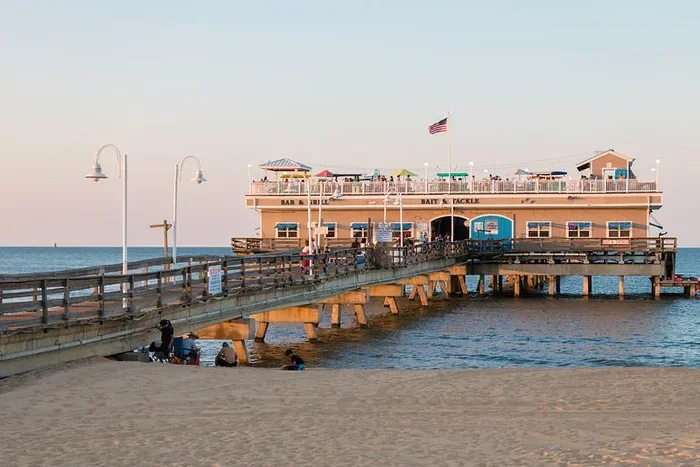
A pier is a flat, raised platform that stretches out over the water. Unlike a jettie, a pier does not usually extend all the way to deep water. Instead, it reaches out a moderate distance and gives anglers a stable place to stand while they cast.
Piers are among the most accessible fishing spots available. You do not need a boat, special gear, or advanced skills. You just need a fishing rod, some bait, and a willingness to wait for a bite. This makes piers perfect for families, beginners, and anyone who wants a relaxed day on the water.
What Makes Piers Good for Fishing
Piers sit over deeper water compared to the shoreline, which means you can reach fish that are farther out. The pilings under the pier create structure and shade. Small fish hide around the pilings, and bigger fish come to feed on them. This creates a natural fishing spot right beneath your feet.
Here are the biggest advantages of fishing from a pier:
- Easy access: Most piers have walkways, railings, and benches for a comfortable fishing experience.
- Stable platform: Unlike a jettie where you stand on rocks near waves, a pier keeps you dry and steady.
- Variety of fish: Because piers span different depths, you can catch both shallow-water and deeper-water species.
- Year-round fishing: Piers are usable in most weather conditions, especially on calm days.
If you are deciding between fishing locations, keep in mind that piers and jetties each have their own strengths. For more insight on choosing the right fishing setup, our article on is a canoe or kayak better for fishing can help you think about how you reach your spot.
Jettie vs Pier: Head-to-Head Comparison
Now let us put both options side by side. This comparison table breaks down the most important factors so you can see at a glance which structure fits your needs.
| Factor | Jettie | Pier |
|---|---|---|
| Distance from shore | Extends far into the water | Moderate distance over water |
| Stability | Can be slippery and uneven | Stable, flat, and secure |
| Target species | Larger saltwater game fish | Wide variety, from small to medium |
| Cost | Usually free | Small fee or free depending on location |
| Best for | Experienced anglers, surf fishing | Beginners, families, casual fishing |
| Safety | Higher risk in rough surf | Lower risk, railings and wide decks |
| Accessibility | May require walking on rocks | Easy walk-up access |
The table above shows that neither option is universally better. It depends on what you want out of your fishing trip. If you are chasing big saltwater fish and do not mind getting a little wet, a jettie is hard to beat. If you want a relaxed day with the family and a stable place to cast, a pier wins every time.
One thing many anglers overlook is the role of water conditions. For a deeper look at how weather and water affect your chances, read our piece on is fishing better or worse after a storm to understand how storms impact both jettie and pier fishing.
Best Fish Species to Target at Each Structure
Different fish species prefer different structures. Knowing what hangs around jetties versus piers helps you pick the right spot for the fish you want to catch.
Species You Will Find at Jettie Fishing Spots
Jetties are famous for holding larger predatory fish. The strong current breaks and deep water nearby create ideal hunting grounds. Here are the species most commonly caught off jetties:
- Striped bass: These trophy fish patrol the edges of jetties, especially during moving tides.
- Bluefish: Aggressive and fun to catch, bluefish love the current breaks near jetties.
- Redfish and drum: These bottom feeders cruise the sand slopes built up against jetties.
- Fluke and flounder: They bury themselves in the sand near jettie structures and ambush baitfish.
- Snook: In warmer coastal areas, snook use jetties as resting spots during moving tides.
Species You Will Find at Pier Fishing Spots
Piers tend to produce a wider variety of fish because they span multiple depth zones. The pilings attract smaller fish, which in turn draw in bigger predators. Common pier catches include:
- Trout and redfish: These are staples of pier fishing in the Southeast.
- Snapper and sheepshead: They feed on the barnacles and crustaceans growing on pier pilings.
- Spanish mackerel and kingfish: These fast runners patrol the deeper water under longer piers.
- Pompano: A favorite among pier anglers, especially during the warmer months.
- Catfish and drum: Bottom feeders that are easy to hook from a pier with cut bait.
If you want to learn more about targeting specific species in different structures, our comparison of swordfish or bass for fishing gives you insight into how structure choice affects your target species.
Tide, Weather, and Timing for Jettie and Pier Fishing
Timing is everything in fishing, and both jetties and piers respond to the same environmental factors. Understanding these factors gives you a serious edge.
Tide Patterns
Moving tides are the lifeblood of structure fishing. When the water rises and falls, it pushes baitfish against jetties and under piers. The best fishing usually happens during the first two hours of an incoming tide. The rising water carries food into the structure zone, and fish start feeding actively.
On a jettie, the incoming tide pushes bait right up against the rocks. On a pier, the rising water brings fish closer to the pilings. Both spots come alive during this window. Outgoing tides can also be productive, but the bite usually slows once the water stops moving.
Weather and Barometric Pressure
Fish are sensitive to changes in weather. Many anglers find that fishing before a storm or during a falling barometer produces the best results. After a storm passes, the water often clears up, and fish start feeding again. For more detail on this topic, our article on is low pressure better for fishing explains the science behind weather and fish behavior.
Time of Day
Early morning and late evening are prime times for both jettie and pier fishing. The light is lower, the water is cooler, and fish are more active. Night fishing from a pier can be especially exciting. Many species that hide during the day come out to feed after dark.
For a full breakdown of how time of day affects your chances, check out our guide on is fishing better at night or day to plan your next trip around the best fishing windows.
Safety Tips for Fishing from Jetties and Piers
Safety should always come first, no matter where you fish. Both jetties and piers have unique hazards that you need to respect.
Jettie Safety
- Watch the waves: Surge can knock you off a jettie fast. Never turn your back on the ocean.
- Wear non-slip shoes: Algae and barnacles make jettie surfaces extremely slippery.
- Check the surf forecast: Rough conditions make jettie fishing dangerous and often unproductive.
- Stay low: Keep your center of gravity close to the structure at all times.
Pier Safety
- Watch your step: Pier planks can be wet and slimy, especially near the waterline.
- Mind the gaps: Gaps between planks can catch your boots or lures.
- Be aware of other anglers: Piers get crowded, so watch for swinging rods and tangled lines.
- Keep gear organized: Loose tackle can fall into the water and create hazards for others.
Following these simple safety rules ensures you have a great time and go home safely. Fishing should always be fun, and that starts with staying safe on the structure.
Quick Tips to Improve Your Catch at Any Structure
Whether you choose a jettie or a pier, these tips will help you catch more fish on every trip.
- Match the hatch: Use bait that mimics what the local fish are already eating. Watch for baitfish breaking the surface and match your lure or bait accordingly.
- Fish the edges: The transition zones around any structure hold the most fish. Cast past the jettie or pier and retrieve your bait through the strike zone.
- Keep your line tight: Structure fishing means you will get snagged often. A tight line helps you feel bites faster and avoid losing gear.
- Use heavier sinkers near jetties: The current near a jettie is stronger, so you need enough weight to keep your bait in the zone.
- Stay patient: Structure fishing can be slow between bites. The key is staying on the water long enough to connect when the fish start feeding.
- Observe before you cast: Watch what other anglers are doing. If everyone is catching fish in one spot, there is a reason. Pay attention and adapt.
Expert Insights: Which Should You Choose
Experienced anglers often have strong opinions about jetties versus piers. The truth is, both are excellent options that serve different purposes. Here is what the pros have to say.
If you want to target trophy-sized saltwater fish and do not mind battling the surf, a jettie is your best bet. The strong current breaks and deep water access create ideal conditions for big game fish. However, you need solid footing, good gear, and a healthy respect for the ocean.
If you want a relaxed, accessible fishing experience that the whole family can enjoy, a pier is the clear winner. You get a stable platform, easy access, and a wide variety of species to target. Piers are also great for learning the fundamentals of structure fishing before you move on to more challenging spots.
Many serious anglers fish both. They hit the pier on calm weekends and save the jettie for days when the surf is up and the fish are feeding aggressively. Having both options in your rotation gives you flexibility and increases your chances of success no matter what the conditions throw at you.
Conclusion
So, is a jettie or pier better for fishing? The honest answer is that both have real value, and the best choice depends entirely on your goals. If you are chasing big saltwater fish and love the challenge of surf fishing, a jettie will deliver exciting action. If you want a safe, easy, and family-friendly spot to cast a line, a pier is hard to beat.
The most important thing is to get out there and fish. Understanding the strengths of each structure helps you make smarter decisions, but no amount of planning replaces time on the water. Pick a spot, pack your gear, and enjoy the experience. The fish will be waiting for you.
Remember to check the tides, watch the weather, and always prioritize safety. With the right approach, both jetties and piers can give you unforgettable fishing trips. Tight lines and tight lines!
Frequently Asked Questions
Is a jettie or pier better for beginners?
A pier is almost always better for beginners. It offers a stable, flat surface with railings and easy walk-up access. Jetties can be slippery and require more balance, especially when waves are crashing against them. Start on a pier to build your confidence before trying a jettie.
Can you catch the same fish from both a jettie and a pier?
Yes, there is overlap, but each structure has its specialties. Jetties tend to hold larger predatory fish that follow the current breaks, while piers produce a wider variety from small baitfish feeders to mid-size game fish. Your target species should guide your choice.
What is the best time of day to fish a jettie or pier?
Early morning and late evening are the most productive times for both structures. Fish are more active in low light and cooler water temperatures. Night fishing from a pier can also be very productive, especially for species that feed after dark.
Do I need special gear for jettie fishing compared to pier fishing?
Jettie fishing often calls for heavier gear because of the stronger currents and bigger fish. You may need heavier sinkers and stronger leaders. Pier fishing is more forgiving and works well with medium-light to medium tackle, making it easier on newer anglers.
Is jettie fishing safe during rough surf?
No, jettie fishing during rough surf is dangerous. Waves can surge over the structure and sweep you off your feet. Always check the surf forecast before heading to a jettie and avoid fishing when large swells or strong currents are present.
How much does it cost to fish from a pier versus a jettie?
Most jetties are free to access since they are public infrastructure. Piers vary, with some charging a small daily fee and others being free. The cost difference is minor compared to the value each structure provides, so choose based on the fishing experience you want.