Learn Why Do Betta Fish Change Color With Their Mood

Do betta fish change color with their mood? Yes, they absolutely do. Your betta’s colors act like a living mood ring, shifting based on stress, happiness, health, and environment. Learning to read these color changes helps you provide better care and spot problems early.
Have you ever walked up to your betta tank and noticed your fish looks completely different than yesterday? Maybe his bright blue fins turned a dull gray. Or perhaps she suddenly developed dark lines across her body. It can be alarming. But here is the good news: do betta fish change color with their mood is a question with a fascinating answer. Yes, they do. Their skin contains special cells that expand and contract, shifting their appearance in real time. Understanding this language of color is one of the best skills a betta keeper can learn.
In this guide, we will dive deep into the science and the signals behind these changes. You will learn exactly what your fish is trying to tell you. We will cover stress stripes, breeding colors, the famous marble gene, and how water quality acts as the ultimate color controller. By the end, you will look at your tank and read your betta like a book.
Key Takeaways
- Bettas change color for many reasons: Mood, stress, health, age, genetics, and environment all play a role in color shifts.
- Stress stripes are horizontal: Dark horizontal lines mean your betta is scared, stressed, or uncomfortable.
- Breeding stripes are vertical: Light vertical stripes on females show they are ready to breed.
- Pale colors often signal illness: A washed-out betta may have poor water quality, parasites, or other health issues.
- Bright, intense colors mean a happy fish: A vibrant betta with full fin extension is usually healthy and content.
- The marble gene causes random changes: Marble bettas change color unpredictably throughout their lives due to a jumping gene.
- Water quality is the number one factor: Clean, warm, stable water keeps colors bright and prevents stress-related fading.
📑 Table of Contents
- The Science Behind the Color Change
- Reading the Mood: Stress Stripes vs. Happy Colors
- When Color Change Signals Sickness
- The Marble Gene: The Wild Card
- Environmental Factors That Control Color
- Age and Color: The Natural Timeline
- Common Mistakes That Dull Your Betta
- Quick Tips for Maximum Color
- Expert Insight: The “Glass Surfing” Color Shift
- Conclusion
The Science Behind the Color Change
It helps to know how this happens. Betta fish have specialized pigment cells in their skin called chromatophores. Think of these like tiny balloons filled with paint. There are different types for different colors. Melanophores hold black and brown pigment. Iridophores reflect shiny blues, greens, and whites. Xanthophores hold yellow, and erythrophores hold red.
When your betta feels a certain way, his nervous system and hormones send signals to these cells. The muscles around the cells relax or tighten. This spreads the pigment out (making the color intense) or pulls it into a tight ball (making the color pale). It happens fast. A betta can go from bright to dull in seconds if he gets a sudden fright. This biological mechanism is the foundation of why do betta fish change color with their mood is such a visible phenomenon.
Chromatophores: The Tiny Color Engines
Each chromatophore type has a job. Melanophores are the most dramatic. When they expand, your betta looks dark, sometimes almost black. When they contract, the black fades, revealing the iridescent layer underneath. Iridophores don’t use pigment. They use crystals that reflect light. This is why your betta shimmers. The angle of the light and the fish’s mood both change how bright that shimmer looks.
Hormones and the Nervous System
Rapid changes (seconds to minutes) are usually nerve-driven. This is the “fight or flight” response. Slower changes (hours to days) are usually hormonal. Cortisol, the stress hormone, plays a big role here. High cortisol over time keeps melanophores expanded. This leads to a permanently darkened, stressed fish. A happy, safe betta has lower cortisol, allowing his true, bright genetic colors to shine through.
Reading the Mood: Stress Stripes vs. Happy Colors
This is the most practical part of betta keeping. You need to know the difference between “I am mad” stripes and “I am ready for love” stripes. They look similar but run in opposite directions. Getting this wrong causes unnecessary panic.
Horizontal Stripes: The Universal Sign of Stress
If you see dark lines running from gill to tail, horizontally along the body, your betta is stressed. Period. This is often called “fear stripes” or “stress stripes.” Both males and females show them. Common triggers include:
- New tank syndrome (cycling issues)
- Water temperature too cold or too hot
- Aggressive tank mates
- Too much flow from the filter
- Lack of hiding spots
- Sudden bright lights or vibrations
If you see these, check your water parameters immediately. Ammonia, nitrite, and temperature are the usual suspects. Fix the environment, and the stripes usually vanish within hours. For more on how emotions drive these physical changes, read our article on how betta fish change color to show their emotions.
Vertical Stripes: The Female Breeding Signal
Light, vertical bars running up and down the body are completely different. Only females show these prominently. They mean “I am full of eggs and ready to spawn.” You will often see them when a female sees a male or a bubble nest. This is a good sign! It means she is healthy, well-fed, and mature. Males rarely show vertical bars. If a male does, it is usually a very young fish or a specific genetic quirk, not a breeding signal.
The “Happy” Look: What to Aim For
A content betta shows:
- Full, intense color saturation
- Fins fully spread (not clamped)
- Active swimming and exploring
- Building bubble nests (males)
- Responding to you at the glass
- No stripes of any kind
This is your baseline. Know what your specific fish looks like at his best. Some bettas are naturally pale (cellophane or pastel varieties). Others are naturally dark (black orchids). “Happy” looks different on every fish.
When Color Change Signals Sickness
Not every color shift is mood. Sometimes it is a scream for help. Disease and poor water quality change colors in specific ways. Learning these patterns can save your fish’s life.
The “Washed Out” Look: Pallor and Lethargy
If your betta turns gray, white, or translucent, and clamps his fins, he is sick. This is not a mood. It is systemic failure. Causes include:
- Ammonia or nitrite poisoning (gills burn, fish suffocates)
- Severe parasitic infection (ich, velvet, flukes)
- Internal bacterial infection
- Old age / organ failure
Test the water first. Do a 50% water change if parameters are off. If water is perfect, consider medication. A pale betta that won’t eat is an emergency.
Velvet and Ich: The “Dust” and “Salt”
These parasites change the fish’s appearance. Velvet looks like gold or rust dust sprinkled on the skin. It kills fast. Ich looks like white salt grains. Both make the fish flash (rub on decor) and clamp fins. The color change here is the parasite itself, not the fish’s pigment cells. Treat immediately with appropriate medication and raised temperature (for ich).
Fin Rot: The Receding Edges
Fin rot eats the color right off the fins. The edges turn black, red, or transparent and fray away. This is a bacterial infection fueled by dirty water. The body color may stay normal while the fins disappear. Clean water and Indian Almond Leaves often cure early stages. Advanced cases need antibiotics. You can learn more about fin regeneration in our guide on whether betta fish grow back their fins.
The Marble Gene: The Wild Card
Some bettas have a “jumping gene” called a transposon. This is the marble gene. It moves around the DNA, turning color genes on and off randomly. A marble betta can change pattern completely every few weeks. One month he is blue and white. Next month he is red and black. Then solid blue. Then cellophane.
How to Spot a Marble Betta
- Bought as a “marble” or “koi” variety
- Color changes are chaotic, not mood-based
- Changes happen over days/weeks, not seconds
- Fish acts perfectly healthy during changes
- No stripes, no clamping, normal appetite
If you have a marble, do betta fish change color with their mood becomes a harder question to answer. Their baseline shifts constantly. You track health by behavior and finnage, not just color. It is a genetic lottery, and it is totally normal. For a deeper look at age-related shifts versus genetic ones, see our piece on how betta fish change color as they age.
Koi vs. Marble: Is There a Difference?
Koi bettas are essentially marbles selected for specific patterns (red, black, white patches resembling koi carp). They behave the same way genetically. The transposon jumps. The pattern shifts. “True Koi” lines are more stable but still change. If you want a fish that stays the exact color you bought, avoid marbles and kois. Buy a solid or butterfly from a breeder who guarantees color stability.
Environmental Factors That Control Color
You have total control over the biggest color influencers. Mood is internal. Environment is external. Master the tank, and the colors will follow.
Water Temperature: The Metabolic Switch
Bettas are tropical. They need 78-80°F (25.5-26.5°C). Cold water (below 76°F) slows metabolism. The fish becomes lethargic. Chromatophores don’t get the energy to expand. Colors fade. The fish gets sick. A heater is not optional. It is the single most important piece of equipment for color retention.
Water Quality: The Silent Color Killer
Ammonia and nitrite burn the gills and skin. The fish produces excess mucus (slime coat) to protect itself. This mucus layer physically blocks light from reaching the chromatophores. The fish looks dull, hazy, or gray. Nitrates above 20-40 ppm cause chronic stress. Chronic stress = cortisol = darkening or fading depending on the fish. Weekly water changes (25-50%) are non-negotiable for vibrant fish.
Lighting: The Stage for the Show
Too bright = stress = hiding = pale colors. Too dim = you can’t see the colors anyway. Aim for a natural day/night cycle. 8-10 hours of moderate light. Use a timer. Floating plants (like frogbit or salvinia) diffuse light beautifully. They make the betta feel safe. A safe betta shows off. Also, a dark substrate (black sand or dark gravel) makes betta colors pop visually. Light substrates wash them out.
Diet: The Pigment Fuel
You cannot build a red car without red paint. Bettas need carotenoids (astaxanthin, beta-carotene) for reds, oranges, and yellows. They need high protein for the iridescent blues and greens. Feed a varied diet:
- High-quality pellet (first ingredient: whole fish or krill)
- Frozen bloodworms, brine shrimp, daphnia
- Live foods (blackworms, mosquito larvae)
- Color-enhancing formulas (use sparingly as staple)
A malnourished betta loses color fast. Overfeeding causes bloat and water quality crashes. Feed small amounts 1-2 times daily. One fast day per week helps digestion.
Age and Color: The Natural Timeline
Color changes throughout life. It is not always mood or sickness. It is biology.
Juvenile to Adult: The “Glow Up”
Baby bettas are often dull, translucent, or striped for camouflage. As they mature (3-6 months), true colors develop. Males especially “bloom.” Fins grow long. Iridescence intensifies. This is the most dramatic positive color change you will see. Enjoy it.
Prime Adulthood: Peak Color
From roughly 6 months to 2 years, a well-kept betta looks his absolute best. Colors are saturated. Fins are full. This is the payoff for good care.
Senior Years: The Gentle Fade
After 2.5 – 3 years, metabolism slows. Colors may dull slightly. Iridescence fades. The fish may get “gray beard” (loss of pigment on the head/ventral area). He moves less. Sleeps more. This is normal aging. Not sickness. Not sadness. Just time. Keep the water pristine and the food high quality to maximize these golden years.
Common Mistakes That Dull Your Betta
Even experienced keepers slip up. Here are the top errors that steal your fish’s shine.
- Skipping the cycle: Putting a betta in an uncycled tank guarantees ammonia stress and pale colors.
- Bowl life: No heater, no filter, tiny volume. Temperature swings and toxin buildup kill color fast.
- Aggressive tank mates: Fin nippers (some tetras, barbs) or other bettas cause chronic stress stripes.
- Overfeeding: Bloats the fish, fouls the water, crashes parameters.
- Ignoring the filter: A clogged filter is a nitrate factory. Clean it in old tank water monthly.
- Chasing “perfect” params with chemicals: pH up/down drops cause wild swings. Stability beats perfection. Bettas adapt to stable pH 6.5-7.5 easily.
- No cover: Bare tanks make bettas feel exposed. Add plants, caves, leaf hammocks.
Quick Tips for Maximum Color
- Use a dark background on the tank (black poster board outside the glass).
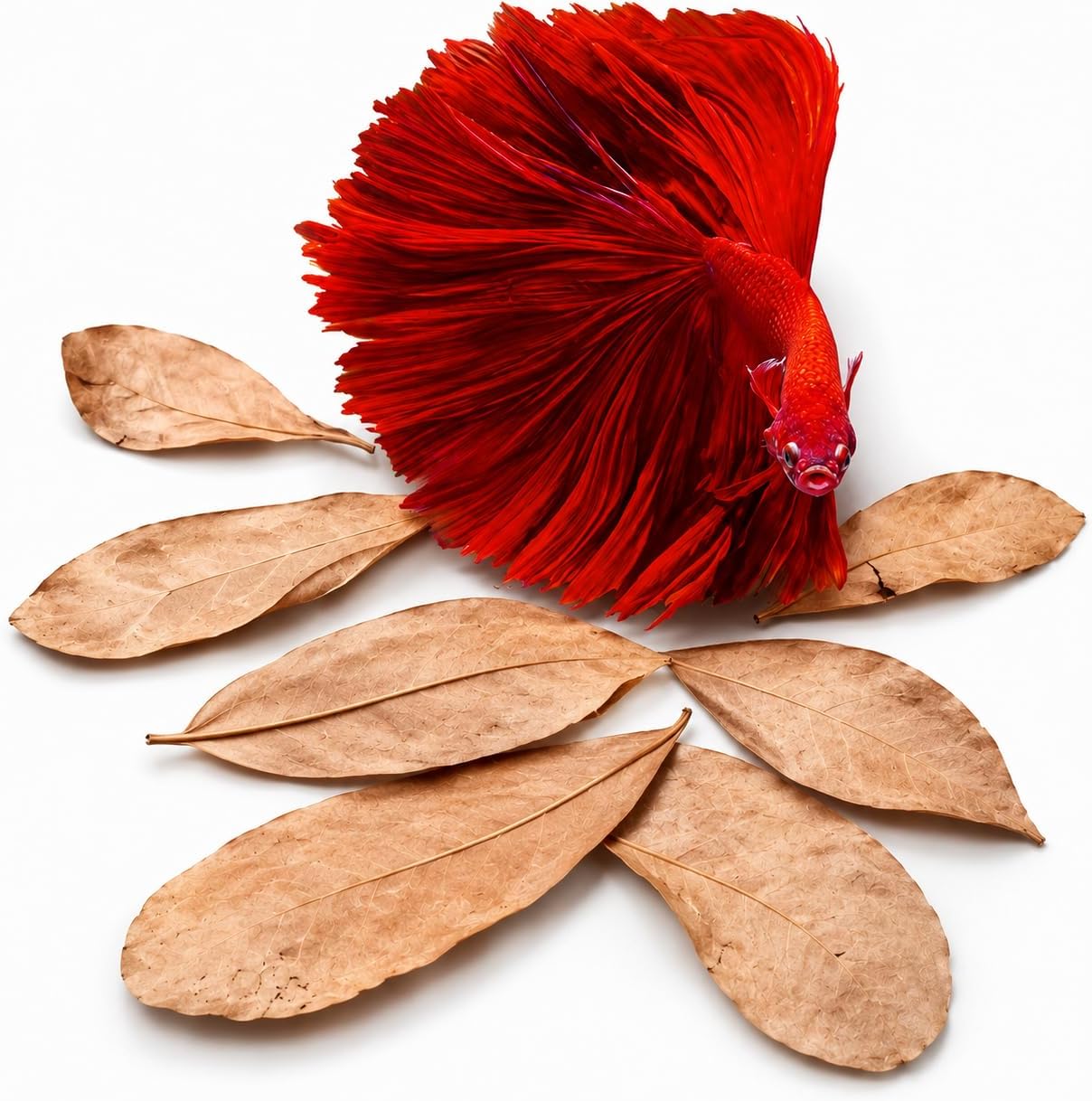
- Add Indian Almond Leaves (Catappa). They release tannins, lower pH slightly, have antibacterial properties, and mimic the natural blackwater habitat. Bettas love them.
- Feed color-enhancing foods 2-3 times a week, not every day.
- Take photos weekly in the same lighting. Slow changes are invisible to daily observation.
- Quarantine new plants and tank mates. Parasites spread fast and ruin color.
Expert Insight: The “Glass Surfing” Color Shift
You see your betta pacing the glass (glass surfing). He looks bright, flared, intense. Is he happy? Usually, no. He sees his reflection. He thinks it’s a rival. He is in “fight mode.” His colors are maxed out for battle. This is high stress, not high joy. If he does this for hours, he exhausts himself. Cover the bottom 3 inches of the tank sides with paper or tall plants to block the reflection. A truly happy betta explores the middle and bottom, hunts for food, and rests on leaves. He doesn’t pace.
Conclusion
Your betta fish is a living canvas. His colors shift with his mood, his health, his age, and his genes. When you ask do betta fish change color with their mood, the answer is a resounding yes. But mood is just one brushstroke. Water quality, temperature, diet, and genetics hold the other brushes. The best thing you can do is provide a stable, warm, clean, enriched home. Feed him well. Watch him daily. Learn his normal. When the colors change, you will know if it’s a conversation, a warning, or just a marble doing its thing. A vibrant betta is a healthy betta. And a healthy betta is a joy to keep.
Frequently Asked Questions
Do betta fish change color when they are happy?
Yes, a happy betta displays bright, saturated colors with fins fully extended. They often show intense iridescence and respond actively to their owner. A vibrant, stripe-free betta is usually a content betta.
Why did my betta fish turn white overnight?
Sudden whiteness usually indicates severe stress, shock from a temperature swing, or a parasitic infection like velvet or ich. Check water parameters immediately, ensure the heater is working, and look for gold dust or white spots on the body.
What do horizontal stripes on a betta mean?
Horizontal stripes (running head to tail) are stress stripes. They indicate fear, discomfort, or poor water conditions. Both males and females display them. Fix the environment to make them disappear.
Can a betta fish get its color back after losing it?
Absolutely. If color loss was due to stress, cold water, or poor diet, correcting those issues usually restores full color within days or weeks. Permanent loss only happens with severe scarring, old age, or genetic marble gene shifts.
Do female betta fish change color like males?
Yes, females change color for mood, stress, and breeding readiness. They show horizontal stress stripes just like males. Uniquely, they display vertical breeding stripes when ready to spawn, which males rarely do.
Is it normal for my betta to change color every few weeks?
If you have a marble or koi betta, yes. They possess a “jumping gene” that randomly activates and deactivates color cells. This causes chaotic, lifelong pattern changes. It is genetic, not a health issue, provided the fish acts normal.