How Do Betta Fish Actually Need in Their Tank
Understanding how do betta fish actually need in their tank is the key to keeping them healthy and happy. Betta fish need the right tank size, clean water, proper temperature, and a few comforting decorations. This guide covers everything you need to create the perfect home for your betta.
Every betta fish owner wants the same thing: a happy, healthy fish that thrives in its home. But the truth is, how do betta fish actually need in their tank is a question many beginners get wrong. You might think a small bowl on a windowsill is enough. But betta fish deserve much more than that.
The right tank setup affects everything from your fish’s color to its lifespan. When you understand betta fish tank needs, you can create an environment where your fish feels safe, active, and comfortable. This guide walks you through every essential element step by step.
Whether you just brought home your first betta or you want to improve your current setup, you will find practical advice here. We will cover tank size, water quality, temperature, decorations, and more. By the end, you will know exactly what your betta needs to live its best life.
Key Takeaways
- Tank Size Matters: A minimum of 5 gallons gives your betta room to swim and thrive.
- Water Conditions Are Critical: Keep the temperature between 76-82°F and maintain a gentle filter.
- Decorations Provide Comfort: Plants, hides, and soft substrates make your betta feel safe.
- Regular Maintenance Is Essential: Weekly water changes and tank cleaning prevent illness.
- Betta Fish Need Mental Stimulation: A well-setup tank reduces boredom and stress.
- Avoid Common Mistakes: Overcrowding, wrong temperature, and skipping cycling harm your fish.
📑 Table of Contents
- Understanding How Do Betta Fish Actually Need in Their Tank
- Tank Size and Space Requirements
- Water Conditions and Temperature
- Filtration and Oxygenation
- Decorations, Plants, and Tank Setup
- Feeding and Nutrition
- Common Mistakes to Avoid
- How to Keep Your Betta’s Tank Clean
- Creating the Ideal Betta Fish Environment
- Final Thoughts on Betta Fish Tank Needs
Understanding How Do Betta Fish Actually Need in Their Tank
Betta fish are often called “lazy” or “low-maintenance.” But that is a myth. In the wild, bettas live in warm, slow-moving waters in Southeast Asia. They need specific conditions to stay healthy in captivity. How do betta fish actually need in their tank comes down to a few core requirements that you must meet every single day.
Think of it this way. You would not want to live in a dark, cramped, dirty room. Your betta feels the same way. A proper betta fish habitat includes space, clean water, the right temperature, and things to explore. Meeting these needs is not complicated, but it does require attention.
Why Tank Setup Directly Affects Betta Health
A poorly set up tank leads to stress. Stressed bettas get sick more often. They may lose their vibrant colors, stop eating, or develop fin rot. On the other hand, a well-designed tank boosts your fish’s immune system and encourages natural behavior like exploring and building bubble nests.
When you focus on betta fish care from the start, you set your fish up for a long life. Bettas can live 3 to 5 years in a proper tank, sometimes even longer. The difference between a neglected bowl and a well-maintained tank is enormous.
Tank Size and Space Requirements
The most common mistake people make is putting a betta in too small a container. Many pet stores sell bettas in tiny cups or bowls. That is not a permanent home. How do betta fish actually need in their tank when it comes to space? They need room to swim, explore, and exercise.
A 5-gallon tank is the minimum recommended size for a single betta. This gives your fish enough space to move around without feeling cramped. A 10-gallon tank is even better, especially if you plan to add a few peaceful tank mates.
Keep in mind that how big of a tank do betta fish need depends on your situation. If you only have one betta, 5 gallons works well. But larger tanks are easier to keep stable because water parameters change more slowly. Small bowls fluctuate in temperature and chemistry quickly, which stresses your fish.
Why Bigger Tanks Make Maintenance Easier
Larger tanks are more forgiving. A small cup of water changes chemistry fast. A 5 or 10-gallon tank gives you a buffer. Even if you forget a water change for a day, the impact is smaller. This is why experienced fish keepers almost always recommend a bigger tank for betta fish tank needs.
- 5-gallon tank: Minimum for one betta. Easy to manage.
- 10-gallon tank: Ideal for one betta with room for plants and a filter.
- 20-gallon tank: Great if you want to add peaceful community fish.
Water Conditions and Temperature
Water quality is at the heart of betta fish tank needs. Betta fish are sensitive to changes in their environment. Dirty water, wrong temperature, or high ammonia levels can make your fish very sick very fast.
The ideal water temperature for bettas is between 76 and 82 degrees Fahrenheit. Most homes are cooler than that, especially in winter. This is why many experts recommend using a heater. Do betta fish need a heater in their tank? Absolutely. A small aquarium heater keeps the temperature steady and your betta comfortable.
Water Parameters You Must Monitor
Beyond temperature, you need to watch several water parameters:
- Ammonia: Should be 0 ppm. Even low levels are toxic.
- Nitrite: Should be 0 ppm. Harmful to fish health.
- Nitrate: Should be below 20 ppm. Regular water changes keep this in check.
- pH Level: Aim for 6.5 to 7.5. Stable pH matters more than hitting a perfect number.
Testing your water regularly takes just a few minutes. It is one of the best habits you can build for betta fish tank maintenance. A simple liquid test kit gives you accurate readings and helps you catch problems early.
Filtration and Oxygenation
Betta fish need clean, oxygen-rich water to survive. But here is the catch: bettas prefer slow-moving water. In the wild, they live in calm rice paddies and slow streams. A strong filter current can tire them out and stress them.
This is why how do betta fish actually need in their tank when it comes to filtration is a balancing act. You need a filter to remove waste, but you also need to reduce the flow. Most aquarium filters come with adjustable settings. Turn the flow down so the water moves gently.
Alternatively, you can use a sponge filter. Sponge filters provide excellent biological filtration without creating a strong current. They are gentle, affordable, and perfect for betta tanks. Do betta fish need a filtered tank? Yes, they do. Even with regular water changes, a filter helps maintain stable water quality between cleanings.
Do Betta Fish Need Oxygen in the Tank?
Yes, bettas need oxygen just like any other fish. They have a special organ called a labyrinth that lets them breathe air from the surface. But this does not mean they can survive without oxygen in the water. Good surface agitation helps oxygen dissolve into the tank.
A gentle filter or an air stone can improve oxygen levels. Just make sure the air stone does not create too much current. Your betta should be able to swim comfortably without struggling against the flow.
Decorations, Plants, and Tank Setup
A bare-bottom tank is not a happy home for a betta. These fish come from environments full of plants, leaves, and hiding spots. Replicating that in your tank makes a huge difference in your fish’s well-being.
What do betta fish like in their tanks is a question with a clear answer. They like plants, hiding spots, and soft surfaces. Live plants are the best option, but silk plants work well too. Avoid sharp plastic decorations that can tear delicate betta fins.
The Best Decorations for Betta Tanks
Here are some great options for your betta fish tank setup:
- Live plants: Java fern, anubias, and Amazon sword plants are all betta-friendly.
- Silk plants: Soft and safe for delicate fins.
- Caves and hides: Provide a sense of security and reduce stress.
- Driftwood: Adds a natural look and can help stabilize pH.
- Leaf litter: Catappa leaves release tannins that mimic natural conditions.
When you set up the tank, arrange decorations to create open swimming areas and cozy hiding spots. Your betta will spend time exploring and resting. A well-decorated tank also gives your fish mental stimulation, which prevents boredom and behavioral issues.
Feeding and Nutrition
Feeding is another important part of betta fish care. Bettas are carnivores. They need a protein-rich diet to stay healthy and colorful. Flakes alone are not enough. In fact, many commercial flakes contain fillers that offer little nutritional value.
The best foods for bettas include:
- Betta pellets: Formulated specifically for betta dietary needs.
- Frozen or live bloodworms: A great treat and protein source.
- Brine shrimp: Another excellent protein-rich option.
- Daphnia: Helps with digestion and provides variety.
Feed your betta 2 to 3 small meals per day. Only give what your fish can eat in 2 minutes. Overfeeding is one of the most common mistakes new betta owners make. Excess food pollutes the water and can cause constipation, which is serious for bettas.
Knowing how often do you need to feed a betta fish is simple. Stick to a regular schedule, offer small amounts, and skip one meal per week. This fasting period helps your fish’s digestive system stay healthy.
Common Mistakes to Avoid
Even well-meaning betta owners make mistakes. Here are the most common ones and how to avoid them:
- Keeping a betta in a bowl: Bowls are too small, lack filtration, and make temperature control nearly impossible.
- Skipping tank cycling: A new tank needs to cycle before adding fish. This builds beneficial bacteria that break down toxic waste.
- Using the wrong tank mates: Bettas can be aggressive. Avoid fin-nipping or overly active fish.
- Ignoring water changes: Even with a filter, regular water changes are essential for betta fish tank maintenance.
- Overcrowding the tank: Too many decorations take away swimming space and can trap waste.
Learning from these mistakes saves you time, money, and most importantly, your fish’s life. If you are new to betta keeping, start simple and build from there.
How to Keep Your Betta’s Tank Clean
A clean tank is a healthy tank. But cleaning does not mean scrubbing everything down. In fact, over-cleaning can destroy beneficial bacteria that keep your tank stable. The goal is maintenance, not sterility.
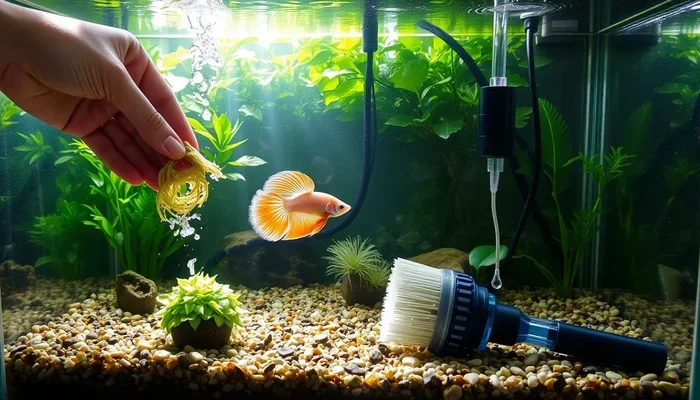
Here is a simple routine for how to change water in betta fish tank and keep things fresh:
- Test your water parameters once a week.
- Remove 25-30% of the water and replace it with dechlorinated water at the same temperature.
- Vacuum the substrate gently to remove debris.
- Rinse filter media in old tank water, never tap water.
- Wipe down the glass to remove algae buildup.
This routine takes about 15 to 20 minutes per week. It keeps your betta’s environment stable and reduces the risk of illness. Consistent maintenance is far easier than treating a sick fish.
Signs Your Betta’s Tank Needs Attention
Watch for these warning signs that something is off:
- Clamped fins or hiding more than usual
- Loss of color or faded scales
- Not eating or spitting out food
- Labored breathing or gasping at the surface
- White spots or fuzzy patches on the body
If you notice any of these, test your water immediately. In most cases, a water change and parameter adjustment resolve the issue quickly.
Creating the Ideal Betta Fish Environment
When you put it all together, creating the ideal environment for your betta comes down to a few key principles. Provide enough space, keep the water clean and warm, add gentle filtration, and decorate the tank with natural-looking elements.
A well-planned betta fish habitat does more than look nice. It supports your fish’s physical health and mental well-being. A stressed fish in a bare, cold bowl will not thrive. A betta in a properly set up 5 or 10-gallon tank with plants, hiding spots, and stable water conditions will display its full beauty.
Take the time to learn what all do you need for a betta fish tank before you bring your fish home. Preparation makes all the difference. A little effort upfront saves you from costly problems later.
Remember, every betta is an individual. Some are more active, some more shy. Some love open swimming areas, while others prefer densely planted corners. Watch your fish, learn its preferences, and adjust the setup accordingly. This is the real secret to understanding how do betta fish actually need in their tank.
Final Thoughts on Betta Fish Tank Needs
Caring for a betta fish is a rewarding experience. These vibrant, personality-filled fish bring life and color to any home. But they also depend on you to provide the right environment. When you understand and meet their needs, you build a bond with your fish that lasts for years.
Start with the basics. Get the right tank size, set up proper filtration and heating, maintain clean water, and add thoughtful decorations. Feed a quality diet and watch for signs of stress or illness. Every step you take improves your betta’s quality of life.
If you ever feel unsure, remember that knowledge is your best tool. Keep learning about betta fish care, ask experienced keepers for advice, and never stop improving your setup. Your fish will thank you with bright colors, active swimming, and a long, healthy life.
Frequently Asked Questions
What is the minimum tank size for a betta fish?
The minimum tank size for a single betta fish is 5 gallons. While some people keep bettas in smaller containers, a 5-gallon tank provides enough space for swimming, stable water parameters, and room for a gentle filter and heater. Larger tanks are always better for long-term betta health.
Do betta fish need a heater in their tank?
Yes, betta fish need a heater. Their natural habitat in Southeast Asia is warm, and they thrive in water temperatures between 76 and 82 degrees Fahrenheit. Without a heater, room temperature fluctuations can stress your betta and weaken its immune system.
How often should I clean my betta fish tank?
You should perform a partial water change of 25 to 30 percent every week. This removes waste and excess nitrates while preserving beneficial bacteria. You should also do a deeper cleaning of the tank and filter media once a month.
Can betta fish live with other fish?
Betta fish can live with certain peaceful, non-fin-nipping species in a large enough tank. However, two male bettas should never be housed together. Always research tank mates carefully before adding any new fish to your betta’s home.
What do betta fish like in their tanks?
Betta fish like planted tanks with plenty of hiding spots, gentle water flow, and soft substrates. They enjoy exploring caves, swimming through plants, and resting on flat surfaces. A well-decorated tank reduces stress and encourages natural behavior.
How do I know if my betta fish is stressed?
Signs of a stressed betta include clamped fins, loss of color, hiding frequently, not eating, and rapid breathing. If you notice these signs, test your water parameters first. Poor water quality is the most common cause of stress in betta fish.
=== CONCLUSION ===
How do betta fish actually need in their tank is a question with a clear answer. Your betta needs space, clean water, stable warmth, gentle filtration, and a thoughtfully decorated environment. These are not luxuries. They are basic requirements for a healthy, happy fish.
By following the tips in this guide, you can create a tank that supports your betta’s physical and emotional well-being. From choosing the right betta fish tank size to maintaining a consistent cleaning schedule, every decision you make impacts your fish’s quality of life.
Start today. Review your current setup, make improvements where needed, and watch your betta thrive. A little effort goes a long way, and the reward is a beautiful, active fish that brings joy to your home every single day.