How Do I Clean Out My Betta Fish Tank
Cleaning your betta fish tank regularly keeps your fish healthy and your tank looking great. This guide covers everything from gravel vacuuming to water changes and filter maintenance. Follow our simple steps to master betta fish tank cleaning like a pro.
Every betta fish owner wants a clean and healthy home for their fish. But figuring out how to clean out a betta fish tank can feel overwhelming at first. The good news is that it does not have to be complicated or time-consuming. With a simple routine, you can keep your tank sparkling and your betta thriving. This guide walks you through every step of the process in plain, easy-to-follow language.
Betta fish tank cleaning is not just about making things look pretty. It is about maintaining safe water conditions that keep your fish healthy. Dirty water builds up harmful toxins like ammonia and nitrite. These toxins can make your betta sick or even shorten its lifespan. The good news? A little regular effort goes a long way. You will learn how to clean out betta fish tank setups of all sizes with confidence.
Whether you have a small bowl or a 5-gallon tank, the principles stay the same. You will discover how to change water safely, clean your gravel, maintain your filter, and control algae. We also cover common mistakes to avoid so you do not accidentally harm your fish. By the end of this guide, you will feel ready to tackle your next tank cleaning session with ease.
Key Takeaways
- Regular cleaning prevents toxins: Partial water changes weekly keep ammonia and nitrite levels safe for your betta.
- Gravel vacuuming removes waste: Using a gravel vacuum during water changes is the most effective way to clean the tank substrate.
- Never replace all filter media at once: Rinse filter media in old tank water to preserve beneficial bacteria.
- Algae control needs consistent effort: Regular scraping and proper lighting prevent buildup on tank walls and decor.
- Use the right water: Treat tap water with a conditioner before adding it to your betta tank.
- Match water temperature carefully: New water should be within 1-2 degrees of your tank water to avoid stressing your fish.
- Clean the tank glass gently: Avoid harsh chemicals and use aquarium-safe tools only.
📑 Table of Contents
- Why Cleaning Your Betta Fish Tank Matters
- What You Need to Clean a Betta Fish Tank
- Step-by-Step Guide to Cleaning Your Betta Fish Tank
- How Often Should You Clean a Betta Fish Tank
- Common Mistakes to Avoid When Cleaning a Betta Fish Tank
- Comparing Cleaning Methods for Different Tank Sizes
- Algae Control: Keeping Your Tank Looking Great
- What to Do If Your Betta Seems Stressed After Cleaning
- Final Thoughts on Cleaning Your Betta Fish Tank
Why Cleaning Your Betta Fish Tank Matters
Your betta fish lives in the same water every single day. Unlike humans, fish cannot move to fresh water when things get dirty. Waste from food, plant matter, and fish itself builds up over time. This waste breaks down into ammonia, which is toxic to fish even in small amounts.
A regular cleaning routine removes these waste products before they reach dangerous levels. Think of it like taking out the trash in your home. If you never take the trash out, things get pretty unpleasant pretty fast. The same goes for your fish tank. Betta tank maintenance is the foundation of good fish care.
Clean water also supports your betta’s immune system. Healthy fish are more colorful, more active, and more likely to live a long life. Bettas can live 3 to 5 years with proper care. A dirty tank can cut that lifespan short. So keeping things clean is one of the best things you can do for your fish.
The Nitrogen Cycle and Your Betta Tank
Understanding the nitrogen cycle helps you clean smarter, not harder. Beneficial bacteria in your tank convert ammonia into nitrite, and then nitrite into nitrate. Nitrate is much less harmful but still needs to be kept in check. Regular water changes remove nitrate from the system.
When you clean your tank, you must be careful not to destroy these helpful bacteria. This is why you should never rinse all your filter media with tap water. Chlorine in tap water kills beneficial bacteria. Instead, rinse filter media in a bucket of old tank water. This preserves the good bacteria while removing debris.
What You Need to Clean a Betta Fish Tank
Before you start, gather your supplies. Having everything ready makes the process smooth and fast. Here is a simple checklist of the essentials:
- Gravel vacuum or siphon: This is the most important tool for cleaning tank substrate. It removes waste from the gravel without losing water.
- Bucket dedicated to tank use: Never use a bucket that has held soap or chemicals. A simple plastic bucket works perfectly.
- Water conditioner: This removes chlorine and chloramine from tap water. It is essential before adding new water to your tank.
- Algae scraper or magnetic cleaner: Keeps the glass walls free of green buildup.
- Thermometer: Helps you match the temperature of new water to your tank water.
- Tank-safe sponge or cloth: For wiping down the outside of the tank and cleaning decor.
- New filter media (optional): Only replace if your current media is falling apart or very old.
You do not need fancy or expensive equipment. Many of these items are affordable and last a long time. If you are on a budget, start with the basics and build your supplies over time. Fish tank supplies are easy to find at any pet store or online.
Quick Tips: Getting the Right Water
The water you add to your tank matters just as much as the cleaning process itself. Always use conditioned water to protect your betta. You can also let tap water sit for 24 hours to allow chlorine to dissipate, but a conditioner is faster and more reliable.
Match the temperature of your new water to your tank water. Bettas prefer temperatures between 76 and 82 degrees Fahrenheit. A difference of more than 2 degrees can stress your fish. Use your thermometer to check both the new water and the tank water before adding anything.
Step-by-Step Guide to Cleaning Your Betta Fish Tank
Now that you have your supplies ready, let us walk through the actual cleaning process. Follow these steps in order for the best results. This method works for tanks of all sizes, from small bowls to larger aquariums.
Step 1: Prepare Your New Water
Start by filling your bucket with the amount of water you plan to replace. A good rule of thumb is to change 25 to 30 percent of the water each week. Use water conditioner according to the bottle instructions. Let the treated water sit for a few minutes so the conditioner can fully work.
Check the temperature of the new water with your thermometer. Adjust it if needed by adding a little warm or cool water. The goal is to match the tank temperature as closely as possible. This prevents thermal shock, which can seriously harm your betta.
Step 2: Vacuum the Gravel
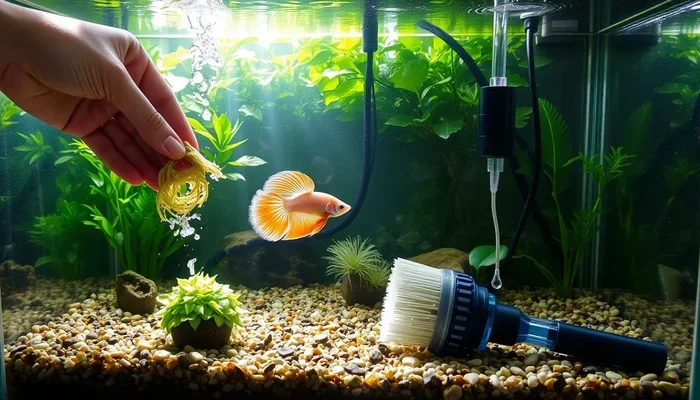
While the water is conditioning, it is time to clean the substrate. Insert your gravel vacuum into the gravel at an angle. Start siphoning and direct the other end of the tube into your bucket. Move the vacuum slowly across the gravel, focusing on areas where debris collects.
You will notice dirt, food particles, and fish waste getting sucked up. This is exactly what you want. Continue vacuuming until you have removed about 25 to 30 percent of the tank water. Do not worry about getting every speck of dirt. A thorough pass over the main areas is plenty.
If you have a small tank or bowl, you can use a turkey baster to remove debris from the bottom. It works just as well for smaller setups. Just be gentle so you do not disturb your betta too much.
Step 3: Clean the Tank Walls and Decor
Use your algae scraper or magnetic cleaner to remove green buildup from the glass. Work in gentle circular motions. Avoid scratching the glass, especially if you have an acrylic tank.
For decorations and plants, gently scrub them with a tank-safe sponge. If algae is stubborn, you can remove the decor and soak it in a bucket of tank water for a few minutes. Never use soap or chemical cleaners on anything that goes in your tank. Tank hygiene means keeping everything fish-safe.
Step 4: Rinse and Maintain Your Filter
Your filter plays a crucial role in keeping the water clean between full tank cleanings. Remove the filter media and rinse it in a bucket of old tank water. This preserves the beneficial bacteria living on the media.
If your filter media is very old or falling apart, you can replace some of it. But never replace all of it at once. Replacing everything at once can crash your nitrogen cycle, which is dangerous for your fish. Replace no more than one-third of the filter media at a time.
Step 5: Add the New Water
Slowly pour the new water into the tank. Use a plate or your hand to diffuse the flow of water. This prevents disturbing the gravel and stressing your betta. Pouring water directly from a height can stir up debris and make a mess.
After adding the new water, check the temperature one more time. Make sure it is stable and within the safe range. Give your betta a little观察 to make sure it is acting normally. A healthy betta should swim actively and respond to your presence.
How Often Should You Clean a Betta Fish Tank
Frequency depends on the size of your tank and how many fish you keep. For a single betta in a 5-gallon tank, a 25 percent water change once a week works well. Smaller tanks or bowls may need more frequent attention because waste builds up faster in less water.
Larger tanks are more stable and may only need a 20 percent change every 10 to 14 days. The key is to test your water regularly. If you notice ammonia or nitrite spiking, you need to do a water change sooner. Tank maintenance schedule helps you stay consistent and prevents problems before they start.
For more details on frequency, check out our article on how often to clean a betta fish tank. It covers different tank sizes and setups in detail.
Common Mistakes to Avoid When Cleaning a Betta Fish Tank
Even the best intentions can lead to mistakes. Here are some common errors to watch out for:
- Using soap or detergent: Even a tiny residue can be deadly to fish. Always use aquarium-safe products only.
- Replacing all the water at once: This removes beneficial bacteria and shocks your fish. Stick to partial water changes.
- Rinsing filter media with tap water: Chlorine kills beneficial bacteria. Always use old tank water for rinsing.
- Skipping water conditioner: Tap water contains chemicals that are harmful to bettas. Always treat water before adding it.
- Cleaning everything at once: Spread your cleaning tasks across the week. Deep clean the filter one week, do a water change the next.
- Ignoring temperature matching: Sudden temperature changes stress your betta and weaken its immune system.
Expert Insight: Many beginners think they need to scrub their tank until it sparkles. But a little natural algae is actually normal and even beneficial. Your goal is clean water, not a sterile environment. A slightly hazy tank is much safer than an over-cleaned one with dead beneficial bacteria.
Comparing Cleaning Methods for Different Tank Sizes
Different tank sizes call for slightly different approaches. Here is a quick comparison to help you choose the right method:
| Tank Size | Water Change | Gravel Vacuuming | Filter Maintenance | Frequency |
|---|---|---|---|---|
| 1-3 Gallon Bowl | 50% weekly | Gentle, partial only | Rinse media monthly | Weekly |
| 5 Gallon Tank | 25-30% weekly | Full substrate pass | Rinse media bi-weekly | Weekly |
| 10 Gallon Tank | 20% every 10 days | Full substrate pass | Rinse media monthly | Every 10-14 days |
| 20 Gallon+ Tank | 15-20% weekly | Full substrate pass | Rinse media monthly | Weekly |
These numbers are general guidelines. Always adjust based on your water test results. If ammonia is high, do a larger water change regardless of your schedule. Water parameters should guide your cleaning frequency, not just a calendar.
Algae Control: Keeping Your Tank Looking Great
Algae is a natural part of any aquarium, but too much can be a problem. The key to controlling algae is managing the factors that cause it. Light, nutrients, and time all play a role in algae growth.
Here are some simple ways to keep algae under control:
- Limit light exposure: Keep your tank lights on for 8 to 10 hours a day. More than that encourages algae growth.
- Do not overfeed your fish: Excess food breaks down into nutrients that feed algae. Feed only what your betta can eat in 2 minutes.
- Do regular water changes: This removes excess nutrients before algae can use them.
- Add live plants: Plants compete with algae for nutrients, which naturally reduces algae growth.
- Clean glass regularly: A quick wipe with an algae scraper once or twice a week keeps buildup from getting out of hand.
If algae is already taking over, do not panic. A thorough cleaning session and adjusted lighting usually do the trick. For stubborn algae on hard surfaces, check out our guide on how to clean algae from betta fish tank for more targeted advice.
What to Do If Your Betta Seems Stressed After Cleaning
Sometimes your betta may act a little off after a cleaning session. This can happen for a few reasons. The water temperature might be slightly different. The tank setup might have changed. Or the cleaning process itself might have been too vigorous.
If your betta seems stressed, give it some time to adjust. Make sure the water temperature is stable and the tank is quiet. Avoid bright lights for a few hours. Most bettas bounce back quickly and return to their normal behavior within a day.
If stress symptoms persist, test your water parameters. High ammonia or nitrite levels after cleaning could mean you removed too much beneficial bacteria. In that case, add a bacteria supplement and do a small water change with properly conditioned water. Betta fish care includes monitoring your fish closely after any major tank maintenance.
Remember, cleaning your tank should be a routine, not a stressful event. Once you get into a rhythm, it becomes second nature. And your betta will thank you with vibrant colors and lively behavior.
Final Thoughts on Cleaning Your Betta Fish Tank
Cleaning your betta fish tank does not have to be a chore. With the right tools, a simple routine, and a little knowledge, you can keep your tank in great shape all year round. The most important thing is consistency. Regular partial water changes and gentle cleaning protect your fish and your investment.
Start small if you are new to this. Focus on weekly water changes and gravel vacuuming first. Add filter maintenance and glass cleaning as you get more comfortable. Soon, cleaning your tank will feel like second nature. Your betta will live a longer, happier life because of it.
For more information on maintaining a healthy environment, read our articles on how do I clean my betta fish tank and how to clean out a betta fish tank. These guides offer additional tips and techniques for every type of betta setup.
Take action today. Grab your supplies and give your tank the care it deserves. Your betta fish will swim happily in a clean, fresh, and safe home.
Frequently Asked Questions
How long does it take to clean a betta fish tank?
A routine cleaning takes about 20 to 30 minutes for a standard 5-gallon tank. Larger tanks may take a bit longer. Once you get into a routine, the process becomes faster and more efficient.
Can I use bottled water for my betta fish tank?
You can use bottled water, but make sure it is free of added minerals and chemicals. Spring water and purified water are better options than distilled water. Always check the label and use a water conditioner to be safe.
Do I need a filter for my betta fish tank?
A filter is not strictly required but highly recommended. It helps maintain water quality between cleanings by removing debris and supporting beneficial bacteria. If you do not have a filter, you will need to do more frequent water changes.
What happens if I do not clean my betta fish tank?
Without regular cleaning, harmful toxins like ammonia and nitrite build up in the water. These toxins can cause stress, disease, and even death in betta fish. A dirty tank also leads to cloudy water and unpleasant odors.
Is it safe to clean my betta fish tank while the fish is inside?
Yes, it is safe to do partial water changes with your betta still in the tank. Just be gentle with the gravel vacuum and avoid strong water flow. Your betta may hide during cleaning but should return to normal behavior quickly.
How can I tell if my betta tank needs cleaning?
Cloudy water, a strong odor, visible debris on the gravel, and algae buildup are all signs your tank needs attention. Testing your water for ammonia and nitrite levels is the most reliable way to know if a cleaning is needed.