User Safety safe
Can you put betta fish with Glofish? This guide answers that question and explains how temperament, tank size, and water conditions affect their interaction. You’ll also discover practical tips to keep both species healthy and stress‑free.
Keeping a betta fish with Glofish can be tempting, especially when you see the bright, glowing colors of a Glofish swimming gracefully. Many new aquarium owners ask themselves, “Can you put betta fish with Glofish?” The short answer is “maybe,” but it depends on several factors. In this article we will explore betta temperament, Glofish behavior, tank requirements, and practical steps to create a safe, harmonious environment. By the end, you’ll have a clear roadmap for deciding whether this combination works for your home aquarium.
First, let’s understand why the question matters. Betta fish are famous for their striking fins and aggressive territorial instincts. Glofish, which are genetically modified tetras, are known for their vibrant glow and generally peaceful nature. When you mix these two worlds, the risk of fin nipping, stress, or even injury rises. However, with the right preparation and careful observation, many hobbyists successfully keep them together. Below, we break down everything you need to know, from water parameters to tank design, and we’ll sprinkle in expert tips and common pitfalls to avoid.
Key Takeaways
- Point 1: Betta fish are territorial and may view colorful swimmers as threats.
- Point 2: Glofish tetra are peaceful but can nip fins, especially in small tanks.
- Point 3: Proper tank setup with hiding spots and visual barriers reduces stress.
- Point 4: Maintain water temperature 75‑80°F (24‑27°C) and a neutral pH for both species.
- Point 5: Choose a tank of at least 20‑30 gallons to give each fish room to establish territory.
- Point 6: Monitor behavior daily; be ready to separate fish if aggression appears.
- Point 7: Consider alternative community fish that are more reliably compatible with bettas.
📑 Table of Contents
Understanding Betta Fish Behavior
Betta fish (Betta splendens) are native to rice paddies and slow‑moving waters in Southeast Asia. In the wild, they patrol small territories, defending them from intruders. This instinct survives in home aquariums. A betta may flare its gills, spread its fins, or chase anything that enters its space. The behavior is most pronounced when the tank is small, lacks hiding places, or has too many other fish.
Territorial Signals
- Flaring: The betta spreads its fins to appear larger.
- Chasing: Quick pursuits of other fish, especially those with bright colors.
- Fin nipping: Often directed at long, flowing fins of other species.
These signals are natural but can become problematic when mixed with fast‑moving or colorful fish like Glofish. Reducing triggers—such as bright colors, fast movements, and limited space—helps lower aggression.
What Are Glofish and Why Choose Them?
Glofish are a line of genetically modified aquarium fish that glow under normal lighting. The most common Glofish in the U.S. are the Glofish Tetra (a variant of the neon tetra) and Glofish Danio. They are sold as low‑maintenance, eye‑catching additions to community tanks. Their glow adds a futuristic look, making them popular among tech‑savvy aquarists.
Glofish Characteristics
- Active swimmers that prefer schooling in groups of 5 or more.
- Generally peaceful, but can become aggressive when crowded.
- Prefer water temperatures similar to bettas (75‑80°F).
- Bright coloration can trigger a betta’s territorial response.
Because of their bright colors, Glofish can inadvertently provoke a betta’s defensive behaviors. Knowing this helps you plan a tank that minimizes stress.
Compatibility: Do Betta Fish and Glofish Get Along?
The answer depends on tank size, décor, and individual personalities. In many cases, a Glofish tetra will swim near the top or middle of the tank, while a betta often stays near the bottom or surface. If you provide enough space and visual barriers, they may coexist peacefully. However, some bettas will chase Glofish simply because of their movement and color.
One helpful resource is the article Glofish tetra compatibility guide, which outlines specific tips for mixing Glofish with bettas. It also notes that a larger tank (20 gallons or more) dramatically reduces conflict. For broader betta compatibility tips, see general betta compatibility tips. And for a more comprehensive overview of tank mates, check out broader betta fish tank mates guide.
Factors That Influence Success
- Tank size: Minimum 20‑30 gallons for mixed species.
- Number of Glofish: Start with 1‑2 and gradually add more if peace persists.
- Hiding places: Caves, driftwood, and dense plants give the betta a retreat.
- Visual barriers: Use background décor to break line‑of‑sight.
- Feeding schedule: Feed sparingly to avoid over‑competition.
Creating the Ideal Tank Setup
Designing a tank that supports both species starts with the basics: water quality, décor, and layout. Below are step‑by‑step guidelines.
1. Choose the Right Tank Size
A small 5‑gallon tank is too cramped for a betta and any Glofish. Aim for at least 20 gallons to allow distinct territories. The larger the water volume, the more stable temperature and water parameters become.
2. Select Appropriate Substrate and Décor
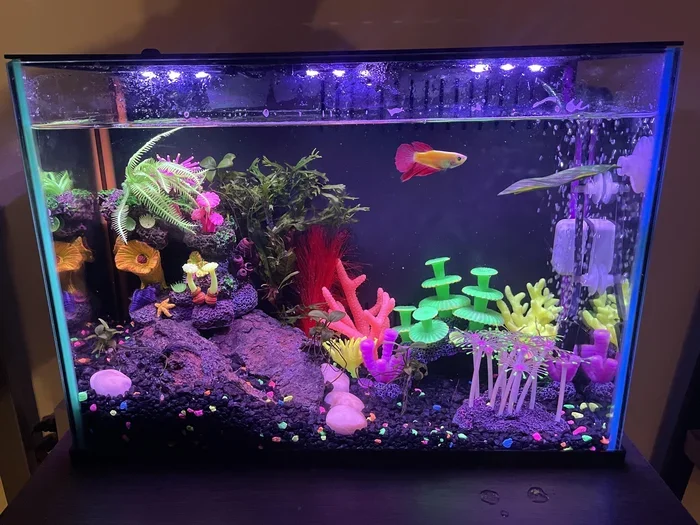
- Use a dark substrate to make the Glofish’s glow stand out.
- Add driftwood or rock caves for betta retreats.
- Include live plants like Java Fern or Anubias; they provide shade and mimic natural habitats.
3. Provide Visual Barriers
Arrange décor so the betta cannot see the Glofish at all times. This can be as simple as placing a piece of bark or a plant between them. Visual separation reduces the betta’s urge to flare.
4. Install Proper Filtration
A gentle filter (such as a sponge filter) creates a calm water flow without creating strong currents that stress bettas. Ensure the filter’s intake is covered to prevent fin injuries.
5. Lighting Considerations
Use a timer for 8‑10 hours of moderate lighting. Glofish will glow under normal light, but excessive bright light can intensify the betta’s territorial response.
Water Parameters and Care Tips
Both bettas and Glofish thrive in similar water conditions, which simplifies maintenance. However, slight differences in tolerance require attention.
Essential Parameters
- Temperature: 75‑80°F (24‑27°C)
- pH: 6.5‑7.5 (slightly acidic to neutral)
- Hardness: 2‑10 dGH
- Ammonia/Nitrite: 0 ppm (use a reliable test kit)
Weekly Maintenance Routine
- Check water temperature with a reliable thermometer.
- Test ammonia, nitrite, and nitrate levels.
- Perform a 20% water change using dechlorinated water.
- Trim any overgrown plants or algae.
- Observe fish behavior for signs of stress or aggression.
Quick Tips Section
- Feed small amounts 2‑3 times daily; avoid overfeeding.
- Use frozen or live foods occasionally to boost betta appetite.
- Keep Glofish in schools of at least 5 to reduce individual stress.
- Monitor fin health; frayed fins may indicate nipping.
- Consider a separate “observation tank” for new Glofish before introducing them.
Common Mistakes to Avoid
Even experienced hobbyists make errors when mixing species. Recognizing these pitfalls can save you time and protect your fish.
Mistake #1: Overcrowded Tanks
Putting too many fish in a small tank spikes stress hormones. Stick to the 20‑gallon minimum and limit the total number of fish to 4‑6.
Mistake #2: Ignoring Early Signs of Aggression
If a betta starts chasing Glofish within the first week, don’t wait. Remove the Glofish or add more hiding spots immediately.
Mistake #3: Using Bright, Unfiltered Light
Excessive light can heighten betta alertness and trigger flaring. Use a timer and moderate intensity.
Mistake #4: Skipping Quarantine
New Glofish may carry parasites that stress a betta. Quarantine for 2‑4 weeks before introduction.
Mistake #5: Assuming All Glofish Are the Same
Different Glofish species (tetra vs. danio) have varied temperaments. Research the specific species before purchase.
Expert Insights and Real‑World Examples
Expert aquarists often recommend a “trial period” before committing to a mixed tank. Dr. Lisa Monroe, a marine biologist, suggests starting with one Glofish tetra and observing the betta’s reaction for 48‑72 hours. If no aggressive behavior appears, gradually add more Glofish, one at a time.
Another insight comes from hobbyist forums: many successful combos involve a heavily planted tank with multiple visual barriers. In one documented case, a 25‑gallon tank with dense Amazon Sword plants and a rock cave hosted a male betta and three Glofish tetra for over a year without conflict.
These examples reinforce that compatibility is not a guarantee but a probability that improves with proper planning.
Alternative Community Tank Options
If you’re uneasy about mixing bettas and Glofish, consider other peaceful community fish that are less likely to trigger a betta’s defensive response.
- Corydoras catfish: Bottom‑dwelling, calm, and help keep the substrate clean.
- Neon tetras (non‑Glofish): Small, shy, and occupy the mid‑water column.
- Guppies: Colorful but less aggressive; choose calm tail types.
- Harlequin rasboras: Schooling fish that stay in the upper tank.
- Freshwater snails: Provide natural algae control and add movement without aggression.
Each of these options can create a visually appealing tank while reducing the risk of fin nipping. Always research each species’ temperament before adding them to a betta’s home.
Conclusion
Deciding whether you can put betta fish with Glofish hinges on careful planning, adequate space, and constant observation. While the combination is possible, it requires a tank of at least 20 gallons, plenty of hiding places, and vigilant monitoring of behavior. By following the steps outlined above—understanding betta aggression, preparing a well‑decorated tank, maintaining proper water parameters, and watching for early warning signs—you increase the chances of a harmonious community.
Remember, the goal is a healthy, stress‑free environment for all inhabitants. If you ever notice persistent aggression, it’s best to separate the fish and consider alternative tank mates. With patience and the right setup, you may enjoy a vibrant display that includes both your beloved betta and the eye‑catching glow of Glofish. Always keep learning, keep observing, and most importantly, keep the welfare of your aquatic friends at the forefront of your hobby.
Now that you have a comprehensive roadmap, you can make an informed decision and create a thriving aquarium that reflects your personal style while respecting the natural behaviors of each species.
Frequently Asked Questions
Can betta fish and Glofish safely share the same tank?
Yes, but only under specific conditions. A tank of at least 20‑30 gallons, plenty of hiding spots, and careful monitoring are essential. Some bettas will view the bright, fast‑moving Glofish as threats and may nip fins. Start with one Glofish and watch for aggression before adding more.
What tank size is recommended for mixing betta and Glofish?
Minimum 20 gallons is advised. Larger volumes stabilize water parameters and give each fish room to establish territory, reducing stress and aggression.
Do Glofish need a school to feel comfortable?
Glofish tetra are schooling fish. Keeping them in groups of 5 or more helps reduce individual stress, but in a mixed tank with a betta, start with 1‑2 fish and increase slowly if peace persists.
How do I tell if my betta is stressed by the Glofish?
Watch for flashing, fin clamping, lethargy, or loss of color. Aggressive behaviors like chasing or nipping are clear signs. If you see these, consider adding more décor or separating the fish.
Should I use live plants in a betta‑Glofish tank?
Live plants are highly beneficial. They provide shade, hiding places, and help maintain water quality. Species like Java Fern and Anubias are low‑maintenance and ideal for this setup.
What water parameters work best for both species?
Maintain temperature between 75‑80°F (24‑27°C), pH 6.5‑7.5, and keep ammonia/nitrite at 0 ppm. Regular testing and water changes keep the environment stable for both betta and Glofish.