User Safety safe
Yes, you can put a filter in a betta fish tank, and it is often essential for keeping your fish healthy. A good filter removes waste, keeps water clean, and supports beneficial bacteria. However, bettas prefer gentle flow, so choosing the right filter matters a lot. This guide covers everything you need to know about betta fish tank filter options, setup, and maintenance.
Can you put a filter in a betta fish tank? The short answer is yes. But the real question is which filter works best and how to set it up properly.
Many new betta owners wonder if their fish even need a filter. After all, bettas live in shallow waters in the wild. But captivity changes everything. A small tank accumutes waste fast. Without filtration, water quality drops quickly. This leads to stress, illness, and a shorter life for your fish.
In this guide, we will cover everything about betta fish tank filter options. You will learn which filters work best, how to install them, and what mistakes to avoid. By the end, you will feel confident setting up a healthy home for your betta.
Key Takeaways
- Betta fish do need a filter: Clean water prevents disease and stress.
- Sponge filters are ideal: They provide gentle flow that bettas love.
- Avoid strong currents: Betta fish struggle in high-flow environments.
- Size matters: Choose a filter rated for your tank size.
- Regular maintenance is key: Clean your filter without killing good bacteria.
- Combine with proper cycling: A filter works best in a cycled tank.
📑 Table of Contents
- Why Betta Fish Need a Filter
- Best Filter Types for Betta Tanks
- How to Choose the Right Filter
- Setting Up a Filter in Your Betta Tank
- Common Mistakes to Avoid
- Maintaining Your Betta Tank Filter
- Filter and Tank Setup Tips
- Can Betta Fish Live Without a Filter?
- Quick Tips for Betta Filter Success
- Expert Insights
- Key Takeaways
- Conclusion
Why Betta Fish Need a Filter
Some people keep bettas in bowls without any filtration. This might work for a few days. But long-term, it is not safe. Let us look at why a filter matters so much.
Waste Builds Up Fast
Betta fish produce waste through breathing, eating, and decaying matter. In a natural pond, this waste disperses over a large area. In a small tank, it concentrates quickly. Ammonia levels rise within hours. This is toxic to your fish.
A filter helps by moving water through media that traps debris. It also hosts beneficial bacteria that break down harmful compounds. Without this process, you would need to change water every day. Even then, toxins can linger.
Oxygenation Support
Filters also help oxygenate the water. As water moves at the surface, gas exchange happens. Oxygen enters the water, and carbon dioxide escapes. Bettas have a labyrinth organ, which lets them breathe air. But they still benefit from well-oxygenated water.
Reduces Cleaning Frequency
With a good filter, you can stretch water changes to once a week or every two weeks. This makes tank maintenance easier. Your fish also enjoys a more stable environment. Stability is key to betta fish health.
Best Filter Types for Betta Tanks
Not all filters work well for bettas. Some create too much flow. Others are too large for small tanks. Here are the top options.
Sponge Filter
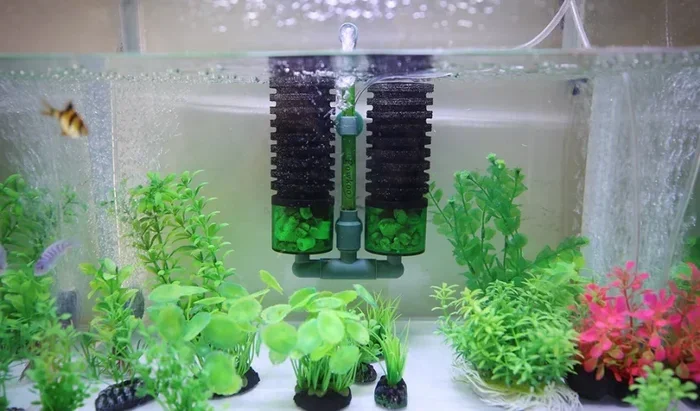
A sponge filter is often the best choice for betta tanks. It sits inside the tank and draws water through a porous sponge. Air pump or a small powerhead drives the flow.
Pros:
- Very gentle flow
- Affordable price
- Safe for small fish
- Easy to clean
Cons:
- Limited mechanical filtration
- Needs an air pump
- Not ideal for large tanks
Hang-On-Back (HOB) Filter
An HOB filter mounts on the back of the tank. It draws water in, runs it through cartridges, and returns it as a gentle flow.
Pros:
- Good filtration capacity
- Easy to maintain
- Available in small sizes
Cons:
- Flow can be too strong
- Cartridges need regular replacement
- Takes up back space
Internal Power Filter
These compact filters sit inside the tank on the wall. They offer adjustable flow rates. This makes them a solid middle-ground option.
Pros:
- Adjustable flow
- Compact design
- Good mechanical and biological filtration
Cons:
- Takes up swimming space
- Can be noisy
How to Choose the Right Filter
Picking a filter for your betta tank involves a few key factors. Let us break them down.
Tank Size Matters
Filter ratings assume a specific gallon capacity. If your tank is 5 gallons, choose a filter rated for 5-10 gallons. Never go too small. The filter should turn the water volume over 4-6 times per hour.
Flow Rate Adjustment
Bettas prefer calm water. Strong currents exhaust them. Look for filters with adjustable flow. If yours is too strong, baffle the output with a sponge or valve.
Filtration Type
Three types of filtration work together:
- Mechanical: Traps debris and particles
- Biological: Hosts beneficial bacteria
- Chemical: Removes toxins and odors
For bettas, biological and mechanical filtration matter most. Chemical filtration is optional.
Setting Up a Filter in Your Betta Tank
Proper setup makes all the difference. Follow these steps for a smooth installation.
Step 1: Rinse the Media
Before installing, rinse the filter media in dechlorinated water. This removes dust and debris. Do not use soap or tap water directly. Chlorine kills beneficial bacteria.
Step 2: Install the Filter
Mount the filter according to the manufacturer’s instructions. For sponge filters, connect the air pump and place the stone inside. For HOB filters, attach it to the back rim and fill the chamber.
Step 3: Prime the System
Fill the filter chamber with tank water. This starts the flow. For HOB filters, make sure the water level covers the intake. A dry pump will burn out.
Step 4: Test the Flow
Turn on the filter and observe the water movement. If your betta struggles to swim, reduce the flow. You can add a sponge baffle or angle the output toward the glass.
Common Mistakes to Avoid
Even experienced fish keepers make mistakes. Here are the most common ones with betta filters.
Using a Filter That Is Too Strong
This is the #1 mistake. A powerful filter creates currents that stress your betta. Signs include:
- Fish hiding constantly
- Struggling to stay upright
- Refusing to eat
If you see these signs, reduce the flow immediately.
Skipping the Cycling Process
A filter needs time to grow beneficial bacteria. This process is called cycling. Adding your betta too early can cause ammonia poisoning. Always cycle the tank for 2-4 weeks before introducing fish.
Neglecting Filter Maintenance
A dirty filter stops working well. But cleaning it too hard also causes problems. Rinse mechanical media in old tank water. Never replace all media at once. This preserves the bacteria colony.
Forgetting About Water Changes
A filter does not replace water changes. It reduces the frequency but does not eliminate it. Plan for 25-30% water changes weekly. Use a water conditioner if your tap water contains chlorine.
If you are unsure about water quality, check out can you use tap water in a betta fish tank for more guidance.
Maintaining Your Betta Tank Filter
Regular maintenance keeps your filter running smoothly. Here is a simple routine.
Weekly Tasks
- Check that water flows steadily
- Remove debris from the intake
- Inspect for clogs or damage
Monthly Tasks
- Rinse mechanical media in old tank water
- Replace chemical media if used
- Check air pump function (for sponge filters)
Every 3-6 Months
- Replace filter cartridges if needed
- Deep clean the filter housing
- Inspect tubing for cracks or blockages
Always keep a spare sponge or media from your old filter. This helps maintain bacteria when you replace parts.
Filter and Tank Setup Tips
Your filter works best when paired with the right setup. Consider these tips.
Tank Size Recommendations
A 5-gallon tank is the minimum for a single betta. Larger tanks give your fish more space and stable water parameters. A filter in a bigger tank works less hard, which extends its life.
If you are new to betta care, check out can you put a betta in a regular fish tank for setup ideas.
Adding Tank Mates
Some owners keep bettas with other fish. A filter becomes even more important in community tanks. Waste from multiple fish raises the bioload quickly.
Choose peaceful tank mates like snails or shrimp. Avoid fin-nipping species. For more ideas, read can you put other fish in with a betta fish.
Live Plants and Filters
Live plants improve water quality naturally. They absorb nitrates and provide hiding spots. A filter keeps water moving around plants, which prevents stagnation.
Can Betta Fish Live Without a Filter?
Technically, yes. But it is not recommended. Without a filter, you must change water daily or every other day. Even then, ammonia spikes can happen suddenly.
In a bowl without filtration, bettas often live shorter lives. They face more stress and disease. A simple sponge filter changes this picture completely. It is affordable, easy to use, and gentle on your fish.
If you are considering a bowl setup, read can you put betta fish in a bowl for important safety tips.
Quick Tips for Betta Filter Success
- Choose a sponge filter for the gentlest flow
- Adjust output if your betta struggles to swim
- Cycle the tank before adding your fish
- Rinse media in old tank water, never tap water
- Replace only half the media at a time
- Pair filtration with weekly water changes
- Monitor ammonia and nitrite levels regularly
Expert Insights
Experienced aquarists agree that filtration is non-negotiable for betta health. Dr. Richmond Loh, a fish veterinarian, emphasizes that stable water quality reduces stress-related illness. A filter is the simplest way to achieve this stability.
Even in small tanks, a sponge filter provides enough biological filtration. Combined with regular water changes, it keeps the environment safe. Your betta will show better color, more energy, and a longer lifespan.
Key Takeaways
- Betta fish need a filter for clean, healthy water
- Sponge filters are the best option for gentle flow
- Adjustable flow rates prevent stress and exhaustion
- Cycling the tank before adding fish is essential
- Regular maintenance keeps the filter working well
- Water changes still matter even with a filter
Conclusion
So, can you put a filter in a betta fish tank? Absolutely. In fact, your betta will thrive with one. The key is choosing the right type and setting it up correctly.
A sponge filter offers the perfect balance of gentle flow and effective filtration. It is affordable, easy to maintain, and safe for your fish. Pair it with regular water changes and proper cycling, and you will create a healthy home for your betta.
Remember that every tank is different. Watch your fish’s behavior and adjust as needed. A happy betta swims freely, eats eagerly, and shows vibrant colors. These are signs that your filter and tank setup are working well.
Take action today. Choose a filter that suits your tank size and flow needs. Your betta will thank you with years of colorful, active companionship.
Frequently Asked Questions
Do betta fish really need a filter?
Yes, betta fish need a filter in captivity. Without one, waste builds up fast in a small tank. A filter keeps water clean and supports beneficial bacteria that break down toxins.
What type of filter is safest for bettas?
A sponge filter is the safest option. It provides gentle flow that bettas can handle easily. Avoid powerful HOB filters without flow adjustment.
Can I use a filter in a betta bowl?
Most bowls are too small for standard filters. A tiny sponge filter may work. But a 5-gallon tank with a proper filter is a much better setup for your betta.
How often should I clean my betta filter?
Rinse mechanical media monthly in old tank water. Replace chemical media every 4-6 weeks. Never clean all media at once to preserve good bacteria.
Will a filter stress my betta fish?
Only if the flow is too strong. Choose a filter with adjustable output. If your betta hides or struggles to swim, reduce the flow immediately.
How long should I run the filter before adding my betta?
Run the filter for 2-4 weeks while cycling the tank. This allows beneficial bacteria to establish. Test water parameters before introducing your fish.
=== CONCLUSION ===
A filter in a betta fish tank is not just optional, it is essential. It keeps water clean, supports oxygenation, and reduces maintenance work. Choose a gentle sponge filter, cycle your tank properly, and maintain the filter regularly. Your betta will enjoy a healthy, happy life in a well-filtered home.