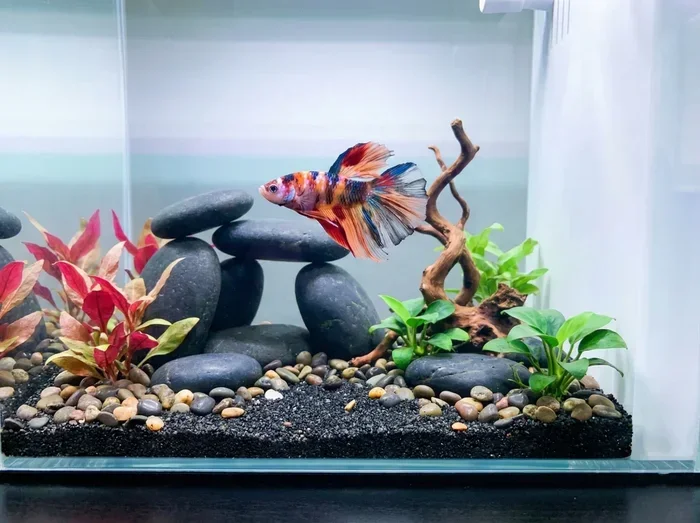
Where Did My Betta Fish Go

Betta fish are master escape artists and hiders due to their wild instincts. They commonly vanish by jumping out of the tank, squeezing into tiny decor gaps, or succumbing to poor water quality or illness. A systematic, calm search is your best first step. Prevention—secure lids, ideal water, and compatible tank mates—is always better than a frantic hunt.
Key Takeaways
- Bettas hide instinctively: Your fish is likely in the tank, camouflaged in décor, under gravel, or inside filter components.
- Jumping is a top escape method: Bettas are notorious jumpers; a gap of even 1/4 inch can be an exit route.
- Water quality directly impacts behavior: Poor water conditions (high ammonia/nitrite) cause severe stress, forcing bettas to hide in the tank’s safest corners.
- Sickness makes them reclusive: Ailing bettas (with dropsy, fin rot, etc.) become lethargic and tuck away, appearing to vanish.
- Tank mates can be a threat: Aggressive or predatory fish may eat a small or weak betta, leaving no trace.
- Search methodically, not frantically: Check every nook, use a flashlight, and inspect the tank’s exterior floor and furniture immediately.
- Prevention is non-negotiable: A tight-fitting lid, weekly water tests, and a species-only tank are the best guarantees against a “missing” betta.
📑 Table of Contents
- The Panic of a Missing Betta
- The Art of Disappearance: Understanding Your Betta’s Instincts
- The Usual Suspects: Common Hiding Spots Inside the Tank
- The Great Escape: When Bettas Take a Leap of Faith
- The Silent Killer: How Water Quality Makes Your Betta Vanish
- When Your Betta is Too Sick to Be Seen
- The Unseen Threat: Tank Mates and “Predation”
- Your Action Plan: How to Conduct a Systematic Search
- Prevention: Your Betta’s Ultimate Security System
The Panic of a Missing Betta
You walk over to say good morning to your vibrant betta fish, ready with his favorite pellet. You peer into the water, scanning his usual spot near the castle decoration. Nothing. You move the silk plants aside. Still nothing. A cold knot forms in your stomach. Where did my betta fish go? This single, terrifying question is one of the most common—and stressful—experiences for a betta owner. The brilliant, personality-filled fish that greeted you yesterday has seemingly vanished into thin water.
Before you descend into full-blown panic, take a deep breath. The answer is almost always less magical and more practical than you think. Bettas are descendants of shallow, muddy rice paddies in Southeast Asia. This evolutionary history has wired them with specific survival behaviors that, in the confines of an aquarium, can make them appear to mysteriously disappear. They are experts at hiding, accomplished jumpers, and highly sensitive to their environment. Your missing betta is likely a victim of one of these very instincts or conditions. This guide will walk you through every possible reason, from the obvious to the obscure, and give you a clear action plan to find your fish and, more importantly, prevent this heart-stopping moment from ever happening again.
The Art of Disappearance: Understanding Your Betta’s Instincts
To solve the mystery, you must think like a betta. In the wild, a betta’s life is a constant exercise in survival. They are solitary, territorial fish who use dense vegetation and murky water to evade predators, ambush prey, and control their tiny domain. Your aquarium, no matter how beautifully aquascaped, is still a glass box. Your betta doesn’t see it as a safe, permanent home; it’s a new territory to be defended and navigated with caution. This inherent wildness is the root cause of most “vanishing acts.”

Visual guide about Where Did My Betta Fish Go
Image source: bettacarefishguide.com
Natural Instincts: Hiding is Survival
A healthy betta in a well-maintained tank will still periodically retreat. This isn’t necessarily a sign of distress. In their natural habitat, constant exposure makes them targets. They seek security. In your tank, that security is found behind a broad-leafed plant, inside a hollow log, or wedged behind the filter intake. If your tank is sparsely decorated, your betta may feel overly exposed and seek the darkest, most secluded corner—sometimes even burying himself lightly in the substrate. The question “where did my betta fish go” is often answered with “right there, where you couldn’t see him.”
Territorial Patrols and “Invisible” Spots
Bettas claim a specific area as their own. They will patrol the perimeter, rest on a leaf near the surface, and defend their space from intruders. Sometimes, their chosen “post” is a spot you don’t routinely check. Is there a gap behind your tank stand? A tight space between the glass and a background panel? A betta will wedge himself into these microscopic crevices, his body flattening to fit, becoming virtually invisible against the background. They are not actively trying to escape; they are simply claiming the best defensive position their environment offers.
The Usual Suspects: Common Hiding Spots Inside the Tank
Before you assume your betta has left the building, conduct a forensic examination of his aquatic home. You must become a detective, looking in places you’ve never considered. A betta’s small, flexible body and love for tight spaces mean your search must be meticulous.

Visual guide about Where Did My Betta Fish Go
Image source: aquariumpub.com
Inside Decor and Hollow Ornaments
This is the #1 hiding spot. Any decoration with an opening—a ceramic pot, a plastic cave, a shipwreck with portholes—is a potential betta bunker. They will swim all the way inside and rest, sometimes for hours. The problem? You look in and see the dark interior and assume it’s empty. Get down to eye level with the tank and use a flashlight to peer into every cavity. Gently, if possible, move the decoration to see if a sleepy betta is inside. Tip: When buying décor, ensure any openings are large enough that a betta cannot become permanently stuck or injured.
Under and Behind the Gravel
Fine gravel or sand can be shifted by a curious betta. They are known to nudge substrate aside to create a small depression or cave against the tank glass. From the front, you see the tank bottom as normal. But if you look from the side, you might spot the outline of a fish tucked under a shelf of gravel, especially if the substrate is dark and the betta is a dark color. This is also a place they might go if the water quality is poor; the bottom can sometimes have slightly different parameters.
The Filter Intake and Output
This is a critical and dangerous spot. The suction from a filter intake is powerful. A betta, especially a small or weak one, can get pulled against the intake screen. From the front, he looks like he’s just resting on the filter. But he may be stuck, injured, or barely holding on. Always check the filter intake grate. If you have a hang-on-back (HOB) filter, look inside the box where the water enters. Similarly, some bettas will rest directly in the outflow current, which can be strong and exhausting for them. They might appear to be gone because they’ve been pulled into the filter mechanism. Immediate Action: Turn off all filters and powerheads during your search. Then inspect them thoroughly.
Inside Plant Roots and Dense Foliage
Live plants with bushy root systems, like Java fern or Anubias attached to driftwood, create a jungle of tiny tunnels. Silk plants with thick clusters of leaves offer similar cover. A betta will thread his way deep into these roots and leaves, and from above, you see only green. You must sift through the foliage gently with your hand or a net to be sure. This is also a common place for a sick betta to hide, as it offers the most security.
The “Now You See Me” Camouflage
Never underestimate your betta’s ability to blend in. A dark blue or black betta against a dark substrate and black tank background can be incredibly hard to spot. A red betta among red plants or decorations disappears. They will often rest perfectly still, matching their surroundings. Change your viewing angle. Shine a bright light from the side. Look for the subtle movement of a gill flap or an eye. Sometimes, you only realize they were there the entire time when they finally move.
The Great Escape: When Bettas Take a Leap of Faith
If you’ve turned the tank inside out and found no fish, the grim reality may be that your betta has indeed left the water. Bettas are labyrinth fish, meaning they have a special organ that allows them to breathe atmospheric air. This adaptation for surviving in oxygen-poor paddy fields also gives them a powerful drive to reach the surface. Combined with their athletic ability and a surprising determination, this makes them legendary jumpers. The question “where did my betta fish go” now has a literal, land-based answer.

Visual guide about Where Did My Betta Fish Go
Image source: sharksinfo.com
Why Do Bettas Jump?
The reasons are multifaceted. Curiosity: they see something above the waterline and investigate. Stress: a sudden loud noise, a perceived threat from a tank mate, or rapidly deteriorating water can trigger a flight response. Pursuit: they might be chasing a flying insect or even their own reflection. And sometimes, it’s simply a mistake—a misjudged leap during a frantic escape from something that startled them. They don’t understand the concept of “glass.” They see an open space at the top and go for it.
How Big a Gap is Big Enough?
You might think your tank is secure because there’s a “lid” or because the opening seems small. Don’t assume. A betta can compress his body to fit through a gap no wider than a pencil. The space between a glass pane and a plastic cover, a gap around a filter cord, or even a slightly warped tank edge is a potential exit. The standard hoods on many beginner kits are notoriously insecure, as they are often designed to be lifted off for feeding and are not sealed.
Securing Your Tank: A Non-Negotiable Checklist
If you own a betta, a secure lid is not optional; it is the single most important piece of equipment you can buy. Here is your must-do list:
- Inspect Daily: Every morning, check that your lid is seated correctly. Look for any warping or gaps.
- Use Mesh or Solid Covers: If your hood has large ventilation slots, cover them with a fine, breathable mesh (like nylon screen) secured with non-toxic silicone. Ensure there are no snag points.
- Eliminate “Perches”: Remove any tall decorations or plants that would allow your betta to get close enough to the water’s surface to judge the jump distance.
- Weight the Edges: For open-top tanks (like bowl-style), you must use a full-cover, clamp-style lid. For rimmed tanks with a separate glass pane, place aquarium-safe silicone weights or small, clean river stones along the back edge where the glass meets the frame.
- Check During Maintenance: The moment you remove the lid for a water change is the most dangerous time. Have your supplies ready, work quickly, and never, ever leave the tank uncovered and unattended, even for a second.
If your betta has jumped, the search area expands. Look immediately on the floor directly around and behind the tank. Check on top of the tank stand, on shelves, behind nearby furniture. They can bounce and land several feet away. Look under everything. A betta can survive out of water for a few hours if he lands on a damp surface, but time is critical. If you find him, gently place him back in his tank. He may be stunned. Observe him closely for signs of injury (torn fins, scratches) or stress (gasping, lethargy). A water change with clean, temperature-matched water can help him recover.
The Silent Killer: How Water Quality Makes Your Betta Vanish
Sometimes, the betta hasn’t hidden or jumped. He’s simply succumbed to a toxic environment and sunk to the bottom, becoming part of the décor until you move something. Poor water quality is the leading cause of death and stress in bettas, and it can absolutely make a fish appear to “disappear” as he becomes lethargic and hides in the most remote corner before passing. If you suspect your water is the issue, this is an emergency.
Ammonia and Nitrite: The Invisible Assassins
Cycling your tank is the single most important process for any fish owner. An uncycled tank has no beneficial bacteria to convert fish waste (ammonia) into less harmful substances. Ammonia burns a fish’s gills and skin, causing immense pain and respiratory distress. A betta suffering from ammonia poisoning will often clamp his fins, hide at the bottom (sometimes against the intake), gasp at the surface, and lose all color. He may seem to vanish because he’s not moving at all. You must have a liquid water test kit. Strips are notoriously inaccurate for ammonia and nitrite. Test your water weekly. Ammonia and nitrite should always read at 0 ppm.
Nitrate Buildup and pH Swings
Even in a cycled tank, nitrate accumulates from the final stage of the nitrogen cycle. While less immediately toxic than ammonia, high nitrate (above 20-40 ppm for bettas) causes chronic stress, weakens the immune system, and shortens lifespan. This chronic stress leads to hiding, loss of appetite, and increased susceptibility to disease. Similarly, unstable pH—caused by using pH-altering chemicals, not allowing water to sit, or using untreated tap water with extreme pH—shocks a betta’s system. They will seek the most stable micro-environment in the tank, which is often a deep corner or behind a rock.
The Solution: Prevention and Response
If you have a missing betta and haven’t tested your water in over a week, do it immediately. If you see any ammonia, nitrite, or high nitrate:
- Perform a 50% water change immediately with properly dechlorinated, temperature-matched water.
- Do not clean your filter media. You would kill the good bacteria. Just rinse it gently in the old tank water you just removed.
- Retest in 24 hours. Continue daily 25-50% water changes until parameters are perfect.
- Check for overfeeding. Uneaten food rots and creates ammonia. Feed only what your betta consumes in 2-3 minutes, once or twice a day.
- Ensure your tank is appropriately sized. A betta in a 1-gallon bowl will have水质 deteriorate far faster than one in a filtered 10-gallon tank.
A betta that disappears due to water quality is a symptom of a failed tank management routine. Fix the water, and you save your current fish and protect any future ones.
When Your Betta is Too Sick to Be Seen
Illness is another primary reason bettas become recluses. A healthy betta is curious and active (for a betta, at least). A sick betta’s sole mission is to conserve energy and protect itself. This means finding the darkest, most hidden spot possible and not moving. By the time you notice he’s missing, he may have been hiding for days, and his condition may be grave.
Common Diseases That Cause Extreme Hiding
Dropsy: This is not a disease itself but a symptom of severe internal infection (often bacterial) causing fluid buildup. The betta becomes extremely bloated, his scales pinecone out, and he becomes so lethargic he cannot swim normally. He will sink and rest on the bottom, often wedged in gravel or décor, unable to move. Fin Rot and Body Rot: Festering, decaying fins or lesions are painful. The fish will isolate himself to avoid any contact. Internal Parasites (e.g., Hexamita): Cause severe emaciation and lethargy. The fish holes up, not eating, wasting away. Swim Bladder Disorder: While often caused by overfeeding, it can also stem from infection or constipation. A betta with SBD may sink and be unable to rise, getting trapped on the tank bottom or in plants.
What to Do If You Suspect Sickness
If you find your betta in a hidden spot looking pale, bloated, or torn:
- Isolate him immediately. If you have other fish, move the sick betta to a bare “hospital tank” (a clean 5-gallon tank with a heater and a sponge filter). This removes stress from tank mates and allows for targeted medication.
- Test water parameters. Rule out water quality as the primary cause or complicating factor.
- Observe carefully. Note all symptoms: bloating, stringy feces, spots, frayed fins, abnormal swimming.
- Research treatments. Common treatments include antibiotics (like Kanamycin or Maracyn) for bacterial infections, or antiparasitics (like Metronidazole). Never medicate a tank with other fish/invertebrates present unless the medication is safe for all inhabitants.
- Epsom salt baths (1 tbsp per gallon for 10-15 minutes) can help with swelling from dropsy or SBD, but it’s a supportive care, not a cure.
A betta that is sick enough to completely disappear is in critical condition. Early detection—by noticing a change in behavior like increased hiding—is key. Daily observation is your best diagnostic tool.
The Unseen Threat: Tank Mates and “Predation”
Many betta owners believe their community tank is peaceful. Then one day, the betta is gone. No body, no signs of a struggle, just an empty territory. What happened? The answer can be unsettling: your other fish may have eaten your betta, or he may have been so stressed by them that he jumped or succumbed to illness.
Aggressive or Nippy Tank Mates
Bettas are famously aggressive, but they are also small and fragile. Fish like tiger barbs, serpae tetras, some danios, and even larger, boisterous gouramis are notorious fin-nippers. A betta, with his long, flowing fins, is a irresistible target. These fish will harass a betta relentlessly, chasing him until he is exhausted and stressed to the point of collapse. They may take bites out of his fins or body. A severely injured or stressed betta will hide constantly and may die from secondary infections or simply give up. In a densely planted tank, a small betta could be eaten piece by piece by a school of these fish, leaving almost no trace.
Invertebrate Threats: The “Cleanup Crew” Turned Predator
This is a shocking reality for many. You add “cleaner” shrimp or snails, thinking they’re safe. But some creatures are opportunistic. Ghost Shrimp and Amano Shrimp are known to be aggressive scavengers. A small, sick, or sleeping betta is not safe from them. They will cluster on a helpless betta and pick at him, especially at the fins. They can consume a small betta surprisingly quickly. Even large apple snails have been observed rasping at the slime coat of a stationary fish. If your betta vanished and you have shrimp, especially ghost shrimp, they are a prime suspect.
The Betta’s Stress Response to Tank Mates
Even if no direct predation occurs, the constant stress of incompatible tank mates is lethal. A betta feels perpetually chased and threatened. This chronic stress suppresses his immune system, making him vulnerable to the diseases discussed earlier. He will hide almost exclusively, not come to the surface to eat, and eventually waste away. His “disappearance” is a slow fade into the background until he is gone. Rule of Thumb: The only truly safe tank mates for a betta are small, peaceful, non-nippy fish like ember tetras (in a large enough school), harlequin rasboras, or corydoras catfish. Even then, you must have a 20+ gallon tank to provide enough space. For absolute safety—and to eliminate this variable entirely—a species-only betta tank is the gold standard.
Your Action Plan: How to Conduct a Systematic Search
If you’ve read this far, you know the reasons. Now, you need a plan. Panic leads to missed clues. Calm, methodical searching is your only hope. Follow this checklist in order.
Step 1: The Immediate Tank Takedown
Do not just look from the front. You must dismantle the tank’s interior.
- Remove all lid and cover materials. Check underneath.
- Take out every single decoration, plant, and piece of driftwood. Place them in a separate container of tank water. Shake them vigorously over a bucket. A betta can be dislodged.
- Siphon the gravel. Use your gravel vacuum to stir the substrate thoroughly in small sections. Watch the outflow bucket like a hawk.
- Remove and inspect all filter media. Take the intake sponge, bio-balls, and cartridge out. Rinse them in a bucket of old tank water. Look inside the filter housing itself.
- Check inside the heater cover if you have one.
- Look behind any background panels or between the glass and the tank wall.
As you remove items, have a clean, prepared quarantine tank ready with water from the main tank. If you find your betta, place him in it immediately to recover from the stress.
Step 2: The Perimeter Search
Your betta may be out of the water but still on the premises.
- Search the floor in a 6-foot radius around the tank. Check behind furniture, under shelves, inside shoes, under rugs. Use a flashlight.
- Check on top of the tank stand, behind the tank, on top of nearby bookshelves or appliances.
- Look inside any open cabinets or drawers near the tank.
- Check the sump or filtration system if you have a complex setup.
- Inspect any towels, cloths, or fabric that were near the tank. A betta can burrow into a pile of laundry.
If you find him out of water, assess his condition. If he’s stiff, he may be gone. If he’s moving slightly, place him in his tank. Some bettas recover from brief periods out of water if they stay moist.
Step 3: The Wait and Observe (If All Else Fails)
If the complete teardown yields nothing, you are not yet 100% certain. Sometimes a betta will be so well-hidden in a spot you missed (like inside a sealed cave) that he only emerges when the coast is clear and the tank is still again.
- Reassemble the tank carefully. Do it quietly.
- Turn off all lights and noise. Leave the room for an hour.
- Return in total silence. Use a red-light flashlight (red light is less startling to fish) to peer into the tank from different angles. Look for the glint of an eye or a slight fin movement.
- Place a favorite food (a bloodworm or a pellet) near his usual spot and leave the room again. Return in 30 minutes. A hungry betta may cautiously emerge.
- Wait 24-48 hours. Sometimes a betta in shock will not move for a day. Before declaring him permanently missing, give him one full day in a quiet, undisturbed room to possibly reappear.
If after this period there is absolutely no sign—no movement, no response to food—then the probability is that he has perished, either from jumping and desiccation, predation, or water-quality-related illness.
Prevention: Your Betta’s Ultimate Security System
The heartbreak of a missing betta is a powerful teacher. The goal is to never have to ask “where did my betta fish go” again. Prevention is built on three non-negotiable pillars: physical security, environmental stability, and social harmony.
Pillar 1: The Impenetrable Fortress (Tank Security)
Your tank must be a sealed habitat. Invest in a high-quality, full-coverage lid that latches securely. If your tank came with a lightweight plastic hood, replace it or modify it with mesh and weights. Regularly inspect for gaps. During water changes, never walk away. Have your water changer, dechlorinator, and towel ready, and keep one hand on the lid at all times. Consider using a tank background on the back and sides—it reduces stress (by making the fish feel less exposed) and eliminates the “edge” where a betta might jump from a background panel.
Pillar 2: The Pristine Kingdom (Water Quality)
Establish a rock-solid maintenance routine.
- Test weekly: Use a liquid test kit (API Freshwater Master Test Kit is the industry standard). Log your results.
- Cycle your tank fully before adding any fish. This takes 4-6 weeks.
- Perform weekly water changes. 25-50% in a filtered tank, more frequent in smaller, unfiltered setups.
- Use a water conditioner that detoxifies ammonia, nitrite, and heavy metals (like Seachem Prime).
- Never overfeed. A betta’s stomach is the size of his eye. Two small pellets or 3-4 bloodworms twice a day is plenty.
Consistent, clean water is the foundation of health. A healthy, unstressed fish is far less likely to engage in risky hiding or jumping behaviors.
Pillar 3: The Peaceful Realm (Tank Mates & Environment)
Resist the urge to create a bustling community. For a betta, solitude is often peace.
- Species-only is safest. A 5+ gallon tank with a heater, filter, and plants is a paradise for a betta.
- If you add mates, choose carefully: small, schooling, non-nippy fish in a large, heavily planted tank. Introduce tank mates after the betta has established his territory and monitor closely for aggression or bullying.
- Avoid invertebrates if you are not 100% sure. Ghost shrimp are a gamble. Amano shrimp are larger but still opportunistic. Nerite snails are generally safe as they can’t reproduce in freshwater and have hard shells.
- Provide abundant, secure hiding spots. Use live or silk plants, especially floating ones like water lettuce or frogbit, which give a sense of overhead cover. Provide caves and tunnels that have two exits (so the betta doesn’t feel trapped).
- Maintain a consistent day/night cycle. Use a timer for your tank light. Sudden, constant light is stressful.
By building this fortress of security, clean water, and peace, you address the root causes of betta disappearance. You move from being a reactive detective to a proactive guardian, ensuring your brilliant betta remains a visible, vibrant part of your world for years to come.
Frequently Asked Questions
What should I do the moment I realize my betta is missing?
First, do not panic. Immediately conduct a systematic search of the tank interior: remove all décor, check the filter, and siphon the gravel. Then, search the floor and surfaces in a 6-foot radius around the tank. Turn off filters and lights to listen and look more carefully. A calm, methodical approach is crucial.
Why do bettas jump out of tanks, and how can I stop it?
Bettas jump due to curiosity, stress, or chasing prey. Their labyrinth organ allows them to breathe air, encouraging surface exploration. To stop it, you must have a 100% secure lid with no gaps larger than a pencil. Use mesh to cover ventilation slots, weight the edges of glass lids, and remove any “perches” that let them get too close to the top.
Where are the most common hiding spots inside a betta tank?
The most common spots are: inside hollow decorations, behind or under dense plants (especially live plant roots), wedged between the tank glass and a background, resting on or inside the filter intake/outtake, and buried under a layer of gravel or sand. Always check these areas by moving items and using a flashlight.
Can poor water quality really make my betta hide and seem gone?
Absolutely. High ammonia or nitrite causes burning and respiratory distress, forcing a betta to the bottom in a lethargic state. Chronic high nitrate or unstable pH causes severe stress, making the fish hide constantly. A betta suffering from water toxicity may not move for days, appearing to be missing until you physically move him.
Can other fish in the tank eat my betta?
Yes. Aggressive, nippy fish like tiger barbs or serpae tetras can harass and bite a betta to death. Even “cleaner” shrimp like ghost shrimp are opportunistic and will attack a sick, sleeping, or small betta, consuming it surprisingly quickly. This can happen with little to no visible signs, making the betta seem to vanish.
When should I stop searching and accept that my betta is gone?
After you have completely dismantled the tank, searched the entire room thoroughly, and then waited 24-48 hours in a quiet, dark room with food presented, you can be fairly certain. If there is absolutely no sign of movement, response to food, or trace of the fish after this process, he has likely perished. If you find a body, remove it promptly to prevent ammonia spikes.