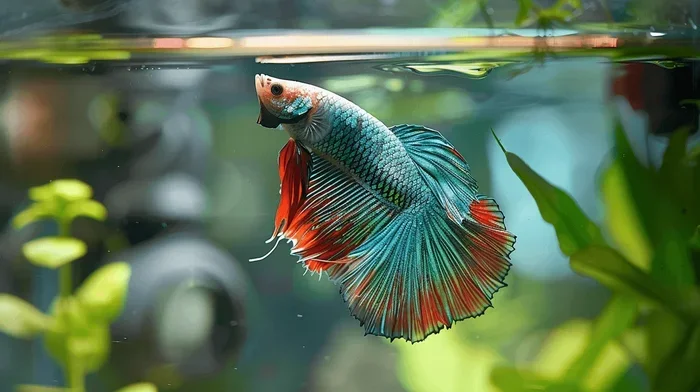
Can Fish See Outside the Tank Betta

Yes, betta fish can see outside the tank — and quite well, too. Their eyes are positioned on the sides of their heads, giving them a wide field of vision that allows them to detect movement, shapes, and colors beyond the glass. Understanding how your betta sees the world outside its tank can help you create a healthier, less stressful environment for your finned friend.
Key Takeaways
- Betta fish can see outside the tank clearly. Their eyes are designed to detect movement, shapes, and colors beyond the glass walls of their aquarium.
- They have a nearly 360-degree field of vision. Because their eyes sit on the sides of their heads, bettas can see in almost every direction at once.
- Bettas can recognize their owners. Studies and anecdotal evidence suggest that bettas can distinguish between different people and may react to familiar faces.
- Too much visual stimulation can stress your betta. Placing a tank in a high-traffic area or near another tank with aggressive fish can cause anxiety.
- Reflections can confuse or agitate bettas. Glass reflections may cause your betta to flare at its own image, which can lead to chronic stress over time.
- Proper tank placement matters. Choosing the right location for your betta’s tank can significantly impact their well-being and behavior.
- Lighting affects how well they see outside. Bettas see best in well-lit conditions and may struggle to perceive things outside the tank in dim environments.
📑 Table of Contents
- Can Fish See Outside the Tank Betta: The Full Answer
- How Betta Fish Eyes Work
- What Do Bettas See Outside the Tank?
- Can Bettas Recognize Their Owners?
- How Tank Placement Affects Your Betta’s Vision and Well-Being
- Lighting and Its Impact on Betta Vision
- Common Vision-Related Behaviors in Bettta Fish
- Tips for Creating a Visually Comfortable Environment
- Frequently Asked Questions About Betta Vision
- Conclusion
Can Fish See Outside the Tank Betta: The Full Answer
If you’ve ever watched your betta fish swim up to the glass and stare at you, you’ve probably wondered — can they actually see you? It’s one of the most common questions betta owners ask, and the answer might surprise you. Betta fish don’t just see outside the tank — they see it remarkably well.
These little creatures have fascinating eyesight that’s quite different from our own. Their eyes are positioned on opposite sides of their heads, which gives them an incredibly wide field of vision. They can detect movement, shapes, and even colors beyond the glass. So the next time your betta follows your finger along the tank wall, know that it’s not just a coincidence — they’re genuinely watching you.
In this article, we’ll dive deep into how betta fish vision works, what they can and can’t see outside the tank, and how you can use this knowledge to give your betta the best possible life. Whether you’re a first-time betta owner or a seasoned fish keeper, understanding your pet’s vision will change the way you interact with them.
How Betta Fish Eyes Work
The Anatomy of a Betta’s Eye
Betta fish have what scientists call “lateral eye placement.” This means their eyes are on the sides of their heads rather than facing forward like human eyes. This setup is common among prey animals in the wild because it allows them to spot predators approaching from almost any direction.
Each eye operates somewhat independently, which means your betta can look at two different things at the same time. One eye might be focused on a piece of food floating in the water while the other watches for movement near the surface. This dual-vision capability is a survival mechanism that bettas inherited from their wild ancestors in the shallow rice paddies and streams of Southeast Asia.
Their eyes are also relatively large compared to their body size. This gives them excellent light-gathering ability, which is important because their natural habitat often consists of murky, shallow waters with limited visibility. Large eyes help them make the most of whatever light is available.
What Colors Can Bettas See?
Here’s where things get really interesting. Betta fish can see a broader spectrum of colors than humans can. While we have three types of color receptors (cones) in our eyes, bettas have four — and some research suggests they may have even more. This means they can see colors that are completely invisible to us, including ultraviolet light.
This enhanced color vision plays a big role in how bettas interact with their environment. In the wild, males use their brilliant colors to attract mates and intimidate rivals. Their ability to see a wide range of colors helps them assess other bettas and determine whether a potential competitor is a threat.
Inside your tank, this means your betta can see the colors of decorations, plants, and even your clothing. If you wear bright colors around the tank, your betta is definitely noticing. Some owners report that their bettas seem more active or responsive when they wear certain colors, and there may be some truth to that observation.
How Far Can Bettas See?
Betta fish don’t have the sharpest long-distance vision. In the wild, they live in shallow, often murky water where visibility is limited to just a few inches or feet. Their eyes are optimized for seeing things at close to medium range rather than far away.
That said, they can definitely see objects outside the tank — especially if those objects are moving. A person walking past the tank, a cat sitting on the counter, or even a television screen across the room can all catch your betta’s attention. Movement is the key factor that triggers their visual response.
Static objects outside the tank may be harder for your betta to distinguish clearly, especially if they’re more than a few feet away. But anything that moves within their general vicinity is likely to be noticed and potentially investigated.
What Do Bettas See Outside the Tank?
Movement and Activity
The number one thing your betta notices outside the tank is movement. Their eyes are specifically designed to detect motion — it’s a survival instinct. In the wild, sudden movement could mean a predator is nearby or prey is within striking distance.
This is why your betta might get excited when you approach the tank. They see you moving toward them, and they associate that movement with feeding time. Many bettas will swim to the front of the tank and follow their owner’s movements, especially around mealtime. It’s one of the most endearing behaviors betta owners experience.
However, not all movement is welcome. Fast, erratic movements near the tank can startle your betta and cause stress. Things like slamming doors, loud pets darting past, or children tapping on the glass can all create anxiety for your fish. It’s important to keep the area around the tank relatively calm.
Shapes and Silhouettes
Bettas can also perceive shapes and silhouettes outside the tank. They may not see fine details the way we do, but they can distinguish between different general shapes. This is part of how they recognize their owners — they learn to associate a particular shape and movement pattern with food and positive interaction.
Your betta can likely tell the difference between a human and a pet like a dog or cat. They may react differently to each. Some bettas become agitated when they see a cat near the tank, while others seem completely unfounded. It depends on the individual fish’s personality and past experiences.
Large pieces of furniture near the tank can also be visible to your betta. While this isn’t usually a problem, placing the tank near a window with moving curtains or blinds can create a lot of visual stimulation that might be overwhelming for your fish.
Reflections in the Glass
One of the most important things to understand about your betta’s vision is how they perceive reflections. Tank glass can act like a mirror, especially in certain lighting conditions. When your betta sees its own reflection, it may interpret it as another betta invading its territory.
This is particularly problematic for male bettas, which are naturally aggressive toward other males. A betta that constantly sees its reflection may spend hours flaring its gills and fins at the “intruder.” While this might look impressive, it’s actually a sign of stress. Chronic stress from reflections can weaken your betta’s immune system and shorten its lifespan.
To minimize reflections, try adjusting the lighting in the room. Turning off overhead lights and using a dedicated aquarium light can reduce the mirror effect. You can also place a background on the outside of the tank to block reflections from certain angles.
Can Bettas Recognize Their Owners?
The Science Behind Fish Recognition
This is a topic that has fascinated fish keepers and scientists alike. Can your betta actually recognize you as an individual? The evidence suggests that yes, they can — at least to some extent.
Research on fish cognition has shown that many species, including bettas, are capable of distinguishing between different human faces. A study published in the journal Scientific Reports demonstrated that archerfish could be trained to recognize and distinguish between human faces with surprising accuracy. While bettas weren’t specifically studied in that research, their cognitive abilities are considered comparable.
Bettas are also highly associative learners. They quickly learn to connect specific stimuli with outcomes. If you’re the person who feeds them every day, they’ll learn to associate your presence with food. Over time, they may begin to recognize your specific appearance, the sound of your footsteps, or even the way you move.
Signs Your Betta Recognizes You
There are several behaviors that suggest your betta recognizes you as their owner. The most common is swimming to the front of the tank when you approach. Many bettas will eagerly swim up to the glass and follow your movements, especially if it’s close to feeding time.
Some bettas also display unique behaviors for their owners that they don’t show for strangers. They might perform a “dance” — a series of rapid, excited swimming patterns — or flare their fins in what appears to be a greeting. These behaviors are less common when unfamiliar people approach the tank.
Another sign is how your betta reacts to your hand. If you regularly put your hand in the tank for maintenance or feeding, your betta may become comfortable with your hand’s presence. They might even swim up to it voluntarily. A betta that doesn’t recognize you, on the other hand, might dart away or hide when your hand enters the water.
How Tank Placement Affects Your Betta’s Vision and Well-Being
High-Traffic Areas
Where you place your betta’s tank has a huge impact on their stress levels and overall health. A tank in a high-traffic area — like a hallway, kitchen, or living room with lots of activity — exposes your betta to constant visual stimulation.
While some visual enrichment is good for bettas (it keeps them mentally stimulated), too much can be overwhelming. Imagine if your home had glass walls and people were constantly walking past, making noise, and moving things around. That’s essentially what a betta in a busy area experiences.
If you must keep your betta in a high-traffic area, consider using a tank background or placing plants and decorations near the glass to create visual barriers. This gives your betta places to retreat when they feel overwhelmed. You can also read more about what you can put in a betta fish tank to create a more comfortable environment.
Near Other Tanks
Placing your betta’s tank near another fish tank can be problematic, especially if the other tank contains another betta or a similarly colorful, aggressive species. Your betta can see the other fish and may perceive them as a threat.
This is particularly relevant if you’re considering keeping two betta fish in the same tank. Even if they’re in separate tanks side by side, the visual contact can cause both fish to become stressed and aggressive. Male bettas are especially territorial and should never be placed where they can see each other.
If you have multiple tanks, try to position them so that bettas can’t see each other directly. You can use tank backgrounds, room dividers, or simply place the tanks on different walls to minimize visual contact.
Near Windows
Placing a betta tank near a window might seem like a nice idea — natural light and a view of the outdoors. But there are several potential problems with this arrangement.
First, direct sunlight can cause rapid temperature fluctuations in the tank. Bettas are tropical fish that need stable water temperatures between 76-82°F (24-28°C). Sunlight heating the water during the day and cooling at night can create stressful temperature swings.
Second, sunlight promotes excessive algae growth. While a little algae is normal and even beneficial, too much can make the tank look dirty and affect water quality. You’ll find yourself cleaning the tank much more frequently.
Third, the view from a window can be stressful for your betta. Birds, squirrels, and other animals moving outside can trigger your betta’s predator-avoidance instincts. While this might seem like enrichment, it can actually create a constant state of alertness that’s exhausting for your fish.
Lighting and Its Impact on Betta Vision
How Light Affects What Bettas See
Lighting plays a crucial role in how well your betta can see outside the tank. In bright conditions, their vision is at its best. They can see colors more vividly, detect movement more easily, and perceive shapes more clearly.
In dim conditions, their vision is still functional but less sharp. This is important to remember if you keep your betta’s room lights off during the day. Your betta may not be able to see you clearly in a dark room, which could explain why some bettas seem less responsive at certain times.
If you’re curious about how your betta navigates in low-light conditions, check out our article on whether betta fish can see in the dark. It’s a fascinating topic that sheds light (pun intended) on how these fish adapt to different lighting environments.
Best Lighting Practices for Betta Tanks
The ideal lighting setup for a betta tank provides a consistent day-night cycle. Bettas need about 8-12 hours of light per day, followed by a period of darkness. This mimics their natural environment and helps regulate their biological clock.
Use a dedicated aquarium light rather than relying on room lighting or sunlight. Aquarium lights provide consistent, controllable illumination that won’t cause temperature fluctuations. LED lights are a great option because they’re energy-efficient, produce minimal heat, and come in a range of color temperatures.
Avoid sudden changes in lighting. Turning a bright light on in a dark room can startle your betta. If possible, use a timer to gradually simulate dawn and dusk. Some advanced LED systems even have built-in sunrise and sunset modes that slowly increase and decrease light intensity.
Common Vision-Related Behaviors in Bettta Fish
Flaring at Reflections
One of the most common vision-related behaviors in bettas is flaring at their own reflection. When a betta sees what it perceives as another betta, it will spread its fins and gills wide to appear larger and more intimidating. This is a natural territorial display.
While occasional flaring is harmless and can even be good exercise, constant flaring at reflections is a sign of chronic stress. If your betta is flaring at the glass multiple times a day, you should take steps to reduce reflections. Adjusting the lighting, adding a background to the tank, or repositioning the tank can all help.
Some bettas are more prone to reflection-flaring than others. Males with particularly vibrant colors and large fins tend to be more territorial and reactive. If you have a betta that’s constantly flaring, it might be worth experimenting with different tank setups to find what works best.
Following Movement Along the Glass
Many bettas will follow moving objects along the outside of the tank glass. This is completely normal behavior and is a sign that your betta is curious and engaged with its environment. You can use this behavior to interact with your betta by slowly moving your finger along the outside of the tank.
Some owners use this as a form of enrichment. Gently moving a colorful object along the glass can give your betta something to focus on and chase. Just be sure not to do this too often or too quickly, as it can overstimulate your fish.
This following behavior is also how many bettas learn to associate their owners with positive experiences. When you approach the tank and your betta swims to greet you, it’s because they’ve learned that your presence usually means food or interaction.
Staring at Specific Spots
Does your betta sometimes stare at a particular spot on the glass or in the room? This is usually because they’ve detected something interesting — a shadow, a reflection, or a small insect on the outside of the tank. Bettas are naturally curious and will investigate anything that catches their attention.
In most cases, this staring behavior is harmless. However, if your betta is staring at the same spot for extended periods and showing signs of stress (clamped fins, loss of color, refusal to eat), it might be worth investigating what they’re looking at. There could be a persistent reflection or another source of visual stress that needs to be addressed.
Tips for Creating a Visually Comfortable Environment
Use Tank Backgrounds
One of the simplest and most effective ways to improve your betta’s visual environment is to add a background to the tank. A solid-colored background on the back and sides of the tank reduces reflections and gives your betta a sense of security.
Blue and black backgrounds are popular choices because they make your betta’s colors pop while providing a calming backdrop. You can find adhesive tank backgrounds at most pet stores, or you can use construction paper or poster board as a DIY solution.
Backgrounds also help reduce stress from activity behind the tank. If your tank is placed against a wall where people frequently walk by, a background can block some of that visual stimulation and give your betta a more peaceful environment.
Provide Hiding Spots
Even though bettas are curious and like to observe their surroundings, they also need places to retreat when they feel overwhelmed. Hiding spots give your betta a sense of security and control over their environment.
Live plants, silk plants, caves, and betta hammocks all provide excellent hiding options. Position some of these near the glass to create visual barriers that reduce reflections and outside stimulation. Your betta will appreciate having a quiet corner to retreat to when the world outside the tank gets too busy.
Control the Lighting
As we discussed earlier, lighting has a huge impact on your betta’s vision and stress levels. Take control of the lighting in and around the tank to create the best possible environment.
Avoid placing the tank near windows with direct sunlight. Use a consistent lighting schedule with a timer. And consider the color temperature of your aquarium light — a neutral white light (around 6500K) is generally best for bettas because it mimics natural daylight without being too harsh.
Frequently Asked Questions About Betta Vision
Can betta fish see in color?
Yes! Betta fish can see in color — and they can see more colors than humans can. They have additional color receptors that allow them to perceive ultraviolet light and a wider range of the color spectrum. This enhanced color vision is one reason why bettas are so visually striking to each other.
Can my betta fish see me when I’m in the room?
Absolutely. Your betta can see you moving around the room, especially if you’re within a few feet of the tank. They can detect your shape, movement, and even the colors of your clothing. Many bettas learn to recognize their individual owners and will respond differently to them compared to strangers.
Why does my betta flare at the glass?
Your betta is most likely flaring at its own reflection in the glass. It perceives the reflection as another betta and responds with a territorial display. While occasional flaring is normal, frequent flaring at reflections can cause chronic stress. Try adjusting the lighting or adding a background to reduce reflections.
Can bettas see in the dark?
Bettas have limited vision in complete darkness. They can detect some movement and shapes in very low light, but they can’t see clearly without any light source. This is why it’s important to provide a regular day-night light cycle rather than keeping the tank in constant darkness.
Do bettas get bored?
Yes, bettas can get bored. They’re intelligent, curious fish that benefit from environmental enrichment. Providing plants, decorations, and occasional interaction can keep your betta mentally stimulated. A bored betta may become lethargic, lose its vibrant colors, or develop repetitive behaviors like glass surfing.
Conclusion
So, can fish see outside the tank betta? The answer is a resounding yes. Betta fish have remarkable vision that allows them to see movement, shapes, colors, and even recognize their owners beyond the glass. Their laterally placed eyes give them an almost 360-degree field of view, making them keen observers of the world around them.
Understanding how your betta sees the world is more than just a fun fact — it’s essential knowledge for providing the best possible care. By managing reflections, controlling lighting, choosing the right tank placement, and providing visual enrichment, you can create an environment where your betta thrives both physically and mentally.
Your betta is watching you just as much as you’re watching it. The next time you approach the tank and see your little friend swimming to the glass to greet you, remember — they’re not just seeing a blur. They’re seeing you, recognizing you, and probably hoping it’s feeding time. That connection between you and your betta is one of the most rewarding aspects of fish keeping, and it all starts with understanding how they see the world.
Frequently Asked Questions
Can betta fish see outside the tank clearly?
Yes, betta fish can see outside the tank quite well. Their eyes are designed to detect movement, shapes, and colors beyond the glass. They see best at close to medium range and are particularly sensitive to movement, which is why they often react when you approach the tank.
Can my betta fish recognize me?
Evidence suggests that bettas can recognize their individual owners. They learn to associate your appearance, movements, and even the sound of your footsteps with feeding time and positive interaction. Many bettas display unique greeting behaviors for their owners that they don’t show for strangers.
Why does my betta fish stare at me?
Your betta stares at you because it can see you and is likely curious or expecting food. Bettas are intelligent fish that learn to associate their owners with feeding. Staring is a normal behavior and often a sign that your betta is engaged and comfortable in its environment.
Can betta fish see in the dark?
Bettas have very limited vision in complete darkness. They can detect some movement in low-light conditions, but they need at least some ambient light to see clearly. Providing a regular day-night light cycle of 8-12 hours of light is important for their health and well-being.
Do reflections in the tank stress betta fish?
Yes, reflections can stress betta fish, especially males. When a betta sees its reflection, it may perceive it as a rival and respond with aggressive flaring. Over time, this constant territorial display can lead to chronic stress. Reducing reflections with proper lighting and tank backgrounds can help.
Where is the best place to put a betta tank?
The best location for a betta tank is a quiet area with stable temperature, away from direct sunlight, high-traffic zones, and other fish tanks. A calm spot with consistent lighting and minimal vibrations will help keep your betta relaxed and healthy.