Can Betta Fish Need Air Pump
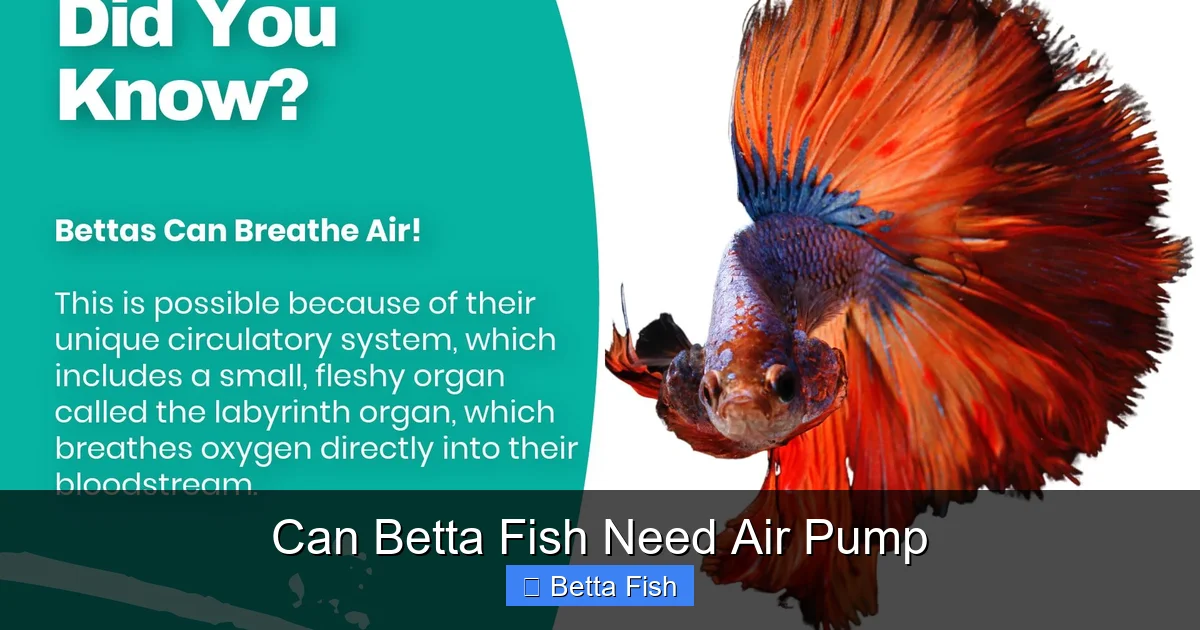
Betta fish have a special organ called a labyrinth that lets them breathe air from the surface, so they don’t always need an air pump. However, an air pump can still benefit your betta in certain setups, especially larger tanks or heavily stocked aquariums where oxygen levels drop.
Key Takeaways
- Bettas have a labyrinth organ: This unique organ allows betta fish to breathe atmospheric air directly from the surface, unlike most other fish.
- Air pumps are not always necessary: In small, lightly stocked tanks with good surface agitation, a betta fish can survive perfectly well without an air pump.
- Air pumps help in specific situations: Larger tanks, heavily stocked aquariums, and warm water setups benefit greatly from added aeration.
- Water movement matters: Gentle water flow and surface agitation help oxygen dissolve into the water, which supports your betta’s overall health.
- Signs your betta needs more oxygen: Gasping at the surface frequently, lethargy, and loss of appetite can indicate low oxygen levels in your tank.
- Filter vs. air pump: A good filter often provides enough surface agitation to oxygenate the water, reducing the need for a separate air pump.
- Balance is key: Too much water flow from a powerful air pump can stress bettas, so always aim for gentle, adjustable aeration.
📑 Table of Contents
- Can Betta Fish Need Air Pump? The Complete Guide Every Betta Owner Should Read
- Understanding the Labyrinth Organ: Why Bettas Are Different
- When Does a Betta Fish Actually Need an Air Pump?
- When Is an Air Pump Unnecessary for Betta Fish?
- Choosing the Right Air Pump for Your Betta Tank
- Signs Your Betta Fish Needs Better Oxygenation
- Common Mistakes Betta Owners Make with Air Pumps
- Creating the Perfect Betta Environment: Beyond the Air Pump
- Conclusion
Can Betta Fish Need Air Pump? The Complete Guide Every Betta Owner Should Read
If you’ve just brought home a beautiful betta fish, you’ve probably found yourself staring at pet store shelves full of air pumps, bubblers, and airstones wondering whether your new finned friend actually needs one. It’s one of the most common questions new betta owners ask, and the answer isn’t as straightforward as you might think. The truth is, betta fish are unlike most other aquarium fish in a really fascinating way, and understanding their unique biology will help you make the best decision for your pet.
Betta fish, also known as Siamese fighting fish, originate from the warm, shallow waters of Southeast Asia. Think rice paddies, slow-moving streams, and stagnant ponds. These environments don’t exactly have strong currents or high oxygen levels. Over thousands of years, bettas evolved a remarkable adaptation that sets them apart from nearly every other freshwater fish you’ll find at the pet store. This adaptation is called the labyrinth organ, and it changes everything when it comes to answering the question of whether your betta fish needs an air pump.
In this comprehensive guide, we’ll break down everything you need to know about betta fish and air pumps. We’ll explore how bettas breathe, when an air pump is helpful, when it’s unnecessary, and how to create the perfect environment for your betta to thrive. By the end, you’ll have all the knowledge you need to make an informed decision for your aquatic buddy.
Understanding the Labyrinth Organ: Why Bettas Are Different
What Exactly Is a Labyrinth Organ?
The labyrinth organ is a specialized breathing structure that betta fish possess. It’s located just behind their gills and is made up of folded, bony plates covered in a thin membrane rich with blood vessels. This organ essentially functions like a primitive lung, allowing bettas to extract oxygen directly from the air above the water’s surface. It’s an incredible evolutionary adaptation that has helped bettas survive in oxygen-poor environments for millennia.
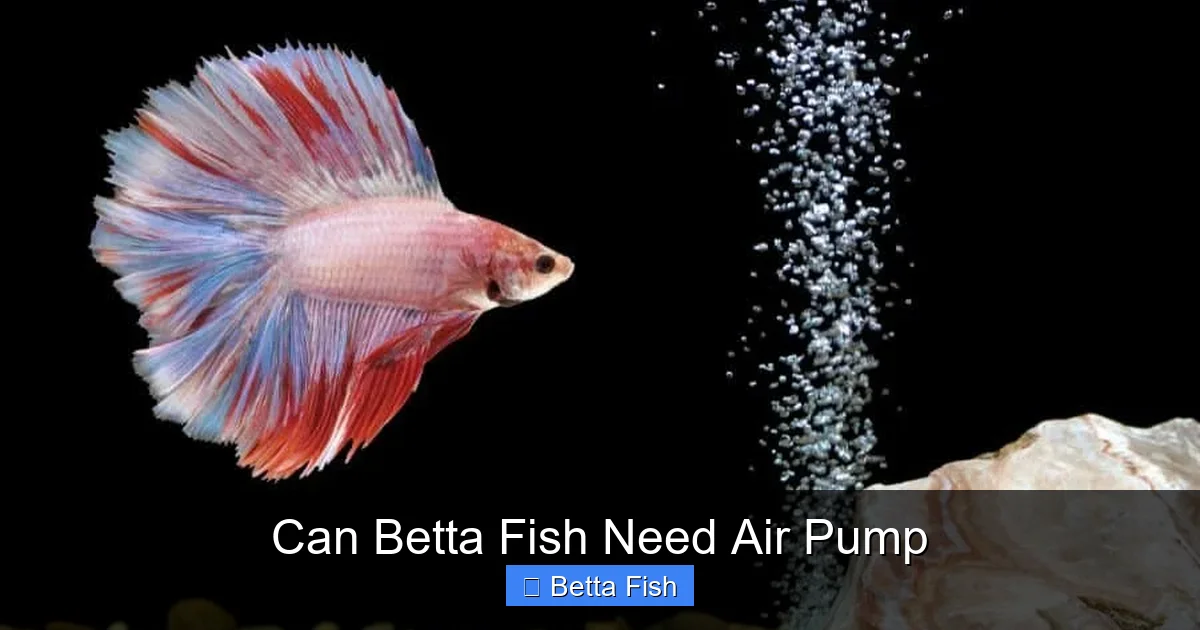
Visual guide about Can Betta Fish Need Air Pump
Image source: ouraquariumlife.com
When you see your betta swim to the top of the tank and take a little gulp of air, that’s the labyrinth organ at work. This behavior is completely normal and healthy. In fact, if your betta never comes to the surface to breathe, that might actually be a cause for concern. Regular surface breathing is a sign that your betta is using its labyrinth organ as nature intended.
How the Labyrinth Organ Affects Your Betta’s Need for an Air Pump
Because bettas can breathe air directly from the surface, they don’t rely solely on dissolved oxygen in the water the way most other fish do. This means that in a small, unfiltered tank where oxygen levels might drop low, your betta can simply swim up and take a breath. This is why bettas have historically been kept in small bowls and vases, though we now know that’s far from ideal for their long-term health.
However, having a labyrinth organ doesn’t mean your betta doesn’t need oxygen in the water at all. Bettas still use their gills to extract dissolved oxygen from the water. The labyrinth organ is more of a backup system, a survival tool that kicks in when water oxygen levels are low. Think of it like having a spare tire in your car. You hope you never need it, but it’s there when things get tough.
This is an important distinction to understand. While your betta can survive without an air pump thanks to its labyrinth organ, survival and thriving are two very different things. A betta that’s constantly relying on its labyrinth organ to breathe because the water lacks oxygen is a betta under stress. Chronic stress leads to a weakened immune system, disease, and a shortened lifespan.
When Does a Betta Fish Actually Need an Air Pump?
Larger Tanks and Community Setups
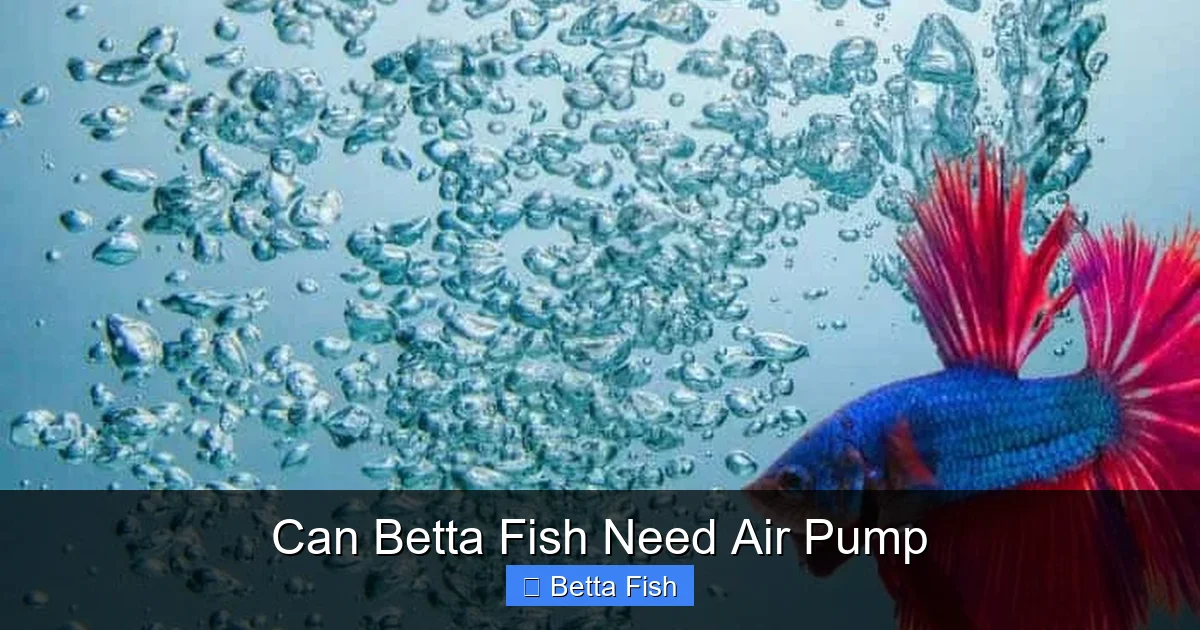
If you’re keeping your betta in a larger tank, say 10 gallons or more, especially with other fish, an air pump becomes much more valuable. In a community tank, the bioload (the amount of waste produced by all the inhabitants) is higher, and the oxygen demand increases accordingly. While your betta can breathe air, your tank’s other residents likely cannot. Fish like tetras, corydoras, and rasboras rely entirely on dissolved oxygen in the water to breathe.
Visual guide about Can Betta Fish Need Air Pump
Image source: fishkeepingacademy.com
If you’re wondering what other fish can live with betta fish, keep in mind that most tank mates will need well-oxygenated water. An air pump ensures that everyone in the tank, not just your betta, has access to the oxygen they need. It’s a simple addition that can make a big difference in the health and harmony of your aquarium community.
Warm Water Environments
Here’s something many new betta owners don’t realize: warm water holds less dissolved oxygen than cool water. Bettas thrive in water temperatures between 76°F and 82°F (24°C to 28°C). At these temperatures, the water’s oxygen-carrying capacity is naturally reduced. This creates a bit of a paradox. Your betta needs warm water to be healthy, but warm water holds less oxygen, which means your betta may need to use its labyrinth organ more frequently.
An air pump helps compensate for this by increasing surface agitation, which promotes gas exchange. When water at the surface is disturbed, carbon dioxide escapes and fresh oxygen enters the water. This is especially important in heated tanks where the warm water surface can develop a thin film that inhibits gas exchange.
During Medication and Illness
When you’re treating your betta for illness, many medications can reduce the water’s oxygen content. Some medications contain chemicals that affect the water’s chemistry, while others can coat the gills and make it harder for your fish to extract oxygen. During these times, adding an air pump can be a lifesaver, literally. The extra aeration helps ensure your betta gets enough oxygen even when the water conditions aren’t ideal.
If you’re dealing with fin rot or other common betta ailments, maintaining high oxygen levels also supports the healing process. Healthy oxygen levels promote tissue regeneration and help your betta’s immune system function at its best. Speaking of which, if you’re curious about whether betta fish fins can grow back, proper water quality and oxygenation play a significant role in the recovery process.
When Is an Air Pump Unnecessary for Betta Fish?
Small Tanks with Regular Maintenance
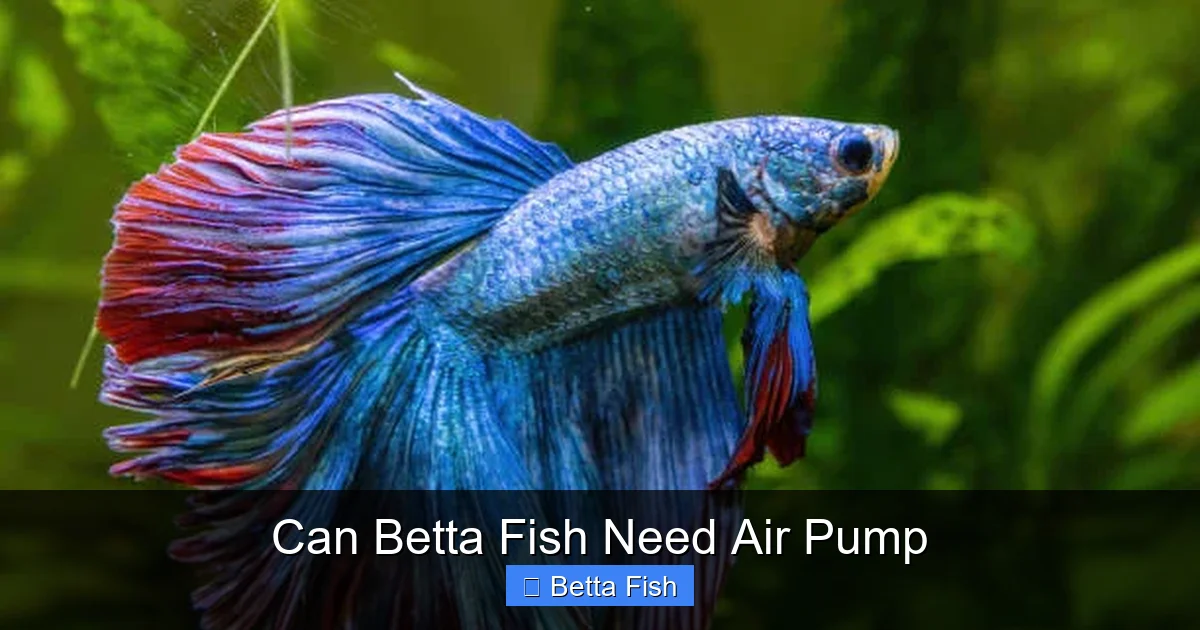
If you’re keeping your betta in a properly sized tank (we recommend at least 5 gallons) with regular water changes and no other fish, an air pump is generally not necessary. A good quality filter will usually provide enough surface agitation to maintain adequate oxygen levels. The key is choosing a filter with an appropriate flow rate for your betta. These fish come from slow-moving waters and don’t appreciate strong currents.
Visual guide about Can Betta Fish Need Air Pump
Image source: thegoldfishtank.com
A hang-on-back filter or a gentle sponge filter is usually perfect for a betta tank. These filters return water to the tank in a way that creates surface movement without creating a strong current that would stress your betta. The surface agitation from the filter output is typically sufficient to maintain healthy oxygen levels in a small, lightly stocked tank.
Tanks with Live Plants
Live aquatic plants are nature’s own air pump. During photosynthesis, plants absorb carbon dioxide and release oxygen into the water. A well-planted betta tank can be beautifully oxygenated without any mechanical equipment at all. Plants like Java fern, Anubias, Amazon sword, and floating plants like water sprite are all excellent choices for betta tanks.
Floating plants are particularly beneficial because they provide cover near the surface where your betta likes to rest and breathe. They also help reduce the intensity of overhead lighting, which bettas appreciate. Just be sure not to cover the entire surface with plants, as your betta still needs easy access to the surface to use its labyrinth organ.
Choosing the Right Air Pump for Your Betta Tank
Size and Power Considerations
If you’ve decided that an air pump would benefit your betta setup, choosing the right one is crucial. The most important factor is matching the pump’s output to your tank size. For a small betta tank of 5 to 10 gallons, you want a small, adjustable air pump. Many air pumps come with adjustable output valves that let you dial in the perfect amount of bubbles.

Visual guide about Can Betta Fish Need Air Pump
Image source: fishtankmaster.com
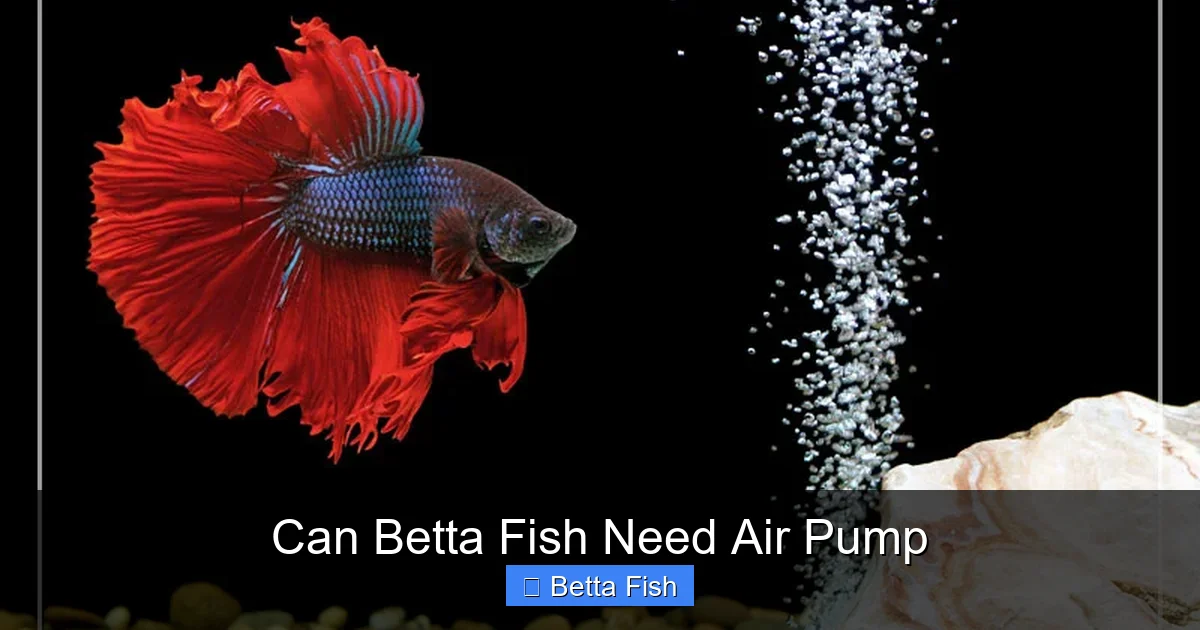
Avoid the temptation to get a powerful pump thinking “more bubbles equals more oxygen.” In reality, an overly powerful air pump will create strong water currents that stress your betta. Remember, these fish evolved in still or slow-moving waters. A gentle stream of tiny bubbles is far more beneficial than a violent eruption of large ones.
Airstones and Bubble Curtains
Pairing your air pump with the right airstone makes a big difference. A fine-pored airstone produces smaller bubbles, which are actually more efficient at oxygenating water than large bubbles. Smaller bubbles have more surface area relative to their volume, which means more contact between the air and water. They also rise more slowly, giving them more time to transfer oxygen to the water.
For a betta tank, a small airstone or a bubble wand is usually the best choice. Place it in a corner of the tank where it won’t create too much current in the main swimming area. Many betta owners position the airstone near the filter output to maximize water circulation and oxygenation without adding extra equipment.
Noise Level Matters
One often overlooked factor is noise. Some air pumps can be surprisingly loud, and the constant buzzing or humming can be annoying, especially if your tank is in a bedroom or living area. Look for air pumps that are specifically marketed as quiet or silent. Diaphragm-style air pumps tend to be quieter than piston-style models.
You can also reduce noise by placing the air pump on a soft surface like a towel or foam pad. This absorbs vibrations and significantly reduces the noise transmitted through furniture. Some owners even place their air pump inside a cabinet or drawer beneath the tank, though you need to make sure there’s adequate ventilation to prevent the pump from overheating.
Signs Your Betta Fish Needs Better Oxygenation
Gasping at the Surface
The most obvious sign that your betta isn’t getting enough oxygen is frequent, desperate gasping at the surface. While it’s normal for bettas to occasionally swim up and take a breath, a betta that’s constantly at the surface, opening and closing its mouth rapidly, is telling you something is wrong. This behavior indicates that the dissolved oxygen in the water is too low, and your betta is struggling to breathe through its gills.
Visual guide about Can Betta Fish Need Air Pump
Image source: smartaquariumguide.com
If you notice this behavior, check your water temperature first. If the water is too warm, the oxygen levels will be lower. Also check for any signs of illness or medication that might be affecting your betta’s ability to breathe. Adding an air pump or increasing surface agitation can quickly resolve this issue.
Lethargy and Loss of Appetite
Low oxygen levels can cause your betta to become unusually lethargic. If your normally active betta is spending most of its time sitting at the bottom of the tank or hiding, it might be because it doesn’t have enough energy due to poor oxygenation. Similarly, a betta that refuses to eat might be too stressed from low oxygen levels to have an appetite.
These symptoms can also indicate other health issues, so it’s important to check your water parameters as well. Test for ammonia, nitrite, and nitrate levels, and make sure the temperature is in the proper range. If water quality checks out, improving aeration is a good next step.
Clamped Fins and Stress Stripes
Bettas that are stressed from poor water conditions, including low oxygen, often display clamped fins (fins held close to the body) and stress stripes (horizontal lines along the body). These are visual indicators that your betta is unhappy with its environment. While clamped fins can have multiple causes, inadequate oxygenation is one of the most common culprits.
If you see these signs, take action immediately. Add an air pump, perform a water change, and check your tank’s overall conditions. A stressed betta is more susceptible to diseases like ich, fin rot, and velvet, so addressing the issue quickly can prevent more serious health problems down the road.
Common Mistakes Betta Owners Make with Air Pumps
Too Much Flow
This is probably the most common mistake. Betta owners see the air pump working and think more is better. But bettas are not built for strong currents. In the wild, they live in still or very slow-moving waters. A powerful air pump can create currents that exhaust your betta as it struggles to swim against the flow. Signs of excessive current include your betta being pushed around the tank, hiding in corners, or struggling to reach the surface.

Visual guide about Can Betta Fish Need Air Pump
Image source: bettafishworld.com
Always start with the lowest air pump setting and increase gradually if needed. Your betta should be able to swim comfortably and reach the surface easily without being buffeted by currents. If your betta looks like it’s swimming against a strong river current, your air pump is too powerful.
Ignoring the Filter’s Role
Many betta owners add an air pump without considering what their filter is already doing. A good filter provides both mechanical and biological filtration AND surface agitation. If your filter is already creating adequate surface movement, adding an air pump might be overkill. The extra turbulence can stress your betta without providing any meaningful benefit.
Before purchasing an air pump, observe your tank’s surface. If you can see gentle ripples and movement across most of the surface, your filter is probably doing a good job of oxygenating the water. If the surface is completely still, then an air pump might be a worthwhile addition.
Neglecting Regular Maintenance
An air pump is not a set-it-and-forget-it device. Airstones can become clogged with mineral deposits and algae, reducing their effectiveness over time. Air tubing can develop kinks or cracks. The pump itself can wear out. Regular maintenance ensures your air pump continues to function properly.
Clean your airstone every few weeks by soaking it in a solution of one part white vinegar to three parts water, then rinsing thoroughly. Replace air tubing annually or whenever it becomes stiff or discolored. And listen to your air pump. If it starts making unusual noises or the output decreases noticeably, it might be time for a replacement.
Creating the Perfect Betta Environment: Beyond the Air Pump
Water Quality Is King
No amount of aeration can compensate for poor water quality. The single most important thing you can do for your betta is maintain clean, properly cycled water. This means regular water changes (25% weekly for smaller tanks, 10-15% weekly for larger ones), using a water conditioner to remove chlorine and chloramines, and monitoring your water parameters with a reliable test kit.

Visual guide about Can Betta Fish Need Air Pump
Image source: i.ytimg.com
Ammonia and nitrite should always be at zero, and nitrate should be kept below 20 ppm. High levels of these compounds can damage your betta’s gills, making it harder for them to breathe even in well-oxygenated water. If you’re new to betta keeping and want to understand how much water a betta fish needs, remember that bigger is always better when it comes to tank size and water volume.
Temperature Stability
Consistent water temperature is crucial for betta health. Fluctuations in temperature can stress your betta and affect the water’s oxygen-carrying capacity. Use a reliable aquarium heater with a thermostat to maintain a steady temperature between 76°F and 82°F. Pair it with a separate thermometer to verify the heater is working correctly.
Sudden temperature drops can shock your betta and compromise its immune system. If you’re using an air pump, be aware that the bubbling action can slightly increase evaporation, which can lead to minor temperature fluctuations. In very small tanks, this effect is more pronounced, so keep an eye on your thermometer.
Providing Hiding Spots and Resting Places
A stressed betta is an unhealthy betta, and stress often comes from feeling exposed and vulnerable. Provide plenty of hiding spots in the form of caves, driftwood, and dense plantings. Betta hammocks (leaf-shaped resting spots that suction to the tank glass near the surface) are also excellent additions. These give your betta a comfortable place to rest near the surface, which is important since they need to breathe air regularly.
When your betta feels secure, it’s more likely to display its full range of natural behaviors, including exploring, building bubble nests, and showing off its magnificent fins. A confident, relaxed betta is a healthy betta, and that’s what every owner wants to see.
Conclusion
So, can betta fish need an air pump? The answer is a nuanced “it depends.” Thanks to their remarkable labyrinth organ, bettas can survive in conditions that would be lethal to most other fish. This means an air pump isn’t strictly necessary for every betta setup. However, there are many situations where adding an air pump can significantly improve your betta’s quality of life and overall health.
If you have a small, well-maintained tank with a good filter and live plants, you probably don’t need an air pump. But if you’re running a larger community tank, keeping your betta in warm water, or dealing with illness and medication, an air pump is a valuable tool that can make a real difference. The key is understanding your specific setup and your betta’s individual needs.
Remember, the goal isn’t just to keep your betta alive. It’s to create an environment where your betta can truly thrive. Pay attention to your fish’s behavior, monitor water quality regularly, and don’t be afraid to adjust your setup as needed. With the right care and attention, your betta fish can live a long, healthy, and beautiful life, whether or not you decide to add an air pump to its home.
Frequently Asked Questions
Do betta fish need an air pump to survive?
No, betta fish do not need an air pump to survive. Their labyrinth organ allows them to breathe air directly from the surface, so they can live in water with lower oxygen levels than most other fish. However, an air pump can improve their overall health and comfort in certain situations.
Can an air pump harm my betta fish?
Yes, an overly powerful air pump can harm your betta by creating strong water currents that cause stress and exhaustion. Bettas prefer still or gently moving water. Always use an adjustable air pump on the lowest effective setting to avoid creating excessive water flow.
How do I know if my betta fish needs more oxygen?
Watch for signs like frequent gasping at the surface, lethargy, loss of appetite, clamped fins, and stress stripes. If you notice these symptoms, check your water temperature and quality first, then consider adding an air pump to increase oxygenation.
Is a filter enough to oxygenate my betta tank?
In most cases, yes. A good filter that creates surface agitation is sufficient to maintain healthy oxygen levels in a small, lightly stocked betta tank. The filter output disturbs the water’s surface, promoting gas exchange that adds oxygen to the water.
What size air pump do I need for my betta tank?
For a standard 5 to 10-gallon betta tank, a small, adjustable air pump designed for tanks up to 10 gallons is ideal. Look for one with a fine-pored airstone that produces small, gentle bubbles rather than large, aggressive ones.
Can I use an air pump in a betta bowl?
While technically possible, it’s not recommended to keep bettas in bowls at all. Bowls lack proper filtration, heating, and swimming space. If your betta is in a bowl, upgrading to a proper 5-gallon tank with a heater and filter is a much better solution than simply adding an air pump.