Betta fish and starfish cannot live together in the same aquarium. While both are popular aquatic pets, they have completely different habitat requirements that make cohabitation nearly impossible. Understanding these differences is crucial before attempting to house any species together in your home aquarium.
Key Takeaways
- Water type incompatibility: Betta fish are freshwater species, while starfish require saltwater environments to survive.
- Temperature conflicts: Even if water type were not an issue, their ideal temperature ranges overlap but their overall environmental needs differ drastically.
- Risk of predation: Starfish are slow-moving invertebrates that could become targets for aggressive betta fish.
- Chemical sensitivity: Starfish are extremely sensitive to ammonia, nitrites, and nitrates, which are common in freshwater betta tanks.
- Feeding challenges: Betta fish are carnivorous and may attempt to eat small starfish or damage their delicate tube feet.
- Alternative tank mates: There are many freshwater species that make excellent companions for betta fish instead of starfish.
- Expert recommendation: Always research water parameters and habitat needs before mixing any aquatic species together.
📑 Table of Contents
- Can Betta Fish Live With Starfish? The Complete Answer
- Understanding Betta Fish: Freshwater Royalty
- Understanding Starfish: Saltwater Marvels
- The Fundamental Incompatibility: Freshwater vs. Saltwater
- Behavioral and Biological Concerns
- What About Other Invertebrates With Betta Fish?
- Setting Up the Perfect Betta Community Tank
- Common Mistakes to Avoid
- Frequently Asked Questions About Betta Fish Compatibility
- Conclusion: Keep Bettas and Starfish in Their Own Worlds
Can Betta Fish Live With Starfish? The Complete Answer
If you have ever gazed at a starfish clinging to a tide pool rock and thought it would look amazing next to your betta fish, you are not alone. Many aquarium enthusiasts wonder about mixing different types of aquatic creatures. The question of whether betta fish can live with starfish comes up surprisingly often in fishkeeping forums and pet store conversations. Unfortunately, the short answer is no. These two animals come from entirely different worlds, and trying to house them together would end in tragedy for one or both of them.
Understanding why these species cannot coexist is more than just a fun fact. It is essential knowledge for any responsible fish keeper. When you know the science behind species compatibility, you make better choices for your aquatic pets. You save money, avoid heartbreak, and create thriving underwater ecosystems. Let us dive deep into the reasons why betta fish and starfish make terrible tank mates and explore what you can do instead.
Understanding Betta Fish: Freshwater Royalty
Natural Habitat and Origins
Betta fish, scientifically known as Betta splendens, originate from the warm, shallow waters of Southeast Asia. You will find them naturally in rice paddies, slow-moving streams, and drainage ditches throughout Thailand, Cambodia, and Vietnam. These environments are strictly freshwater with very little salt content. Over millions of years, bettas have evolved to thrive in these specific conditions. Their bodies are designed to process freshwater efficiently, and their organs function optimally within a narrow range of water parameters.
One of the most fascinating things about betta fish is their labyrinth organ. This special anatomical feature allows them to breathe atmospheric air directly from the surface. It is an adaptation that helps them survive in oxygen-poor waters where other fish would perish. However, this adaptation also means they are specifically tuned to freshwater environments. Placing a betta in saltwater would cause severe osmotic stress, essentially dehydrating their cells and leading to rapid death.
Ideal Water Parameters for Betta Fish
To keep a healthy betta fish, you need to maintain specific water conditions. The temperature should stay between 76 and 82 degrees Fahrenheit. The pH level needs to hover between 6.5 and 7.5. Ammonia and nitrite levels must remain at zero, while nitrates should stay below 20 parts per million. These fish prefer soft to moderately hard water with minimal salinity. Even a small amount of salt can cause problems for a betta over time, though some keepers use very tiny amounts of aquarium salt therapeutically.
If you are interested in learning more about what other species can share a betta’s freshwater home, check out this detailed guide on what other fish can live with betta fish. It covers many compatible freshwater options that will thrive alongside your betta.
Understanding Starfish: Saltwater Marvels
Natural Habitat and Origins
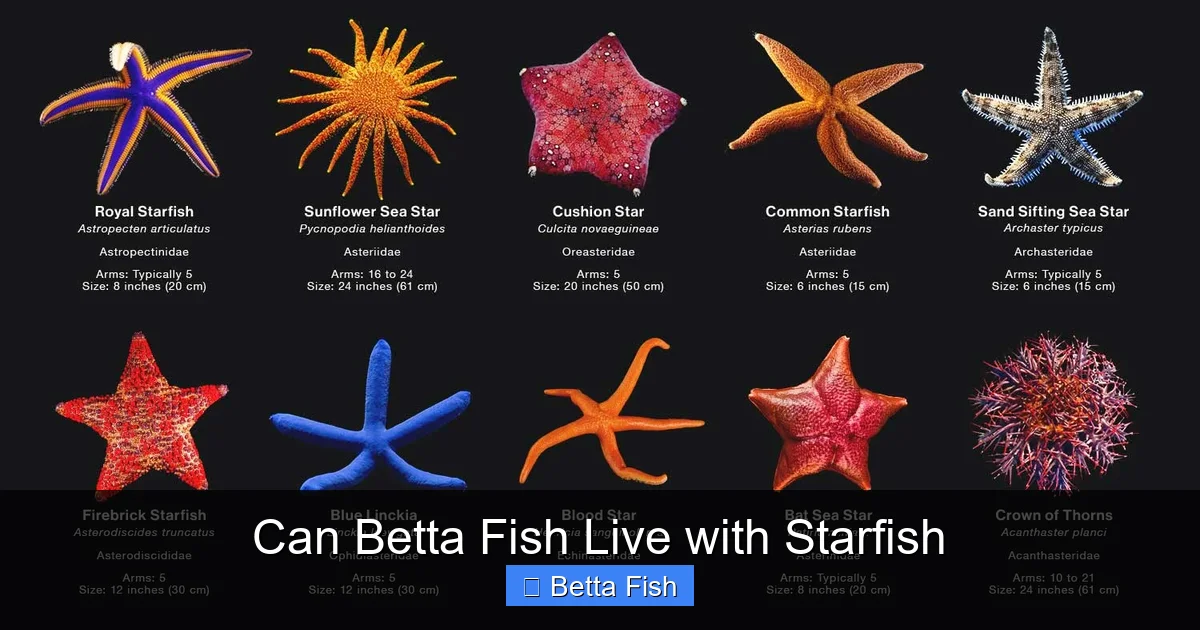
Starfish, also known as sea stars, are marine invertebrates found in oceans around the world. They inhabit tide pools, coral reefs, rocky shorelines, and deep ocean floors. Every single species of starfish is a saltwater creature. There are no freshwater starfish in existence. Their bodies are fundamentally designed to function in a marine environment with a specific salinity level, typically around 35 parts per thousand. This means that for every liter of ocean water, there are approximately 35 grams of dissolved salts.

Visual guide about Can Betta Fish Live with Starfish
Image source: thoughtco.com
Starfish have a unique hydraulic system called the water vascular system. This network of fluid-filled canals powers their hundreds of tube feet, allowing them to move, grip surfaces, and open clam shells. This system only works properly in saltwater. If you place a starfish in freshwater, the osmotic pressure difference causes water to flood into their cells. The starfish essentially falls apart at a cellular level. It is a quick and devastating process that no responsible aquarist would want to witness.
Ideal Water Parameters for Starfish
Marine aquariums housing starfish require careful attention to water chemistry. The salinity must remain stable at 1.023 to 1.025 specific gravity. Temperature requirements vary by species but generally fall between 72 and 78 degrees Fahrenheit. The pH should stay between 8.1 and 8.4, which is significantly more alkaline than betta fish prefer. Calcium, alkalinity, and magnesium levels must also be monitored and maintained for proper starfish health.
Starfish are incredibly sensitive to changes in water chemistry. Even small fluctuations in ammonia or nitrate levels that a freshwater betha could tolerate will quickly kill a marine starfish. This sensitivity makes them challenging even for experienced saltwater aquarium keepers. They require mature, well-established tanks with stable biological filtration and regular water testing.
The Fundamental Incompatibility: Freshwater vs. Saltwater
Why Water Type Matters So Much
The single biggest reason betta fish cannot live with starfish comes down to basic chemistry. Betta fish need freshwater. Starfish need saltwater. There is no middle ground here. You cannot create a brackish environment that satisfies both species because bettas are not brackish water fish, and starfish cannot tolerate reduced salinity for extended periods. It is like trying to house a desert cactus and a tropical orchid in the same pot. No matter how hard you try, one of them will suffer.
Some people wonder if they could gradually acclimate one species to the other’s water type. This approach does not work and would be cruel. Osmotic regulation is not something fish or invertebrates can simply adjust to over time. Their cellular biology is fixed. A betta fish placed in saltwater will experience severe dehydration as water is pulled from its body through osmosis. A starfish placed in freshwater will absorb too much water, causing its cells to rupture. Both scenarios lead to painful deaths.
Temperature and pH Differences
Even if we ignore the freshwater versus saltwater issue, other parameters clash as well. Betta fish prefer a slightly acidic to neutral pH between 6.5 and 7.5. Starfish require alkaline conditions between 8.1 and 8.4. These ranges do not overlap at all. Temperature ranges do overlap somewhat, with both species comfortable in the mid-70s to low-80s Fahrenheit. However, temperature compatibility alone is not enough to make two species suitable tank mates.
The differences extend to hardness and mineral content as well. Betta fish thrive in softer water with lower mineral content. Starfish need water rich in calcium, magnesium, and other trace elements that support their calcareous endoskeletons. These conflicting requirements make it physically impossible to create a single environment that meets the needs of both animals.
Behavioral and Biological Concerns
Aggression and Predation Risks
Betta fish are known for their territorial and sometimes aggressive nature, especially males. They flare their gills, spread their fins, and attack anything they perceive as a threat or competitor. A slow-moving starfish would be an easy target for a curious or aggressive betta. Those delicate tube feet and soft body tissues would not stand a chance against a betta’s nipping behavior. Even if the betta did not kill the starfish outright, the constant stress and physical damage would lead to infection and death.

Visual guide about Can Betta Fish Live with Starfish
Image source: treehugger.com
On the flip side, some larger starfish species are actually predators themselves. Certain starfish varieties feed on small fish and invertebrates. While most aquarium starfish species are not active fish hunters, a stressed or dying starfish could still pose a threat to a betta if it releases toxins or defensive chemicals into the water. Neither animal would benefit from this stressful living arrangement.
Feeding Incompatibilities
Betta fish are carnivores that need a diet rich in animal protein. They enjoy foods like bloodworms, brine shrimp, daphnia, and high-quality betta pellets. Starfish, depending on the species, might be detritivores, herbivores, or predators. Their feeding methods are completely different from a betta’s. Starfish can extend their stomachs out of their mouths to envelop food, a feeding strategy that has nothing in common with how bettas eat.
In a shared tank scenario, competition for food would be a serious issue. Bettas are quick, aggressive eaters that would consume most of the food before a slow-moving starfish could get any. The starfish would slowly starve while the betta overeats. This imbalance creates an impossible feeding situation that would harm both animals over time.
What About Other Invertebrates With Betta Fish?
Freshwater Alternatives to Starfish
If you love the look of interesting invertebrates and want something that can actually live with your betta fish, there are several great options. Freshwater snails are among the best tank mates for betta fish. Species like nerite snails, mystery snails, and ramshorn snails are peaceful, hardy, and help clean algae from your tank. They occupy a different niche than bettas and rarely trigger aggressive behavior. For a detailed breakdown, read about whether betta fish can live with snails.

Visual guide about Can Betta Fish Live with Starfish
Image source: treehugger.com
Freshwater shrimp are another excellent choice. Cherry shrimp, amano shrimp, and ghost shrimp can all coexist with betta fish in the right conditions. They add movement and interest to your tank while helping clean up uneaten food and debris. Just keep in mind that some bettas will see small shrimp as snacks, so choosing larger shrimp species or providing plenty of hiding spots is important. Learn more about keeping betta fish with shrimp to set up a successful community tank.
Other Compatible Freshwater Species
Beyond invertebrates, many freshwater fish species make wonderful companions for betta fish. Small, peaceful schooling fish like ember tetras, harlequin rasboras, and corydoras catfish can thrive in a betta tank. Bottom-dwelling species are particularly good choices because they occupy a different area of the tank and rarely cross paths with your betta. Always research each species carefully and introduce new tank mates gradually while monitoring for signs of aggression.
For a comprehensive list of suitable tank mates, explore this article on what fish can live with betta fish. It covers dozens of species with detailed compatibility information to help you build a beautiful, harmonious aquarium.
Setting Up the Perfect Betta Community Tank
Tank Size and Setup Requirements
Before adding any tank mates to your betta’s home, make sure the aquarium is large enough. A single betta fish needs at least 5 gallons of water. If you want to add community fish, bump that up to 10 or 20 gallons minimum. More water volume means more stable water parameters and more territory for everyone to claim. A larger tank significantly reduces aggression because fish have space to establish their own areas and avoid each other when needed.
Visual guide about Can Betta Fish Live with Starfish
Image source: cdn.shopify.com
Heavily planted tanks work best for betta communities. Live plants like java fern, anubias, and floating plants provide hiding spots, reduce stress, and improve water quality. Driftwood and smooth rocks create additional territories and break sight lines between fish. The goal is to create an environment where your betta feels secure and tank mates have places to retreat if needed.
Water Quality and Maintenance
Maintaining excellent water quality is non-negotiable in any community tank. Invest in a reliable water test kit and check ammonia, nitrite, nitrate, and pH levels weekly. Perform regular water changes of 25 to 30 percent every week or two. Use a water conditioner to remove chlorine and chloramines from tap water before adding it to the tank. A good filter is essential, but make sure the flow is not too strong because bettas prefer calm water.
Remember that adding more fish to a tank increases the bioload. More fish means more waste, which means more frequent water changes and filter maintenance. Never add too many fish at once. Introduce new additions one at a time and wait a week or two between additions. This approach allows your beneficial bacteria colony to adjust and prevents dangerous ammonia spikes.
Common Mistakes to Avoid
Rushing the Introduction Process
One of the biggest mistakes new fish keepers make is rushing to add tank mates. They see a cool fish or invertebrate at the store and buy it the same day without any research. Then they dump it straight into their betta tank and wonder why things go wrong. Proper acclimation takes time. Float the bag in your tank for 15 to 20 minutes to equalize temperature. Then slowly add small amounts of tank water to the bag over another 30 minutes. This process reduces shock and gives the new arrival time to adjust.
Ignoring Species-Specific Needs
Another common error is assuming all aquatic creatures have similar needs. As we have discussed, betta fish and starfish have completely incompatible requirements. But even among freshwater species, needs vary widely. Some fish need harder water, others need softer. Some prefer bright lighting, others need dim conditions. Always research every species before purchasing and make sure their requirements match what your current tank provides.
Overstocking the Aquarium
Overstocking is a recipe for disaster. Too many fish in too small a space leads to stress, aggression, disease, and poor water quality. A good general rule is one inch of fish per gallon of water, though this is just a starting point. Some fish produce more waste than others, and some need more swimming space. When in doubt, understock your tank. Your fish will be healthier and happier with a little extra room.
Frequently Asked Questions About Betta Fish Compatibility
Many aquarium hobbyists have questions about what can and cannot live with betta fish. The key takeaway is that betta fish are freshwater tropical fish, and any potential tank mate must share those same basic requirements. Starfish, being marine saltwater invertebrates, fail this fundamental test spectacularly. Always prioritize the health and wellbeing of all your aquatic pets by choosing compatible species from the start.

Visual guide about Can Betta Fish Live with Starfish
Image source: awesomeocean.com
Conclusion: Keep Bettas and Starfish in Their Own Worlds
So, can betta fish live with starfish? The definitive answer is a firm no. These two amazing creatures belong to completely different aquatic environments and can never share the same tank. Betta fish are freshwater beauties that need warm, slightly acidic, soft water to thrive. Starfish are marine invertebrates that require saltwater with high alkalinity and mineral content. The gap between their needs is simply too vast to bridge.
But do not let this discourage you from creating a stunning aquarium. There are so many wonderful freshwater species that make perfect companions for betta fish. From colorful tetras and peaceful corydoras to helpful snails and fascinating shrimp, the options are nearly endless. Do your research, set up a proper tank, maintain excellent water quality, and you will be rewarded with a thriving underwater community that brings joy for years to come.
The best fish keepers are the ones who respect the natural needs of every species in their care. By understanding why betta fish and starfish cannot coexist, you are already on the path to becoming a more knowledgeable and responsible aquarist. Keep learning, keep asking questions, and most importantly, keep your fish happy and healthy.
Frequently Asked Questions
Can betta fish live with starfish in a brackish water tank?
No, betta fish are strictly freshwater species and cannot survive in brackish water. Starfish also require full-strength saltwater and cannot tolerate reduced salinity. There is no water type that satisfies both species simultaneously.
What happens if you put a starfish in a freshwater betta tank?
The starfish would die quickly. Freshwater causes osmotic shock in marine invertebrates, flooding their cells and causing cellular rupture. This process is fatal and would occur within hours to days depending on the species.
Are there any starfish species that live in freshwater?
No, there are absolutely no freshwater starfish species in the world. All approximately 2,000 known species of starfish are marine animals that require saltwater to survive. Any creature sold as a freshwater starfish is misidentified.
What are the best invertebrate tank mates for betta fish?
Freshwater snails like nerite snails and mystery snails are excellent choices. Freshwater shrimp such as cherry shrimp and amano shrimp also work well. These invertebrates share the same freshwater requirements as betta fish and help keep the tank clean.
Can betta fish live with marine fish if you add salt to the tank?
No, adding salt to a betta tank will harm or kill the betta. Betta fish are not saltwater fish and cannot survive in marine conditions. Marine fish also cannot live in the warm, soft, acidic water that bettas prefer.
How do I know if a species is compatible with my betta fish?
Research the species’ water parameters including temperature, pH, hardness, and salinity requirements. Make sure they match your betta’s needs exactly. Also consider temperament, size, and dietary needs to ensure a peaceful community tank.

