Wondering if angel fish can share a tank with bettas? In most cases, the answer is no—angel fish are too large and aggressive for the delicate betta. However, with the right tank size, plenty of hiding spots, and careful monitoring, a few setups can work. Read on for practical tips, warning signs, and alternatives that keep both species happy.
Key Takeaways
- Size matters: Angel fish grow 6‑8 inches, far larger than a betta’s 2‑3 inches.
- Temperament clash: Both species are territorial; fights are common in small spaces.
- Tank size is crucial: A minimum of 30 gallons is needed to give each fish room to claim its own area.
- Provide plenty of cover: Plants, driftwood, and caves reduce stress and aggression.
- Consider gender: Female bettas are slightly less aggressive, but still risky with angels.
- Alternative companions: Peaceful community fish like neon tetras or rasboras are safer choices.
- Monitor daily: Early signs of stress mean it’s time to separate the fish.
📑 Table of Contents
- Introduction: The Dream of a Colorful Community Tank
- 1. Understanding the Two Species
- 2. Tank Size and Setup Considerations
- 3. Behavioral Compatibility – What to Watch For
- 4. Practical Steps to Test Compatibility
- 5. Alternatives: Safer Tank Mates for Bettas and Angels
- 6. Real‑World Example: A Successful Angel‑Betta Setup
- Conclusion: Proceed With Caution or Choose Safer Companions
Introduction: The Dream of a Colorful Community Tank
If you’ve ever walked past a pet store and seen the vibrant fins of an angel fish swimming next to the flamboyant betta, you might have imagined a tank bursting with color. Both fish are beautiful, relatively easy to care for, and make great focal points for a home aquarium. But before you mix them together, it’s worth asking a few hard questions.
Can angel fish live with bettas without constant fighting? Will the betta’s flowing fins become a snack for the larger predator? In this guide we’ll break down the biology, temperament, and practical needs of each species, then give you a step‑by‑step plan for deciding whether to keep them together—or choose a better tank‑mate.
1. Understanding the Two Species
Angel Fish Basics
Angel fish (Pterophyllum scalare) are a type of cichlid native to the slow‑moving waters of the Amazon basin. They reach 6‑8 inches (15‑20 cm) in length, have tall, laterally compressed bodies, and sport long, flowing fins that can be spectacularly patterned. In the wild they live in heavily planted, dimly lit areas where they hide among roots and leaf litter.

Visual guide about Can Angel Fish Live with Bettas
Image source: i.ytimg.com
- Temperament: Generally semi‑aggressive. They defend a territory, especially during breeding.
- Water parameters: 76‑82 °F, pH 6.5‑7.5, soft to moderately hard water.
- Diet: Omnivorous – high‑quality flakes, pellets, occasional live or frozen foods.
Betta Fish Basics
Betta splendens, often called Siamese fighting fish, are native to shallow rice paddies and slow‑moving streams in Thailand. Males are famous for their vivid colors and aggressive flaring behavior, while females are less flamboyant and slightly less territorial.
- Temperament: Males are highly territorial; females are more social but can still be feisty.
- Water parameters: 78‑82 °F, pH 6.5‑7.5, soft water.
- Diet: Carnivorous – betta pellets, frozen bloodworms, brine shrimp.
Why Compatibility Is Tricky
Both fish love warm water and similar pH, which is a plus. The problem lies in size and aggression. Angel fish are large enough to see a betta as a potential snack, while bettas view any newcomer as an intruder. The result can be stress, fin damage, or even death.
2. Tank Size and Setup Considerations
Minimum Tank Volume
For a single angel fish, a 20‑gallon tank is the bare minimum. Adding a betta means you need at least 30 gallons to give each fish a clear territory and enough swimming space. Smaller tanks quickly become a pressure cooker where aggression spikes.
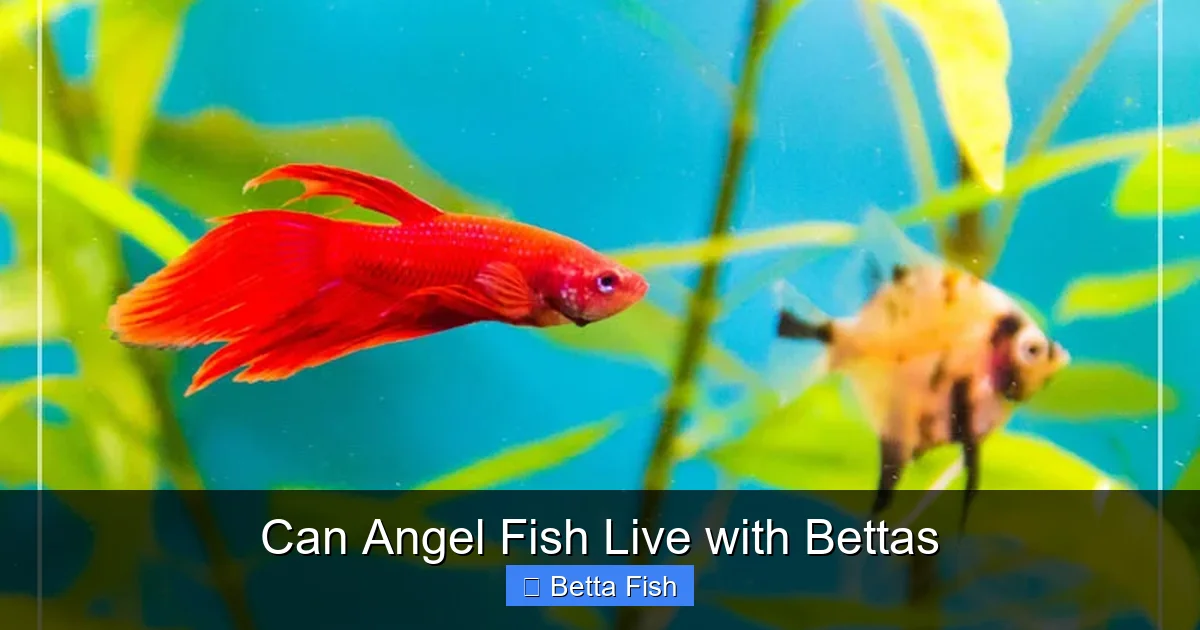
Visual guide about Can Angel Fish Live with Bettas
Image source: smartaquariumguide.com
Creating Distinct Zones
Use tall plants (e.g., Amazon swords, Java fern), driftwood, and rock caves to break the line of sight. Angels like to swim vertically, while bettas prefer the mid‑water and surface. Placing a dense vertical forest on one side and a horizontal “garden” on the other helps each fish feel safe.
Filtration and Water Flow
Both species thrive in gently moving water. A canister filter with a flow rate of 4‑5 times the tank volume per hour works well. Add a sponge pre‑filter to protect delicate betta fry or eggs if breeding is planned.
Lighting
Angels enjoy subdued lighting, mimicking the dappled shade of their natural habitat. Bettas also prefer lower light; bright lights can cause stress and make them more aggressive. A 10‑hour photoperiod with a dimmable LED is ideal.
3. Behavioral Compatibility – What to Watch For
Signs of Aggression
- Flared fins and rapid gill movement.
- Chasing or nipping at the other fish’s fins.
- Loss of color or faded scales in the betta.
- Hiding constantly or refusing to eat.
Early Intervention
If you notice any of these signs within the first 48 hours, consider a temporary divider or a separate quarantine tank. Never wait for a serious injury; stress can compromise the immune system and lead to disease.
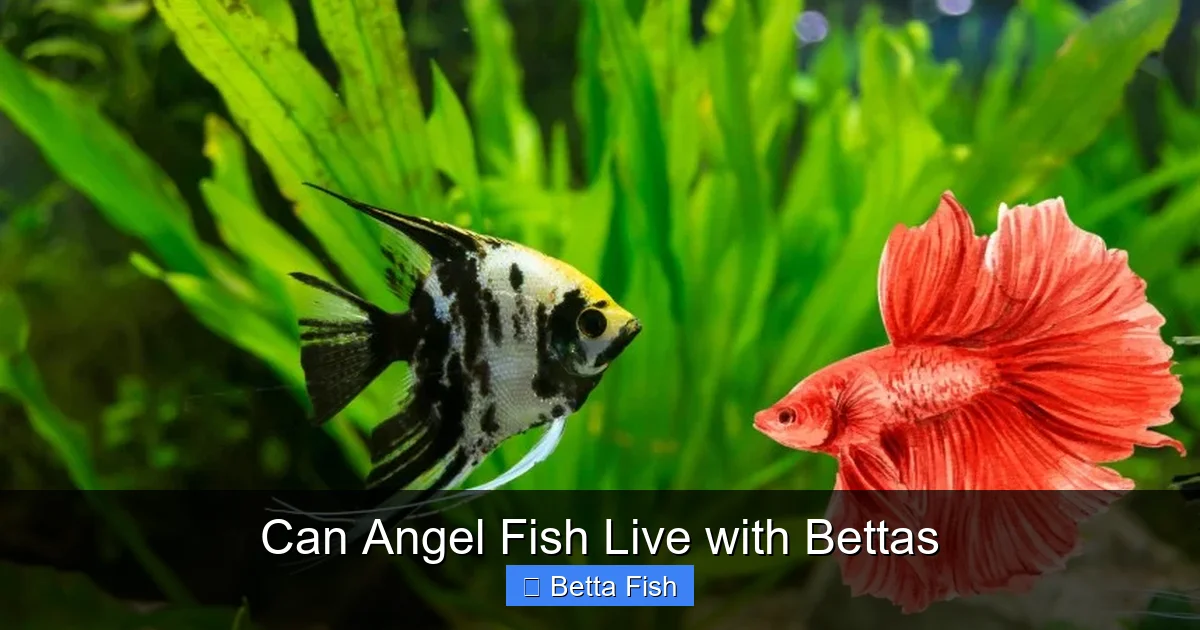
Visual guide about Can Angel Fish Live with Bettas
Image source: infishtank.com
Gender Differences
Female bettas are generally less combative, making them a slightly safer bet with angels. However, the size gap remains, and a hungry angel may still target a small female. Male bettas are the most risky because they will flare at any fin that looks like a rival.
4. Practical Steps to Test Compatibility
Step 1: Quarantine Both Fish
Before any mixing, keep each fish in a separate quarantine tank for at least two weeks. This prevents disease transfer and lets you observe any hidden health issues.
Step 2: Use a Clear Divider
Place a sturdy acrylic or glass divider in the main tank. Let the fish see each other but not touch. Watch for aggressive displays over a 24‑hour period.
Step 3: Gradual Introduction
If both fish seem calm, remove the divider for a short supervised session (15‑30 minutes). Keep a net handy. If any aggression appears, replace the divider and try again later, extending the time each session.
Step 4: Permanent Co‑habitation?
Only after several calm sessions should you consider a permanent merge. Continue to add extra hiding spots and monitor daily for the first two weeks.
5. Alternatives: Safer Tank Mates for Bettas and Angels
Community Fish That Work With Bettas
If the angel‑betta combo feels too risky, there are plenty of other peaceful fish that coexist well with bettas. Check out our detailed guide on what other fish can bettas live with for a full list.
Best Choices for Angel Fish
Angels thrive with other semi‑aggressive or larger cichlids, peaceful tetras, and larger catfish. Good companions include:
- Rummy Nose Tetras (small, fast swimmers).
- Guppies (if the betta is female and the tank is spacious).
- Peaceful dwarf cichlids like Apistogramma.
When to Keep a Betta Solo
Sometimes the simplest solution is best. A single betta in a well‑planted 5‑gallon tank can live a long, healthy life without the stress of tank mates. Pairing a betta with live plants, snails, or shrimp can provide enrichment without aggression.
6. Real‑World Example: A Successful Angel‑Betta Setup
One hobbyist successfully kept a female betta with a juvenile angel in a 45‑gallon tank. Here’s how they did it:
- Tank preparation: Added 12 tall plants, three driftwood logs, and two hollow ceramic caves.
- Gradual introduction: Started with a divider for one week, then a 1‑hour supervised free swim daily for three days.
- Feeding strategy: Fed the betta a small portion of high‑quality pellets at the surface, while the angel received sinking pellets and occasional frozen brine shrimp.
- Monitoring: Checked for fin nipping twice daily; after two weeks, the fish displayed calm behavior and shared the space.
Note that this success required a large tank, a female betta, and a young angel that hadn’t yet reached full size. Replicate these conditions, and you may achieve similar results.
Conclusion: Proceed With Caution or Choose Safer Companions
Can angel fish live with bettas? The short answer is that it’s possible only under very specific conditions: a large (30 gallon+) tank, plenty of hiding spaces, a female betta, and a juvenile angel. Even then, the risk of aggression remains high, and constant observation is essential.
For most hobbyists, the safer route is to keep these species separate or to pair each with more compatible tank mates. Remember, a happy aquarium is one where every fish feels secure and can display its natural behavior without fear.
Take the time to research, set up a proper environment, and always have a backup plan (like a spare tank) ready. Your fish will thank you with vibrant colors and lively activity for years to come.
Frequently Asked Questions
Can angel fish and bettas share a 20‑gallon tank?
Usually not. A 20‑gallon tank is too small for an adult angel, and the limited space increases aggression toward a tiny betta.
Are female bettas safer with angels than males?
Female bettas are less aggressive, but size and predatory instincts of the angel still pose a risk.
What signs indicate my betta is stressed?
Faded colors, constant hiding, loss of appetite, and frantic fin flaring are key stress indicators.
Do angel fish need a heated tank?
Yes. Keep the water between 76‑82 °F to suit both angels and bettas.
Can I use a tank divider permanently?
Yes, a clear divider can let both fish enjoy the same water while preventing direct contact, making it a safe long‑term solution.
What are some good community fish for a betta tank?
Check out our article on what other fish can bettas live with for options like neon tetras, rasboras, and small catfish.

