Betta fish and goldfish cannot sense carbon monoxide the way humans do, but they can show distress when water quality suffers. Understanding their limits helps you keep a safe, healthy tank and protect your home from hidden dangers.
Key Takeaways
- Fish lack CO CO receptors: Neither bettas nor goldfish can directly detect carbon monoxide gas.
- Water quality is the real alarm: Poor oxygen levels or contaminated water trigger stress behaviors.
- CO CO can still harm fish: High indoor CO CO can lower dissolved oxygen, endangering your pets.
- Use detectors, not fish: Install a carbon monoxide alarm in the room with the aquarium.
- Regular tank checks matter: Monitoring temperature, pH, and ammonia helps catch problems early.
- Ventilation saves both you and fish: Fresh air reduces CO CO buildup and improves fish respiration.
- Know the signs: Gasping, lethargy, and erratic swimming often point to low oxygen, not CO CO itself.
📑 Table of Contents
- Introduction: Why the Question Matters
- What Is Carbon Monoxide and How Does It Affect Aquariums?
- Do Betta Fish or Goldfish Have a Sense for CO CO?
- How to Use Your Fish as an Early Warning System (and Why It’s Not Reliable)
- Maintaining a Healthy Aquarium Environment
- Safety Checklist: Protecting Both You and Your Fish
- Frequently Overlooked Connections: Fish Compatibility and CO CO
- Conclusion: Keep Your Fish Happy and Your Home Safe
Introduction: Why the Question Matters
Imagine you’re sitting by your betta’s vibrant tank, a goldfish gliding lazily, and you hear the faint beep of a carbon monoxide (CO CO) alarm. You might wonder: Can my fish feel the danger before I do? It’s a natural thought because both bettas and goldfish are sensitive to changes in their environment.
In this article we’ll break down the science of CO CO detection, explore how fish actually sense problems, and give you practical steps to keep both your family and your aquatic friends safe. By the end, you’ll know exactly what to watch for and why a proper CO CO detector is still your best friend.
What Is Carbon Monoxide and How Does It Affect Aquariums?
CO CO basics
Carbon monoxide is a colorless, odorless gas produced by incomplete combustion—think gas stoves, furnaces, or a faulty fireplace. When inhaled, it binds to hemoglobin in blood, preventing oxygen transport. In a closed room, CO CO levels can rise quickly, creating a silent threat.
Visual guide about Can a Betta Fish or Goldfish Detect Carbon Monoxide
Image source: pangovet.com
CO CO’s indirect impact on water
Fish don’t breathe air; they extract dissolved oxygen (DO) from water through their gills. High CO CO in the room can lower the amount of oxygen that dissolves into the water because the gas displaces oxygen in the air above the tank. Over time, DO drops, and fish become stressed, gasping at the surface, or even dying.
Real‑world example
Homeowners have reported that after a furnace malfunction, their bettas began floating upside‑down, a classic sign of oxygen deficiency. The problem wasn’t the fish “smelling” CO CO; it was the reduced oxygen in the water.
Do Betta Fish or Goldfish Have a Sense for CO CO?
Fish sensory systems
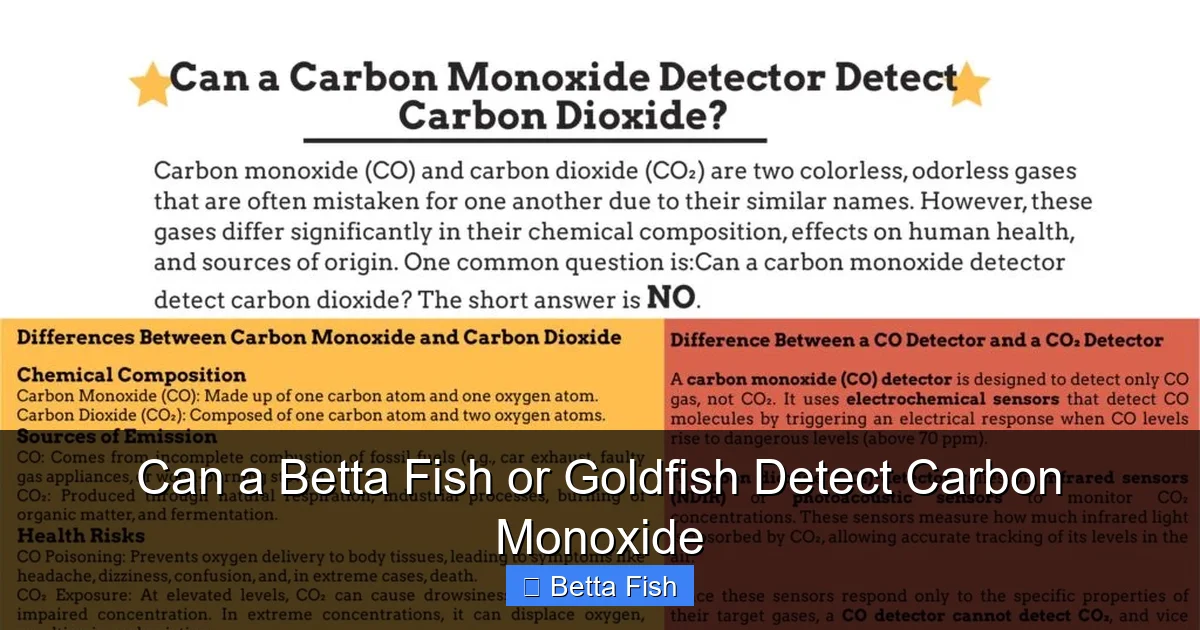
Fish rely on sight, smell (olfaction), lateral line (detecting water movement), and taste. They lack a respiratory system that can process gases the way lungs do, so they have no specific receptors for carbon monoxide.
Visual guide about Can a Betta Fish or Goldfish Detect Carbon Monoxide
Image source: sensor1stop.com
Why they can’t “detect” CO CO
CO CO does not dissolve well in water, and even if a tiny amount entered the tank, it would not bind to fish hemoglobin the way it does in mammals. Therefore, bettas and goldfish cannot sense CO CO directly.
What they can sense: oxygen and stress
What fish *can* detect is a drop in dissolved oxygen, a rise in carbon dioxide, or the presence of toxins like ammonia. When these conditions occur, they exhibit frantic swimming, gulping at the surface, or become lethargic.
How to Use Your Fish as an Early Warning System (and Why It’s Not Reliable)
Common myths
Some aquarium hobbyists claim that if their fish act strangely, a CO CO leak is likely. While fish stress can hint at poor water conditions, it is not a specific indicator of carbon monoxide.
Visual guide about Can a Betta Fish or Goldfish Detect Carbon Monoxide
Image source: res.cloudinary.com
Practical observation tips
- Watch for surface gulping—sign of low DO.
- Note any sudden color fading or frayed fins.
- Check for erratic swimming patterns.
These signs tell you the water needs attention, but they won’t tell you whether CO CO is the culprit.
Why a CO CO alarm is essential
Because fish cannot give you a precise warning, the only reliable method is a dedicated CO CO detector installed in the same room as the aquarium. Modern detectors sound an alarm long before levels become dangerous for humans or fish.
Maintaining a Healthy Aquarium Environment
Regular water testing
Use a liquid test kit to check ammonia, nitrite, nitrate, pH, and dissolved oxygen. Keeping these parameters stable reduces stress and masks any indirect effects of CO CO.
Proper filtration and aeration
Air stones, power filters, and surface agitation increase oxygen exchange. A well‑aerated tank can tolerate mild CO CO fluctuations better than a stagnant one.
Temperature control
Warmer water holds less oxygen. If you use a heater, ensure the temperature stays within the species‑specific range (betta: 76‑82 °F, goldfish: 65‑75 °F). Lower temperatures help retain more dissolved oxygen.
Ventilation of the room
Open windows or use an exhaust fan when using gas appliances. Good airflow dilutes any CO CO that may leak into the room.
Safety Checklist: Protecting Both You and Your Fish
Step‑by‑step checklist
- Install a certified CO CO detector near the aquarium.
- Test the detector monthly and replace batteries as needed.
- Perform weekly water parameter checks.
- Clean the tank and change 20‑30% of water every two weeks.
- Ensure the filter runs 24/7 and clean its media regularly.
- Provide surface agitation with an air stone or a filter that creates flow.
- Keep the room well‑ventilated, especially when using gas appliances.
When to act
If the CO CO alarm sounds, evacuate the room, ventilate, and call emergency services. Then, check your tank’s DO levels; if they are low, perform an emergency water change and increase aeration.
Frequently Overlooked Connections: Fish Compatibility and CO CO
While CO CO isn’t a factor in fish compatibility, many owners wonder about mixing bettas and goldfish. For a clear answer, see our guide on Can a Betta Fish Live With a Goldfish. Understanding species needs helps you avoid additional stress that could compound any hidden gas issues.
Conclusion: Keep Your Fish Happy and Your Home Safe
Betta fish and goldfish cannot directly detect carbon monoxide, but they are excellent indicators of water‑related problems. By maintaining optimal water quality, ensuring proper ventilation, and installing a reliable CO CO detector, you create a safe environment for both your family and your aquatic companions.
Remember: the fish may gasp for oxygen, but the alarm will warn you about carbon monoxide. Use both signals wisely, and enjoy a thriving, worry‑free aquarium.
Frequently Asked Questions
Can betta fish sense low oxygen levels?
Yes, bettas will surface‑gulp and may appear frantic when dissolved oxygen drops too low.
Do goldfish die quickly from carbon monoxide?
Goldfish are more tolerant of low oxygen than bettas, but severe CO CO can still lower water oxygen and cause stress or death.
Should I rely on my fish to alert me to a CO CO leak?
No. Fish cannot detect CO CO directly. Always use a certified CO CO detector for reliable protection.
How often should I test my aquarium water?
Test key parameters (ammonia, nitrite, nitrate, pH, and DO) at least once a week for a stable tank.
What is the best way to increase oxygen in my tank?
Use an air stone, increase surface agitation, and keep water temperature moderate to boost dissolved oxygen.
Can I keep bettas and goldfish together safely?
Generally not recommended due to different temperature and space needs. Learn more at Can a Betta Fish Live With a Goldfish.

