Betta fish and frogs can share a tank, but only under very specific conditions. Understanding water parameters, temperament, and tank size is key to preventing stress or injury for both pets.
Key Takeaways
- Compatibility depends on species: Not all frogs are suitable tank‑mates for bettas.
- Water quality is critical: Both animals need stable temperature, pH, and low ammonia.
- Tank size matters: A minimum of 20 gallons gives enough space for hiding spots.
- Observe behavior daily: Early signs of stress signal that the pairing isn’t working.
- Alternative companions: Some small, peaceful fish or invertebrates may be safer than frogs.
- Proper feeding: Separate feeding zones prevent competition and accidental swallowing.
- Research each species: Always check specific care sheets before mixing any animals.
📑 Table of Contents
- Introduction: Why the Question Comes Up
- 1. Understanding the Basics of Betta Care
- 2. What About Pet Frogs?
- 3. Compatibility Check: Can They Co‑Exist?
- 4. Setting Up a Shared Tank
- 5. Feeding Both Species Without Conflict
- 6. Monitoring Health and Adjusting as Needed
- 7. Alternatives to Frogs: Safer Tank‑Mates for Bettas
- Conclusion: Proceed with Caution, Not Assumption
Introduction: Why the Question Comes Up
If you’ve ever watched a bright‑red betta flaunt its fins and then seen a tiny tree frog hop across a leaf, you might wonder whether those two can become tank‑mates. The idea sounds fun—colorful fish swimming beside a curious amphibian—but the reality is a bit more complicated. Both bettas and many pet frogs love warm, fresh water, yet their needs and instincts differ enough that a careless pairing can end badly.
In this article we’ll break down everything you need to know before you even think about putting a betta fish and a frog together. From water chemistry to temperament, tank size to feeding tricks, you’ll get a clear picture of what works, what doesn’t, and how to create a safe, thriving environment if you decide to try.
1. Understanding the Basics of Betta Care
1.1 Natural habitat and temperament
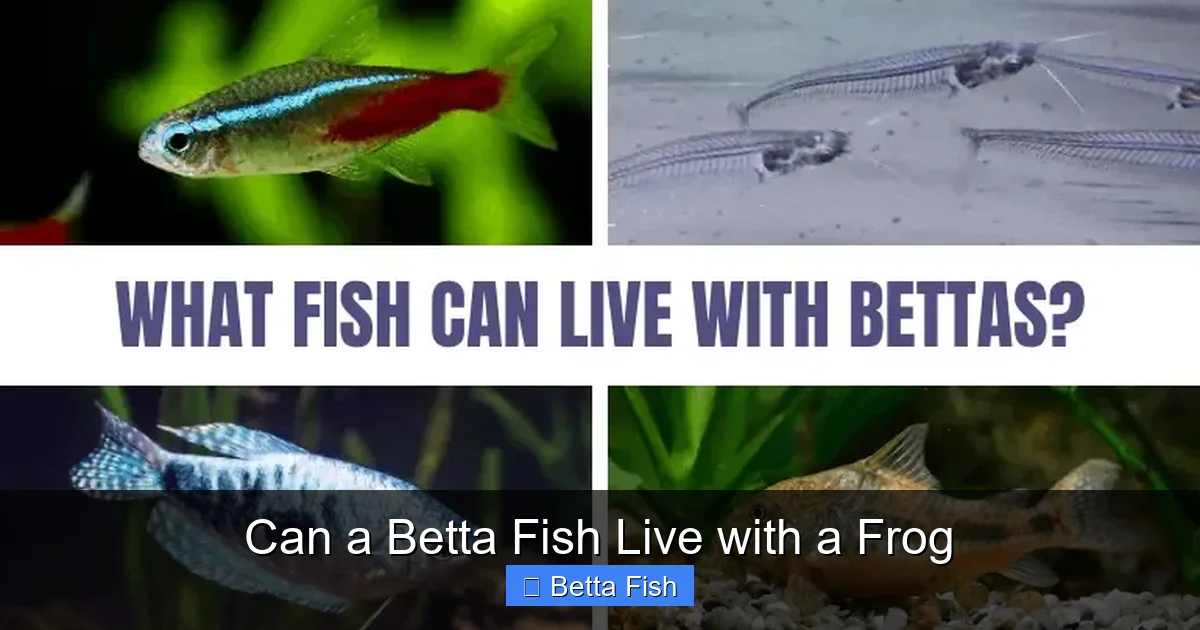
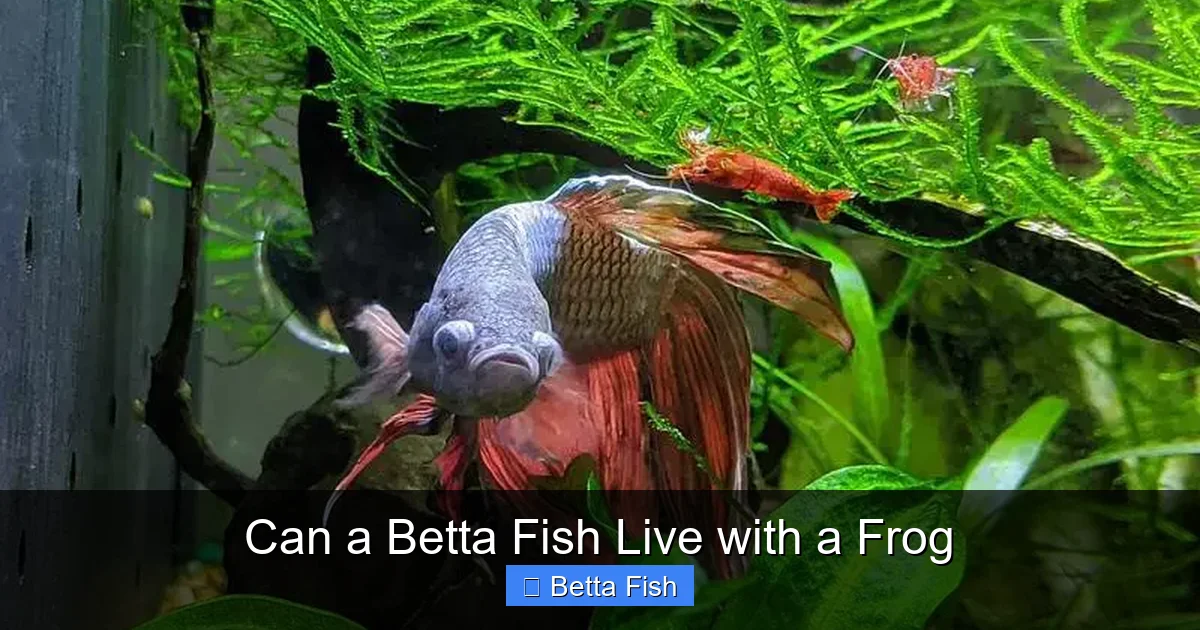
Bettas (Betta splendens) come from shallow, slow‑moving waters of Thailand and Cambodia. They are labyrinth fish, meaning they can gulp air from the surface, which is why they often do well in smaller setups. In the wild they are solitary and fiercely territorial, especially males. This aggression is why a betta will often flare at its own reflection or at any fish that looks too similar.
Visual guide about Can a Betta Fish Live with a Frog
Image source: japanesefightingfish.org
1.2 Water parameters you must match
- Temperature: 76‑82 °F (24‑28 °C) is ideal.
- pH: 6.5‑7.5, slightly acidic to neutral.
- Hardness: 3‑4 dGH is comfortable.
- Ammonia/Nitrite: Both must be 0 ppm.
Keeping these values stable is non‑negotiable for a healthy betta.
2. What About Pet Frogs?
2.1 Common species kept in aquariums
Many hobbyists keep small aquatic or semi‑aquatic frogs such as the African dwarf frog (Hymenochirus spp.), White’s tree frog (Litoria caerulea), or the African clawed frog (Xenopus laevis). Each has its own water preferences:
Visual guide about Can a Betta Fish Live with a Frog
Image source: bettafishworld.com
- African dwarf frog: 72‑78 °F, pH 6.5‑7.5, likes fully aquatic life.
- White’s tree frog: 70‑78 °F, tolerates a wider pH range, needs both water and land.
- African clawed frog: 68‑78 °F, prefers cooler water, very hardy.
2.2 Amphibian breathing and skin needs
Frogs breathe through their skin as well as lungs, so they require pristine water with low chlorine and low nitrate. Any sudden spikes in temperature or pH can stress them quickly.
3. Compatibility Check: Can They Co‑Exist?
3.1 Matching water temperature and pH
Fortunately, the temperature ranges of most small pet frogs overlap nicely with betta requirements. The key is to pick a frog that thrives at the same temperature you keep your betta. For example, an African dwarf frog does well at 76‑78 °F, which fits perfectly with a betta’s sweet spot.
Visual guide about Can a Betta Fish Live with a Frog
Image source: aquariumia.com
3.2 Size and space considerations
A male betta’s fins can be as long as 3 inches, while an adult African dwarf frog can reach 2‑3 inches in length. In a cramped 5‑gallon tank they will constantly be in each other’s way, leading to stress and possible injury. A minimum of 20 gallons gives both animals room to claim their own territories and provides enough water volume to buffer minor parameter changes.
3.3 Temperament and predation risk
Bettas are aggressive toward other fish that look like rivals, but they are generally not predatory toward amphibians. However, a curious betta may nip at a frog’s tail or fins, especially if the frog is very active near the surface. Conversely, some frogs—particularly larger species like White’s tree frog—might see a betta as a snack and try to swallow it. The safest bet is to choose a small, fully aquatic frog that stays at the bottom, reducing the chance of a mouth‑to‑mouth encounter.
3.4 Real‑world example
One hobbyist reported success keeping a male betta with an African dwarf frog in a 30‑gallon tank. They used plenty of live plants, a driftwood hideout for the betta, and a floating lily pad for the frog. After two weeks of careful observation, neither animal showed signs of stress. This example illustrates that success is possible but requires diligent setup and monitoring.
4. Setting Up a Shared Tank
4.1 Choosing the right tank
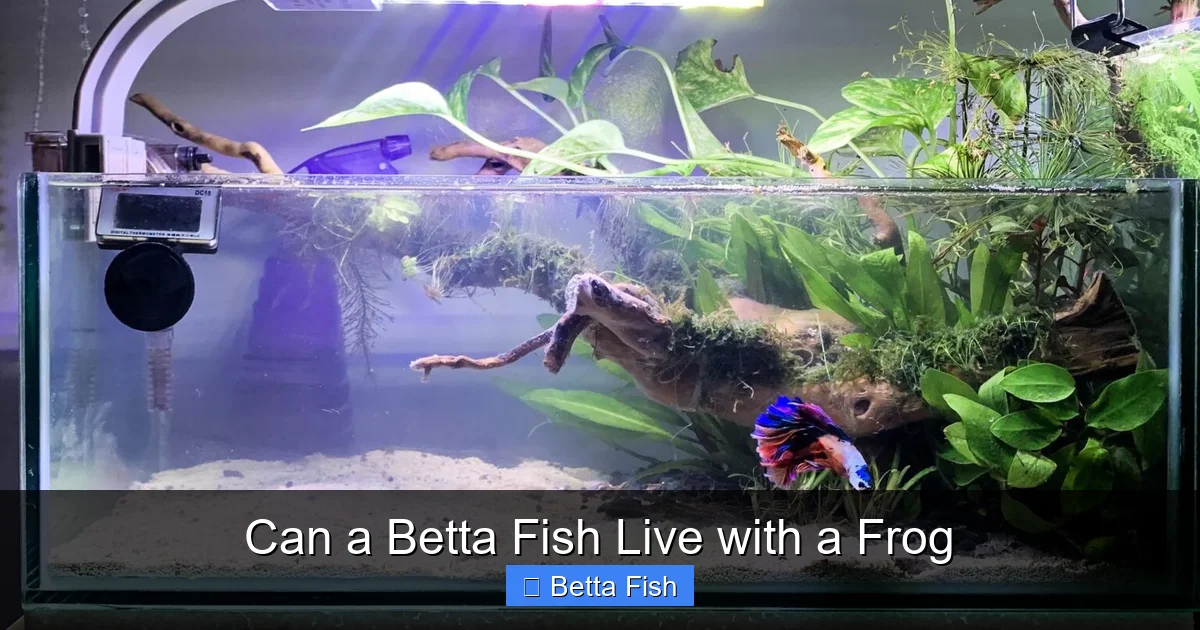
Start with at least a 20‑gallon long tank. A longer shape (e.g., 24×12×12 inches) provides horizontal swimming space for the betta and a deeper area for the frog to hide. Install a tight‑fitting lid—frogs can jump surprisingly far.
4.2 Filtration and flow
Both bettas and frogs prefer low to moderate water movement. Use a sponge filter or a gentle hang‑on‑back (HOB) filter set to “low.” The sponge also offers surface area for beneficial bacteria, keeping ammonia at bay.
4.3 Plants, hides, and décor
- Live plants: Anubias, Java fern, and Marimo moss create natural cover.
- Driftwood and rocks: Provide perches for the betta and climbing spots for the frog.
- Floating pads: A small piece of leaf or a floating lily pad gives the frog a place to rest above water.
4.4 Substrate and water conditioning
Fine sand or smooth gravel works best; avoid sharp edges that could cut a frog’s delicate skin. Always treat tap water with a de‑chlorinator that also removes chloramines, because frogs are especially sensitive to these chemicals.
5. Feeding Both Species Without Conflict
5.1 Separate feeding zones
Use a feeding cup or a small mesh net to drop food in opposite corners of the tank. This keeps the betta from stealing the frog’s bloodworms and vice‑versa.
5.2 Diet basics
- Betta: High‑protein pellets, occasional frozen or live brine shrimp.
- Frog: Small live foods like daphnia, bloodworms, or specially formulated frog pellets.
5.3 Feeding schedule
Feed the betta 2‑3 times a day in small portions. Feed the frog once daily, preferably after the betta’s meal so the water is less cloudy.
6. Monitoring Health and Adjusting as Needed
6.1 Signs of stress
For bettas: faded colors, clamped fins, excessive gill movement. For frogs: lethargy, loss of appetite, skin discoloration. If you notice any of these, consider separating the animals immediately.
6.2 Water testing routine
Test the tank weekly for ammonia, nitrite, nitrate, and pH. A quick dip test can be done with a cheap aquarium test kit. Keep nitrate below 20 ppm; higher levels can harm both bettas and frogs.
6.3 When to separate
If aggression escalates, or if one animal shows signs of illness that could spread (e.g., fungal infection on a frog), move them to separate tanks. It’s better to have two happy pets than one stressed one.
7. Alternatives to Frogs: Safer Tank‑Mates for Bettas
If the idea of a frog still feels risky, consider other peaceful companions that share similar water needs. Small, non‑aggressive fish such as neon tetras, rasboras, or even certain shrimp can coexist with a betta when the tank is large enough and there are plenty of hiding spots.
For more ideas on compatible fish, check out our guide on What Fish Can Live With A Betta and the article about Can a Betta Fish Live With Other Fish. These resources break down which species are safest and how to set up a community tank.
Conclusion: Proceed with Caution, Not Assumption
In short, a betta fish can live with a frog—but only if you choose the right frog species, provide a spacious, well‑filtered tank, and keep a vigilant eye on both animals. The overlapping temperature range makes it technically possible, yet the differing temperaments and feeding habits mean that success is not guaranteed.
Start with a larger tank, use plenty of plants and hides, and test water parameters daily. If any sign of stress appears, be ready to separate them. By respecting the needs of both the betta and the frog, you can enjoy a unique and lively aquatic display that’s both beautiful and healthy.
Frequently Asked Questions
Can a betta fish live with an African dwarf frog?
Yes, if the tank is at least 20 gallons, the water temperature is kept between 76‑78 °F, and both animals have plenty of hiding spots, they can coexist peacefully.
Will a betta eat a small frog?
Generally bettas do not view small, fully aquatic frogs as food, but a very hungry betta might nip at a frog’s tail. Monitoring and separate feeding reduce this risk.
Do I need a heater for a mixed betta‑frog tank?
Both bettas and most small pet frogs thrive in the same temperature range, so a reliable aquarium heater set to 78 °F works for both.
Can I keep a male betta with a female frog?
Gender isn’t the main issue; the key factors are species compatibility, tank size, and temperament. A calm, non‑aggressive frog of either sex can be a suitable tank‑mate if conditions are right.
What should I do if my betta starts flaring at the frog?
Immediately provide more visual barriers such as plants or decorations, and consider moving the frog to a separate compartment or a different tank.
Are there any plants that help both bettas and frogs feel safe?
Floating plants like water lettuce, as well as rooted plants such as Java fern and Anubias, give the betta places to rest and the frog spots to hide and rest out of the water.

