Are Betta Fish Considered Smart

Betta fish are surprisingly clever for a small aquarium pet. They can recognize owners, solve simple puzzles, and even display social learning. Understanding their intelligence helps you create a richer, more stimulating environment that keeps them healthy and happy.
Key Takeaways
- Recognition ability: Betta fish can learn to identify their keeper’s face and feeding routine.
- Problem‑solving skills: They navigate mazes and push objects to get food, showing basic cognition.
- Social learning: Bettas observe other fish and can mimic simple behaviors.
- Environmental enrichment: Adding plants, caves, and interactive toys boosts mental health.
- Training tips: Consistent cues, positive reinforcement, and short sessions work best.
- Limitations: Their intelligence is modest compared to mammals; patience is key.
- Health link: A stimulated mind often means a stronger immune system and longer lifespan.
📑 Table of Contents
- Introduction: Why Betta Intelligence Matters
- 1. The Science of Fish Intelligence
- 2. How Betta Fish Show Their Smarts
- 3. Boosting Betta Intelligence Through Enrichment
- 4. Practical Tips for Owners Who Want a Clever Betta
- 5. Common Misconceptions About Betta Intelligence
- Conclusion: Smart, Curious, and Worth the Effort
Introduction: Why Betta Intelligence Matters
When you first see a betta fish, the bright fins and bold personality steal the show. Most hobbyists think of them as just pretty decorations, but there’s more beneath those shimmering scales. Recent observations suggest that bettas are capable of learning, remembering, and even showing curiosity—traits we usually reserve for “smart” animals.
Knowing whether betta fish are considered smart isn’t just trivia; it shapes how you care for them. An engaged betta is less stressed, eats better, and lives longer. In this article we’ll explore the science behind betta cognition, share real‑world examples, and give you hands‑on tips to keep your finned friend mentally sharp.
1. The Science of Fish Intelligence
What defines “smart” in the animal kingdom?
Intelligence can be measured in many ways: problem‑solving, memory, social learning, and tool use. For fish, researchers often use maze tests, operant conditioning, and observation of natural behaviors. While fish lack the brain mass of mammals, they have evolved efficient neural circuits for survival.

Visual guide about Are Betta Fish Considered Smart
Image source: infishtank.com
Betta brain structure
The betta’s brain is small but specialized. The telencephalon handles learning and memory, while the optic tectum processes visual cues—crucial for recognizing owners or navigating obstacles. Studies on related gourami species show similar neural pathways, hinting that bettas share these capabilities.
Comparisons with other pets
Goldfish can be trained to push a lever for food, and cichlids can solve simple puzzles. Betta fish fall in the same range: they may not master complex tricks, but they can learn cause‑and‑effect relationships and display short‑term memory up to several days.
2. How Betta Fish Show Their Smarts
Recognizing their keeper
Many owners report that their betta swims to the front of the tank when they approach. Experiments using colored cards or distinct feeding cues confirm that bettas can associate a specific visual cue with food. This is a classic example of associative learning.

Visual guide about Are Betta Fish Considered Smart
Image source: animalslog.com
Maze and obstacle navigation
Place a clear plastic tube with a food reward at the far end. A curious betta will explore, learn the tube’s shape, and eventually swim straight to the prize. Repeating the test shows improvement—a sign of learning.
Tool use and object manipulation
While bettas don’t build nests like some fish, they will push floating objects (like a small ball) to reach food. This simple problem‑solving indicates they can plan a short series of actions to achieve a goal.
Social learning
When two bettas are housed in adjacent tanks (with a clear view), the observer often copies the demonstrator’s feeding behavior. This mirrors social learning seen in schooling fish, suggesting bettas can learn by watching others.
3. Boosting Betta Intelligence Through Enrichment
Why enrichment matters
A bored betta may become lethargic or develop fin rot from stress. Providing mental challenges mimics their natural environment, where they hunt and explore.
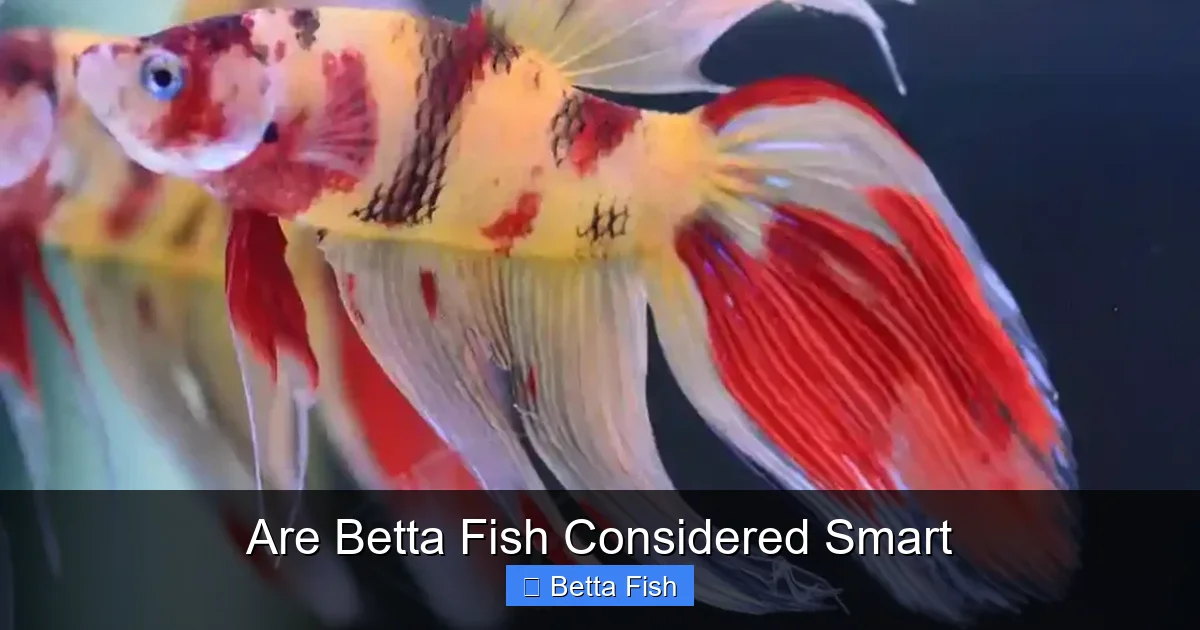
Visual guide about Are Betta Fish Considered Smart
Image source: oceanbitez.com
Live plants and hiding spots
Plants, driftwood, and caves create a three‑dimensional playground. They encourage exploration and give the betta places to claim territory. For ideas on safe greenery, see Which Live Plants Are Good For Betta Fish.
Interactive toys
Floating rings, ping‑pong balls, and silicone tunnels work well. Rotate toys every few weeks to keep the environment fresh.
Training sessions
Use a small stick or a finger tap as a cue, then reward with a tiny portion of high‑quality food. Keep sessions under two minutes and repeat daily. Over time, the betta will associate the cue with a treat, similar to clicker training for dogs.
4. Practical Tips for Owners Who Want a Clever Betta
Start with a routine
Feed at the same time each day and use the same hand or spoon. Consistency reinforces the betta’s ability to predict events, which is the foundation for more complex learning.
Use positive reinforcement
Never punish a betta for not performing a trick. Instead, reward even small attempts with a pea‑sized food morsel. This builds confidence and encourages repeat behavior.
Gradual difficulty increase
Begin with easy tasks—like swimming to a colored marker. Once mastered, add a step, such as pushing a ball before receiving food. Patience is key; some bettas take weeks to catch on.
Monitor stress signals
Rapid gill movement, faded colors, or clamped fins indicate stress. If you see these, simplify the challenge and give the fish a break.
Link to related care topics
Understanding a betta’s natural habits helps you design smarter enrichment. Learn more about their activity patterns in Are Betta Fish Nocturnal and discover why they’re often called “fighter fish” in Why Are Male Betta Fish So Aggressive.
5. Common Misconceptions About Betta Intelligence
“Betas are dumb because they live in tiny bowls.”
This myth stems from outdated pet‑store practices. When housed in a proper tank with enrichment, bettas display far more curiosity and learning ability than many assume.
“Only male bettas are smart.”
Both sexes can learn, though males often show more boldness due to territorial instincts. Female bettas may be quieter but are equally capable of recognizing patterns.
“If a betta won’t do a trick, it’s not intelligent.”
Intelligence isn’t a single test. Some bettas excel at maze navigation, others at color recognition. Tailor activities to your fish’s personality.
Conclusion: Smart, Curious, and Worth the Effort
Betta fish may be small, but they are far from simple. Their ability to recognize owners, solve basic puzzles, and learn from peers places them among the more cognitively engaging freshwater fish. By providing enrichment, consistent routines, and gentle training, you can unlock a betta’s hidden potential, leading to a healthier, more vibrant companion.
So the next time you watch your betta glide through a leafy forest of live plants, remember—you’re sharing an underwater world where curiosity thrives. Happy fish‑keeping!
Frequently Asked Questions
Do betta fish have long‑term memory?
Yes, bettas can remember feeding cues and simple visual patterns for several days, though their memory span is shorter than that of mammals.
Can I train a betta to do tricks?
Absolutely. Using positive reinforcement, you can teach a betta to swim to a marker, push a ball, or respond to a tap cue.
Are male bettas smarter than females?
Both sexes are capable learners. Males may appear more daring because of their territorial nature, but females learn just as well when motivated.
How often should I change enrichment toys?
Rotate toys every 2‑3 weeks. This prevents boredom and encourages continual exploration.
What signs show my betta is stressed during training?
Look for rapid gill movement, faded colors, or clamped fins. If these appear, pause the session and give your fish a calm environment.
Is a larger tank necessary for a smart betta?
Yes, a spacious, well‑filtered tank provides room to explore and reduces stress, which supports better learning and overall health.