Which Is Better Fish Oil Capsules or Liquid
When it comes to supplementing your Betta fish with omega-3s, the choice between capsules and liquid fish oil isn’t just about preference—it impacts effectiveness, ease of use, and your fish’s health. Capsules offer precise dosing and stability but may have lower bioavailability, while liquid forms absorb faster but require careful storage and measurement. Understanding these key differences ensures you provide the best support for your Betta’s vibrant fins, immune system, and overall vitality.
As a Betta fish enthusiast, you want nothing more than to see your aquatic friend thrive—those flowing, vibrant fins shimmering with health, a lively personality, and a robust immune system. You’ve likely heard about the benefits of fish oil, packed with omega-3 fatty acids like EPA and DHA, for supporting exactly that. But then comes the aisle (or the online cart) dilemma: fish oil capsules or liquid? Which one truly serves your Betta’s needs better? It’s a common question, and the answer isn’t one-size-fits-all. It hinges on understanding how each form works, your routine, and your specific goals for your finned companion. Let’s dive deep into this comparison, breaking down the science, practicality, and real-world application for Betta fish care.
First, let’s acknowledge why this matters. Betta fish, with their dazzling colors and elaborate fins, are prone to stress-related illnesses and fin rot. Omega-3s from fish oil are anti-inflammatory, support cell membrane health (crucial for fin integrity), and can enhance coloration. But the form you choose—capsule or liquid—affects how efficiently your Betta receives these nutrients. It’s not just about human convenience; it’s about bioavailability, stability, and precise dosing for a creature that consumes a tiny amount of food daily. We’ll explore every angle, from the molecular level to your kitchen counter, to help you make an informed, confident choice.
Key Takeaways
- Absorption Varies: Liquid fish oil is generally absorbed quicker by Betta fish, but capsule contents can be just as effective if properly administered.
- Dosage Control: Capsules provide pre-measured, consistent doses, reducing the risk of over- or under-supplementing your Betta.
- Storage Stability: Capsules are more resistant to oxidation and rancidity; liquid fish oil requires strict refrigeration to maintain potency.
- Practicality: Capsules are less messy and travel-friendly; liquids mix easily with food but can be trickier to dose accurately.
- Cost Efficiency: Price per milligram of omega-3s varies—high-concentration liquids may offer better value, but capsules prevent waste.
- Purity Matters: Both forms can contain contaminants; choose reputable brands with third-party testing for heavy metals and oxidation.
- Betta-Specific Needs: Consider your Betta’s diet and health goals—color enhancement may benefit from direct liquid mixing, while capsules suit routine maintenance.
📑 Table of Contents
- The Omega-3 Lifeline: Why Betta Fish Need EPA and DHA
- Fish Oil Capsules: The Pill of Precision (and Potential Hurdles)
- Liquid Fish Oil: Direct Delivery with a Fragility Trade-Off
- Absorption and Bioavailability: Cutting Through the Hype
- Practical Application: How to Use Each Form for Your Betta
- Cost Analysis: Calculating the True Price per Dose
- Safety and Purity: The Non-Negotiable Foundation
- Making Your Decision: A Personalized Guide for Betta Owners
The Omega-3 Lifeline: Why Betta Fish Need EPA and DHA
Before comparing capsules and liquid, grasp what you’re supplementing. Fish oil provides two critical long-chain omega-3 fatty acids: Eicosapentaenoic acid (EPA) and Docosahexaenoic acid (DHA). For Bettas, these aren’t just buzzwords—they’re foundational to health.
EPA: The Anti-Inflammatory Warrior
EPA acts as a powerful anti-inflammatory agent. In Bettas, this translates to a calmer digestive tract, reduced internal stress responses, and a more resilient immune system. A Betta constantly battling minor inflammation (from water quality fluctuations, tank mate stress, or a suboptimal diet) is vulnerable to diseases like dropsy or fin rot. Regular, adequate EPA intake helps modulate this response, keeping your fish in a state of physiological balance. Think of it as an internal peacekeeper, ensuring the Betta’s energy goes toward displaying those gorgeous fins, not fighting invisible fires.
DHA: The Structural Architect for Fins and Color
DHA is a primary structural component of cell membranes. For a Betta, whose beauty is literally skin-deep (and fin-deep), this is paramount. DHA integrates into the fin and skin cell membranes, making them more flexible, resilient, and less prone to tearing or necrosis. Furthermore, DHA plays a role in pigment cell function. While genetics determine base color, optimal DHA levels can help express and maintain the full spectrum of reds, blues, and iridescence that Bettas are famous for. A deficiency might lead to faded colors or brittle, ragged fin edges.
The Plant-Based Omega-3 Gap
Bettas (and all fish) cannot efficiently convert shorter-chain omega-3s from plant sources (like flaxseed oil’s ALA) into the potent EPA and DHA they need. This conversion rate is notoriously low in aquatic animals. Therefore, direct marine-sourced fish oil is the only reliable way to deliver these specific fatty acids. Whether from capsules or liquid, the source must be fatty fish like anchovies, sardines, or salmon—preferably from sustainable, low-mercury fisheries.
Fish Oil Capsules: The Pill of Precision (and Potential Hurdles)
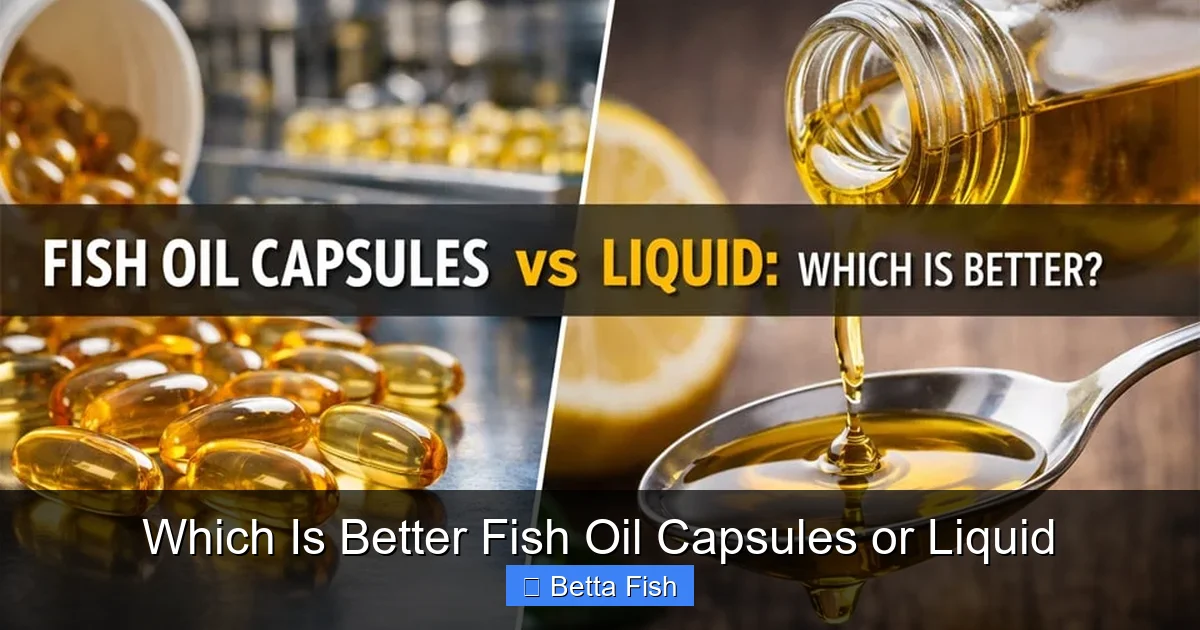
Fish oil capsules, or softgels, are the most common form on the market. They’re essentially a sealed, gelatin-based container holding the oil. For Betta owners, they present a unique set of advantages and challenges.
Visual guide about Which Is Better Fish Oil Capsules or Liquid
Image source: jinlupacking.com
Advantage: Unmatched Stability and Freshness
The capsule shell is a barrier against oxygen, light, and heat—the three primary enemies of fish oil. Once sealed, the oil inside remains in a pristine, unoxidized state until the moment you break it. This is a massive benefit. Rancid fish oil is not only ineffective but harmful, producing free radicals that can stress your Betta’s system. Capsules, stored in a cool, dark place, can maintain potency for years, whereas opened liquid bottles have a much shorter shelf life. For the Betta owner who supplements infrequently or lives in a warm, humid climate, capsules offer peace of mind against spoilage.
Advantage: Perfect, Waste-Free Dosing
This is arguably the biggest pro for Bettas. A typical high-quality capsule contains a standardized amount of EPA/DHA (e.g., 300mg). For a Betta, you’ll use a tiny fraction of that—often just a pinprick or a minuscule drop. With a capsule, you pierce it, squeeze out the required micro-dose, and the rest remains protected in the other half or another capsule. There’s no risk of contaminating a whole bottle by introducing water or food particles. You get exact, repeatable dosing every single time, which is critical for a creature with a metabolic rate as high as a Betta’s.
Disadvantage: The Piercing Problem and Potential Absorption Lag
The act of accessing the oil is the capsule’s main drawback. You need a clean, sharp pin or needle. Piercing must be done carefully to avoid bursting the capsule prematurely or contaminating the oil with skin oils. Then, you must extract the micro-dose without losing it. It’s a delicate, slightly messy process that not everyone enjoys. Furthermore, some studies suggest that the oil from a recently pierced capsule might not be as immediately bioavailable as pre-emulsified liquid oil. The oil is still in a triglyceride form, which requires digestion. For a Betta with a simple digestive tract, this isn’t usually a significant barrier, but it’s a theoretical consideration.
Disadvantage: Added Ingredients
Check the capsule label. Many contain gelatin (from pork or beef—a concern for some), glycerin, or even small amounts of soy or wheat. While the quantities are minuscule and the dose for your Betta is microscopic, owners of highly sensitive Bettas or those with strict dietary philosophies might prefer a pure, additive-free liquid.
Liquid Fish Oil: Direct Delivery with a Fragility Trade-Off
Liquid fish oil is exactly what it sounds like: the purified oil in a bottle. It’s often marketed as “more natural” or “faster acting.” For Betta use, it’s a tool with very different properties.
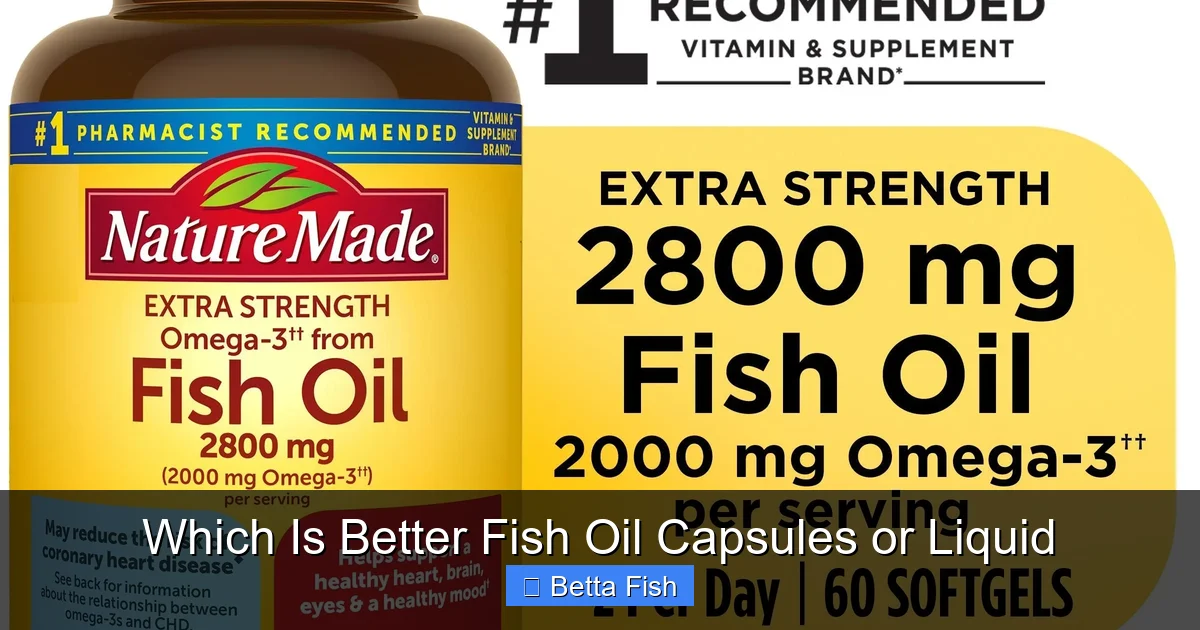
Visual guide about Which Is Better Fish Oil Capsules or Liquid
Image source: i5.walmartimages.com
Advantage: Superior Ease of Administration (Once You Master Dosing)
This is the liquid’s trump card. To dose your Betta, you simply use the dropper that comes with the bottle. You can place a tiny drop directly onto a frozen or live food (like daphnia or brine shrimp) just before feeding, or mix an almost imperceptible amount into a small portion of their regular pellet or flake food. No piercing, no squeezing, no potential for capsule shrapnel in the tank. For owners who feed prepared foods, this is a seamless addition to the routine. The oil coats the food instantly, ensuring your Betta consumes it with their meal.
Advantage: Potentially Faster Perceived Onset
Because the oil is already in a free, liquid state, some believe it’s more readily available for absorption. While scientific consensus on a *major* difference for fish is slim, in practice, Betta owners often report seeing improvements in fin appearance or activity levels within 2-3 weeks of consistent liquid supplementation, compared to 4+ weeks with capsules. This could be due to the direct mixing with food ensuring full consumption, versus a Betta possibly nibbling around a droplet from a pierced capsule.
Disadvantage: The Rancidity Risk is Real and Immediate
Once a liquid fish oil bottle is opened, it’s in a constant battle with oxygen. Even with a tight seal, each opening introduces air. Oxidation begins quickly, leading to rancidity. Rancid oil smells fishy, pungent, or like metal—not the mild, ocean-like scent of fresh oil. Never use oil that smells off. Rancid oil is pro-inflammatory and toxic. This means you must buy smaller bottles (to use quickly), store it in the refrigerator immediately after opening, and never use the dropper tip if it touches food or water (use a separate dropper). For a Betta owner who only needs a drop every other day, a large bottle of liquid may go bad before it’s finished.
Disadvantage: Dosing Precision Can Be Tricky
Droppers vary in size and calibration. A “drop” from one bottle might be 0.05ml; from another, 0.1ml. For a Betta, you’re often talking about 1/4th or 1/8th of a drop. Achieving that consistently is nearly impossible with a standard dropper. This can lead to inconsistent dosing—some days too little (wasted), some days too much (risky, as excessive fat can cause digestive issues). Capsules, once you master piercing, offer more reliable micro-dosing.
Absorption and Bioavailability: Cutting Through the Hype
This is the heart of the “which is better” debate. Does form truly affect how much EPA/DHA your Betta actually uses?
Visual guide about Which Is Better Fish Oil Capsules or Liquid
Image source: estore.caring2u.com
The Molecular Form: Triglycerides vs. Ethyl Esters vs. Natural Form
Most conventional fish oil (both capsule and liquid) is in natural triglyceride (TG) form—the same form found in fish. This is well-absorbed. Some cheaper, highly concentrated liquids or “pharmaceutical-grade” oils are re-esterified into ethyl ester (EE) form to pack in more omega-3s per volume. EE form requires bile for absorption and may be less efficiently taken up, especially in smaller creatures like Bettas. Always check the label: “Natural Triglyceride Form” or “TG” is ideal. Avoid “Ethyl Ester” if possible for Bettas.
Emulsification: The Key to Fish Absorption
Fish don’t have gallbladders like humans. Their ability to emulsify fats (break them into small droplets for absorption) is different. Here’s where the method of delivery matters more than the pre-packaged form. If you mix the fish oil with food—especially a food that contains some natural fat or protein—you are essentially pre-emulsifying it. The Betta eats the food-oil combo, and digestion is straightforward. Whether that oil came from a capsule you squeezed onto the food or from a liquid you mixed in becomes largely irrelevant at this stage. The critical factor is that the oil is consumed with food. Administering oil directly into the water is ineffective and pollutes the tank; Bettas won’t ingest a meaningful amount.
The Verdict on Bioavailability
For a Betta, assuming you are mixing the oil with their food, the bioavailability difference between a high-quality capsule and a high-quality liquid in natural TG form is negligible. The winner is the method you will use consistently and correctly. If you reliably pierce a capsule and coat each food portion, you’ll get excellent results. If you reliably use a dropper to add liquid to food, you’ll get excellent results. The form’s inherent absorption advantage is overshadowed by administration technique.
Practical Application: How to Use Each Form for Your Betta
Knowing the theory is useless without a clear, safe protocol. Here’s exactly how to use each form.
Using Capsules: A Step-by-Step Guide
- Choose a High-Quality, Pure Capsule: Look for “molecularly distilled,” “third-party tested” (IFOS, GOED, or Labdoor verified), and from small fish (sardines, anchovies) to minimize mercury. Ensure it’s in natural triglyceride form.
- Gather Tools: A clean, sharp pin (a sterile sewing pin or dedicated capsule piercer), a small, clean glass dish or lid, and tweezers (optional).
- The Dosing Ritual: For a typical Betta, a common starting dose is 1/8th to 1/4th of a standard 1000mg capsule (which usually provides ~300mg EPA/DHA total) per day or every other day. Pierce the capsule near the rounded end. Gently squeeze to release a tiny drop into your dish. Use the pin to guide and collect the micro-dose. The rest of the capsule’s contents can be stored in the dish, covered, in the fridge for 24-48 hours, or discarded.
- Administer: Using a clean toothpick or the pin, transfer the micro-drop onto a single pellet or a few frozen daphnia just before feeding. Let it absorb for 10 seconds. Feed immediately.
- Clean Up: Wipe the pin with a clean cloth. Never reuse a contaminated dropper or pierce the same spot twice.
Pro Tip: Some owners find it easier to pierce the capsule over the food container itself, letting the oil fall directly onto the food pile. Practice with an empty capsule first!
Using Liquid: A Step-by-Step Guide
- Choose a High-Quality Liquid: Same criteria as capsules: molecular distillation, third-party tested, small fish source, natural TG form. Ensure it comes with a dropper.
- Storage is Non-Negotiable: Refrigerate immediately upon arrival and after every use. Keep the bottle in the darkest part of the fridge, not the door. Use within 3-4 months of opening.
- Calibrate Your Dropper: First, count how many drops equal 1ml (usually 20-30). Then, calculate your Betta’s dose. If your target is 0.05ml (1/20th of a ml), and your dropper gives 20 drops/ml, that’s 1 drop. But you may need 1/4 drop. To achieve this, draw the dropper full, then let out 3/4s of it onto a spoon, leaving 1/4 in the tip—that’s your dose. It sounds fiddly, and it is. This is the liquid’s biggest practical hurdle.
- Administer: Place the calibrated micro-dose onto food as described above. Never add directly to the tank water.
- Dropper Hygiene: The dropper tip must never touch food, water, or your skin. If it does, rinse it with distilled water and let dry before returning to the bottle to prevent contamination and oxidation.
Pro Tip: Consider buying a set of micro-droppers (1ml syringes without needles) from a pharmacy for more precise measuring.
Cost Analysis: Calculating the True Price per Dose
Comparing price tags is misleading. You must calculate the cost per effective milligram of EPA/DHA per dose for your Betta.
The Capsule Calculation
A 120-capsule bottle of 1000mg fish oil (300mg EPA/DHA) costs $20. That’s $0.166 per capsule. But you use 1/8th of a capsule per dose. So your cost per dose is $0.0208 (just over 2 cents). However, you are wasting 7/8ths of the capsule unless you store it carefully and use it within 48 hours, which many don’t. If you discard the remainder, your effective cost per dose jumps to $0.166. If you use the remainder within two days for another dose, your cost halves again. Honesty about usage is key.
The Liquid Calculation
A 4oz (120ml) bottle of concentrated liquid fish oil (providing 800mg EPA/DHA per teaspoon/5ml) costs $25. That’s $0.104 per ml. Your Betta’s dose might be 0.05ml. So cost per dose is $0.0052 (half a cent). But this assumes you use every drop before it oxidizes. If the bottle expires or you lose 20% to rancidity, your real cost rises. Liquids often have a higher upfront concentration, which can mean better value if you use it all.
The Verdict on Cost
For the Betta owner who supplements consistently and can store liquid properly, liquid is almost always cheaper per dose due to higher concentrations and no “wasted” capsule contents. For the occasional supplementer or someone in a hot climate, capsules might be more economical because you only open what you need, and the rest stays fresh indefinitely. Factor in the cost of pins, droppers, or syringes, but these are minimal.
Safety and Purity: The Non-Negotiable Foundation
This transcends the capsule vs. liquid debate. A contaminated or rancid product is worse than no supplement.
What to Avoid: The “Fishy” Red Flags
- Rancidity: Smell is your first test. Fresh fish oil should smell mildly of the ocean, not fishy, pungent, or like old cooking oil. If it has a strong odor, discard it.
- Contaminants: Mercury, PCBs, and dioxins accumulate in large predatory fish. Reputable brands use small fish (sardines, anchovies) and employ molecular distillation to remove these. Look for third-party certification seals (IFOS, GOED, USP).
- Excessive Vitamin A or D: Some cod liver oils have high levels of these fat-soluble vitamins, which can be toxic to fish in excess. For Bettas, stick to pure fish body oil, not cod liver oil, unless specifically formulated for fish.
- Artificial Flavors/Colors: Unnecessary and potentially harmful. Your Betta doesn’t need strawberry-flavored oil.
Storage: The Golden Rules for Both Forms
Capsules: Store in a cool, dark cupboard. Refrigeration extends life but isn’t always necessary if kept cool and sealed. Discard any that smell off when pierced.
Liquid: REFRIGERATE. Always. Use an amber or opaque bottle if possible. Minimize air exposure by closing tightly immediately. Use a clean tool to dose. If the oil thickens in the fridge, let it sit at room temp for 10 minutes before dosing—this is normal.
Making Your Decision: A Personalized Guide for Betta Owners
So, which is better for you and your Betta? Here’s a quick decision matrix:
- Choose CAPSULES if: You value absolute stability and long shelf life; you only supplement occasionally (e.g., 1-2 times a week); you are uncomfortable with precise liquid measuring; you live in a very warm, humid environment without reliable refrigeration; you want zero risk of a bottle going rancid mid-use.
- Choose LIQUID if: You supplement daily or every other day; you feed frozen or live foods and want to coat them instantly; you are comfortable with a small, daily measuring ritual; you have reliable fridge space; you want the lowest possible cost per dose; you prefer to avoid gelatin (if vegan/vegetarian).
Our General Recommendation for Most Betta Owners: Start with a high-quality liquid fish oil if you feed prepared foods (pellets, frozen) regularly. The ease of adding a drop to the food bowl is transformative. Just be religious about refrigeration and dosing precision. If the dosing feels too finicky, or if you only plan to supplement during stressful times (new tank, after illness), capsules are the more forgiving, stable choice. Remember, the best form is the one you will use correctly and consistently. Inconsistent supplementation, regardless of form, yields no benefits.
Ultimately, both capsules and liquid can be excellent tools in your Betta care arsenal. The “better” form is the one that aligns with your lifestyle, your Betta’s feeding routine, and your commitment to proper storage and dosing. By prioritizing purity, understanding administration, and tailoring to your fish’s needs—whether that’s boosting color, healing fins, or bolstering immunity—you’ll make a choice that leads to a healthier, more vibrant Betta swimming proudly in your tank.
Frequently Asked Questions
Can I use regular human fish oil capsules or liquid for my Betta fish?
Yes, you can use high-quality, pure human fish oil supplements for your Betta, as long as they are free of added flavors, colors, or excessive vitamins A/D. Always choose products tested for contaminants and from small fish sources. The dosage, however, is drastically smaller than for humans—just a tiny fraction of a capsule or a minuscule drop.
How much fish oil should I give my Betta fish?
A general starting point is 1/8th to 1/4 of a standard 1000mg capsule (providing ~30-75mg combined EPA/DHA) or 0.025ml to 0.05ml of liquid, every other day. Adjust based on your Betta’s size (adult vs. juvenile) and specific health goals. More is not better; excess fat can cause digestive issues. Observe your fish and consider consulting a vet specializing in fish for precise guidance.
Is liquid fish oil better than capsules for enhancing Betta fish color?
Not inherently. The color-enhancing power comes from the DHA content, which is present in both forms. Liquid might show results slightly faster simply because it’s easier to mix directly and consistently with food, ensuring your Betta consumes the full dose. The key is consistent, quality supplementation with food, not the form itself.
What’s the safest way to pierce a fish oil capsule for my Betta?
Use a clean, sharp sterile pin. Pierce the capsule over a small, clean glass dish or the lid of your fish food container. Pierce near the rounded end to create a small hole. Gently squeeze from the opposite end to extract a single, tiny drop. Avoid touching the oil with your fingers. Use tweezers to handle the capsule if needed, and wipe the pin clean with a cloth after each use.
How can I tell if my fish oil (liquid or capsule) has gone rancid?
Rancid fish oil has a strong, pungent, “fishy” or metallic odor—not a mild, fresh ocean smell. For capsules, pierce one and smell the oil. For liquid, simply open and sniff. If it smells off, discard it immediately. Rancid oil is pro-inflammatory and harmful. Also, check for a thick, sticky texture or a change in color (darkening).
Are there any risks of over-supplementing my Betta with fish oil?
Yes. Excessive fat can lead to digestive distress, including constipation or fatty liver disease, especially in Bettas who are prone to obesity. It can also disrupt the balance of other essential fatty acids. Stick to recommended micro-doses (1/8th capsule or less every other day is often sufficient). More is not beneficial. Watch for lethargy, loss of appetite, or stringy feces, which could indicate over-supplementation.