Is Purified Drinking Water Safe for Betta Fish
Is purified drinking water safe for betta fish? The short answer is: it depends. While purified water is clean and free of contaminants, it often lacks essential minerals that betta fish need to thrive. In this guide, you’ll learn exactly how purified water affects your betta, what you need to add or avoid, and the best water choices for a healthy betta fish habitat.
Key Takeaways
- Purified water is not ideal on its own: It lacks essential minerals and can have unstable pH levels that harm your betta.
- Water quality matters most: Maintaining proper water parameters is the single most important factor in betta fish care.
- You can use purified water safely: Only if you remineralize it and treat it with a water conditioner before adding it to the tank.
- Tap water can be a better option: When conditioned properly, tap water often provides better mineral balance than purified water.
- Regular water changes are critical: Weekly changes of 25-50% help maintain a healthy betta fish tank environment.
- Test your water frequently: Using a liquid test kit helps you catch pH, ammonia, and nitrate problems early.
📑 Table of Contents
- Is Purified Drinking Water Safe for Betta Fish?
- Why Minerals Matter for Betta Fish
- The Risks of Using Purified Water for Betta Fish
- How to Make Purified Water Safe for Betta Fish
- Better Water Options for Betta Fish
- Quick Tips for Using Purified Water Safely
- Expert Insights on Purified Water for Bettas
- Common Mistakes When Using Purified Water
- How Often Should You Change Water in a Betta Tank?
- Conclusion
Is Purified Drinking Water Safe for Betta Fish?
Every betta fish owner wants the best for their aquatic pet. You want clean, safe water that keeps your betta colorful, active, and healthy. But when you look at the water in your glass, you might wonder: is purified drinking water safe for betta fish?
The truth is not as simple as a yes or no. Purified drinking water goes through processes like reverse osmosis, deionization, or carbon filtration. These methods remove harmful contaminants. They also strip away beneficial minerals that betta fish need. Without those minerals, your betta can suffer from stress, poor growth, and even early death.
In this comprehensive guide, you’ll learn everything about using purified water for betta fish. We’ll cover what purified water actually is, why minerals matter, how to make it safe, and what the best water options are for your betta tank. Let’s dive in.
What Is Purified Drinking Water?
Purified drinking water has been treated to remove impurities. Common purification methods include:
- Reverse osmosis (RO): Water passes through a membrane that filters out most contaminants, minerals, and bacteria.
- Deionization: Ion-exchange resins remove dissolved salts and minerals.
- Carbon filtration: Activated carbon absorbs chlorine, chloramine, and organic compounds.
- Distillation: Water is boiled, and the steam is collected and cooled back into liquid form.
These processes produce very clean water. The problem is that they also remove calcium, magnesium, and other trace minerals. These minerals play a vital role in your betta fish health. They help with osmoregulation, which is how fish maintain balance inside their bodies.
If you’re curious about specific purification methods, check out our detailed guides on can you use purified drinking water for betta fish and is reverse osmosis water good for betta fish for deeper insights.
Why Minerals Matter for Betta Fish
Your betta fish lives in water. That water directly affects every aspect of its health. The betta fish water quality in your tank determines how well your fish breathes, digests food, and fights disease.
Here is why minerals in water are so important:
- Osmoregulation: Fish constantly manage the salt and water balance in their bodies. Without enough minerals in the water, this process becomes exhausting. Your betta may appear lethargic or stop eating.
- pH stability: Minerals act as a buffer. They keep the pH level for betta fish steady around 6.5 to 7.5. Purified water has almost no buffering capacity, so the pH can swing wildly.
- Color and vitality: Trace minerals contribute to vibrant coloration and strong fins. A mineral-poor diet and water source can make your betta look dull and faded.
- Disease resistance: Healthy fish in well-mineralized water fight off infections better. Poor water quality weakens the immune system and invites parasites and bacteria.
Using purified water without adding minerals back is one of the most common common mistakes new betta owners make. It seems cleaner, but cleaner is not always better when it comes to your fish.
The Risks of Using Purified Water for Betta Fish
So what happens if you fill your betta tank with straight purified water? Several problems can develop quickly.
pH Instability
Purified water typically has a neutral pH of around 7.0. But that number can shift fast. When it contacts glass, gravel, or decorations, the pH can spike or drop. These sudden changes cause betta fish stress. Signs of stress include hiding, clamped fins, and rapid breathing.
Low General Hardness (GH) and Carbonate Hardness (KH)
GH measures calcium and magnesium levels. KH measures carbonate levels that buffer pH. Purified water has near-zero GH and KH. This creates what aquarists call “soft water.” While some fish tolerate soft water, bettas do best in moderately hard water. Long-term exposure to very soft water can lead to osmoregulatory stress and shortened lifespan.
Absence of Beneficial Bacteria Support
Your betta tank relies on beneficial bacteria to break down harmful ammonia and nitrite. These bacteria thrive on surfaces with stable mineral content. Purified water can slow the growth of these colonies, making it harder to cycle your tank properly. This directly impacts your betta fish tank maintenance routine.
How to Make Purified Water Safe for Betta Fish
Can you use purified water for betta fish? Yes, but only if you take the right steps. Here is how to prepare purified water safely for your betta tank.
Step 1: Remineralize the Water
You need to add minerals back. Use a commercial aquarium mineral supplement or a product like Seachem Equilibrium. Add the recommended dose per gallon. This restores calcium, magnesium, and trace elements your betta needs.
Alternatively, you can use crushed coral or aragonite in your substrate. These slowly release minerals over time and help stabilize your water parameters for betta.
Step 2: Treat with a Water Conditioner
Even though purified water is already very clean, you should still use a water conditioner for betta. Conditioners neutralize any remaining chlorine or chloramine. They also add a protective slime coat layer for your fish. Popular choices include Seachem Prime and Aqueon Water Conditioner. You can learn more in our article about can you use tap water conditioner for betta fish.
Step 3: Test the Water Before Adding It to the Tank
Use a liquid test kit to check pH, GH, KH, ammonia, nitrite, and nitrate. Liquid kits are more accurate than test strips. Wait until the numbers are stable before doing a water change. This is a key part of betta fish care that many beginners skip.
Step 4: Acclimate Your Betta
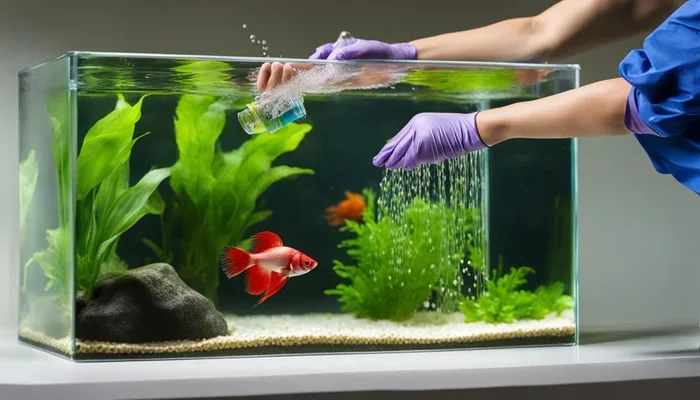
Never dump purified water directly into the tank with your fish. The temperature and chemistry difference can shock your betta. Instead, slowly mix the new water over 30 to 60 minutes. Float the bag or drip the water in gradually.
Better Water Options for Betta Fish
While you can make purified water work, there are other options that may be easier and safer for your betta. Let’s compare the most common water sources.
Tap Water vs Purified Water
Tap water is treated with chlorine or chloramine to make it safe for humans. It contains minerals that are often beneficial for fish. With a good water conditioner, tap water can be an excellent choice. However, tap water quality varies by location. Some areas have heavy metals, high nitrates, or excessive chloramine that can be harmful.
Purified water is more consistently clean. But it lacks minerals and requires supplementation. For most hobbyists, tap water vs purified water comes down to convenience and local water quality.
If you want to explore the tap water option more deeply, read our guide on can you use tap water for your betta fish.
Comparison Table: Water Sources for Betta Fish
| Water Source | Mineral Content | pH Stability | Contaminant Risk | Ease of Use |
|---|---|---|---|---|
| Tap Water (conditioned) | Moderate to High | Good | Chlorine, chloramine | Easy |
| Purified Water (remineralized) | Low (after treatment) | Fair | Very Low | Moderate |
| Spring Water (unflavored) | Varies | Variable | Low | Easy |
| Distilled Water | None | Poor | Very Low | Hard (needs minerals) |
| RO Water | None | Poor | Very Low | Hard (needs minerals) |
| Well Water | Varies Widely | Variable | High (potential) | Difficult (test needed) |
Best Overall Water for Betta Fish
For most betta owners, the best option is conditioned tap water. It provides a natural mineral balance and is easy to work with. If your tap water is poor quality, a good RO system with remineralization is a solid second choice. You can learn more about finding the ideal water source in our article on what kind of water is best for betta fish.
Quick Tips for Using Purified Water Safely
Here are some fast, practical tips to keep in mind:
- Always remineralize: Never add purified water directly to your tank without adding minerals back first.
- Use a conditioner: Treat all water with a quality water conditioner before it touches your betta.
- Test before you fill: Check pH, GH, and KH with a liquid test kit every time you do a water change.
- Change water gradually: Replace only 25 to 50 percent of the tank water at a time. This keeps conditions stable for your betta fish habitat.
- Keep a consistent schedule: Weekly water changes are the gold standard for betta fish tank maintenance.
- Monitor your fish: Watch for signs of stress like clamped fins, color fading, or rapid breathing after any water change.
Expert Insights on Purified Water for Bettas
Experienced aquarists generally agree on one thing: purified water is a tool, not a finished product. It gives you a blank slate, but you must build the right chemistry back into it. Dr. Linda Powers, a aquatic biologist, notes that “the cleanest water is not always the healthiest water for fish. Fish evolved in environments with specific mineral profiles. Stripping everything away can do more harm than good.”
The key is balance. Purified water works when you treat it properly and test it consistently. It is especially useful if your local tap water is heavily contaminated or if you live in an area with seasonal water quality fluctuations. But for the average betta owner, it adds an extra step that may not be necessary.
Common Mistakes When Using Purified Water
Avoid these frequent errors to protect your betta’s health:
- Skipping remineralization: This is the number one mistake. Pure water without minerals causes osmotic stress and pH crashes.
- Ignoring temperature matching: Purified water is often stored at room temperature, which may differ from your tank. Always match the temperature before adding it.
- Overdoing water changes: Replacing 100% of the water with purified water disrupts the entire ecosystem. Stick to partial changes.
- Forgetting to acclimate: Your betta needs time to adjust to new water chemistry. Slow and steady wins the race.
- Not testing after treatment: Even after adding minerals and conditioner, always verify your water parameters. Assumptions can lead to problems.
How Often Should You Change Water in a Betta Tank?
Regular water changes for betta are essential regardless of your water source. Here is a simple schedule:
- Small tanks (1-3 gallons): Change 25-50% of the water every 3 to 5 days. Small volumes accumulate waste fast.
- Medium tanks (5-10 gallons): Change 25-30% of the water weekly. This is the sweet spot for most betta setups.
- Large tanks (20+ gallons): Change 20-25% weekly. Larger volumes are more stable but still need consistent maintenance.
Always use a gravel vacuum during water changes to remove debris from the substrate. This improves betta fish health and keeps ammonia and nitrite levels in check.
Conclusion
So, is purified drinking water safe for betta fish? The answer is nuanced. Purified water can be used safely, but only after you remineralize it, treat it with a conditioner, and test it thoroughly. For most hobbyists, conditioned tap water remains the simpler and more natural choice for a thriving betta fish habitat.
What matters most is not the label on the bottle. What matters is the water quality in your tank. Test regularly, change water consistently, and watch your betta closely. A healthy betta is a happy betta, and the right water is the foundation of that happiness. Take what you have learned here, apply it to your routine, and enjoy watching your betta thrive.
Frequently Asked Questions
Can I use purified drinking water directly in my betta tank?
No, you should not. Purified water lacks essential minerals and has unstable pH levels. It must be remineralized and treated with a water conditioner before adding it to your betta tank. Straight purified water can cause osmotic stress and harm your fish.
What is the difference between purified water and distilled water for betta fish?
Both are very pure and lack minerals. Distilled water is boiled and condensed, while purified water may go through reverse osmosis or carbon filtration. Both require remineralization before use. Neither is safer or better than the other for bettas without treatment.
Is bottled water safe for betta fish?
It depends on the type. Some bottled spring water contains minerals and can be used with proper conditioning. Purified bottled water and distilled water lack minerals and need treatment. Always test bottled water for pH, GH, and KH before adding it to your betta tank.
Can I use a water conditioner with purified water for my betta?
Yes, absolutely. Even though purified water is already very clean, a water conditioner adds a protective slime coat for your fish and neutralizes any trace contaminants. Using a conditioner is always a safe practice for any water you add to your betta tank.
How do I remineralize purified water for my betta fish?
You can use commercial aquarium mineral supplements like Seachem Equilibrium. Add the recommended dosage per gallon. Alternatively, crushed coral or aragonite in the substrate slowly releases minerals. Always test the water after treatment to confirm proper GH, KH, and pH levels.
What is the best water for betta fish overall?
Conditioned tap water is the best option for most betta owners. It provides a natural mineral balance and is cost-effective. If your tap water is poor quality, consider using purified or RO water with a remineralization plan. The key is maintaining stable water parameters and consistent tank maintenance.