Is Pcr Better Than Fish for Detecting Snps
PCR and FISH are both powerful tools for detecting SNPs, but they serve different purposes. PCR offers high sensitivity and amplification of specific genetic variants, while FISH provides visual, spatial context within chromosomes. Understanding which method is better depends on your research goals and the type of SNP analysis you need.
Key Takeaways
- PCR excels at detecting SNPs with high sensitivity: It amplifies tiny DNA samples, making it ideal for identifying single nucleotide changes with precision.
- FISH offers spatial and chromosomal context: Unlike PCR, FISH shows where genetic changes occur within the chromosome structure visually.
- PCR is more cost-effective for routine SNP screening: Laboratories often prefer PCR for high-throughput SNP genotyping due to lower costs and faster results.
- FISH is better for detecting large structural changes: When SNPs are linked to chromosomal rearrangements, FISH provides a broader picture that PCR cannot match.
- Both methods can complement each other: Many researchers use PCR and FISH together to confirm SNP findings and gain deeper insights.
- Choice depends on research goals: Your decision should be guided by the type of SNP, sample quality, and the level of detail you need.
📑 Table of Contents
- Introduction: PCR vs FISH for SNP Detection
- Understanding SNPs and Why Detecting Them Matters
- How PCR Works for SNP Detection
- How FISH Works for SNP Detection
- Head-to-Head Comparison: PCR vs FISH for SNP Detection
- When to Choose PCR Over FISH
- When to Choose FISH Over PCR
- Combining PCR and FISH for Better Results
- Common Mistakes When Choosing Between PCR and FISH
- Expert Insights and Practical Tips
- Conclusion: Is PCR Better Than FISH for Detecting SNPs?
Introduction: PCR vs FISH for SNP Detection
Genetic research has come a long way. Scientists can now detect tiny changes in our DNA with remarkable accuracy. Two of the most popular methods used today are PCR (Polymerase Chain Reaction) and FISH (Fluorescence In Situ Hybridization). Both play important roles in detecting SNPs (Single Nucleotide Polymorphisms).
But which one is actually better? The answer is not as simple as picking a winner. Each method has unique strengths and weaknesses. Your choice depends on what you are trying to learn, the type of sample you have, and the level of detail you need. In this article, we will break down everything you need to know about is PCR better than FISH for detecting SNPs.
We will compare how each method works, what they are best at, and when you should choose one over the other. Whether you are a student, researcher, or just curious about genetic analysis, this guide will give you clear answers. Let us dive in.
Understanding SNPs and Why Detecting Them Matters
What Are SNPs?
SNPs are the most common type of genetic variation in humans. They represent a single base pair change in the DNA sequence. Think of your DNA as a massive instruction manual. SNPs are like single-letter typos in that manual. Most of the time, these typos do not cause any harm. Sometimes, they can affect how your body works.
SNPs can influence everything from your eye color to your risk for certain diseases. They are used in genome-wide association studies (GWAS) to link genetic variants to health conditions. Detecting SNPs accurately is crucial for personalized medicine, pharmacogenomics, and evolutionary biology research.
Why SNP Detection Is Important in Modern Genetics
SNP detection plays a key role in many areas of science and medicine. Here are some of the main reasons why researchers care so much about finding SNPs:
- Disease risk assessment: SNPs can signal a higher risk for conditions like diabetes, heart disease, or cancer.
- Drug response prediction: Pharmacogenomics uses SNPs to predict how a patient will respond to a medication.
- Ancestry and evolution: SNPs help scientists trace human migration patterns and evolutionary history.
- Agricultural genetics: SNP detection in plants and animals helps improve breeding programs and crop yields.
Given how important SNPs are, choosing the right detection method is critical. This is where the PCR vs FISH debate becomes relevant.
How PCR Works for SNP Detection
The Basics of PCR
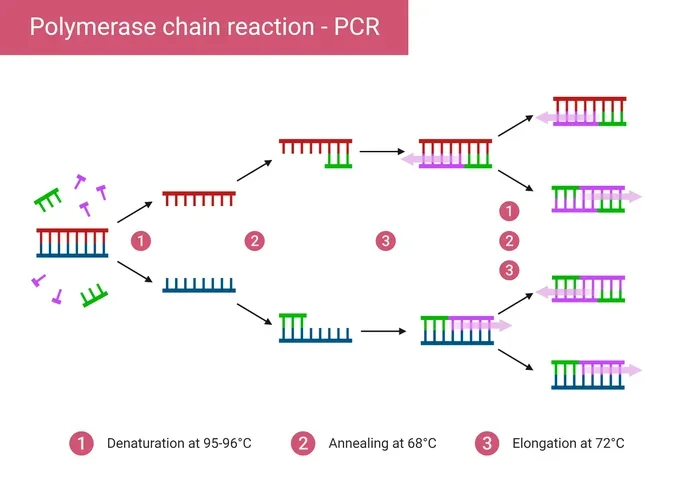
PCR, or Polymerase Chain Reaction, was invented by Kary Mullis in 1983. It is a technique that amplifies a specific segment of DNA millions of times over. By making many copies of a target region, PCR allows scientists to study even the smallest traces of genetic material. This makes it incredibly useful for detecting SNPs.
The process involves three main steps repeated in cycles:
- Denaturation: The double-stranded DNA is heated to separate it into two single strands.
- Annealing: Short primers bind to the target DNA sequence.
- Extension: DNA polymerase builds new strands by copying the template.
Each cycle doubles the amount of target DNA. After 30 to 40 cycles, you have billions of copies. This amplification is what makes PCR so powerful for SNP analysis.
PCR Variants Used for SNP Detection
Several PCR-based methods have been developed specifically for SNP detection. Here are some of the most common ones:
- TaqMan SNP genotyping: Uses fluorescent probes that distinguish between two alleles at a SNP site. It is highly accurate and widely used in clinical labs.
- ARMS-PCR (Amplification Refractory Mutation System): Uses allele-specific primers. Only the correct allele gets amplified, making it easy to identify SNPs.
- Pyrosequencing: A real-time PCR method that sequences the amplified product to detect SNPs directly.
- High Resolution Melting (HRM): Detects SNPs by analyzing the melting behavior of amplified DNA. It is quick and cost-effective.
Strengths of PCR for SNP Detection
PCR has several clear advantages when it comes to identifying SNPs:
- High sensitivity: PCR can detect SNPs even in very small or degraded samples. This is especially helpful in forensic science and ancient DNA studies.
- High specificity: Primer and probe design can target exact SNP locations with great precision.
- Speed: Results can be obtained in a few hours, especially with real-time PCR platforms.
- Scalability: 96-well and 384-well plate formats allow hundreds of SNPs to be tested simultaneously.
- Cost-effective: Routine SNP screening with PCR is generally less expensive than FISH-based approaches.
How FISH Works for SNP Detection
The Basics of FISH
FISH, or Fluorescence In Situ Hybridization, is a technique that uses fluorescently labeled DNA probes. These probes bind to specific regions on chromosomes. When viewed under a fluorescence microscope, researchers can see exactly where a genetic sequence is located. FISH gives a visual, spatial map of the genome.
The process works like this:
- Probe preparation: DNA probes are labeled with fluorescent dyes. Each probe targets a specific chromosomal region.
- Hybridization: The probes are applied to chromosome preparations or cells. They seek out and bind to their complementary sequences.
- Washing: Unbound probes are washed away.
- Visualization: Under the microscope, fluorescent signals show where the probes have bound.
For SNP detection, specialized FISH probes can be designed to target specific nucleotide changes. This is particularly useful when SNPs are associated with chromosomal rearrangements or copy number variations.
Strengths of FISH for SNP Detection
FISH brings something to the table that PCR simply cannot offer:
- Spatial context: FISH shows the physical location of a SNP on a chromosome. This is invaluable for studying chromosomal rearrangements and translocations.
- Visual confirmation: Researchers can directly see the genetic change. This provides a level of confirmation that is hard to match with PCR alone.
- Detection of structural variants: FISH excels at identifying large deletions, duplications, and translocations that may be linked to SNPs.
- Single-cell resolution: FISH can detect genetic changes in individual cells, which is useful for mosaicism studies.
- No amplification needed: Unlike PCR, FISH does not require DNA amplification. This eliminates amplification-related errors.
Head-to-Head Comparison: PCR vs FISH for SNP Detection
Now let us compare these two methods directly. This comparison table summarizes the key differences:
| Feature | PCR | FISH |
|---|---|---|
| Sensitivity | Very high (amplifies tiny samples) | Moderate (depends on probe design) |
| Specificity | Excellent (primer/probe targeting) | Good (probe hybridization) |
| Speed | Fast (hours) | Slower (days for some protocols) |
| Cost | Lower per test | Higher per test |
| Spatial information | None (sequence-based only) | Excellent (chromosomal location) |
| Throughput | High (96/384-well formats) | Low (limited to few targets per cell) |
| Sample quality needed | Requires intact DNA | Requires intact chromosomes/cells |
| Best for | SNP genotyping, screening | Structural variants, cytogenetics |
As you can see, neither method is universally better. Each one shines in different areas. PCR is your go-to for routine SNP genotyping and high-throughput screening. FISH is the better choice when you need spatial information or are investigating structural changes alongside SNPs.
When to Choose PCR Over FISH
There are several situations where PCR is clearly the better option for SNP detection:
High-Throughput SNP Screening
If you need to genotype hundreds or thousands of SNPs across many samples, PCR is the practical choice. Platforms like TaqMan and HRM are designed for exactly this purpose. You can plate dozens of samples and run multiple SNPs in a single run. FISH simply cannot match this level of throughput.
Small or Degraded Samples
PCR works beautifully when you have limited material. Forensic labs often deal with DNA samples that are old, fragmented, or extremely small. PCR can still amplify the target region and detect SNPs reliably. FISH would struggle in these conditions because it needs intact chromosomal material.
Cost-Sensitive Projects
Budget matters, especially in large-scale studies. PCR-based SNP genotyping costs significantly less per sample than FISH. If your primary goal is to screen for known SNPs without needing spatial data, PCR will save you time and money.
Clinical Diagnostics
In clinical settings, speed and accuracy are paramount. PCR delivers rapid results for known SNP markers associated with drug metabolism, disease risk, or infectious agents. Many clinical labs rely on real-time PCR for routine diagnostics.
When to Choose FISH Over PCR
On the other hand, there are clear scenarios where FISH is the superior method:
Studying Chromosomal Rearrangements
When SNPs are located near or within chromosomal rearrangements, FISH provides essential context. PCR can tell you that a SNP exists, but it cannot show you where it sits on a chromosome. FISH fills that gap perfectly.
Cancer Genetics
Cancer often involves complex genetic changes. FISH is widely used in oncology to detect gene amplifications, deletions, and translocations. For example, HER2 amplification in breast cancer is routinely assessed using FISH. While PCR can detect specific mutations, FISH gives the bigger picture.
Mosaicism Detection
Mosaicism occurs when genetic changes are present in only some cells of an organism. FISH can detect these changes at the single-cell level. PCR might miss low-level mosaicism because the amplified signal can be diluted by normal cells.
Prenatal and Embryonic Genetic Analysis
FISH is commonly used in prenatal diagnostics to check for chromosomal abnormalities. When combined with SNP analysis, it provides both the sequence-level detail and the chromosomal context that clinicians need.
Combining PCR and FISH for Better Results
Here is an important insight that many researchers overlook: PCR and FISH are not always competing methods. Often, they work best together. Using both techniques can provide a more complete picture of genetic variation.
For example, a researcher might first use PCR to identify a specific SNP associated with a disease. Then, FISH can be used to visualize where that SNP is located on the chromosome and whether it is near any structural abnormalities. This combined approach strengthens the confidence in the findings.
Some modern platforms even integrate both principles. Comparative Genomic Hybridization (CGH) arrays combine elements of hybridization with PCR-based amplification. These hybrid approaches are becoming increasingly popular in genomic research.
Additionally, new technologies like CRISPR-based detection and nanopore sequencing are emerging as alternatives to both PCR and FISH. These methods may eventually change the landscape of SNP detection entirely. But for now, PCR and FISH remain the gold standards in their respective domains.
Common Mistakes When Choosing Between PCR and FISH
Assuming One Method Is Always Better
This is the biggest mistake researchers make. The question “is PCR better than FISH for detecting SNPs” does not have a universal answer. The best method depends entirely on your specific research question. Always consider what you are trying to learn before choosing a technique.
Ignoring Sample Quality
Both methods require good-quality samples, but in different ways. PCR needs intact, amplifiable DNA. FISH needs preserved chromosomes or cells. If your sample is poorly preserved, one method may fail where the other succeeds. Always assess your sample quality before committing to a method.
Overlooking Cost and Resources
FISH requires specialized equipment, including a fluorescence microscope and trained personnel. PCR can be performed on standard thermal cyclers that most labs already have. Do not choose a method without considering the resources available to you.
Expert Insights and Practical Tips
Here are some practical tips from experienced geneticists to help you get the best results:
- Validate your assays: Always run positive and negative controls when developing new PCR or FISH assays for SNP detection.
- Start with a pilot study: Test a small number of samples before scaling up. This helps you identify problems early.
- Combine methods when in doubt: If your results are unclear using one method, try the other to confirm your findings.
- Stay updated on new technologies: The field of genetic analysis evolves rapidly. New tools can complement or even replace PCR and FISH.
- Consider downstream analysis: Think about how you will analyze your data before choosing a method. Some approaches generate data that is easier to interpret than others.
Conclusion: Is PCR Better Than FISH for Detecting SNPs?
So, is PCR better than FISH for detecting SNPs? The honest answer is: it depends. PCR is the better choice for most routine SNP genotyping tasks. It is fast, sensitive, cost-effective, and highly scalable. If your goal is to identify known SNPs across many samples, PCR is almost certainly your best bet.
However, FISH has unique strengths that PCR simply cannot replicate. When you need spatial information, chromosomal context, or the ability to detect structural variants alongside SNPs, FISH is the clear winner. For cancer research, prenatal diagnostics, and mosaicism studies, FISH remains indispensable.
The bottom line is that both methods have a place in modern genetics. Many research programs benefit from using both PCR and FISH in complementary ways. Rather than thinking of this as a competition, think of it as a toolkit. The best researchers know when to use each tool for maximum impact.
We hope this guide has helped clarify the differences and given you a practical framework for choosing between PCR and FISH. The right method is the one that best fits your specific research needs. Take your time, plan carefully, and do not be afraid to use both.
Frequently Asked Questions
What is the main difference between PCR and FISH for SNP detection?
PCR amplifies specific DNA sequences to identify SNPs at the nucleotide level. FISH uses fluorescent probes to visualize where genetic sequences are located on chromosomes. PCR gives you sequence-level detail, while FISH gives you spatial and chromosomal context.
Can PCR detect all types of SNPs?
PCR can detect most single nucleotide changes, especially when combined with specific primer designs or probes. However, it may struggle with SNPs in highly repetitive regions or those associated with large structural changes. In these cases, FISH or complementary methods may be needed.
Is FISH more expensive than PCR for SNP analysis?
Yes, FISH is generally more expensive per test than PCR. It requires specialized equipment like fluorescence microscopes and trained personnel. PCR, on the other hand, can be run on standard thermal cyclers commonly found in most laboratories, making it a more budget-friendly option for routine screening.
Can PCR and FISH be used together in the same study?
Absolutely. Many studies use both methods in combination. PCR can identify a specific SNP, and FISH can then show where that SNP is located on a chromosome. This combined approach provides both sequence-level precision and chromosomal context, leading to more robust and reliable findings.
Which method is better for cancer genetics research?
FISH is often preferred in cancer genetics because it can detect gene amplifications, deletions, and translocations that are common in cancer cells. However, PCR is still valuable for identifying specific mutations within those structural changes. Many cancer labs use both methods together for a comprehensive analysis.
Are there newer technologies replacing PCR and FISH for SNP detection?
Emerging technologies like next-generation sequencing, CRISPR-based detection, and nanopore sequencing are gaining ground. These methods offer high throughput and detailed genetic information. However, PCR and FISH remain widely used and reliable. They are likely to continue playing important roles alongside these newer approaches for the foreseeable future.