How to Trian a Betta Fish
Learning how to trian a betta fish is easier than most people think. With patience, the right approach, and a few simple techniques, you can teach your betta to respond to signals, follow your finger, and even perform basic tricks. This guide covers everything from setting up the right environment to advanced training methods that work.
Key Takeaways
- Betta fish are smarter than you think: They can learn tricks and respond to cues with consistent practice.
- Bonding comes first: Building trust with your betta makes training much easier and faster.
- Use positive reinforcement: Food rewards and a calm environment are the keys to successful training.
- Keep sessions short: Five to ten minutes per day is enough to avoid stressing your fish.
- Watch for body language: Understanding your betta’s signals helps you adjust your training approach.
- Avoid common mistakes: Overfeeding, long sessions, and loud noises can ruin progress.
📑 Table of Contents
What Is Betta Fish Training?
Trian a betta fish means teaching your fish to respond to signals, follow commands, and interact with you on purpose. Many people think bettas are simple pets that just swim around. But the truth is, bettas are curious and intelligent creatures. They can recognize their owner, learn routines, and even perform simple tricks.
Training a betta is not like training a dog. You will not get your fish to fetch a ball or sit on command. Instead, betta training focuses on building a responsive relationship. Your fish learns to follow your finger, eat from your hand, and swim through small hoops or tunnels. These activities keep your betta mentally stimulated and happy.
The best part? Anyone can do it. You do not need special equipment or years of experience. All you need is patience, consistency, and a little bit of time each day. Whether you are a beginner or a seasoned fish keeper, training your betta can be a fun and rewarding experience.
Why Should You Train Your Betta Fish?
There are many reasons to learn how to trian a betta fish. First, it strengthens the bond between you and your pet. Bettas are often kept alone, which can make them seem lonely. Training gives them mental engagement and a sense of purpose. A stimulated betta is a happier and healthier betta.
Second, training helps you monitor your fish’s health. When your betta responds to cues, you know it is alert and active. If your betta stops responding, it could be a sign of stress or illness. This makes training a useful health check tool.
Third, trained bettas are more enjoyable to watch. Imagine your fish swimming to your hand when you approach the tank or following your finger along the glass. These moments create a deeper connection and make fish keeping more interactive and fun.
If you are new to betta care, start by reading care for a betta fish 101 to make sure your tank setup and water conditions are right before you begin training.
Betta Fish Intelligence Facts
Bettas belong to the gourami family and have been studied for their cognitive abilities. They can recognize their feeder, distinguish between colors, and remember patterns for weeks. In the wild, bettas navigate complex rice paddies and streams. This natural problem-solving ability makes them capable learners in a home environment.
How to Prepare for Training
Before you start trian a betta fish, you need the right setup. A stressed or uncomfortable fish will not learn. Preparation is the foundation of successful training.
Step 1: Set Up the Right Tank
Your betta needs a clean, comfortable tank with stable water conditions. A tank of at least 5 gallons is ideal. Make sure the water temperature stays between 76 and 82 degrees Fahrenheit. Use a gentle filter to keep the water clean without creating strong currents that stress your fish.
Step 2: Establish a Feeding Routine
Bettas respond best to training when they are slightly hungry. Feed your betta at the same times each day. This creates anticipation and motivation. High-quality betta pellets or frozen brine shrimp work great as training rewards.
You can also use a pea as a special treat during training sessions. Learn more about preparing this treat in our guide on how to feed a pea to a betta fish.
Step 3: Create a Calm Environment
Place the tank in a quiet area of your home. Avoid loud noises, sudden vibrations, or direct sunlight that can overheat the water. A calm environment helps your betta focus during training. Keep the tank lights on a consistent schedule to help your fish feel secure.
Quick Tip for Training Success
Spend a few minutes each day just watching your betta before you start training. This helps your fish get used to your presence and reduces stress. The more comfortable your betta feels, the faster it will learn.
Basic Training Techniques
Now that your tank is ready and your betta is comfortable, it is time to start training. Here are the most effective techniques for beginners.
Finger Following
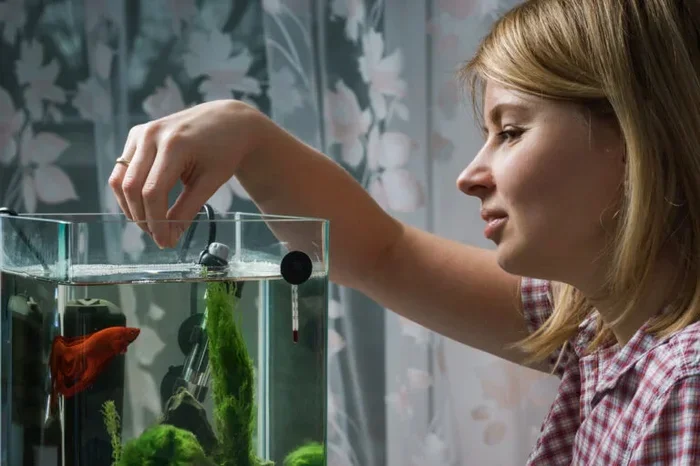
This is the most popular and easiest trick to teach. Simply place your finger on the outside of the tank glass and wait for your betta to notice it. Move your finger slowly along the glass. At first, your betta may just stare. That is normal. After a few days, it will start to follow your finger.
Reward your betta with a small food treat each time it follows your finger for a few seconds. Do this for five to ten minutes per session. Repeat once or twice a day. Within one to two weeks, most bettas will follow your finger reliably.
Hand Feeding
Hand feeding builds trust and is a great stepping stone to more advanced tricks. Start by dropping food near your hand in the water. Let your betta eat from your fingertips. Do not rush this process. Some bettas take days to feel brave enough to eat from your hand.
Once your betta eats comfortably from your hand, try placing your fingers a little further away each session. Eventually, your fish will swim to your hand when you approach the tank. This is a rewarding experience for both you and your betta.
Proper betta fish water quality plays a big role in how willing your fish is to engage in training. Dirty or stressed water makes bettas shy and unresponsive. Learn how to maintain great water conditions by reading how to take care of a betta fish water.
Target Training
Target training uses a small object like a pencil eraser or a stick. Touch the object to the water surface near your betta. When your fish swims toward it, reward with food. Over time, move the target to different spots in the tank. Your betta will learn to swim to the target on command.
This technique works well because bettas are naturally curious. They want to investigate new objects in their space. Use this curiosity to your advantage during training sessions.
Swimming Through Hoops
Once your betta masters basic following and target training, you can try hoops. Use a small hoop made from flexible tubing or wire. Hold it in the water and guide your betta through with food. Start with a wide hoop and gradually make it smaller as your fish improves.
This trick requires more patience. Some bettas learn it in a week, while others take several weeks. Never force your fish through the hoop. Let it happen naturally with positive reinforcement.
How to Build a Strong Bond With Your Betta
Training and bonding go hand in hand. You cannot effectively trian a betta fish without first building trust. Bettas are territorial by nature, so they need time to accept your presence as non-threatening.
Spend Time Near the Tank
Sit by your tank for a few minutes each day. Talk softly or just be present. Your betta will start to recognize your voice and presence. Over time, it may swim to the front of the tank when you approach.
Use Consistent Signals
Bettas respond well to routine. Use the same hand signals and feeding times every day. Consistency helps your fish understand what to expect. It also builds a sense of security.
Respect Your Betta’s Boundaries
If your betta hides or seems stressed, give it space. Pushing training too fast can set you back. Let your fish set the pace. A relaxed betta learns much faster than a stressed one.
For more tips on strengthening your relationship, check out how to grow a bond with your betta fish.
Understanding Betta Body Language
Learning to read your betta’s body language is essential during training. A relaxed betta holds its fins open and swims smoothly. A stressed betta may clench its fins, hide, or stay at the bottom of the tank. If you notice stress signs, end the training session and give your fish a break.
A happy betta will flare its gills slightly when it sees you. This is a sign of interest and excitement. Use these moments to your advantage during training. A happy, interested betta is an eager learner.
Common Mistakes to Avoid When Training a Betta
Even with the best intentions, many fish owners make mistakes that slow down or ruin training progress. Here are the most common errors and how to avoid them.
| Mistake | Why It Hurts Training | How to Fix It |
|---|---|---|
| Overfeeding during training | Makes your betta lazy and less motivated | Use small food portions and feed after training |
| Training sessions that are too long | Causes stress and fatigue | Keep sessions to 5-10 minutes max |
| Inconsistent signals or timing | Confuses your betta and slows learning | Use the same cues and train at the same time daily |
| Loud noises or sudden movements | Startles your betta and breaks trust | Train in a quiet, calm space |
| Skipping days without reason | Disrupts routine and reduces progress | Train at least 4-5 days per week consistently |
Quick Tips to Avoid Common Pitfalls
- Never train right after a water change. Your betta needs time to adjust to new water conditions.
- Do not repeat commands too loudly. Bettas respond to visual cues better than sound.
- Stop training if your betta loses interest. Pushing a tired or uninterested fish creates negative associations.
- Keep the tank clean. A dirty tank makes bettas sluggish and less responsive.
Advanced Training Ideas
Once your betta masters the basics, you can try more advanced activities. These challenges keep your fish mentally sharp and provide hours of entertainment.
Obstacle Courses: Arrange small plants, rocks, or decorations to create a path through the tank. Guide your betta through with your finger or a target stick. Reward each successful completion with a treat.
Color Recognition: Use colored cards or objects outside the tank. Betta fish can distinguish between different colors over time. Place a red card near the feeding area and a blue card near a resting spot. With practice, your betta may learn to swim toward the correct color.
Morning and Evening Routines: Some bettas can learn to anticipate feeding times. If you approach the tank at the same time each day, your betta may start swimming to the front eagerly. This is a sign of a well-trained and happy fish.
Remember that every betta is different. Some are quick learners, while others take more time. The key is to stay patient and enjoy the process. Training should be a positive experience for both you and your fish.
Expert Insight: Patience Is Everything
Experienced betta keepers agree that patience is the single most important factor in successful training. Some bettas learn tricks in just a few days. Others take weeks. Neither situation is a failure. Every small progress counts. Celebrate the little wins, and your training journey will be much more enjoyable.
Conclusion
Learning how to trian a betta fish opens up a whole new way to enjoy your pet. From simple finger following to advanced obstacle courses, betta training is fun, rewarding, and surprisingly easy. The secret is to start with a healthy, comfortable fish, use positive reinforcement, and keep sessions short and consistent.
Always pay attention to your betta’s body language and adjust your approach as needed. A stressed fish will not learn. A happy and curious fish will thrive. With time and patience, you will be amazed at what your betta can do.
Start today. Pick one technique, practice it daily, and watch your bond with your betta grow stronger every week. Your fish is smarter than you think. All it needs is a little guidance and a lot of love.
Frequently Asked Questions
How long does it take to trian a betta fish?
Most bettas start responding to basic training within one to two weeks. Advanced tricks may take three to four weeks or longer. The timeline depends on your betta’s personality, age, and how consistently you train. Some bettas are quick learners, while others need more time. Stay patient and keep sessions short for the best results.
What is the best food to use as a training reward?
Small pieces of high-quality betta pellets or frozen brine shrimp work great as training rewards. You can also use a tiny piece of pea as an occasional treat. Always use small portions to avoid overfeeding. Reserve training treats for sessions so your betta stays motivated and hungry enough to learn.
Can betta fish really recognize their owners?
Yes, bettas can recognize their owners over time. They associate your presence, voice, and appearance with feeding and care. Many bettas swim to the front of the tank when their owner approaches. This recognition builds naturally through daily interaction and consistent routines. Training helps strengthen this bond even further.
Is training stressful for betta fish?
Training should never be stressful. If your betta shows signs of stress, such as clamped fins, hiding, or loss of appetite, stop training immediately. Keep sessions short and positive. A calm environment and gentle approach ensure training remains a fun and safe activity for your fish.
How often should I train my betta fish?
Train your betta once or twice a day for five to ten minutes per session. Do not train more than this, as it can exhaust your fish. Consistent, short sessions work much better than long, infrequent ones. Aim for at least four to five training days per week for steady progress.
Do I need any special equipment to train my betta fish?
No special equipment is needed. All you need is your finger, a small target like a pencil eraser, and your betta’s regular food. A clean tank with good water conditions is the most important setup requirement. You can learn more about maintaining proper water conditions in our guide on how to take care of a betta fish water.