How to Transport Your Betta Fish
Transporting your betta fish doesn’t have to be stressful. This guide walks you through everything you need to know about safely moving your betta fish, from choosing the right container to keeping water temperature stable. You’ll learn proven methods that keep your fish healthy and calm during any trip.
Moving a betta fish can feel overwhelming, especially if you’ve never done it before. Whether you’re relocating to a new home or simply rearranging your aquarium setup, how to transport your betta fish safely is one of the most important skills every fish owner should master.
Betta fish are sensitive creatures. They react strongly to changes in their environment, and poor transport can lead to serious health issues or even death. The good news? With the right approach, you can move your betta fish with confidence and keep it completely safe.
This guide covers everything from choosing the right container to managing water temperature during the trip. By the end, you’ll have a clear, step-by-step plan for any betta fish transport situation. Let’s dive in.
Key Takeaways
- Use a clean, dedicated fish bag or container with enough oxygen for the journey
- Keep water temperature stable to prevent shock and stress in your betta fish
- Minimize travel time whenever possible to reduce the risk of health problems
- Acclimate your betta fish slowly when you arrive at the new location
- Never feed your fish right before transport to keep the water clean
- Plan ahead for long distance moves with proper equipment and preparation
📑 Table of Contents
- Why Transporting Betta Fish Requires Careful Planning
- Choosing the Right Container for Transport
- Preparing the Water for Transport
- Managing Temperature During Transport
- Reducing Stress During the Journey
- Setting Up the New Home After Transport
- Common Mistakes to Avoid When Transporting Betta Fish
- Quick Tips for a Smooth Betta Fish Transport
- Expert Insights on Betta Fish Transport
- Conclusion
Why Transporting Betta Fish Requires Careful Planning
Betta fish might look tough with their flowing fins and bright colors, but they’re actually quite delicate when it comes to environmental changes. Transporting betta fish isn’t like moving a toy from one room to another. It involves managing water quality, temperature, oxygen levels, and stress.
When you move your betta fish, you’re essentially asking it to survive in an unfamiliar environment with different water conditions. Even small shifts in pH, temperature, or chlorine levels can cause serious problems. Understanding this helps you take the right precautions before you start packing.
The biggest risks during transport include temperature shock, oxygen deprivation, and stress-related illness. A well-planned approach eliminates nearly all of these risks. That’s exactly what we’ll walk through below.
The Science Behind Betta Fish Stress During Transport
Betta fish have a special organ called the labyrinth organ, which lets them breathe air from the surface. This doesn’t mean they don’t need clean water, though. During betta fish transport, the water quality can drop fast because waste builds up in a small, enclosed space.
Stress weakens the immune system of your betta fish. A stressed fish becomes more vulnerable to diseases like ich and fin rot. This is why minimizing stress during any betta fish relocation should be your top priority.
Choosing the Right Container for Transport
Selecting the proper container is the first real step in how to transport your betta fish safely. You have several options, and each one works better in different situations.
Option 1: The Fish Bag Method
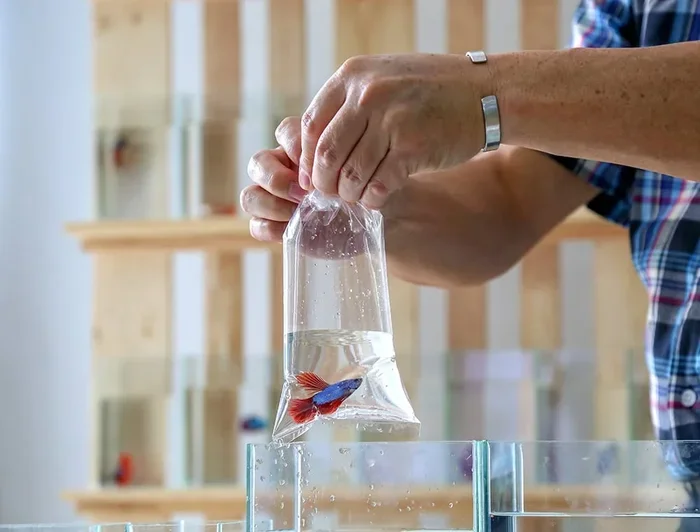
The classic fish bag method remains one of the most popular ways to transport betta fish. You use a clean, dedicated plastic bag filled halfway with tank water and half with fresh air or pure oxygen.
Here’s how it works:
- Use a bag that’s at least 3 millimeters thick for durability
- Fill it halfway with your betta’s tank water
- Add fresh oxygen if possible, not just air
- Place the betta fish gently inside
- Tie the bag securely with a rubber band
- Place the bag in a dark, insulated container
This method works great for short trips under two hours. For longer journeys, you’ll need a more robust setup.
Option 2: A Dedicated Plastic Container
For trips longer than two hours, a clean plastic container with a secure lid works better than a bag. Look for containers that are sturdy, transparent, and free of any chemical residue. A container with a screw-top lid prevents leaks while still allowing some airflow.
Fill the container with about 75 percent tank water and leave the rest as air space. The air gap gives your betta fish oxygen to breathe during the betta fish travel process.
Option 3: Small Portable Aquarium Tanks
If you’re doing a long distance betta fish transport, consider using a small portable tank. These come in various sizes and often include built-in filtration and heating elements. They’re more expensive but offer the safest environment for your fish during extended trips.
This is especially useful if you’re moving across state lines or traveling for several hours. You can find more detailed guidance on long distance betta fish transport if this is your situation.
Preparing the Water for Transport
Water preparation is one of the most critical steps in how to transport your betta fish. The water your betta travels in needs to match its current tank conditions as closely as possible.
Use Dechlorinated Water From the Tank
Always use water from your betta’s existing tank rather than tap water. Tank water already has the right temperature, pH balance, and beneficial bacteria that your fish is accustomed to. Preparing water properly for betta fish is an essential skill that pays off during transport.
If you must add fresh water, make sure it has been treated with a water conditioner to remove chlorine and chloramine. Never use untreated tap water during transport.
Keep the Water Level Right
Fill your transport container about two-thirds full with water. This leaves enough air space for oxygen exchange while still giving your betta fish plenty of room. Overfilling the container reduces the oxygen supply and creates a risky environment.
Here’s a quick comparison of water levels for different transport methods:
- Fish bag: Half water, half air or oxygen
- Plastic container: Two-thirds water, one-third air
- Portable tank: Fill to manufacturer’s recommended level
Don’t Feed Before Transport
Stop feeding your betta fish 12 to 24 hours before the trip. This is one of the best things you can do to keep the water clean during transport. A fish that eats before travel will produce waste in a small, enclosed space, which rapidly degrades water quality.
Betta fish can easily go a day or two without food. This short fasting period won’t harm your fish at all. In fact, an empty stomach means less waste and cleaner water throughout the journey.
Managing Temperature During Transport
Temperature stability is crucial when you move your betta fish. Betta fish are tropical creatures that thrive in water between 76 and 82 degrees Fahrenheit. Even small drops or spikes can cause serious stress.
Insulate the Transport Container
Wrap the transport container in a towel or bubble wrap to insulate it from outside temperature changes. This simple step helps maintain a consistent water temperature during car rides or outdoor transport.
In cold weather, you can use a hot water bottle wrapped in a towel placed near (not inside) the container. In hot weather, keep the container out of direct sunlight and avoid leaving it in a parked car.
For more detailed advice on maintaining warmth, check out our guide on how to keep your betta fish warm. These same principles apply directly to transport scenarios.
Monitor the Temperature Throughout the Trip
If possible, place a small thermometer near or inside the transport container. Check it periodically during the trip. Quick action can save your fish if the temperature starts to drift outside the safe range.
Reducing Stress During the Journey
Stress is the silent killer during betta fish transport. A calm betta fish handles travel much better than a frightened one. Your job is to create as calm an environment as possible.
Keep the Container in a Quiet, Dark Place
Place the transport container in a quiet area of your vehicle away from loud music, heavy traffic noise, and sudden movements. Cover the container with a light cloth to block out excess light. Darkness helps betta fish feel safe and reduces their stress response.
Avoid opening the container frequently to check on your fish. Every time you open it, you change the temperature and introduce new air. Trust your preparation and let the journey proceed undisturbed.
Drive Smoothly and Avoid Bumps
Rough roads and sudden stops can slosh water around and terrify your betta fish. Drive at a steady pace, avoid sharp turns, and take smoother routes whenever possible.
If you’re walking the container, hold it close to your body to minimize jostling. Your own body heat can also help maintain a stable temperature inside the container.
Setting Up the New Home After Transport
Arriving at your destination is only half the battle. How you set up the new environment determines how well your betta fish recovers from the betta fish relocation experience.
Acclimate Your Betta Fish Slowly
When you reach your destination, don’t immediately release your betta fish into a new tank. Instead, float the transport container in the new tank for 15 to 20 minutes. This allows the water temperatures to equalize gradually.
After the temperature equalizes, slowly add small amounts of the new tank water to the transport container over the next 15 minutes. This process, called drip acclimation, helps your betta fish adjust to any differences in pH and water chemistry.
If you’re setting up a new tank for the first time, make sure you’ve already properly set up a fish tank for betta fish before you transport your fish. A stable, cycled tank makes the transition much smoother.
Observe Your Betta Fish Closely
Watch your betta fish carefully for the first 24 to 48 hours after transport. Look for signs of stress such as clamped fins, loss of color, hiding constantly, or refusing to eat. These behaviors are normal in the first day but should improve quickly.
If symptoms persist beyond 48 hours, test the water parameters immediately. Betta fish health after transport depends heavily on water quality. Test for ammonia, nitrite, nitrate, and pH levels to make sure everything is in the safe range.
Common Mistakes to Avoid When Transporting Betta Fish
Even experienced fish owners make mistakes during transport. Knowing what to avoid can save you a lot of trouble and protect your betta fish from unnecessary harm.
- Using soap or chemical cleaners on the container. Even tiny residue can be lethal to betta fish. Always rinse containers with plain water only.
- Overcrowding the transport container. Never place multiple betta fish in the same bag or container. Male bettas are territorial and will fight.
- Leaving the container in direct sunlight. This rapidly increases water temperature and can cook your fish.
- Forgetting to secure the container. A loose container in a car can spill and create a dangerous situation for both you and your fish.
- Skipping the acclimation process. Rushing the transition to a new tank is one of the fastest ways to stress your betta fish.
Quick Tips for a Smooth Betta Fish Transport
Here are some fast, actionable tips to keep in mind:
- Plan your transport during cooler hours of the day to avoid extreme temperatures.
- Always carry a backup container in case the primary one leaks or breaks.
- Bring a small water test kit so you can check parameters at your destination.
- Keep a towel and spare bag handy for any unexpected spills or accidents.
- Travel with a friend if possible so someone can hold the container steady during the drive.
- Have the new tank fully set up and running before you transport your fish. Never transport a betta fish to an unprepared tank.
Expert Insights on Betta Fish Transport
Veterinary experts and experienced aquarists agree that preparation is the single most important factor in successful betta fish transport. The less time your fish spends in an unstable environment, the better its chances of staying healthy.
Dr. Jessie Sanders, a certified aquatic veterinarian, emphasizes that “the key to safe fish transport is maintaining stable water parameters and minimizing stress triggers.” This means controlling temperature, limiting noise, and keeping the container secure at all times.
Many professional breeders transport betta fish multiple times a week. Their secret? They keep a dedicated transport kit ready at all times. This kit includes clean bags, a small water conditioner bottle, a thermometer, and a portable heater pad for cold weather trips.
Having a transport kit prepared in advance means you’re never scrambling when you need to move your betta fish in a hurry. It also ensures you always have clean, safe equipment that won’t harm your fish.
Conclusion
Transporting your betta fish safely comes down to three core principles: preparation, temperature control, and stress reduction. When you choose the right container, prepare clean tank water, and manage the environment carefully, your betta fish can handle transport with minimal risk.
Remember to skip feeding before the trip, keep the water temperature stable, and acclimate your fish slowly when you arrive at the destination. Avoid the common mistakes that many fish owners make, and always plan ahead for any betta fish relocation.
With the steps outlined in this guide, you now have everything you need to transport your betta fish safely and confidently. Whether it’s a short move across town or a long distance betta fish transport, your preparation will make all the difference. Your betta fish deserves a safe journey, and now you know exactly how to give it one.
Frequently Asked Questions
How long can a betta fish survive in a transport bag?
A healthy betta fish can survive in a properly filled transport bag for up to 7 to 8 hours. The key factors are enough oxygen, stable temperature, and clean water. For trips longer than this, switch to a dedicated container or portable tank to keep your fish safe.
Can I use tap water for transporting my betta fish?
It’s best to use water from your betta’s existing tank. If you must add water, treat it with a water conditioner to remove chlorine and chloramine. Untreated tap water can harm your betta fish’s gills and stress it during transport.
Should I cover the transport container?
Yes, covering the container with a light cloth helps reduce stress by keeping the environment dark and quiet. Just make sure the cover isn’t airtight so your betta fish gets enough oxygen. A breathable fabric works perfectly for this.
What temperature should the water be during transport?
Keep the water between 76 and 82 degrees Fahrenheit, which is the ideal range for betta fish. Use insulation and temperature monitoring to maintain this range throughout the journey. Sudden temperature drops or spikes are the most common causes of transport-related illness.
How do I know if my betta fish is stressed after transport?
Watch for clamped fins, faded colors, hiding in corners, refusing to eat, or rapid gill movement. These are all signs of stress. Most betta fish recover within 24 to 48 hours if the water parameters in the new tank are stable and clean.
Can I transport my betta fish in a bucket instead of a bag?
A clean bucket with a secure lid can work well for transport, especially for longer trips. Make sure the bucket has never been used with chemicals or soap. Fill it two-thirds with tank water, leave air space on top, and secure the lid to prevent spills during the drive.