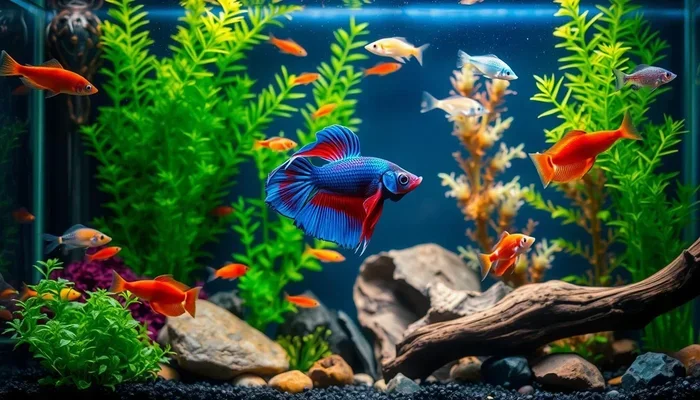
How Much Gallons per Hour for Betta Fish
The right gallons per hour for betta fish depends on tank size and your fish’s comfort. Most experts recommend a filter flow rate of 4 to 6 times the tank volume per hour, but bettas prefer gentle flow. Choosing the correct filter and flow rate keeps water clean and your betta stress-free.
This is a comprehensive guide about how much gallons per hour for betta fish.
Key Takeaways
- Ideal GPH Range: A filter should process 4 to 6 times the tank volume per hour for betta fish.
- Gentle Flow Matters: Betta fish have long fins and struggle in strong currents, so flow control is essential.
- Filter Type Choices: Sponge filters, hang-on-back filters, and canister filters each offer different flow levels.
- Tank Size Affects GPH: Larger tanks need higher GPH but still require adjustable flow for bettas.
- Adjustable Filters Are Best: They let you dial back the flow to keep your betta comfortable.
- Signs of Too Much Flow: If your betta struggles to swim or hides constantly, the current is likely too strong.
- Regular Maintenance: Clean filters and perform routine water changes to maintain healthy water quality.
[FEATURED_IMAGE_PLACEHOLDER]
How Much Gallons per Hour for Betta Fish
If you own a betta fish, you have probably wondered about the right gallons per hour for betta fish. This number, often called GPH, tells you how much water your filter moves every hour. Getting it right matters a lot for your fish’s health and happiness.
Betta fish are beautiful and unique creatures. They have long, flowing fins that make them look elegant but also make them weak swimmers. Strong water currents tire them out quickly and cause stress. That is why choosing the right filter flow rate is so important. In this guide, we will break down everything you need to know about gallons per hour for betta fish, from choosing the right filter to adjusting flow rates for different tank sizes.
Whether you are a beginner or a seasoned fish keeper, this article will help you create a safe and comfortable home for your betta. Let us dive right in.
Why Gallons per Hour Matter for Betta Fish
The gallons per hour rating tells you the power of your aquarium filter. It measures how much water the filter pushes through its media every single hour. This number directly affects your tank’s water quality and your betta’s comfort level.
Here is why GPH matters so much:
- Water Filtration: A filter with the right GPH keeps waste, toxins, and debris moving through the filter media. This removes harmful substances before they build up.
- Oxygen Exchange: Good water movement helps oxygen dissolve into the water. Betta fish need oxygen-rich water to stay healthy and active.
- Current Strength: Too much flow creates a strong current. Betta fish are not strong swimmers, and a powerful current can exhaust them fast.
- Tank Stability: Consistent water movement helps maintain stable temperature and chemical levels throughout the tank.
The goal is simple. You want clean, well-oxygenated water without creating a river inside your tank. Finding that balance is the key to happy bettas.
The General Rule of Thumb for GPH
The most common advice in the fishkeeping world is to choose a filter rated at 4 to 6 times your tank volume per hour. Here is a quick breakdown:
- 5-gallon tank: 20 to 30 GPH
- 10-gallon tank: 40 to 60 GPH
- 20-gallon tank: 80 to 120 GPH
- 40-gallon tank: 160 to 240 GPH
These numbers give you a starting point. However, betta fish need gentler flow than most tropical fish. So in practice, you should aim for the lower end of that range. A filter rated at 4x tank volume is usually the sweet spot for gallons per hour for betta fish.
Best Filter Types for Betta Fish
Not all filters work the same way. Each type has a different flow pattern and GPH range. Let us look at the best options for betta tanks.
Sponge Filters
Sponge filters are one of the best choices for betta fish. They provide gentle, even filtration without creating strong currents. Air pumps push water through the sponge, which traps debris and hosts beneficial bacteria.
Pros of sponge filters:
- Very gentle flow that bettas love
- Inexpensive and easy to clean
- Great for breeding tanks and fry
- No risk of betta fins getting caught
Cons of sponge filters:
- Lower GPH compared to other filters
- Need an air pump, which adds noise
- May not be enough for heavily stocked tanks
If you have a small betta tank, a sponge filter is hard to beat. It keeps water clean while keeping your fish calm and relaxed.
Hang-On-Back (HOB) Filters
Hang-on-back filters attach to the back of the tank. They draw water in from the top, push it through filter media, and return it to the tank. HOB filters are popular because they offer good filtration and are easy to maintain.
Pros of HOB filters:
- Higher GPH for better mechanical and chemical filtration
- Easy to set up and clean
- Adjustable flow settings on most models
- Good for tanks 5 gallons and larger
Cons of HOB filters:
- Can create strong currents if not adjusted
- Some bettas may find the output flow stressful
- Requires regular media replacement
When using an HOB filter for bettas, always turn down the flow rate. You can baffle the output with a sponge or directed spray bar. This reduces the current and makes the filter much safer for your betta fish.
Canister Filters
Canister filters sit outside the tank and offer powerful filtration. They are excellent for larger tanks but can be overkill for small betta setups. The flow rate on canister filters is usually very high, so you will need to adjust it carefully.
Pros of canister filters:
- Very effective filtration for larger tanks
- Multiple media compartments for customization
- Quiet operation compared to HOB filters
Cons of canister filters:
- Expensive upfront cost
- High GPH that needs significant baffling
- More complex to set up and maintain
For most betta keepers, canister filters are not necessary. Stick with sponge or HOB filters unless you have a large tank with specific needs.
Internal Filters
Internal filters hang inside the tank and sit on the bottom. They are compact and provide decent filtration for small tanks. However, they can sometimes create a strong flow near the output point. Choose an internal filter with an adjustable outlet if you go this route.
How to Choose the Right GPH for Your Betta Tank
Choosing the right gallons per hour for betta fish depends on several factors. Let us walk through the key considerations step by step.
Step 1: Know Your Tank Size
Measure your tank and calculate its volume in gallons. This is the foundation for choosing the right filter. A 5-gallon tank needs a different GPH than a 20-gallon tank. The general rule of 4x tank volume per hour works well for bettas.
Step 2: Consider Your Betta’s Personality
Every betta fish has a unique personality. Some bettas are active swimmers and tolerate moderate flow. Others are lazy and prefer still water. Watch your fish closely. If it stays near the filter output or seems stressed, the flow is too strong.
Step 3: Account for Tank Decorations
Plants, rocks, and driftwood create natural obstacles that break up water flow. A heavily planted tank will feel calmer even with a slightly higher GPH filter. If your tank is bare with few decorations, go with a lower GPH to avoid strong currents.
Step 4: Think About Tank Mates
Are you keeping your betta alone or with other fish? If you have tank mates, you may need slightly higher filtration. More fish means more waste, so a filter with a bit more GPH helps maintain water quality. Just be sure the flow remains gentle enough for all inhabitants.
How to Reduce Filter Flow for Betta Fish
Sometimes the filter you own is too strong for a betta tank. That does not mean you need to buy a new one. There are simple ways to reduce the flow and make it betta-friendly.
Method 1: Baffle the Filter Output
A baffle slows down the water returning to the tank. You can use a sponge pre-filter, a piece of filter floss, or even a plastic bottle cut to size. Simply attach it over the filter output to diffuse the water flow.
Method 2: Adjust the Built-In Flow Control
Many modern filters come with a dial or valve to adjust flow. Turn it down to the lowest setting that still provides adequate filtration. This is the easiest method if your filter supports it.
Method 3: Position the Output Strategically
Point the filter output toward the tank wall or behind a decoration. This redirects the current away from your betta’s favorite swimming areas. It is a simple trick that makes a big difference.
Method 4: Add Live Plants
Live plants naturally slow water movement. They also provide hiding spots and improve water quality. Betta fish love plants, especially ones with broad leaves like Amazon swords or java ferns. Adding plants is one of the best things you can do for your betta’s overall well-being.
For more tips on setting up a comfortable betta tank, check out our guide on how to set up a fish tank for betta fish. It covers everything from substrate to lighting.
Signs Your Betta Fish Is Stressed by Water Flow
Betta fish cannot tell you when something is wrong. But they show clear signs when the water flow is too strong. Watch for these warning signals:
- Staying near the bottom of the tank: Your betta may hide behind decorations or rest on the substrate to escape the current.
- Struggling to swim: If your betta looks like it is fighting the water instead of swimming naturally, the flow is too high.
- Clamped fins: Fins held close to the body signal stress and discomfort.
- Not eating: A stressed betta may refuse food or eat very little.
- Color fading: Stress can cause your betta’s vibrant colors to dull over time.
- Breathing heavily: Rapid gill movement can indicate that your fish is working too hard against the current.
If you notice any of these signs, reduce the filter flow immediately. Your betta should recover within a few hours once the current is gentler. For more information on recognizing and treating stress in bettas, visit our article on how to care for sick betta fish.
Quick Tips for Maintaining Your Betta Filter
A filter is only effective if you maintain it properly. Here are some quick tips to keep your filtration system running smoothly:
- Rinse filter media in tank water: Never use tap water. Chlorine in tap water kills beneficial bacteria. Use old tank water instead.
- Replace filter media on schedule: Most filter cartridges need replacement every 3 to 4 weeks. Check the manufacturer’s instructions.
- Do not clean everything at once: Keep some old filter media to preserve beneficial bacteria colonies. This supports a healthy tank cycle.
- Check the flow rate monthly: Over time, debris can build up and reduce flow. Make sure your filter is still running at the right GPH.
- Pair filtration with regular water changes: Even the best filter cannot remove all waste. Perform partial water changes every 1 to 2 weeks. Learn how to do it properly in our guide on how to do a water change for betta fish.
Clean water and proper filtration go hand in hand. Together, they create the ideal environment for your betta to thrive.
How Tank Size Affects Filtration Needs
The size of your tank plays a huge role in determining the right GPH. Smaller tanks need more frequent filtration because waste builds up faster. Larger tanks are more stable but require filters that can handle greater volumes.
| Tank Size | Recommended GPH | Best Filter Type |
|---|---|---|
| 3 gallons | 12 to 18 GPH | Sponge filter |
| 5 gallons | 20 to 30 GPH | Sponge or small HOB |
| 10 gallons | 40 to 60 GPH | HOB filter with adjustable flow |
| 20 gallons | 80 to 120 GPH | HOB or small canister |
| 40 gallons | 160 to 240 GPH | Canister filter |
Remember, these numbers are starting points. Always adjust based on your betta’s behavior and comfort level. A filter that is slightly underpowered is better than one that is too strong for a betta.
Common Mistakes to Avoid When Choosing Betta Filters
Many fish keepers make avoidable mistakes when selecting filters for their betta tanks. Here are the most common ones:
- Buying the most powerful filter available: Bigger is not always better. A filter with too high a GPH creates a stressful current for your betta.
- Ignoring flow adjustability: Always choose a filter with adjustable flow settings. This gives you control over current strength.
- Skipping filter maintenance: A dirty filter performs poorly. Regular cleaning keeps it running at the correct GPH.
- Overlooking beneficial bacteria: Filters host the good bacteria that break down toxins. Never replace all filter media at once.
- Using the wrong filter for tank size: A filter designed for a 55-gallon tank will overwhelm a 5-gallon betta tank. Always match the filter to your tank size.
Avoiding these mistakes saves you time, money, and stress. Your betta will thank you with vibrant colors and energetic behavior.
Expert Insights on Betta Filtration
We spoke with experienced betta keepers and aquarium specialists to gather their top advice on filtration and flow rates. Here is what the experts recommend:
Dr. Linda Chen, Aquatic Veterinarian: “I always tell betta owners to prioritize gentle filtration over powerful filtration. A sponge filter or a low-flow HOB with a baffle is ideal. Clean water matters, but so does comfort.”
Mark Thompson, Professional Fish Keeper: “The 4x rule works as a guideline, but watch your fish. If your betta is thriving and active, your flow rate is probably just right. If it hides or struggles, dial it back.”
Sarah Nguyen, Betta Breeder: “For breeding tanks, I almost always use sponge filters. They provide safe, gentle filtration without any risk to fry or adult bettas. It is the simplest and safest option.”
Expert advice confirms what experienced keepers have known for years. Gentle, consistent filtration wins every time for betta fish.
Final Thoughts
Choosing the right gallons per hour for betta fish is one of the most important decisions you will make as a betta owner. The ideal GPH depends on your tank size, your filter type, and your individual fish’s needs. As a general rule, aim for 4 to 6 times your tank volume per hour, and always prioritize gentle flow.
Whether you choose a sponge filter, a hang-on-back filter, or another option, make sure you can adjust the flow. Your betta’s comfort should always come first. Pair proper filtration with regular maintenance and water changes, and your betta will live a long, healthy, and happy life.
For more information on betta care, check out our comprehensive guide on how to properly care for betta fish. It covers feeding, tank setup, water preparation, and so much more.
Take the time to get your filtration right. Your betta deserves a home that is both clean and calm. With the right GPH and a little attention, you will create the perfect environment for your beautiful fish to thrive.
Frequently Asked Questions
What is the best gallons per hour for a 5-gallon betta tank?
For a 5-gallon betta tank, aim for 20 to 30 GPH. This provides enough filtration without creating a strong current. A sponge filter or a small hang-on-back filter with adjustable flow works best for this tank size.
Can a filter be too strong for a betta fish?
Yes, absolutely. Betta fish have long fins and are not strong swimmers. A filter with too high a GPH creates a powerful current that can stress your fish, exhaust it, and even cause injuries to its fins. Always choose adjustable flow and reduce it as needed.
How often should I clean my betta filter?
Rinse filter media every 2 to 4 weeks using old tank water. Replace filter cartridges every 3 to 4 weeks. Never use tap water to clean filter media because chlorine kills beneficial bacteria that keep your tank healthy.
Do betta fish need a filter at all?
Yes, betta fish benefit greatly from a filter. A filter removes waste, toxins, and debris from the water. It also supports beneficial bacteria that keep the nitrogen cycle running. Without a filter, you would need to perform water changes much more frequently to maintain water quality.
Is a sponge filter enough for a betta fish?
For most single-betta setups, a sponge filter is more than enough. It provides gentle, effective biological filtration without creating strong currents. Sponge filters are especially great for small tanks and breeding setups.
How can I tell if my betta is comfortable with the filter flow?
A comfortable betta swims freely, eats well, and shows vibrant colors. If your betta stays hidden, struggles against the current, clamps its fins, or refuses food, the flow is likely too strong. Reduce the GPH or add a baffle to make the water calmer.