How Many Gallons Should Betta Fish Have

So, how many gallons should betta fish have? The short answer is at least 5 gallons, but bigger is always better. Many people still keep bettas in tiny bowls, which harms their health and shortens their lifespan. A proper tank size gives your betta room to swim, explore, and thrive. In this guide, you will learn the ideal tank size, why it matters, and how to set up a happy home for your fish.
You love your betta fish. You watch them glide through the water, flare their gorgeous fins, and explore their world. But have you ever stopped to think about whether their home is big enough? How many gallons should betta fish have is one of the most important questions every fish owner should ask. The truth is, many bettas suffer simply because their tanks are too small. A proper tank size can mean the difference between a happy, vibrant fish and a stressed, sick one.
If you are new to betta care or thinking about getting a betta, understanding tank size is the first step. This guide covers everything you need to know about choosing the right tank, setting it up, and keeping your betta healthy. Let us dive in and make sure your finned friend has the best home possible.
Key Takeaways
- Minimum 5 gallons: This is the smallest tank size recommended for a single betta fish to stay healthy and active.
- Bigger tanks are better: A 10-gallon or larger tank provides more swimming space and stable water conditions.
- Tank size affects health: Small tanks lead to poor water quality, stress, and a shorter betta fish lifespan.
- Setup matters just as much as size: A proper heater, filter, and decorations make a big difference in your betta’s well-being.
- Avoid common mistakes: Bowls, vases, and overcrowded tanks are the top errors new betta owners make.
- Maintenance is essential: Regular water changes and cleaning keep your betta tank safe and comfortable.
📑 Table of Contents
How Many Gallons Should Betta Fish Have
The most common answer you will hear is 5 gallons. This is the minimum tank size recommended by most betta experts and aquarium professionals. But why 5 gallons? And can you go smaller? Let us break it down.
Why 5 Gallons Is the Minimum
A 5-gallon tank gives your betta enough room to swim around comfortably. Bettas are active fish, even though they move slowly. They like to explore, rest, and patrol their territory. In a tiny bowl or vase, they simply do not have space to do any of that.
Here is what a 5-gallon tank gives your betta:
- Enough swimming space to stay active and healthy.
- Stable water parameters because the water volume dilutes waste more effectively.
- Room for a filter and heater without taking up all the space.
- A proper habitat where you can add plants and decorations safely.
Anything smaller than 5 gallons, and you start running into serious problems with water quality and fish stress. Many pet stores sell bettas in tiny cups or bowls. This is convenient for the store, but it is not good for the fish. Always aim for at least 5 gallons for your betta’s home.
Is a 3-Gallon Tank Ever Okay?
Some people ask if a 3-gallon tank works for a betta. The honest answer is no. A 3-gallon tank is too small to maintain stable water conditions. Waste builds up quickly, and temperature fluctuations happen fast. Even with frequent water changes, a 3-gallon tank is stressful for a betta.
If you already have a 3-gallon tank, consider upgrading. Your betta will thank you with better color, more energy, and a longer life. Tank size matters more than most beginners realize.
Can You Go Bigger Than 5 Gallons?
Absolutely. In fact, bigger is almost always better. A 10-gallon tank is a popular choice for betta owners who want to give their fish more room. Larger tanks are easier to maintain because water parameters stay more stable. You also have more flexibility to add plants, caves, and other decorations that make your betta feel safe and happy.
Some owners even keep bettas in 20-gallon tanks. The key is to make sure the tank is not too tall, since bettas are surface breathers and need easy access to the water’s surface. A long, wide tank works better than a tall, narrow one.
Why Tank Size Matters for Betta Health
You might wonder why tank size is such a big deal. Can’t a betta live in a small bowl? The answer is no, and here is why.
Water Quality and Waste Buildup
In a small tank, fish waste, uneaten food, and chemicals build up fast. This spikes ammonia and nitrite levels, which are toxic to bettas. In a larger tank, the water dilutes these waste products more effectively. This means your water quality for betta stays healthier for longer between water changes.
Think of it this way: if you spill a cup of coffee in a small room, the smell is overwhelming. But if you spill the same cup in a large hall, you barely notice it. The same principle applies to your betta tank.
Stress and Behavior
Bettas kept in tiny tanks often become stressed. Stressed bettas show signs like faded colors, clamped fins, lethargy, and aggression. A betta fish habitat that is too small removes their ability to swim and explore, which is natural behavior for these fish.
A properly sized tank gives your betta room to move freely. This reduces stress and promotes natural behavior. You will notice your betta swimming more, displaying brighter colors, and acting more alert.
Betta Fish Lifespan
Did you know that bettas can live 3 to 5 years with proper care? Some even reach 7 years in excellent conditions. One of the biggest factors that affects betta fish lifespan is tank size. Bettas in small, poorly maintained tanks often die much earlier than they should.
By giving your betta a tank of at least 5 gallons, you are investing in their long-term health. A good betta fish care routine starts with the right living space.
Common Tank Size Mistakes to Avoid
Many new betta owners make mistakes when choosing a tank. Here are the most common ones and how to avoid them.
Mistake 1: Using a Bowl or Vase
This is the number one mistake. Bowls and vases look cute, but they are terrible for bettas. They are too small, lack proper filtration, and make it nearly impossible to maintain stable water conditions. Never keep a betta in a bowl or vase long-term.
Mistake 2: Believing Bettas Can Live in Tiny Spaces Because They Do in the Wild
Some people argue that bettas live in small puddles in the wild. While it is true that bettas can survive in shallow water temporarily, those puddles are part of large, complex ecosystems with plenty of space to move between them. A tiny tank in your home is not the same thing.
Mistake 3: Overcrowding the Tank
Bettas are solitary fish. They do not need tank mates, and adding too many fish to a small tank creates problems. If you want to add other fish, consider a how many fish in a 10 gallon tank with a betta setup carefully. Overcrowding leads to aggression and poor water quality.
Mistake 4: Skipping the Heater and Filter
Some small tanks come without room for a heater or filter. But bettas need warm, clean water to thrive. Should a betta fish have a filter? Yes, absolutely. A gentle filter keeps the water clean, and a heater maintains the right temperature between 76 and 82 degrees Fahrenheit.
Setting Up the Perfect Betta Tank
Now that you know the right size, let us talk about setting up the tank properly. A good setup goes beyond just picking the right tank size.
Choosing the Right Tank
Look for a tank that is at least 5 gallons. A long, rectangular shape works best because it provides more surface area for gas exchange. Avoid tall, narrow tanks that waste vertical space and make it harder for your betta to reach the surface.
When you are shopping, keep these tips in mind:
- Go for 5 gallons minimum for a single betta.
- Choose a long tank over a tall one for better swimming space.
- Look for tanks with a lid because bettas can jump.
- Consider a 10-gallon tank if you have room and budget.
Essential Equipment
Every betta tank needs a few key pieces of equipment to keep your fish healthy and comfortable.
Filter: A gentle sponge filter works great for bettas. Strong filters can create too much current, which bettas do not like. The filter helps maintain clean water and reduces the frequency of water changes.
Heater: Bettas are tropical fish and need warm water. A small aquarium heater set to 78 degrees Fahrenheit is ideal. Temperature swings stress bettas and make them susceptible to illness.
Thermometer: A simple stick-on thermometer lets you monitor the water temperature easily. Check it regularly to make sure your heater is working properly.
Substrate: Use fine gravel or sand. Avoid rough substrates that could damage your betta’s delicate fins. Live plants also make a great substrate addition and help keep the water clean naturally.
Decorations and Plants
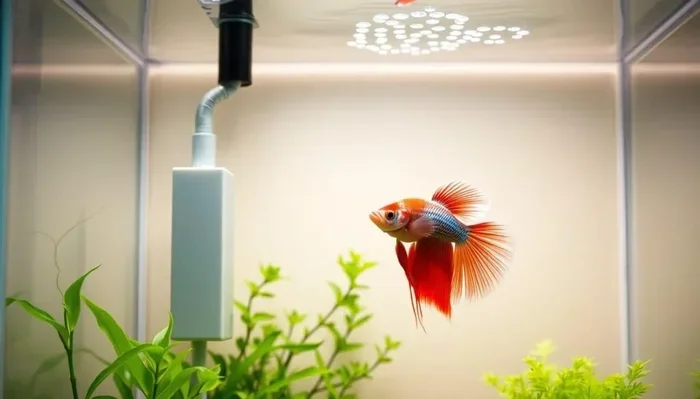
Bettas love places to hide and explore. Add some live or silk plants, caves, and driftwood. Avoid sharp plastic decorations that can tear their fins. Plants also provide resting spots near the surface, which bettas appreciate since they breathe air.
Setting up a betta fish tank setup that looks natural and feels safe helps reduce stress. A well-decorated tank also makes it more enjoyable for you to watch your fish every day.
How to Maintain Your Betta Tank
Once your tank is set up, maintenance is key to keeping your betta healthy. A larger tank is easier to maintain than a small one, but all tanks need regular care.
Water Changes
For a 5-gallon tank, aim to change about 25 to 30 percent of the water every week. This removes waste buildup and keeps water quality for betta at safe levels. Use a gravel vacuum to clean the substrate during water changes.
If you are wondering how many times to change water for betta fish, the answer is once a week for most tank sizes. Larger tanks may only need water changes every 1 to 2 weeks, but this depends on the bioload and filtration.
Testing Water Parameters
Invest in a simple liquid test kit to check ammonia, nitrite, nitrate, and pH levels. Test the water at least once a month, or more often if you notice any changes in your betta’s behavior. Keeping these parameters in check is one of the best things you can do for your fish.
Cleaning the Tank
You might be wondering how often should you clean your betta fish bowl or tank. For a properly filtered 5-gallon tank, a full clean is rarely needed. Instead, focus on regular partial water changes and wiping down the glass. Only do a full tank clean if there is a serious algae buildup or water quality issue.
Overcleaning can actually be harmful because it removes beneficial bacteria that help break down waste. Stick to a gentle, consistent maintenance routine for the best results.
How Tank Size Compares: A Quick Look
Let us put tank sizes into perspective with a quick comparison. This table shows common tank sizes and what they mean for your betta.
- 1-2 gallons: Too small. Water quality crashes fast. Not suitable for long-term betta housing.
- 3 gallons: Slightly better but still too small. Requires very frequent water changes and close monitoring.
- 5 gallons: The minimum recommended size. Provides a stable environment with room for a filter and heater.
- 10 gallons: An excellent choice. More stable water parameters and extra space for enrichment.
- 20 gallons: Ideal for experienced keepers. Allows for more creative setups and easier maintenance.
As you can see, the sweet spot for most betta owners is between 5 and 10 gallons. This range balances ease of maintenance with a comfortable living space for your fish.
Final Thoughts on Betta Tank Size
Choosing the right tank size is one of the most impactful decisions you will make for your betta fish. How many gallons should betta fish have comes down to one simple answer: at least 5 gallons, with bigger being even better. A proper tank gives your betta the room, stability, and enrichment they need to live a long, happy life.
Remember, tank size is just the beginning. Combine it with a good filter, a reliable heater, regular water changes, and a thoughtful setup. Your betta will reward you with vibrant colors, active behavior, and years of companionship.
Take the time to give your betta the home they deserve. You will not regret it, and neither will your fish.
Frequently Asked Questions
Can a betta fish live in a 1-gallon tank?
A 1-gallon tank is far too small for a betta fish. While a betta might survive in a 1-gallon tank for a short time, it will likely become stressed, sick, and have a much shorter lifespan. Always choose at least a 5-gallon tank for your betta.
How often should I change the water in a 5-gallon betta tank?
For a 5-gallon tank, change about 25 to 30 percent of the water once a week. This helps maintain stable water quality and keeps waste levels low. Use a gravel vacuum during water changes to remove debris from the substrate.
Do betta fish need a filter in their tank?
Yes, betta fish benefit greatly from a filter. A gentle sponge filter keeps the water clean and reduces the buildup of harmful toxins. If you are wondering should a betta fish have a filter, the answer is a definite yes for any tank 5 gallons or larger.
What is the best tank shape for a betta fish?
A long, rectangular tank works best for bettas. It provides more horizontal swimming space and better surface area for gas exchange. Avoid tall, narrow tanks because bettas need easy access to the water’s surface to breathe air.
Can two betta fish live together in a larger tank?
Two male bettas should never be housed together because they will fight. Female bettas can sometimes live in groups in larger tanks, but this requires careful planning. If you are considering multiple bettas, research how many betta fish can live together before making any decisions.
Does tank size affect betta fish color and vibrancy?
Yes, tank size can indirectly affect your betta’s color. Bettas in larger, well-maintained tanks with stable water parameters tend to display brighter, more vibrant colors. Stress from poor living conditions often causes bettas to lose their color and appear dull.