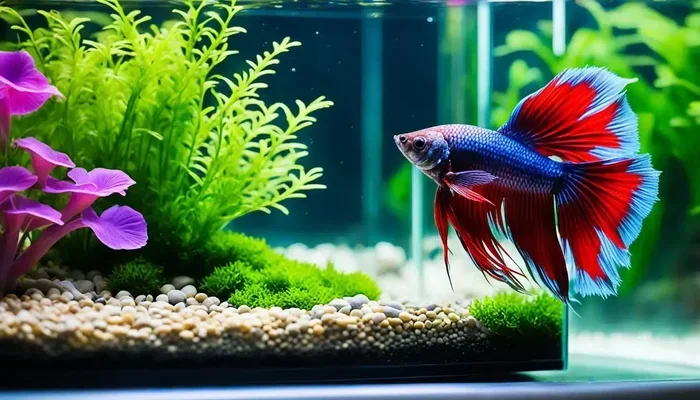
Do Betta Fish Like Open Tanks Best for Happy Fish

Many new fish keepers ask if betta fish prefer open tanks or covered setups. The truth is that betta fish like open tanks only when certain safety and humidity conditions are met. You will learn how to balance airflow, jumping risks, and water quality so your betta fish thrives in the right environment.
Key Takeaways
- Open tops increase jumping risk: Betta fish are famous escape artists, so a secure lid or lowered water level matters.
- Humidity drops faster: Open tanks lose moisture quickly, which can affect temperature stability and water parameters.
- Airflow improves gas exchange: A partially open setup can help oxygen levels, especially if you avoid strong currents.
- Tank size matters more than the lid: A spacious tank with gentle filtration supports healthier fish than a cramped covered bowl.
- Water quality stays central: Regular water changes and proper cycling matter far more than whether the top is open.
- Heaters and lights need protection: Open setups require careful placement of equipment to prevent damage or overheating.
- Observe your fish first: If your betta flares, hides, or stays near the surface, adjust the setup rather than guessing.
📑 Table of Contents
- Do Betta Fish Like Open Tanks Best for Happy Fish
- Why Do Betta Fish Like Open Tanks Sometimes
- Do Betta Fish Like Open Tanks When It Comes to Air and Oxygen
- Do Betta Fish Like Open Tanks When Jumping Risk Is High
- Do Betta Fish Like Open Tanks for Water Quality and Evaporation
- Do Betta Fish Like Open Tanks in Smaller or Larger Setups
- Do Betta Fish Like Open Tanks With Plants and Decor
- Do Betta Fish Like Open Tanks Best for Happy Fish: Final Setup Tips
- Conclusion
Do Betta Fish Like Open Tanks Best for Happy Fish
Many people fall in love with betta fish because of their bright colors and big personalities. These little tropical fish can be wonderful companions, but they also have very specific needs. One common question is whether an open top aquarium is better than a covered one. The short answer is that it depends on your setup, your room, and your fish. A completely open tank can work in some cases, but it also brings extra risks that many beginners overlook.
If you are building a new home for your betta, you want to think about more than just how the tank looks on a shelf. You should also think about safety, water quality, temperature, and how your fish behaves day to day. In this guide, we will walk through the pros and cons of open tanks, what betta fish actually prefer, and how to make the best choice for your situation. By the end, you will know how to set up a tank that supports a healthy, active, and content betta fish.
Why Do Betta Fish Like Open Tanks Sometimes
Some aquarium owners prefer open tops because they look clean and simple. An open tank can also make it easier to reach in, perform maintenance, and watch your fish without a lid getting in the way. For certain rooms, an open setup may feel less bulky and more natural. That does not automatically mean it is the best choice for every betta fish, though.
Betta fish often spend time near the surface because they can breathe atmospheric air. They have a special organ called the labyrinth organ that helps them gulp air when needed. Because of that, they do not always need a sealed environment. In a calm room with stable temperature and good water quality, an open top may not cause problems right away. Still, the setup has to be chosen carefully.
When an Open Top Can Work Well
An open tank may be fine if you keep the water level a bit lower and your betta is not a frequent jumper. It can also work if your room stays warm and draft-free. Some keepers like open tops for planted tanks or simple community-style displays, as long as the fish are compatible and the water remains stable.
If you want a more natural look, you can use smooth stones, live plants, and gentle filtration. Just remember that the open surface changes how the tank behaves. Water evaporates faster, dust can enter more easily, and the temperature may shift more than in a covered tank. So even if the tank looks nice, you still need to monitor it closely.
When an Open Top Becomes a Problem
The biggest issue is jumping. Betta fish are known for leaping out of water, especially if they feel stressed, crowded, or startled. An open tank gives them a direct path to the floor, where they can dry out very quickly. Even a short fall can be dangerous. If your betta is active, skittish, or new to the tank, an uncovered top is a real risk.
Another concern is evaporation. Open tanks lose water more quickly, which means the water line can drop between maintenance sessions. That can affect the heater, the filter intake, and the overall stability of the tank. In warmer rooms, this can happen even faster. You may also notice that humidity around the tank changes, which can matter if your betta is sensitive to environmental swings.
Do Betta Fish Like Open Tanks When It Comes to Air and Oxygen
A lot of people think an open tank automatically means better airflow, and that is partly true. An open surface allows gas exchange with the room, which can help oxygen enter the water. At the same time, too much surface agitation can create currents that bother betta fish. These fish usually prefer calm water, not a mini river race.
If you are thinking about airflow, it helps to understand the bigger picture of filtration and circulation. You do not need a powerful current to keep the water healthy. In fact, many betta fish do better with gentle movement and quiet resting spots. If you want to learn more about how movement affects them, you can read Do Betta Fish Like Air Pump Circulation for a closer look at circulation needs.
Gentle Surface Movement Is Usually Best
A lightly moving surface can support oxygen without stressing your fish. This is often better than a totally still top, especially in warmer water. Still, the goal is balance. You want enough exchange for healthy water, but not so much disturbance that your betta has to fight the flow all day.
If your tank uses a filter, aim for a setup that breaks the current or spreads it gently across the tank. Betta fish often appreciate places to hide and rest, such as broad leaves, smooth caves, or quiet corners. These spots give them a break from any mild movement and help them feel secure.
Avoid Strong Currents and Heavy Splashing
Heavy splashing may look dramatic, but it can make betta fish tired and nervous. Strong flow can also push food around and make feeding more difficult. If your fish constantly struggles to stay in place, the setup may be too active for comfort. A calmer environment usually supports better behavior and less stress.
So, if you are considering an open tank, think about the whole system, not just the lid. The surface may be open, but the water movement should still match your betta fish personality and comfort level.
Do Betta Fish Like Open Tanks When Jumping Risk Is High
This is one of the most important parts of the discussion. Betta fish can jump, and they sometimes do it without much warning. They may leap when startled by a sudden movement, when chasing another fish, or when trying to explore. In an open tank, that exploration can turn into a dangerous accident very fast.
If you want to keep an open top, you need to treat jumping prevention as a priority. That may mean keeping the water level lower, using a mesh cover, or placing the tank in a location where a jump would not be fatal. Some keepers also use a partial cover that allows airflow while blocking direct escape.
Signs Your Betta May Be More Likely to Jump
Some bettas are calmer than others, but there are common signs that your fish may be more restless. Frequent pacing near the rim, repeated flaring, or constant surface cruising can indicate irritation or stress. A new fish may also explore more while it adjusts to the tank. If you notice these behaviors, an open top may not be the safest choice.
It also helps to think about tank mates. Even peaceful companions can create extra activity, which may encourage a betta to move around more. If you are curious about how bettas interact with other fish, you may find Do Betta Fish Kill And Eat Other Fish useful for understanding compatibility risks.
Simple Ways to Reduce Jumping Danger
You can lower the risk without making the tank feel closed off. A few practical options include:
- Keeping the water a few inches below the rim
- Using a lightweight mesh or screen instead of a heavy hood
- Placing smooth decor near the surface to break up open swimming paths
- Avoiding sudden vibrations or loud noise near the tank
- Watching new fish closely during the first few days
These small changes can make an open setup safer while still giving you the look and feel you want.
Do Betta Fish Like Open Tanks for Water Quality and Evaporation
Water quality is the real foundation of betta health. An open tank does not automatically improve water quality, and it can sometimes make maintenance harder. Faster evaporation can concentrate waste if the water level drops and you do not top it off correctly. It can also change the distance between the heater and the water surface, which may affect heating consistency.
If you choose an open tank, you should stay on top of water changes and testing. Stable parameters matter more than the style of the lid. Many beginners focus on the look of the tank and forget that clean, balanced water is what keeps a betta fish active and bright. For a deeper look at maintenance habits, you can check Do Betta Fish Have To Have Water Changes.
Evaporation Can Affect Stability
As water evaporates, the tank becomes shallower. That can leave the heater exposed or cause the filter intake to suck in air. Both problems can interrupt your routine and stress the fish. In addition, if you simply add tap water without matching temperature or treating it properly, you may introduce new issues.
A covered or partially covered tank usually slows evaporation and helps the setup stay more consistent. That does not mean open tanks are bad, but they do demand more attention. If you are the type of keeper who enjoys frequent checks and regular topping off, an open top may still suit you.
How to Keep an Open Tank Stable
If you want the open look without constant instability, focus on these habits:
- Test water regularly rather than guessing
- Top off evaporated water with treated, temperature-matched water
- Keep the heater fully submerged and secure
- Watch the filter intake for noise or air pockets
- Clean debris before it breaks down and affects water quality
Consistency is the key. A well-maintained open tank can be perfectly fine, but only if you stay proactive.
Do Betta Fish Like Open Tanks in Smaller or Larger Setups
Tank size changes everything. A small open bowl is usually a poor choice for betta fish, even if it looks charming. Small volumes of water shift temperature and chemistry quickly, and they offer less room for swimming and resting. Larger tanks are more stable and give your fish a better chance to behave naturally.
If you are deciding on size, it helps to think about space, not just style. Some people assume a tiny tank is easier, but easier is not always better for the fish. A bigger tank often gives you more control and a healthier environment. If you want more detail on space needs, see Do Betta Fish Like A Lot Of Space.
Why Larger Tanks Often Work Better
Larger tanks usually hold temperature better and dilute waste more effectively. They also give you room for plants, gentle filtration, and hiding spots. A betta fish can explore without feeling boxed in, and you have more options for creating a comfortable layout.
In a larger open tank, you still need to watch for evaporation and jumping, but the setup is often easier to manage than a tiny open container. More water means more stability, which usually means less stress for both you and your fish.
Why Tiny Open Containers Are Risky
Small open containers can heat up quickly and lose water fast. They may also lack filtration or enough surface area for healthy gas exchange. In those conditions, your betta fish may become lethargic or stressed. Even if the tank looks simple, the fish may not be thriving inside it.
If you are comparing options, it is worth looking at how tank size affects long-term care. For example, you might explore Do Betta Fish Like 10 Gallon Tank to understand how a more spacious setup can support better living conditions.
Do Betta Fish Like Open Tanks With Plants and Decor
Decor and plants can make an open tank feel balanced and inviting. They also give your betta places to rest, hide, and explore. A well-decorated tank often looks more natural and helps the fish feel less exposed. That can be especially helpful if the top is open and the fish has a wide field of view.
When choosing plants, think about your lighting, your experience level, and how much maintenance you want to do. Live plants can help the tank feel more dynamic, while artificial plants are easier for beginners who want a low-maintenance setup. Either way, the goal is to create a calm environment that suits your betta fish.
Good Decor Choices for Open Tanks
Helpful additions include:
- Broad-leaf plants that offer resting spots near the surface
- Smooth rocks or driftwood with no sharp edges
- Low caves or tunnels for shy moments
- Open swimming areas so the fish is not crowded
- Soft substrate that is easy to clean
A mix of cover and open space usually works well. Your betta fish can choose where to spend time, which is a sign of a comfortable setup.
What to Avoid in an Open Setup
Try to avoid sharp decorations, overcrowded layouts, and heavy objects that could tip or damage the tank. Also avoid placing the tank where direct sunlight, drafts, or household traffic will constantly disturb it. An open tank may look airy and light, but it still needs a stable location.
If your fish seems to prefer hiding more than usual, you may want to learn more about behavior cues. For instance, you can read Do Betta Fish Hide In Rocks to understand when hiding is normal and when it may signal stress.
Do Betta Fish Like Open Tanks Best for Happy Fish: Final Setup Tips
If you want the best chance of success, think of the open top as a choice that needs support from the rest of the setup. A happy betta fish is usually the result of good water, safe surroundings, stable temperature, and enough room to behave naturally. The lid is only one part of the picture.
Here is a simple comparison to help you decide:
| Setup Feature | Open Top | Covered Top |
|---|---|---|
| Jumping risk | Higher | Lower |
| Evaporation | Faster | Slower |
| Access for maintenance | Easy | Moderate |
| Temperature stability | More variable | More consistent |
| Surface gas exchange | Good | Good, depending on lid |
| Best for busy rooms | Less ideal | More ideal |
If you choose an open tank, keep the water level safe, monitor evaporation, and make sure your fish has calm places to rest. If you notice stress, adjust the setup before assuming the fish is simply being difficult. Small changes often make a big difference.
Quick Tips for a Safer Open Tank
- Use a partial cover if you want airflow without full exposure
- Keep the tank away from loud speakers, doors, and foot traffic
- Match new water to the tank temperature before adding it
- Watch for surface skimming, jumping, or frantic swimming
- Maintain a regular cleaning and testing routine
Common Mistakes to Avoid
- Leaving the water level too high near the rim
- Using a strong filter that creates constant turbulence
- Ignoring evaporation between water changes
- Placing sharp decor where the fish can injure itself
- Assuming an open top fixes poor water quality
Expert Insights for Betta Keepers
Experienced keepers usually focus on what the fish does, not just what the tank looks like. If your betta explores calmly, rests often, and eats well, the setup is probably working. If it stays tense, hides too much, or seems exhausted, the environment may need adjustment. The best setup is the one that fits your fish and your ability to maintain it.
It also helps to remember that betta fish are individuals. Some are bold and curious. Others are shy and prefer a more protected space. Your job is to create a balanced home that respects those traits. An open tank can be part of that home, but only when the rest of the setup supports it.
Conclusion
So, do betta fish like open tanks? They can live in open tanks, but only when the risks are managed and the environment stays stable. An open top may offer easier access and a clean look, yet it also raises jumping danger, evaporation, and temperature changes. The best choice depends on your room, your tank size, and how carefully you maintain the water.
If you want a happy betta fish, focus on safety, gentle water movement, good filtration, and regular care. Whether you choose an open top, a partial cover, or a full lid, the goal is the same: a calm, healthy home where your fish can thrive. When you match the setup to the fish instead of forcing the fish to fit the setup, you give your betta the best chance at a comfortable life.
Frequently Asked Questions
Do betta fish like open tanks more than covered tanks?
Not always. Betta fish do not automatically prefer open tops, and covered tanks often offer better safety and stability. The best choice depends on your tank size, room conditions, and how well you manage evaporation and jumping risk.
Can betta fish jump out of an open tank?
Yes, betta fish can jump, and an open top makes escape much easier. Even a calm fish may leap if startled, so many keepers use a lower water level or a light cover for protection.
Do open tanks help betta fish get more oxygen?
An open surface can support gas exchange, but betta fish still need calm water rather than strong currents. Gentle movement is usually better than heavy splashing or powerful flow.
Is an open tank bad for betta fish humidity and temperature?
It can be. Open tanks lose water faster and may experience more temperature variation, especially in drafty or warm rooms. Regular topping off and stable placement help reduce those problems.
What size tank is best if I want an open top?
A larger tank is usually easier to manage than a small open container because it holds temperature and water quality more steadily. More space also gives your betta fish better room to swim and rest.
Do betta fish like open tanks with plants and hiding spots?
Many betta fish feel more comfortable when the tank includes plants, smooth decor, and quiet places to rest. These additions can make an open setup feel less exposed and more natural for the fish.