Can You Put Other Fish in With a Betta Tank Mates Guide
Yes, but only with the right fish and setup. The answer to can you put other fish in with a betta is still yes, but not for every tank. Learn which species fit, how to set up the tank, and when to separate fish before you add a new roommate.
Many betta owners want a lively tank, not an empty one. Adding betta tank mates can make an aquarium feel more natural. It can also create stress, injury, or even death when the wrong fish are combined.
If you are wondering can you put other fish in with a betta, the answer is yes in some cases. The safe choice depends on the betta’s nature, the tank size, and the needs of every fish. Before you shop, this guide to can you put any other fish with a betta can help you plan better.
Key Takeaways
- Choose calm species: Pick hardy, peaceful fish that stay away from the betta and do not nip fins.
- Use enough space: A 20-gallon long tank gives you far more room to manage betta tank mates than a 5-gallon tank.
- Match water needs: Keep temperature, pH, filtration, and flow stable enough for every fish in the tank.
- Add plenty of cover: Plants, caves, and sight barriers reduce stress and block direct confrontations.
- Watch closely: Separate the betta at the first sign of injury, constant chasing, or stopped feeding.
- Never keep two males together: One male betta may share a tank, but two male bettas should never be housed together.
📑 Table of Contents
Can You Put Other Fish in With a Betta Safely?
There Is No One-Size-Fits-All Answer
A betta may ignore some fish, tolerate others, or attack them on sight. Bettas are territorial, and their reactions can change with stress, space, and tank layout. Even a calm betta can become aggressive as it grows.
Some bettas have shorter fins and may be less prone to nipping. Others have long, flowing fins that can tempt other fish. Do not judge a fish only by its color or type. Meet the betta in person when you can, and look for its normal behavior.
Start with the Right Tank Size
A bowl is not a good home for a betta or any community fish. Bettas need a heated, filtered tank with regular water changes. For a mixed tank, more space usually means more control.
- 5 gallons: Best for one betta, with a snail or hardy shrimp as an optional cleanup crew.
- 10 gallons: Possible for one calm betta and a small school of tiny fish, but stocking must be very careful.
- 20-gallon long: The best beginner choice for a peaceful community tank with several types of fish.
Quick Comparison of Common Tank Mates
| Fish or Animal | Fit | Main Reason |
|---|---|---|
| Ember tetras or harlequin rasboras | Often good | Hardy, active, mid-level fish that live in groups. |
| Corydoras catfish | Often good | Stay near the bottom and need a group of at least six. |
| Nerite snails or Amano shrimp | Low risk | Usually peaceful and useful for cleaning. |
| Guppies or fancy goldfish | High risk | Guppies may nip fins, while goldfish need cooler water. |
| Barbs, cichlids, or gouramis | Usually avoid | They may nip, fight, or guard the tank too strongly. |
Best Betta Tank Mates by Tank Size
Safe Choices for a 5-Gallon Tank
A 5-gallon tank leaves little room for error. Keep one betta by itself, or add only a low-risk snail or shrimp. Avoid tetras, rasboras, and corydoras here. These fish need space to school and may not thrive in such a small setting.
Options for a 10-Gallon Tank
A 10-gallon tank can work with a calm betta and a small group of tiny fish. Choose six to eight ember tetras or harlequin rasboras. Keep them in a group so they feel safe and show natural behavior. A nerite snail is another low-risk choice.
If you want corydoras, add at least six and keep the tank well filtered. Do not fill the tank just because the fish are small. Tank size, filter power, and water parameters all matter.
A Strong Setup for a 20-Gallon Long Tank
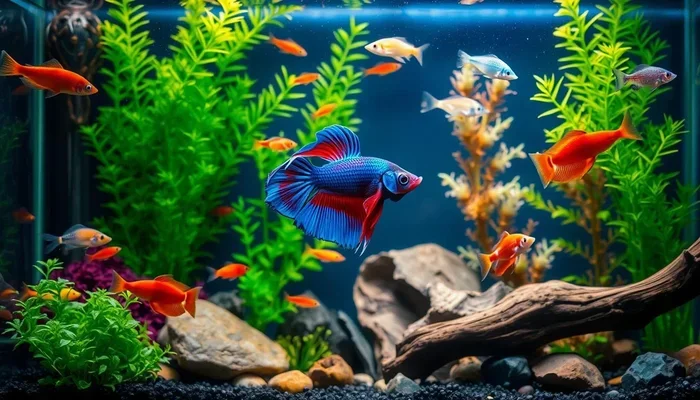
A 20-gallon long tank offers more hiding spots, swimming space, and water stability. A good plan may include:
- One calm betta.
- Eight to twelve ember tetras or harlequin rasboras.
- Six corydoras catfish.
- One nerite snail or a few Amano shrimp.
This is not a rule for every tank. Check your filter, test results, plant growth, and feeding routine first. A crowded tank can turn dangerous fast.
Rules for Male and Female Bettas
When choosing male betta tank mates, use extra care. A male betta should never share a tank with another male. For more details, see male betta tank mates.
A male and female betta should also not be kept together as normal tank mates. They may fight, and constant stress can harm both fish. Breeding requires a separate, planned setup. Likewise, two male bettas must never be placed in the same tank.
How to Build a Safe Betta Community Tank
Match the Water and Climate
Every fish must thrive in the same water. A cycled aquarium should show zero ammonia and zero nitrite. Keep nitrate near 20 parts per million or lower when possible. Test the water before adding fish and again during the first few weeks.
- Temperature: Aim for 78 to 80°F, then keep it stable.
- pH: A range near 6.5 to 7.5 often works, but stability matters more.
- Filter flow: Use a gentle flow, especially for long-finned bettas.
- Feeding: Offer food where each fish can reach it.
Create Cover and Clear Sight Lines
Add floating plants, leafy plants, caves, and driftwood-style decor made for aquariums. These items break up the tank and stop one fish from staring at another. Leave open swimming space near the surface for the betta.
A secure tank cover is also wise. Bettas can jump, and a lid helps prevent injury. Avoid sharp plastic, rough rocks, and decor that traps fins.
Quarantine and Stock in the Right Order
Keep new fish in a separate tank for two to four weeks. This quarantine period helps spot illness before it reaches your betta. Add the community fish first, then add the betta last. Turn off the lights, use a net instead of scooping from water, and move the betta slowly.
Expert Insights: Temperament Beats the Label
No species list can promise a safe match. Some peaceful-looking fish nip, while a quiet betta may still attack. Build the tank for the most risky fish, not the one you hope will be calm.
How to Introduce a Betta to Other Fish
A slow introduction lowers stress and gives you time to react. Follow these steps:
- Prepare the tank: Cycle it, test the water, and add plenty of cover before the betta arrives.
- Acclimate slowly: Float the bag, then drip small amounts of tank water into it over 20 to 30 minutes.
- Release at night: Dim the lights and place the betta near the back of the tank.
- Watch the first hours: Check for chasing, pinned fins, pale color, or refusal to eat.
- Monitor for days: Some fights begin at once, while others appear later.
- Keep a backup plan: Have a hospital tank or separate container ready if separation is needed.
Do not punish a betta for defending its space. Aggression is a sign that the setup or stocking choice did not work. Move the fish apart before either one is hurt.
Warning Signs, Common Mistakes, and Quick Tips
When You Must Separate the Fish
Remove the betta right away if it nips fins, pins its fins flat, turns pale, or hides all day. Also separate them if other fish chase it, block its food, or refuse to leave one corner. A torn fin can become infected, so quick action matters.
Common Mistakes to Avoid
- Adding fish based only on a picture or popular list.
- Using a bowl or keeping the tank too cold.
- Choosing flashy, long-finned fish that invite nipping.
- Keeping a school with too few fish.
- Adding a new fish without quarantine.
- Expecting a betta to share its space with a second betta.
Quick Tips for Better Success
- Choose small, hardy fish that stay in the middle or bottom of the tank.
- Use dense plants and sight barriers, not just open swimming space.
- Feed the betta first, then make sure other fish get food too.
- Do not rearrange the whole tank after the betta settles in.
- Keep records of water tests, feeding, and behavior.
Key Takeaways: A Mixed Tank Takes Patience
The safest betta tank mates are calm, hardy, and active in groups. They should use a different part of the tank and never match the betta’s fin style or temper. Even then, watch closely. A tank that looks safe today can change tomorrow.
Conclusion: Is a Mixed Betta Tank Worth It?
If you are still asking can you put other fish in with a betta, start with a larger, well-planted tank and a calm betta. Pick small schooling fish or peaceful cleanup animals. Avoid fin nippers, bold cichlids, gouramis, goldfish, and any second male betta.
A shared tank can be beautiful, but the betta’s health must come first. Plan the water, space, cover, and stocking order before buying fish. If the betta shows stress or injury, separate it at once. A happy, safe tank is always better than a crowded one.
Frequently Asked Questions
Can a betta live with tetras?
Yes, a calm betta may live with small, hardy tetras such as ember tetras. Use a group of at least six and give them plenty of room. Avoid bold tetras that nip fins.
Can a male betta live with a female betta?
Not as normal tank mates. A male and female betta can fight and may need to be separated at once. Keep them together only for a planned breeding setup.
Can two male bettas live in the same tank?
No. Two male bettas should never share a tank. They can fight seriously, so each male needs his own properly heated and filtered tank.
What fish should not go with a betta?
Avoid guppies, fancy goldfish, barbs, cichlids, gouramis, and flashy long-finned fish. These species may nip fins, need different water conditions, or act too aggressively.
How large should a betta tank be for other fish?
A betta needs at least a 5-gallon heated and filtered tank. A 10-gallon tank can hold a few small fish, but a 20-gallon long tank is much easier for a community setup.
How do I know when to separate a betta?
Separate the fish if you see torn fins, constant chasing, pale color, pinned fins, or stopped feeding. It is better to act early than wait for a serious injury or infection.