Can Overfeeding Kill a Betta Fish
Overfeeding is a common mistake that can quickly turn a vibrant betta into a sickly fish. Understanding how much to feed, spotting early warning signs, and adjusting your routine are key to preventing fatal health problems.
Key Takeaways
- Overfeeding can cause fatal health issues: bloating, constipation, and organ failure are direct results of excess food.
- Feed small portions once or twice daily: most bettas thrive on 2‑3 tiny pellets or a few brine shrimp per feeding.
- Watch for early warning signs: swollen abdomen, loss of appetite, and cloudy water are red flags.
- Maintain water quality: uneaten food pollutes the tank and stresses the fish.
- Adjust feeding when temperature changes: metabolism slows in cooler water, so feed less.
- Use a feeding schedule: consistency helps avoid accidental over‑feeding.
- Seek veterinary help early: if symptoms appear, a fish‑savvy vet can often save your betta.
📑 Table of Contents
- Introduction: Why Feeding Matters More Than You Think
- 1. The Biology Behind Overfeeding
- 2. Recognizing the Early Warning Signs
- 3. How Much Food Is Too Much?
- 4. Practical Tips to Prevent Overfeeding
- 5. What To Do If You Suspect Over‑Feeding
- 6. Frequently Overlooked Factors
- Conclusion: Feeding Wisely to Keep Your Betta Thriving
Introduction: Why Feeding Matters More Than You Think
When you first bring home a betta fish, the excitement can turn into a feeding frenzy. Those bright, flowing fins seem to beg for a constant buffet, and it’s easy to think “more is better.” The truth is, overfeeding is one of the leading causes of preventable death in bettas. In this article we’ll answer the question, can overfeeding kill a betta fish? and give you a step‑by‑step plan to keep your pet healthy.
Betta fish are small, tropical predators that evolved to hunt insects on the water’s surface. In the wild they eat only what they need to survive. In a home aquarium, the temptation to over‑feed is high, but the consequences are severe. Let’s dive into the science, the signs to watch for, and the practical tools you need to feed responsibly.
1. The Biology Behind Overfeeding
How a Betta’s Digestive System Works
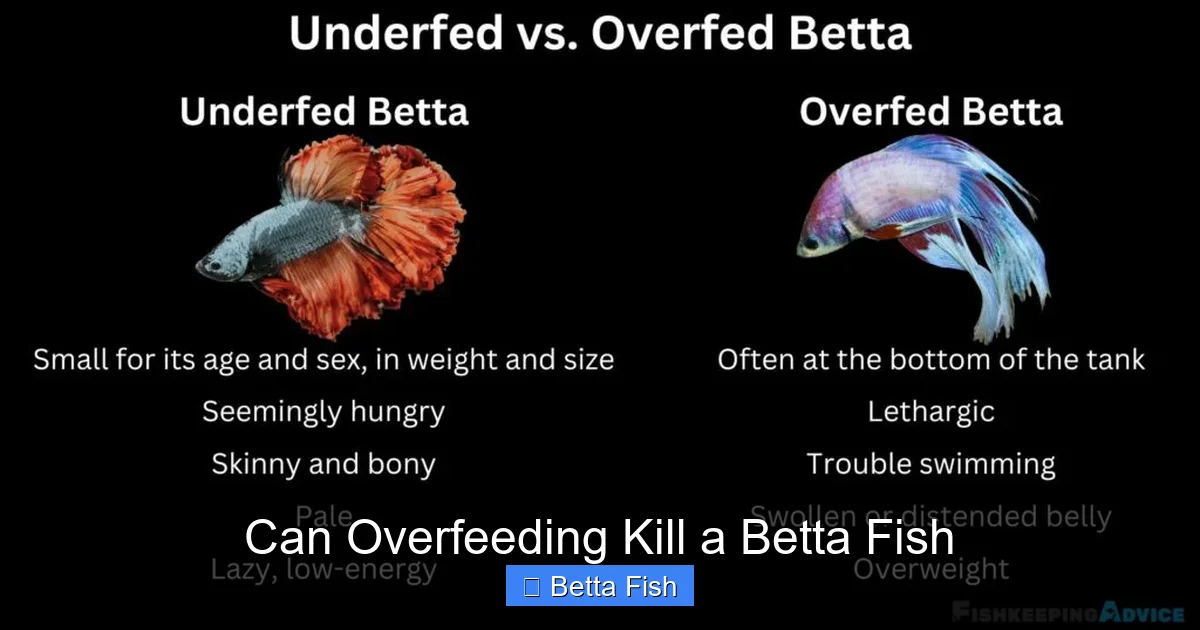
A betta’s stomach is roughly the size of a pea. It can only hold a tiny amount of food at a time. When you give more than it can handle, the excess sits in the gut, fermenting and producing harmful gases. This leads to bloating, constipation, and eventually a condition called “swim bladder disorder,” which makes the fish float upside down or sink to the bottom.
Visual guide about Can Overfeeding Kill a Betta Fish
Image source: fishkeepingadvice.com
Metabolism and Temperature
Betta metabolism speeds up in warm water (around 78‑80°F) and slows down as temperatures drop. If you keep the tank at a stable temperature but increase the amount of food, the fish’s body can’t keep up with digestion, amplifying the risk of over‑feeding.
Why Overfeeding Can Be Fatal
Constant over‑feeding creates a cycle of poor water quality, bacterial overgrowth, and stress. Stress weakens the immune system, making the betta vulnerable to bacterial infections like Flavobacterium columnare (columnaris) and fungal issues. In severe cases, organ failure can occur, and the fish may die within days.
2. Recognizing the Early Warning Signs
Physical Symptoms
- Swollen abdomen: a round, balloon‑like belly is a classic sign of over‑feeding.
- Loss of buoyancy: the fish may float at the surface or sink and rest on the tank bottom.
- Lethargy: less movement, hiding more often.
- Red or inflamed anal fin: indicates constipation.
Behavioral Changes
Betta fish that are over‑fed often lose interest in food, become less aggressive, and may even ignore their usual “flare” displays. If you notice a sudden drop in appetite after a period of heavy feeding, it’s time to reassess.

Visual guide about Can Overfeeding Kill a Betta Fish
Image source: geometrydash.ie
Water Quality Clues
Uneaten food quickly turns cloudy and releases ammonia. Test kits will show rising ammonia and nitrite levels, which are toxic to bettas. A spike in ammonia often coincides with over‑feeding.
3. How Much Food Is Too Much?
Portion Guidelines
For most bettas, 2‑3 small pellets (the size of a grain of rice) once or twice a day is sufficient. If you’re feeding live or frozen foods, aim for a few pieces that the fish can consume in under two minutes.

Visual guide about Can Overfeeding Kill a Betta Fish
Image source: europe-kikaku.com
Feeding Frequency
Young bettas (under 3 months) can handle two feedings per day. Adult bettas do well with one feeding in the morning and a tiny snack in the evening. Over‑feeding often happens when owners give food at every opportunity, not realizing the fish has already eaten enough.
Adjusting for Temperature and Activity
When water temperature drops below 75°F, reduce the portion by half. In a heavily planted tank with lots of natural insects, you can cut back even further.
4. Practical Tips to Prevent Overfeeding
Use a Feeding Schedule
Write down feeding times on a calendar or set a phone reminder. Consistency eliminates guesswork.
Measure Food with a Spoon or Tweezers
Instead of sprinkling food from a bag, use a calibrated spoon or tweezers to count each pellet. This visual control helps you stick to the recommended amount.
Remove Uneaten Food
After five minutes, use a small net or siphon to clear any leftover flakes. This protects water quality and prevents the fish from gulping excess.
Consider Automatic Feeders
For busy owners, a low‑volume automatic feeder can dispense precise amounts at set times, reducing the temptation to “just give a little more.”
Watch the Tank’s Ecosystem
Regular water changes (20‑30% weekly) and a good filter keep ammonia low. A clean tank supports a healthy digestive system.
5. What To Do If You Suspect Over‑Feeding
Fast the Betta
Give the fish a 24‑hour fast to allow the digestive tract to clear. During this time, monitor water parameters closely.
Introduce a Light Diet
After the fast, offer a very small amount of high‑quality, easily digestible food such as finely crushed betta pellets or a tiny piece of frozen brine shrimp.
Increase Water Changes
Perform a 30% water change daily for three days to dilute any toxins from decaying food.
Seek Professional Help
If bloating persists or the fish shows signs of swim bladder disorder, consult a veterinarian who specializes in fish. Early intervention can save a life.
Prevent Future Incidents
Review your feeding log, adjust portion sizes, and keep a clean tank. Learning from the mistake ensures a healthier future for your betta.
6. Frequently Overlooked Factors
Food Quality Matters
Low‑quality pellets often contain fillers that are harder to digest, increasing the risk of constipation. Choose a reputable brand with high protein content and minimal additives.
Supplemental Foods
Occasional treats like daphnia or bloodworms are fine, but they should never replace the staple diet. Too many protein‑rich treats can overload the liver.
Tank Size and Filtration
A cramped bowl makes it harder to remove excess food and maintain water quality. Even though bettas can survive in small spaces, a 5‑gallon tank with a gentle filter provides a safer environment. For more on tank size, see our guide on Can You Keep Betta Fish In A Bowl.
Compatibility with Other Fish
If you share the tank with tank‑mates, over‑feeding one betta can affect the whole community. Over‑fed bettas may become aggressive, and excess food can harm delicate species. Learn which companions are safe in our article What Fish Can Live With A Betta Fish.
Conclusion: Feeding Wisely to Keep Your Betta Thriving
The short answer to the headline question is a resounding yes—can overfeeding kill a betta fish? It can, and it often does so quietly, through bloating, poor water quality, and weakened immunity. By understanding the betta’s tiny stomach, watching for early signs, and sticking to a measured feeding routine, you protect your fish from a preventable fate.
Remember, a healthy betta is a happy betta. Small, regular portions, clean water, and attentive observation are the three pillars of successful betta care. When you feed with intention, you’ll enjoy the dazzling colors and bold personality of your betta for many years to come.
Frequently Asked Questions
Can a betta survive if I accidentally overfeed once?
One occasional over‑feeding episode is usually not fatal. The fish may become bloated, but a fast and a water change can help it recover.
How often should I change the water after overfeeding?
Perform a 20‑30% water change the day you notice uneaten food, then another change the following day to keep ammonia low.
Is it better to feed frozen or pellet food?
High‑quality pellets are convenient and nutritionally balanced. Frozen foods are great as occasional treats but should be offered in very small amounts.
Can I feed my betta once a day instead of twice?
Yes. Many adult bettas do fine on a single daily feeding, especially if the portion is appropriate for their size.
What should I do if my betta’s belly stays swollen?
Fast the fish for 24 hours, increase water changes, and consider a gentle gut‑clearing diet like a small amount of cooked pea. If it doesn’t improve, seek veterinary help.
Do bettas need supplements to aid digestion?
Usually no. A balanced commercial diet provides all needed nutrients. Over‑supplementing can actually worsen digestive issues.