Can Betta Fish Live with Guppy Fish
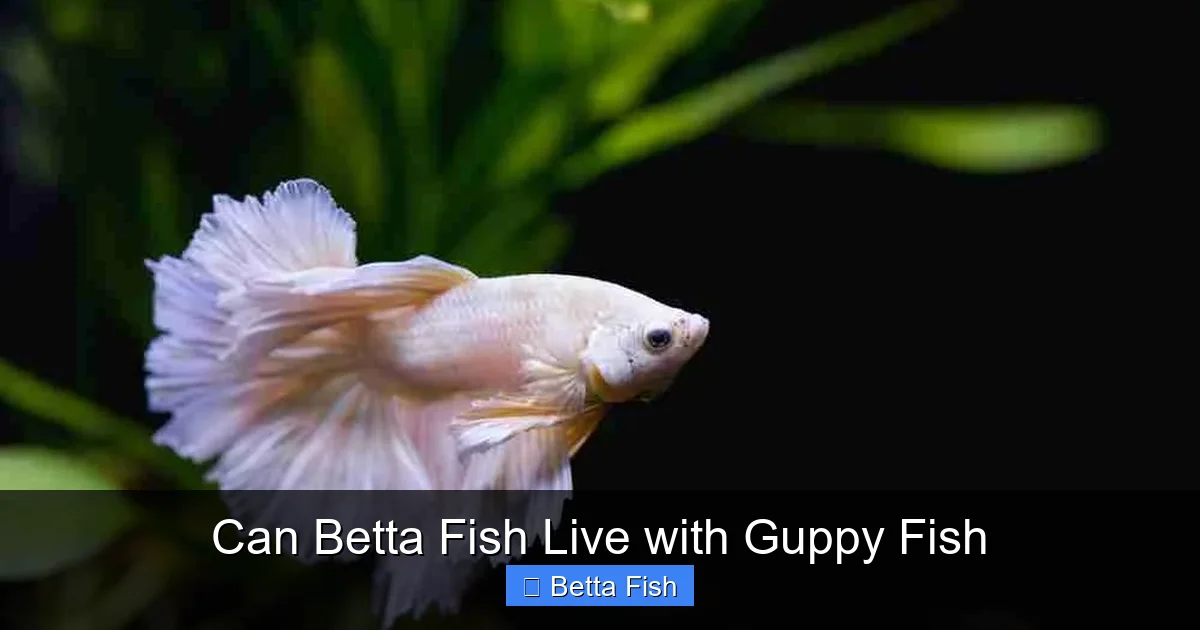
Can betta fish live with guppy fish? It’s risky and often not recommended. Male bettas are territorial and may attack guppies, especially males with bright, flowing tails. Success depends on your betta’s personality, tank size, and careful setup—but even then, danger remains.
Key Takeaways
- Risk Level Is High: Most male bettas see guppies as threats or targets due to their colorful, flowing fins that trigger aggression.
- Female Bettas Offer Better Odds: Female bettas are generally less aggressive than males, making coexistence slightly more possible.
- Tank Size Matters: A minimum of 20 gallons is recommended to provide enough territory and hiding spots for both species.
- Personality Is Key: Every betta has a unique temperament—some are calm, others are extremely aggressive, making outcomes unpredictable.
- Always Have a Backup Plan: Keep a separate tank or divider ready in case aggression occurs, as injuries can happen quickly.
- Monitor Constantly: Even if they seem fine initially, ongoing supervision is essential because betta aggression can emerge without warning.
[FEATURED_IMAGE_PLACEHOLDER]
📑 Table of Contents
- Introduction: The Truth About Bettas and Guppies
- Understanding Betta Fish Temperament
- Understanding Guppy Fish Behavior
- The Core Problem: Why This Combination Usually Fails
- Conditions Where It Might Work
- Signs of Trouble to Watch For
- What to Do If It Doesn’t Work
- Safer Alternatives to Guppies
- Expert Tips for Success
- Conclusion: Should You Try It?
Introduction: The Truth About Bettas and Guppies
So you’ve got a beautiful betta fish sitting pretty in its tank, and now you’re eyeing those adorable little guppies at the pet store. They’re colorful, active, and seem like they’d make great tank mates, right? Well, hold on before you toss them in together. The question of whether betta fish can live with guppy fish is one of the most common questions new fish keepers ask—and the answer isn’t as straightforward as you might hope.
Here’s the thing: betta fish, especially males, are naturally territorial and aggressive. They’re also called Siamese fighting fish for a reason. Guppies, on the other hand, are peaceful community fish with bright colors and flowing fins. Unfortunately, those gorgeous flowing fins on a guppy look an awful lot like another betta to your betta fish. That resemblance can trigger serious aggression.
But does that mean it’s absolutely impossible? Not necessarily. Some hobbyists have successfully kept these two species together under very specific conditions. In this article, we’ll break down everything you need to know about whether betta fish can live with guppy fish, including the risks, the conditions that might make it work, and what to do if things go south. Let’s dive in and explore this topic in full detail.
Understanding Betta Fish Temperament

Visual guide about Can Betta Fish Live with Guppy Fish
Image source: tankarium.com
Why Are Bettas So Aggressive?
Betta fish have been bred for centuries for fighting. In their native Thailand, they were historically bred for sport, much like roosters in cockfighting. That aggressive DNA hasn’t gone away, even in the pet store varieties you see today. Male bettas are particularly territorial and will attack anything they perceive as a rival—especially fish with bright colors and long, flowing fins.
A betta’s aggression isn’t just about anger. It’s instinct. When a male betta sees another fish with vibrant colors and elaborate fins, its brain literally tells it to attack. This is why keeping two male bettas together is a death sentence. And this is exactly why the question of whether betta fish can live with guppy fish is so complicated—because guppies often trigger that same aggressive response.
Male vs. Female Betta Aggression
Not all bettas are created equal when it comes to aggression. Female bettas tend to be significantly less territorial than males. While they can still be feisty, many female bettas are calm enough to coexist with other species. If you’re determined to try keeping bettas and guppies together, choosing a female betta dramatically improves your chances of success.
That said, even female bettas have their limits. Some females are just as aggressive as males, and there’s no reliable way to know your fish’s true personality until you test it. If you’re exploring what other fish can live with betta fish, you’ll find that female bettas open up more options than males do.
Understanding Guppy Fish Behavior
Visual guide about Can Betta Fish Live with Guppy Fish
Image source: japanesefightingfish.org
What Makes Guppies a Problem?
Guppies are wonderful little fish. They’re hardy, colorful, and incredibly active. They’re also one of the most popular freshwater aquarium fish in the world. But those very qualities—bright colors, flowing tails, and active swimming—make them a problem when housed with bettas.
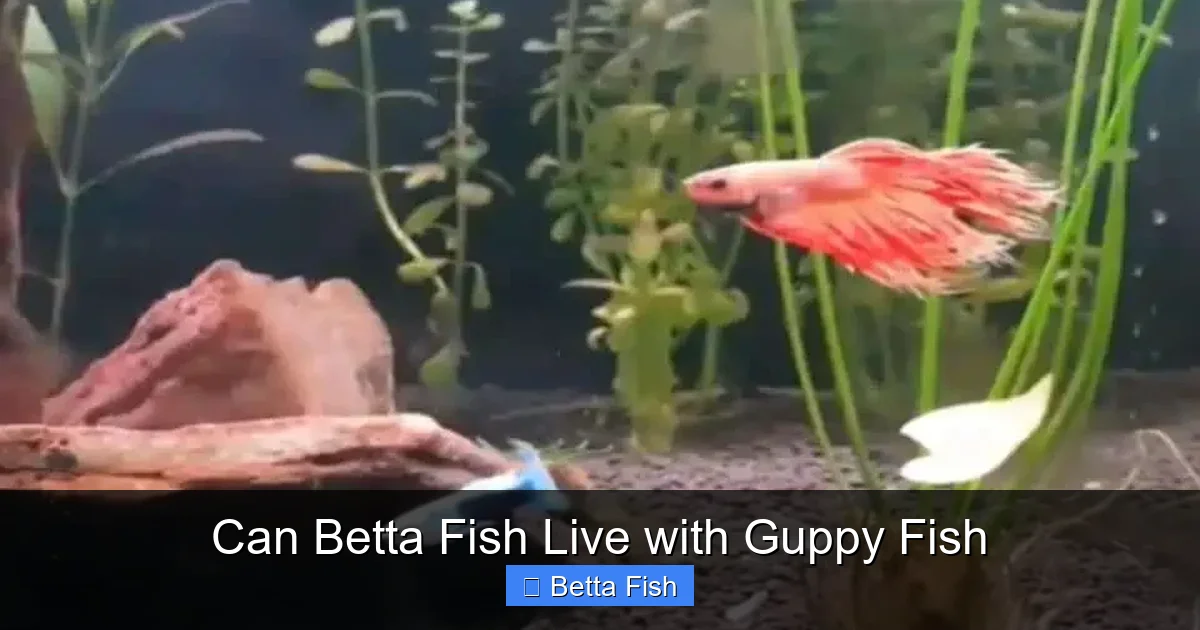
Male guppies are the biggest concern. Their large, colorful caudal fins look almost identical to a betta’s fins from your betta’s perspective. To a male betta, a male guppy isn’t a potential friend—it’s a rival that needs to be eliminated. Female guppies are less flashy and might be ignored, but there are no guarantees.
Guppy Social Needs
Guppies are schooling fish. They feel safest and most comfortable when kept in groups of five or more. This means that if you want guppies, you need a decent-sized tank just for them. Adding a betta to that mix creates a crowded, stressful environment where territorial disputes are more likely to occur.
Guppies also breed prolifically. If you keep males and females together, you’ll have babies very quickly. A sudden population explosion can stress out your betta even further, leading to more aggression. This is another reason why the combination of betta fish and guppy fish is so challenging in practice.
The Core Problem: Why This Combination Usually Fails

Visual guide about Can Betta Fish Live with Guppy Fish
Image source: smartaquariumguide.com
Fin Nipping and Aggression
The most common outcome when you put a male betta with guppies is fin nipping. Your betta will chase and bite the guppies’ fins, causing tears, infections, and extreme stress. In severe cases, the betta will kill the guppies outright. This can happen within hours of introduction, so it’s not something that develops slowly over weeks.
Even if your betta doesn’t attack immediately, the constant stress of being chased weakens the guppies’ immune systems. Stressed fish are far more susceptible to diseases like ich, fin rot, and fungal infections. So even if the betta doesn’t physically kill the guppies, the stress might do the job anyway.
Competition for Territory
Both bettas and guppies like to claim their own space in the tank. Bettas prefer the upper portion of the water column, and so do guppies. This means they’re constantly in each other’s space, which increases the likelihood of conflict. In the wild, fish can simply swim away. In a home aquarium, there’s nowhere to escape.
If you’re researching can a betta fish live with a guppy, you’ll find that many experienced keepers advise against it for exactly this reason. The overlap in swimming zones creates constant tension that eventually boils over into violence.
Conditions Where It Might Work

Visual guide about Can Betta Fish Live with Guppy Fish
Image source: fishlab.com
A Large, Well-Planted Tank
If you’re absolutely determined to try, tank size is your biggest ally. A 20-gallon long tank (or larger) gives both species room to establish separate territories. The tank should be heavily planted with live plants, driftwood, and caves to create visual barriers and hiding spots. Dense planting breaks the line of sight between fish, which reduces aggression significantly.
Floating plants are especially helpful because bettas like to rest near the surface. Plants like hornwort, water sprite, and Amazon sword provide cover for guppies while giving your betta a natural environment. The more complex the tank layout, the better your chances of making this pairing work.
Introducing Them the Right Way
How you introduce the fish matters enormously. Never just drop a guppy into a betta’s established tank. Instead, rearrange all the decorations in the betta’s tank before adding guppies. This resets the betta’s sense of territory so it doesn’t feel as defensive. You can also use a breeding box or tank divider for the first few days so the fish can see each other without physical contact.
When you do release the guppies, watch closely for the first hour. If your betta flares its gills, charges the glass, or displays aggressive body language, remove the guppies immediately. These are clear signs that coexistence won’t work. For more detailed guidance on can a betta fish live with guppies, check out our in-depth article on the topic.
Choosing the Right Betta
Some bettas are simply more aggressive than others, and there’s no foolproof way to predict temperament. Young bettas tend to be less set in their ways than older ones. Plakat bettas (short-finned varieties) may be slightly less triggered by guppy fins than veil-tail or half-moon varieties, though this isn’t a guarantee.
If you’ve had your betta for a while and it’s shown aggression toward its own reflection, it’s probably not a good candidate for community housing. Calm bettas that ignore their reflection during mirror tests are better candidates, but even they can surprise you.
Signs of Trouble to Watch For

Visual guide about Can Betta Fish Live with Guppy Fish
Image source: i.ytimg.com
Immediate Red Flags
When you first introduce guppies to a betta’s tank, watch for these warning signs: flaring gill plates, rapid chasing, biting, color changes in the betta (darker colors often indicate aggression), and the betta positioning itself between the guppies and the surface. If you see any of these behaviors, act fast.
Guppies that are being attacked will hide constantly, clamp their fins close to their bodies, lose their appetite, and may develop visible wounds. A guppy that spends all its time hiding behind the filter or in the corner of the tank is a guppy in distress.
Long-Term Stress Indicators
Even if outright aggression doesn’t occur, watch for subtle signs of stress in both species. These include loss of color, reduced appetite, lethargy, hiding more than usual, and increased susceptibility to illness. Chronic stress shortens a fish’s lifespan significantly, so don’t assume everything is fine just because there’s no visible violence.
What to Do If It Doesn’t Work
Have a Backup Tank Ready
This is non-negotiable. Before you even attempt to house betta fish with guppy fish, you need a separate tank ready to go. A 5-gallon tank with a heater and filter is sufficient as a quarantine or backup home. If aggression occurs, you need to be able to separate the fish immediately—not tomorrow, not in a few hours, but right now.
Never rely on tank dividers as a permanent solution. They’re useful for temporary separation during introduction, but they don’t give either fish adequate space and can cause long-term stress.
Rehoming Options
If the pairing doesn’t work, you’ll need to rehome either the betta or the guppies. Local fish stores sometimes accept returns or trades. Online aquarium communities and forums often have members willing to adopt fish. Whatever you do, don’t keep them together and hope the aggression will stop on its own—it won’t.
Safer Alternatives to Guppies
Better Tank Mates for Bettas
If you want a community tank with your betta, there are much safer options than guppies. Bottom-dwelling fish like corydoras catfish stay out of the betta’s territory. Small, fast-moving fish like ember tetras or harlequin rasboras are less likely to be seen as threats. Snails and shrimp can also work well in a betta tank.
For a comprehensive list of compatible species, take a look at our guide on what fish can live with betta fish. You’ll find plenty of options that are far less risky than guppies.
Creating a Guppy-Only Community
If you love guppies, consider setting up a separate guppy community tank. Guppies thrive with other peaceful livebearers like mollies, platies, and swordtails. A 15-20 gallon planted tank with a group of guppies and some corydoras makes a stunning display without any of the risks associated with mixing species.
Expert Tips for Success
Maintain Water Quality
Both bettas and guppies need clean, warm water. Keep the temperature between 76-80°F, which is comfortable for both species. Perform regular water changes of 25% weekly, and always use a water conditioner. Poor water quality stresses fish and makes aggression worse.
Feed Them Separately
Competition for food can trigger aggression. Make sure both the betta and guppies are getting enough to eat by feeding them in different areas of the tank. Bettas are carnivores and need protein-rich food, while guppies do well with a varied diet of flakes and small pellets.
Provide Visual Barriers
Use tall plants, rocks, and driftwood to create distinct zones in the tank. When fish can’t constantly see each other, they’re less likely to engage in territorial behavior. This is one of the most effective strategies for reducing aggression in any community tank setup.
Conclusion: Should You Try It?
Visual guide about Can Betta Fish Live with Guppy Fish
Image source: guppyfishtank.com
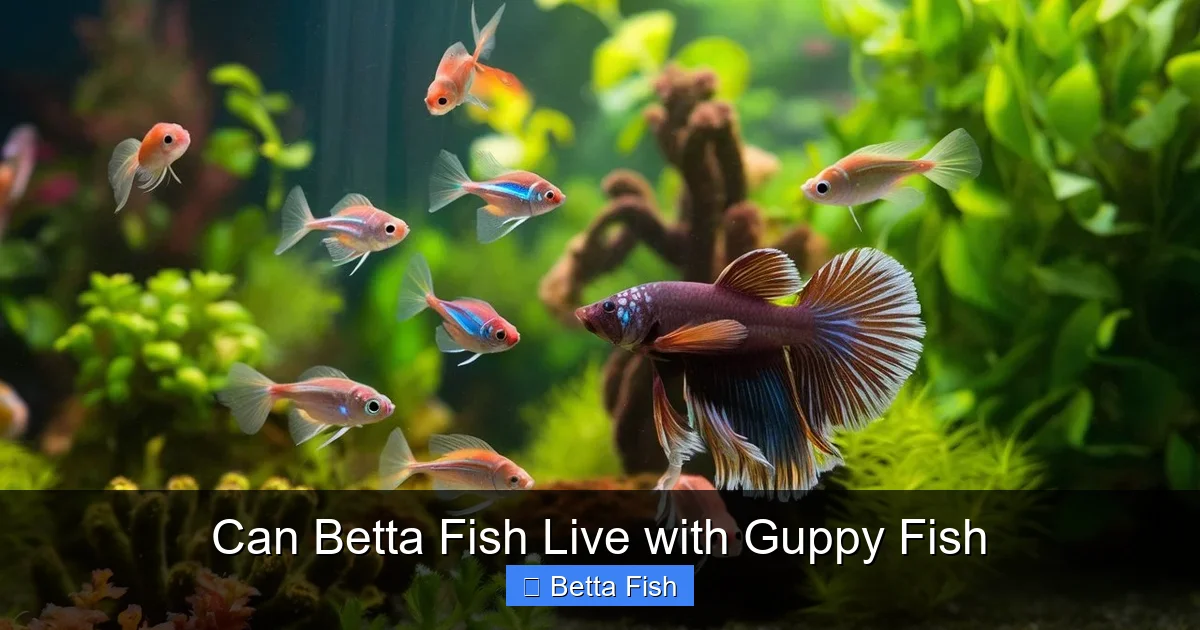
Let’s be honest—the answer to whether betta fish can live with guppy fish is usually no. The risks are simply too high for most setups. Male bettas are aggressive by nature, and guppies’ bright colors and flowing fins are practically designed to trigger that aggression. While there are rare cases where a particularly calm betta tolerates guppies, you’re gambling with the lives of your fish.
If you have a female betta, a large and heavily planted tank, and a calm personality, you might get away with it. But even then, you need to monitor constantly and be ready to separate them at a moment’s notice. For most fish keepers, the safest and most responsible choice is to keep bettas and guppies in separate tanks.
Your fish depend on you to make the right decisions for their wellbeing. A beautiful community tank is wonderful, but not at the cost of your pets’ health and safety. Choose wisely, plan ahead, and always prioritize the welfare of every fish in your care.
Frequently Asked Questions
Can a male betta fish live with guppies?
It’s highly discouraged. Male bettas are territorial and aggressive, and they often see guppies—especially males with flowing fins—as rivals. Attacks can happen quickly and result in serious injury or death for the guppies.
Can a female betta live with guppies?
Female bettas are generally less aggressive than males, so coexistence is slightly more possible. However, success depends entirely on the individual betta’s temperament, and there are no guarantees. A large, well-planted tank is essential.
What size tank do I need to keep bettas and guppies together?
If you attempt this pairing, you need a minimum of 20 gallons. Larger is always better. The tank should be heavily planted with plenty of hiding spots and visual barriers to reduce territorial aggression.
Why do bettas attack guppies?
Bettas attack guppies because the guppies’ bright colors and flowing fins trigger the betta’s territorial instincts. To a betta, a colorful guppy looks like a rival betta, not a potential tank mate.
What are safer tank mates for betta fish?
Safer options include corydoras catfish, ember tetras, harlequin rasboras, nerite snails, and Amano shrimp. These species are less likely to trigger betta aggression because they occupy different areas of the tank or lack the flowing fins that provoke attacks.
How do I know if my betta is too aggressive for tank mates?
Signs of an aggressive betta include constant flaring at its reflection, attacking tank decorations, and aggressive behavior during feeding. If your betta displays these traits, it’s best kept alone. A calm betta that ignores its reflection may be a better candidate for community living.