Can a Betta Fish Live with a Guppy
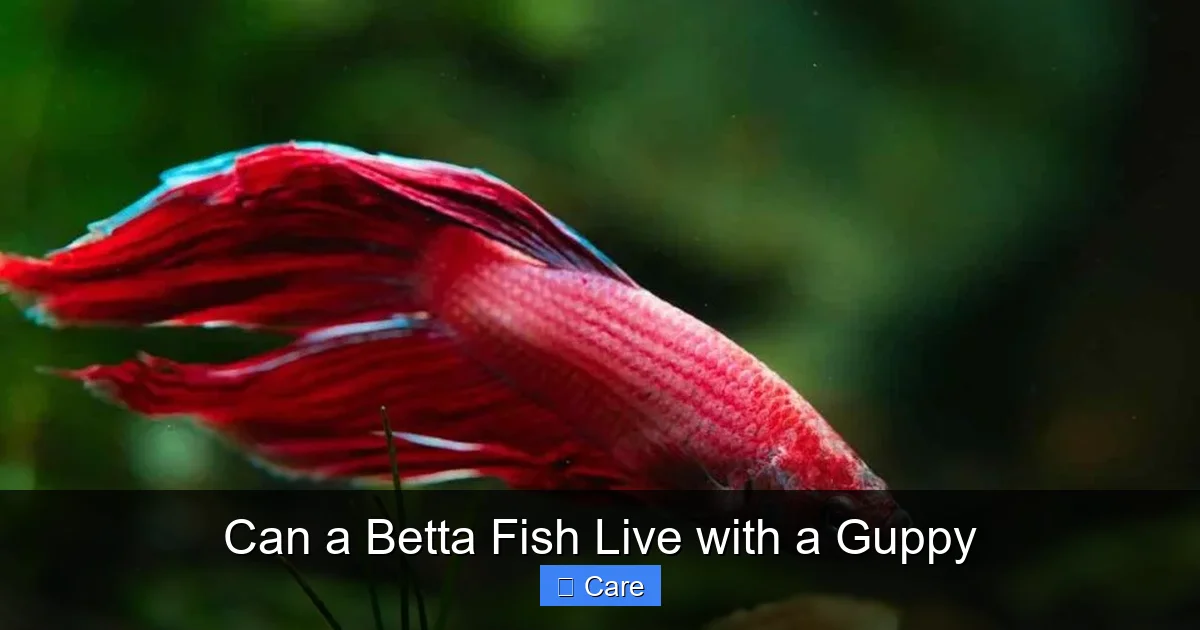
While it’s possible for a betta fish and a guppy to coexist, it’s considered a high-risk pairing due to the betta’s aggressive nature and the guppy’s flowing fins, which can trigger a betta’s hunting instinct. Success depends entirely on careful tank preparation, meticulous selection of individual fish with calm temperaments, and continuous, vigilant monitoring. For most aquarists, especially beginners, choosing a different, more compatible tank mate for your betta is the safer and less stressful path.
Key Takeaways
- High-Risk Pairing: Betta fish are famously territorial and aggressive, while guppies have bright colors and long fins that often trigger a betta’s aggression, making this combination risky.
- Tank Size is Critical: A minimum of 20 gallons is strongly recommended to provide enough space for each fish to establish its own territory and allow the guppy to evade a chasing betta.
- Individual Personalities Matter: Some bettas are naturally more docile (“peaceful plakat” types), and some guppies are less flashy. Success often hinges on selecting the right individuals.
- Aquascaping is Essential: A heavily planted tank with dense foliage, rocks, and driftwood creates visual barriers and hiding spots, breaking line-of-sight and reducing constant confrontation.
- Constant Vigilance Required: You must watch for signs of stress or aggression daily. Have a separate “hospital” tank ready to instantly remove any fish that are being harassed or injured.
- Guppy Population Should Be Higher: Keeping a small school of 4-6 guppies (all male or all female) can diffuse the betta’s focus, as it can’t single out one individual as easily.
- Not Recommended for Beginners: The dynamic is unpredictable. New aquarists should first master betta solo care or choose easier, less aggressive community tank mates.
📑 Table of Contents
- The Famous Betta Temperament: Understanding the Siamese Fighting Fish
- The Guppy’s Perspective: Why They Appear as Targets
- Creating a Peaceful Coexistence: The Non-Negotiable Tank Setup
- The Introduction Protocol: A Delicate Dance
- Reading the Signs: Aggression vs. Curiosity
- When It Doesn’t Work: Alternatives and Emergency Plans
- The Verdict: A Calculated Risk for the Dedicated Hobbyist
The Famous Betta Temperament: Understanding the Siamese Fighting Fish
To even consider the question “can a betta fish live with a guppy,” we must first start with the star of the show: the betta. Betta splendens, known as Siamese fighting fish, have a reputation for a reason. Centuries of selective breeding for combat have ingrained strong territorial and aggressive instincts in most males. A betta’s world is one of claimed space. He will patrol his domain, flaring his gills and fins at any perceived intruder. This isn’t just about violence; it’s a deep-seated need to control his environment. In the wild, a betta’s territory might be a small, resource-rich patch of water under a leaf. In your aquarium, that entire tank is his patch.
This territoriality is the primary hurdle. A betta doesn’t see a guppy as a friend or even just another fish. He sees a flashy, moving object that looks like a rival male betta (due to the guppy’s long, flowing caudal fin) or potential prey. The guppy’s vibrant colors and active, darting swimming style are essentially a red flag to a bull. It’s crucial to understand that this behavior is not “meanness” but a natural, hardwired response. You cannot love or train this instinct out of a betta. You can only manage its expression through environmental design and careful selection.
The Role of Fin-Nipping and Flaring
What does betta aggression look like? It starts with flaring—the dramatic expansion of gill covers and fins to appear larger. This is a warning. It escalates to chasing, where the betta will relentlessly pursue the guppy. The most dangerous outcome is nipping. Bettas have small but sharp teeth. They will nip at the long, delicate fins of guppies, causing torn, ragged edges. This is not only painful for the guppy but opens the door to fatal infections like fin rot. A guppy with shredded fins can quickly become lethargic, stressed, and succumb to disease. Your job as a keeper is to prevent the behavior from ever reaching the nipping stage.
The Guppy’s Perspective: Why They Appear as Targets
Now, let’s look at the potential tankmate: the guppy (Poecilia reticulata). Guppies are livebearers, known for their prolific breeding and the male’s spectacular, ornate tail fins. From a betta’s perspective, these features are problematic. The long, flowing, often brightly colored tail of a male guppy is a perfect mimicry of another male betta’s finnage. In the betta’s mind, this is an invading male come to steal his territory and his female. Even a female guppy, with her shorter but still active fins and brighter coloration than many females of other species, can be seen as a threat or a target.
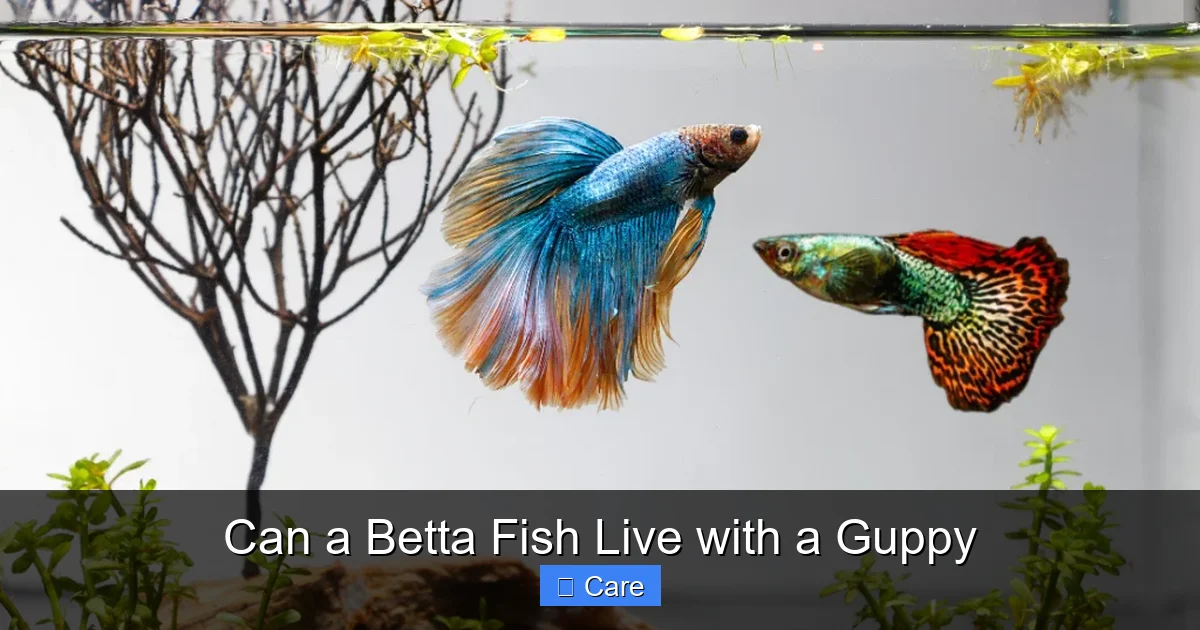
Visual guide about Can a Betta Fish Live with a Guppy
Image source: japanesefightingfish.org
Guppies themselves are generally peaceful, community-oriented fish. They are mid to top-dwelling swimmers and are almost constantly active. This constant movement is another trigger. To a betta lying in wait under a leaf, a darting guppy is irresistible prey-like behavior. Their small size (usually 1.5-2.5 inches) also places them in a size range that a determined betta might view as a snack, not just a rival. Furthermore, guppies are livebearers, meaning they give birth to fully formed, free-swimming fry. A betta will readily eat these tiny, wriggling newborns, making successful guppy breeding in a community tank with a betta virtually impossible.
Creating a Peaceful Coexistence: The Non-Negotiable Tank Setup
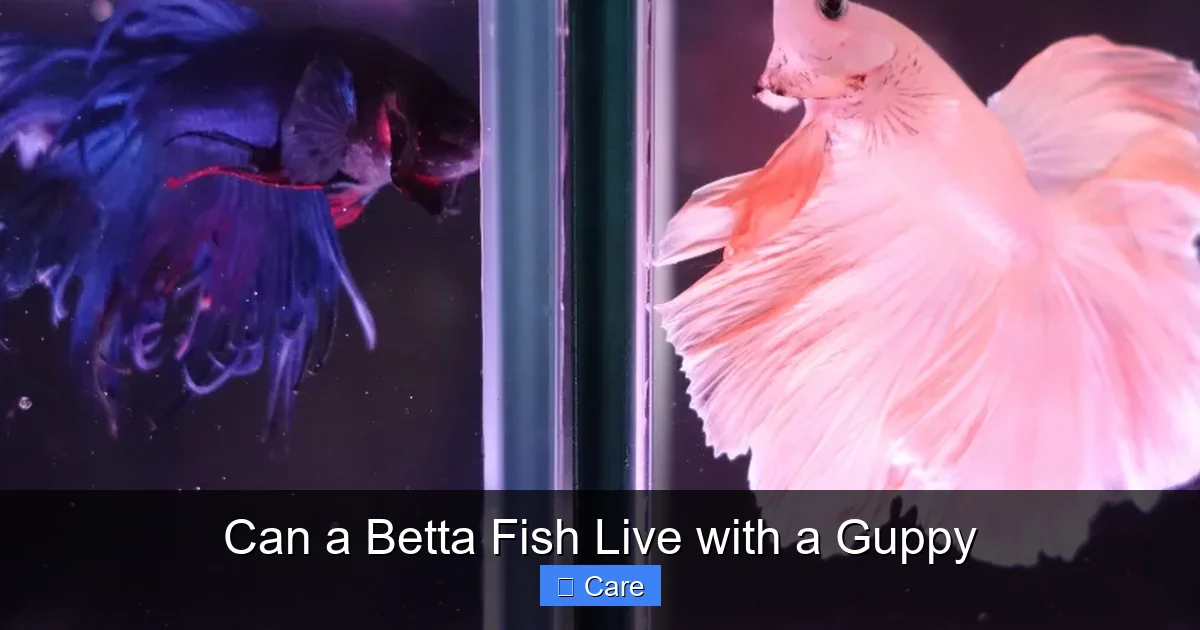
If you accept the risks and wish to proceed, the physical environment is your single most powerful tool for success. The goal is to break the tank into a series of small, disconnected territories, eliminating a clear “king’s court” that the betta can defend in its entirety. A standard 5-gallon betta tank is a death sentence for a guppy. You need space, and lots of it.
Visual guide about Can a Betta Fish Live with a Guppy
Image source: japanesefightingfish.org
Tank Size and Dimensions
Absolute Minimum: 20 Gallons (75 Liters). This is the consensus among experienced aquarists who have tried this pairing. A 20-gallon long tank provides a significant footprint (48″ x 13″), offering horizontal swimming space. This allows a guppy to dart away and have room to escape before the betta can intercept. In a smaller tank, the betta can guard every inch. A larger tank (30+ gallons) is even better and significantly increases the odds of peace. The extra water volume also dilutes any potential aggression and stabilizes water parameters, which is crucial for the stress-sensitive guppy.
The Art of Aquascaping: Hiding Spots and Visual Barriers
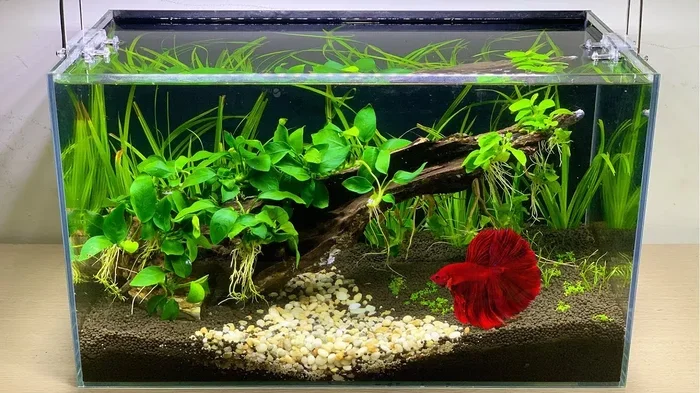
You must fill this tank with dense planting and decorations. Think “jungle,” not “show tank.” Use live plants like Java fern, Anubias, Cryptocoryne, and Vallisneria. Floating plants like water lettuce or frogbit are fantastic for creating a canopy at the surface, breaking the line of sight from above—a common betta patrol route. Add driftwood, large rocks, and clay pots (with holes plugged) to create caves and tunnels. The key is to ensure that at no point can the betta see the entire length of the tank from one end to the other. Every few inches should be a visual break. This prevents the betta from constantly spotting and obsessing over the guppies.
Lighting and Water Parameters
Use subdued lighting. Harsh, bright lights can increase stress and make fish more visible to each other. Bettas prefer warmer water (78-80°F or 25.5-26.5°C), while guppies are comfortable in a slightly broader range (72-82°F or 22-28°C). Find a middle ground, around 78°F, which is acceptable for both. Ensure excellent filtration with a gentle flow. A strong current will stress both fish, but especially the betta, whose long fins make swimming difficult. A sponge filter or a hang-on-back filter with a flow diffuser is ideal. Water quality must be pristine; perform regular 25% water changes weekly to keep ammonia and nitrite at zero.
The Introduction Protocol: A Delicate Dance
How you introduce the fish is as important as the tank setup itself. Rushing this process almost guarantees disaster.
Visual guide about Can a Betta Fish Live with a Guppy
Image source: vivopets.com
1. The Betta Establishes First
The absolute best practice is to fully cycle the tank and introduce the betta first. Let him live alone in the spacious, well-planted tank for at least 2-3 weeks. This allows him to claim his territory, learn the layout of all the hiding spots, and feel secure. A betta that is confident in his domain is less likely to react with extreme panic to a new intruder. During this time, you can observe his baseline behavior. Is he flaring at his own reflection? Is he calmly exploring? This gives you an early read on his personality.
2. Choosing the Right Guppies
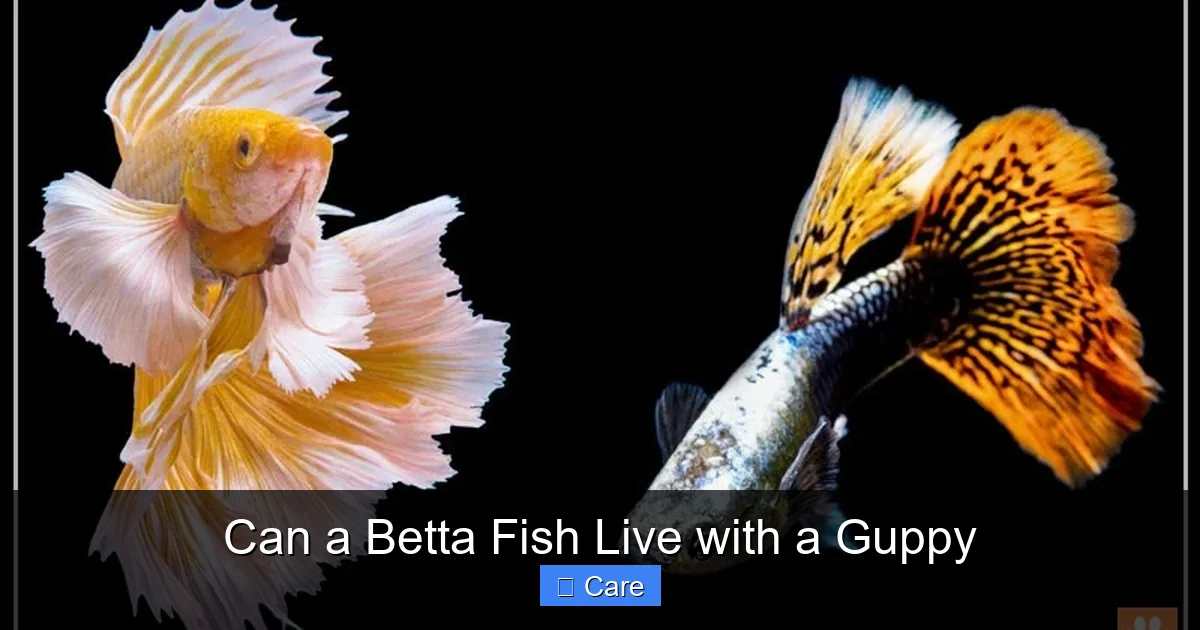
When you’re ready, select your guppies with extreme care. Avoid the flashiest, most ornate male guppies with huge, colorful tails. Instead, look for guppies with shorter, less flowing fins (sometimes called “swordtail” or less exaggerated varieties) and more subdued coloration. Females are often a better choice as they lack the dramatic tails, though they may still be colorful. Consider getting a small school of 4-6 all-male or all-female guppies. A school dilutes the betta’s focus. It’s harder for him to fixate on one individual if there are several identical ones darting around. Never introduce a single guppy; it will be a constant, irresistible target.
3. The Acclimation Process
Use the drip acclimation method for the guppies. Float the bag in the tank for 15-20 minutes to equalize temperature, then slowly drip tank water into the bag over 1-2 hours. This is a stressful time for the new arrivals. Once acclimated, use a net to transfer the guppies into the tank. Do not pour any bag water into your aquarium. After introduction, do not be surprised if the betta immediately begins patrolling and flaring. This is expected. The real test comes over the next 48-72 hours.
Reading the Signs: Aggression vs. Curiosity
For the first few days, you need to be a detective. Observe the tank for hours, from different angles. Distinguish between normal curiosity and dangerous aggression.
- Acceptable Behavior (Usually): A brief, investigative flare from the betta when a guppy darts into his immediate vicinity, followed by the betta returning to his business. The guppy swimming away confidently. Occasional, short chases that the guppy easily evades by zipping into a hiding spot.
- Red Flags (Action Required): Persistent, relentless chasing where the betta does not give up. The betta cornering a guppy against the glass or into a decoration. Visible nipping or tearing on guppy fins. The guppy spending all its time hiding at the top of the water column, clamped fins, rapid breathing, or lethargy. If you see any of these, the experiment is over. The stressed guppy will die from stress or injury within days if left in the tank.
Remember, a betta’s aggression can be subtle at first. He might “pretend” to ignore the guppies but then ambush one from behind a plant. This is why a heavily planted tank with multiple escape routes is so vital. It gives the guppy a fighting chance to disappear.
When It Doesn’t Work: Alternatives and Emergency Plans
Be prepared for the likelihood that it won’t work. Have a plan before you even buy the second fish. You need a dedicated, cycled quarantine or “hospital” tank (5-10 gallons is fine) ready to go. The moment you see sustained red-flag behavior, you must remove either the betta or the guppies. Given the betta is almost always the aggressor, you will likely be moving the guppies to the backup tank.
If the betta proves too aggressive, he goes back to being a solo centerpiece fish. This is not a failure; it’s responsible fishkeeping. If, against the odds, the betta is ignoring the guppies after a week, you have a tentative success. But you must maintain that high level of vigilance forever. A new decoration, a change in water temperature, or the betta simply having a bad day can suddenly reignite aggression months later.
Consider these safer, more reliable tank mates for a betta instead:
- Peaceful Bottom-Dwellers: Corydoras catfish, Kuhli loaches, or Bristlenose plecos (small, non-sucker varieties). They occupy a different tank layer and have armored bodies.
- Fast, Non-Finny Swimmers: Harlequin rasboras, Chili rasboras, or some species of Danio (like Zebra danios, but they can be boisterous). They are fast, stay in the top/mid-level, and have short fins.
- Invertebrates (with caution): Large Amano shrimp or Ghost shrimp *might* work, but there’s always a risk the betta will eat them. Nerite snails are completely safe and great algae eaters.
The Verdict: A Calculated Risk for the Dedicated Hobbyist
So, can a betta fish live with a guppy? The honest answer is: sometimes, under very specific, controlled, and resource-intensive conditions. It is not a recommended community for beginners, for those with small tanks, or for anyone who wants a “set it and forget it” aquarium. It is a project that requires your active, ongoing participation. You are not just maintaining water parameters; you are acting as a constant peacekeeper and observer.
The rewards for success can be a beautiful, active community tank. The risks are high: injured or dead guppies, a perpetually stressed betta, and the financial and emotional cost of failed livestock. For every story of a peaceful betta-guppy tank, there are dozens of stories of torn fins and tragic ends. Your primary responsibility is to the well-being of the animals, not to the idea of a mixed-species tank. If you have the 20+ gallon tank, the dense planting, the backup plan, and the willingness to watch your tank like a hawk, you can try. But if any of those pieces are missing, please choose a different, safer companion for your magnificent betta. A happy, healthy solo betta is always a better outcome than a stressed betta and a pile of injured guppies.
Frequently Asked Questions
What size tank is absolutely necessary for a betta and guppy?
You should never attempt this in a tank smaller than 20 gallons. A 20-gallon long provides the horizontal space and volume needed for the guppy to evade a chasing betta. Smaller tanks make it impossible for the guppy to find true refuge and guarantee constant territorial conflict.
How can I tell if my betta is just curious or actually being aggressive towards the guppies?
Curiosity is a brief flare followed by disinterest. Aggression is sustained, relentless chasing, cornering, nipping, and the guppy spending all its time hiding with clamped fins. If the chasing lasts more than a few seconds and the guppy cannot relax, the betta is being aggressive and the guppies must be removed immediately.
What should I do the moment I see my betta chasing and nipping the guppies?
You must act immediately. Have a separate, cycled hospital tank ready. Use a net to carefully remove the guppies and transfer them to the backup tank. Do not wait to see if “they’ll work it out.” Fin nipping causes severe stress and leads to fatal infections like fin rot within days. The betta should remain in the main tank alone.
Are there any guppy types that are safer with a betta?
Yes, generally guppies with shorter, less flowing fins and more subdued coloration are a slightly better choice. Avoid the flashy, large-tailed “fancy” male guppies entirely. Female guppies are often recommended as they lack the dramatic tails, though they can still be colorful. Always choose a small school (4-6) of the plainest guppies available to dilute the betta’s focus.
My betta isn’t chasing the guppies, but the guppies are always hiding. Is this okay?
No, this is a clear sign of chronic stress for the guppies, even if they aren’t being physically harmed. Constantly hiding means they cannot eat properly, swim freely, or exhibit natural behaviors. Their immune system will weaken, and they will eventually become sick and die. This is not a successful tank; you must rehome the guppies.
Can I feed my betta and guppies the same food without issues?
You can, but you must feed strategically. Use high-quality, small-pellet or micro-pellet foods that sink slowly. Feed the guppies first by dispersing food in multiple areas of the tank, then distract the betta with his food (pellets, frozen brine shrimp) in a specific corner. This helps ensure the guppies get enough to eat before the betta, who is often a faster and more aggressive eater, can consume everything.