Betta fish are indeed ray‑finned fishes, part of the vast Actinopterygii class that includes most aquarium species. This classification explains their anatomy, evolution, and the best ways to keep them healthy at home.
Key Takeaways
- Betta fish belong to the order Cypriniformes: they share this order with many other popular freshwater fish.
- Ray‑finned fishes have lepidotrichia: thin, bony “rays” support their fins, giving bettas their graceful movement.
- Understanding taxonomy helps hobbyists: knowing bettas are ray‑finned guides tank setup, diet, and health care.
- Betta anatomy reflects their classification: the labyrinth organ, vibrant colors, and aggressive temperament are all linked to their evolutionary line.
- Proper care aligns with their natural traits: stable water parameters, gentle flow, and enrichment mimic their native habitats.
- Betta fish are freshwater, not saltwater: they thrive in soft, slightly acidic water typical of Southeast Asian rice paddies.
- Learning about ray‑finned fishes connects you to a broader fish world: it opens doors to compatible tank mates and plant choices.
📑 Table of Contents
- Introduction: Why the Question Matters
- 1. The Big Picture: What Are Ray‑Finned Fishes?
- 2. Betta Fish in the Taxonomic Tree
- 3. Anatomy of a Ray‑Finned Betta
- 4. Why Knowing Betta Are Ray‑Finned Helps You Care for Them
- 5. Common Misconceptions About Betta Classification
- 6. The Big Takeaway: Applying Knowledge to Everyday Care
- Conclusion
Introduction: Why the Question Matters
If you’ve ever set up a betta tank or watched a male flare its fins, you might have wondered how scientists place this flashy little fish on the grand tree of life. The phrase “ray‑finned fish” sounds technical, but it’s simply a way to group fish that share a common fin structure. Knowing that bettas are ray‑finned helps you understand their body plan, behavior, and even the best ways to keep them thriving.
In this article we’ll walk through the science step by step, keep the language friendly, and sprinkle in practical tips you can use today. By the end you’ll be able to explain to a friend (or impress a fellow hobbyist) that betta fish are indeed ray‑finned fishes, and you’ll see how that knowledge improves their care.
1. The Big Picture: What Are Ray‑Finned Fishes?
1.1 Definition and Scope
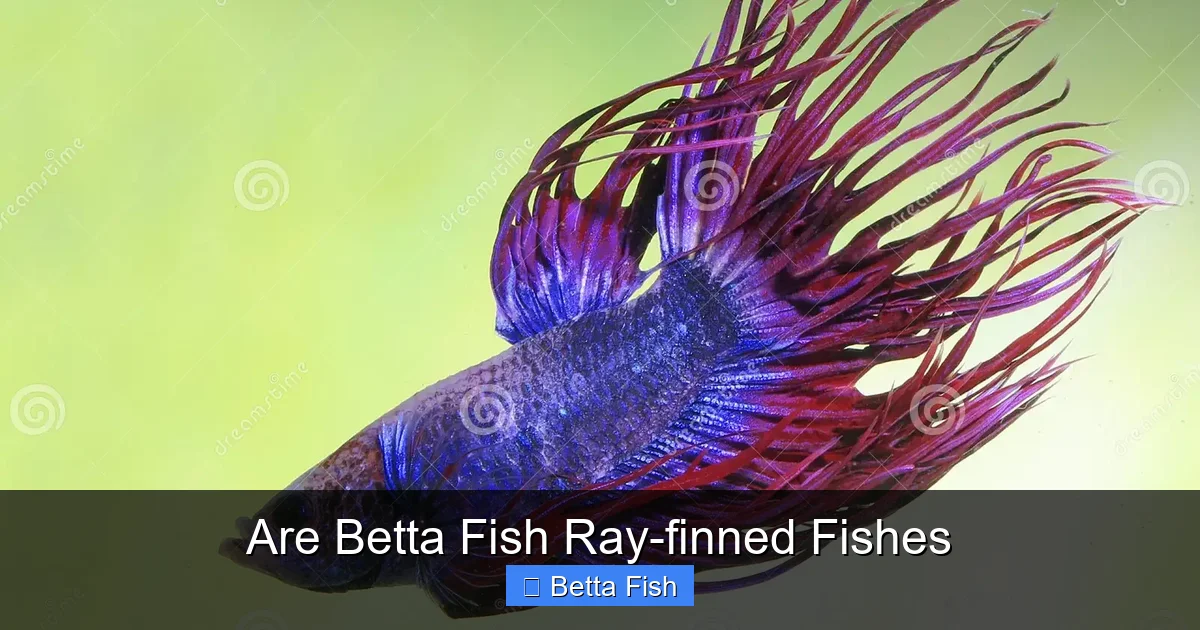
Ray‑finned fishes belong to the class Actinopterygii. This group includes over 30,000 species—basically every fish you see in a pet store, from goldfish to neon tetras. The hallmark of the class is the fin structure: thin bony “rays” (called lepidotrichia) support the fin membranes, allowing precise movements.
Visual guide about Are Betta Fish Ray-finned Fishes
Image source: thumbs.dreamstime.com
1.2 How Ray‑Finned Fishes Differ From Lobe‑Finned Fishes
Lobe‑finned fishes (Sarcopterygii) have fleshy, limb‑like fins with a central bone shaft. They’re the distant relatives of land vertebrates (think coelacanths and lungfish). In contrast, ray‑finned fishes have multiple slender rays that fan out, giving them a sleek, flexible appearance—perfect for the quick darting motions bettas display.
1.3 Evolutionary Success
The ray‑fin design proved incredibly adaptable. It allowed fish to occupy nearly every aquatic niche on Earth. This evolutionary triumph explains why bettas, despite being a small species, share a lineage with massive ocean dwellers and tiny aquarium favorites alike.
2. Betta Fish in the Taxonomic Tree
2.1 From Kingdom to Species
Here’s the quick rundown:

Visual guide about Are Betta Fish Ray-finned Fishes
Image source: thumbs.dreamstime.com
- Kingdom: Animalia
- Phylum: Chordata
- Class: Actinopterygii (ray‑finned fishes)
- Order: Cypriniformes
- Family: Osphronemidae (the gourami family)
- Genus: Betta
- Species: Betta splendens (the most common pet betta)
Notice the class is Actinopterygii—right there, confirming bettas are ray‑finned.
2.2 The Order Cypriniformes
Cypriniformes also includes zebrafish, goldfish, and many loaches. These fish share a few key traits: they lack a stomach, have pharyngeal teeth, and possess a single dorsal fin without spines. Betta fish inherit the single dorsal fin, which is supported by those characteristic rays.
2.3 Family Osphronemidae: The Gourami Connection
Within the gourami family, bettas are known for their labyrinth organ—a special breathing structure that lets them gulp air from the surface. This adaptation is unrelated to the ray‑fin structure, but it co‑evolved with it, giving bettas a unique niche in shallow, oxygen‑poor waters.
3. Anatomy of a Ray‑Finned Betta
3.1 The Fin Rays (Lepidotrichia)
Each betta fin is built from dozens of tiny bony rays. These rays are flexible yet strong, allowing the fish to flare its gill covers, fan out its caudal fin, and perform the spectacular “flaring” display during aggression or courtship. The rays are covered by a thin membrane that creates the smooth surface you see.

Visual guide about Are Betta Fish Ray-finned Fishes
Image source: thumbs.dreamstime.com
3.2 The Labyrinth Organ
While not a fin, the labyrinth organ is a hallmark of the gourami family. It sits above the gills and lets bettas breathe atmospheric oxygen. This organ works hand‑in‑hand with the ray‑fin system, enabling the fish to stay near the water’s surface where they can gulp air while still using their fins for precise maneuvering.
3.3 Coloration and Scales
Betta scales are thin and iridescent, reflecting light in a way that makes their colors pop. The ray‑fin skeleton supports the vibrant display, especially during breeding when males showcase their full palette to attract females.
4. Why Knowing Betta Are Ray‑Finned Helps You Care for Them
4.1 Water Flow and Fin Health
Ray‑finned fish thrive in water that offers gentle, consistent flow. Too strong a current can damage the delicate fin rays, leading to torn or frayed fins. Aim for a low‑to‑moderate flow—think a gentle ripple rather than a strong stream.
4.2 Tank Setup Tips
- Size matters: While many beginners start with tiny bowls, a 5‑gallon tank gives bettas room to swim without risking fin damage.
- Plants and hiding spots: Live plants such as Java moss or Anubias provide surfaces for the labyrinth organ to access air and give the fish places to rest.
- Filtration: Use a sponge filter that creates gentle flow; it also helps maintain water quality without stressing the fins.
For more on tank size, see our guide on Why Are Betta Fish Tanks So Small.
4.3 Diet and Digestion
Ray‑finned fish lack a true stomach, so they rely on a short, efficient digestive tract. Feed high‑quality betta pellets or frozen foods in small portions twice daily. Overfeeding can cloud the water and stress the delicate fin rays.
4.4 Compatibility with Other Species
Because bettas are ray‑finned, they share similar water parameter needs with many small community fish. However, their aggressive nature (especially males) limits tank mates. Peaceful, similarly sized species like neon tetras or small rasboras can work if the tank is well‑planted.
Read more about compatible species in What Fish Are Compatible With Betta Fish.
5. Common Misconceptions About Betta Classification
5.1 “Betta Fish Are Not Real Fish?”
Some people think bettas are more like amphibians because of their labyrinth organ. While the organ is unique, bettas are still true fish—specifically ray‑finned fishes—because they possess gills, fins supported by rays, and lay eggs.
5.2 “All Betta Species Are the Same”
There are over 70 recognized betta species, each with subtle differences in fin shape, coloration, and behavior. All remain within the same ray‑fin classification, but their diversity shows how adaptable the ray‑fin design is.
5.3 “Ray‑Finned Means They Can’t Live in Saltwater”
Most ray‑finned fish are freshwater, but many marine species (like clownfish) also belong to Actinopterygii. Betta fish, however, are strictly freshwater, thriving in soft, slightly acidic water.
6. The Big Takeaway: Applying Knowledge to Everyday Care
6.1 Checklist for a Healthy Ray‑Finned Betta
- Maintain water temperature between 76‑82°F (24‑28°C).
- Keep pH around 6.5‑7.5; soft water (0–5 dGH) mimics natural habitats.
- Provide gentle water flow—no strong currents.
- Use a lid or cover; bettas love to jump for air.
- Feed small amounts 2 × daily; remove uneaten food.
- Include live plants or silk decorations to reduce stress.
6.2 When to Seek Professional Help
If you notice torn fins, white spots, or loss of color, it could be a sign of fin rot or stress. Because ray‑finned fins are delicate, early treatment prevents permanent damage. Contact a local aquarium specialist or veterinarian experienced with tropical fish.
Conclusion
Betta fish are unmistakably ray‑finned fishes, part of the expansive Actinopterygii class that dominates the aquatic world. This classification explains their fin structure, evolutionary history, and many of the care requirements that keep them vibrant and healthy. By understanding that bettas share the same basic anatomy as countless other aquarium species, you can make smarter choices about tank setup, water parameters, and compatible tank mates.
So the next time you watch a male betta flare his fins in a dazzling display, remember: you’re witnessing the elegant movement of a ray‑finned marvel, perfectly adapted to its watery home. Treat those rays with respect, and your betta will reward you with color, personality, and endless fascination.
Frequently Asked Questions
Are betta fish part of the ray‑finned fish class?
Yes. Betta fish belong to the class Actinopterygii, which is the scientific name for ray‑finned fishes.
Do all ray‑finned fishes have the same care needs?
No. While they share a common fin structure, each species has unique temperature, pH, and habitat requirements. Betta fish, for example, need warm, soft water and gentle flow.
Can I keep a betta with other ray‑finned fish?
It depends on temperament. Male bettas are aggressive, but a peaceful community of small, non‑aggressive ray‑finned fish can work in a well‑planted, larger tank.
Why do bettas have a labyrinth organ if they are ray‑finned?
The labyrinth organ is an extra adaptation for breathing air. It evolved alongside the ray‑fin structure to let bettas survive in low‑oxygen waters.
Is the fin damage in bettas related to their ray‑fin anatomy?
Yes. The delicate bony rays can be torn by strong currents, aggressive tank mates, or poor water quality, leading to frayed or ragged fins.
Where are betta fish originally from?
Betta fish are native to the shallow, slow‑moving waters of Southeast Asia, especially Thailand, Cambodia, and Vietnam.

