When Does Petsmart Get New Betta Fish

Petsmart typically receives new betta fish shipments 1-2 times per week, but the exact day varies significantly by location and regional distribution center. The best way to know is to build a relationship with your local store’s pet care team and observe tank conditions. New arrivals are often identifiable by exceptionally clear water and highly active fish. Patience and strategic timing, like mid-week visits, increase your chances of finding a wide selection of healthy bettas.
So, you’ve fallen in love with the idea of bringing a majestic, flowing-finned Siamese fighting fish into your home. You’ve set the perfect tank, researched ideal water parameters, and you’re ready to choose your new aquatic companion. You head to your local Petsmart, drawn by the convenience and the promise of a wide selection. You peer into the tiny cups, seeing a dazzling array of colors and tail types—but also noticing some fish that look less than thrilled. A burning question forms in your mind: when does Petsmart get new betta fish? It’s the million-dollar question for any prospective betta owner hoping to find a healthy, vibrant fish at the end of a long supply chain. The answer, like navigating the fish aisle itself, is a bit more complex than a simple day of the week. Let’s dive deep into the logistics, the secrets, and the strategies for finding your perfect Petsmart betta.
Key Takeaways
- No National Schedule: There is no single, fixed day Petsmart gets new bettas nationwide; delivery days are determined by local distribution centers and store-specific logistics.
- Weekly Cycle is Common: Most stores follow a weekly restocking pattern, often receiving shipments on Monday or Tuesday, making mid-week the prime time to shop for new arrivals.
- Season Affects Supply: Warmer months and holidays (like Valentine’s Day) often see increased breeder production and higher stock levels at Petsmart.
- New Fish Have Tell-Tale Signs: Look for crystal clear water, minimal waste, and vibrant, active swimming—these are strong indicators of a recently delivered batch.
- Staff Are Your Best Resource: Friendly, knowledgeable associates can often tell you the approximate delivery day and which fish in the tank are newest.
- Health is Paramount: Always select a betta with undamaged fins, bright eyes, and responsive behavior, regardless of how new it is to the store.
- Alternatives Exist: If local stock is consistently poor, explore other chain retailers, local fish stores, or reputable online betta breeders for healthier, hardier specimens.
📑 Table of Contents
- Understanding the Journey: How Betta Fish Reach Petsmart
- Petsmart’s Typical Betta Fish Restocking Patterns
- Factors That Can Delay or Accelerate New Arrivals
- How to Be a Betta Detective: Identifying New Arrivals at Petsmart
- The Ultimate Checklist: Selecting a Healthy Betta, New or Not
- What To Do If Your Local Petsmart’s Betta Selection is Consistently Poor
- Conclusion: Patience, Observation, and Responsible Choice
Understanding the Journey: How Betta Fish Reach Petsmart
Before we can pinpoint a delivery day, we need to understand the incredible journey a betta fish undertakes to end up in that cylindrical cup at Petsmart. This isn’t a simple farm-to-table operation; it’s a global aquaculture adventure that starts far from any retail store.
The Role of Commercial Betta Breeders
Betta fish, as we know them, are the product of centuries of selective breeding, primarily in Thailand (historically Siam, hence “Siamese”). Today, the vast majority of bettas sold in large U.S. chains like Petsmart originate from specialized commercial breeding facilities in Southeast Asia, particularly Thailand, but also Malaysia and Indonesia. These are not small hobbyist operations. They are large-scale farms that raise thousands of fish in a controlled environment, focusing on producing the vivid colors (like red, blue, purple, metallic) and elaborate fin shapes (half-moon, double-tail, crown tail) that captivate hobbyists.
These breeders raise the fish from fry (newly hatched) to adulthood in a network of tanks and vats. Once the fish reach a sellable size and showcase their desired traits, they are carefully prepared for export. This involves a health check, a period of fasting to clean their digestive systems (reducing waste in transit), and then they are individually bagged with a small amount of water and pure oxygen. These bags are then packed into insulated shipping boxes with cold packs to maintain a stable temperature during their long journey by air freight to the United States.
The Critical Role of U.S. Distribution Centers
The fish do not fly directly from Bangkok to your local Petsmart. Instead, they land at a major U.S. airport and are transported to one of Petsmart’s several regional distribution centers (DCs). These DCs are massive logistics hubs that receive not just fish, but all types of pet products for a vast geographic region. Here, the betta shipments are unpacked. The fish are acclimated to freshwater from their bagged state and given a brief health observation period. The DC staff then bundles these new betta arrivals with other store orders.
This is the first major fork in the road for your potential pet. The schedule of this DC is the single biggest factor determining when your specific Petsmart store gets new bettas. Each distribution center serves a cluster of stores and runs its own delivery route schedule. One DC might service all stores in the Midwest on a Monday/Tuesday cycle, while another on the East Coast operates on a Wednesday/Thursday cycle. There is no corporate-mandated, nationwide “betta delivery day.”
Petsmart’s Typical Betta Fish Restocking Patterns
Now that we know the bettas arrive at a regional hub, how do they get to your store? Petsmart, like most major retailers, uses a centralized ordering and delivery system. Store managers and pet care associates place orders for inventory based on sales data, current stock levels, and upcoming promotions. The DC then packs these orders onto trucks for daily delivery routes.
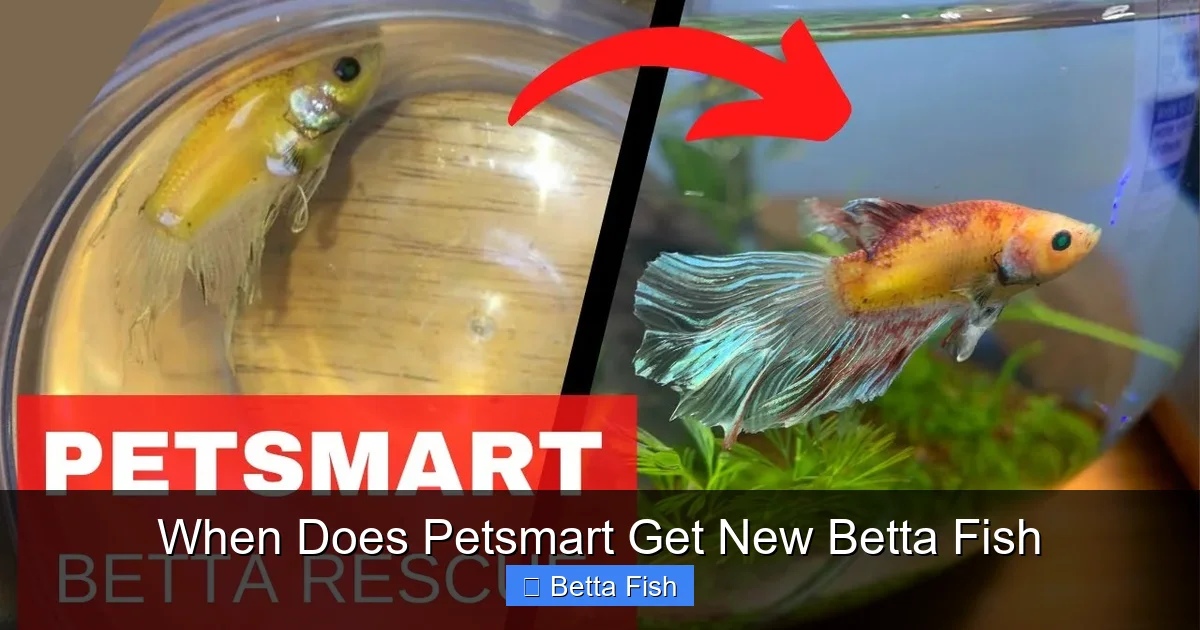
Visual guide about When Does Petsmart Get New Betta Fish
Image source: i.ytimg.com
The Weekly Delivery Cycle
For the vast majority of Petsmart locations, the pattern is a weekly one. A store will receive its general merchandise and pet supply truck on a specific day of the week, often early in the morning before opening. This truck will include the ordered betta fish, which have been held at the DC for just a day or two. Therefore, if you can discover your store’s general delivery day, you’ve cracked the code. In my experience and from countless associate reports, the most common betta delivery days are Monday and Tuesday. This makes sense logistically: suppliers ship to DCs over the weekend, DCs process and distribute early in the week, and stores are restocked for the mid-week and weekend rush.
However, this is not universal. Some stores, especially in very large metropolitan areas or with different DC assignments, might get deliveries on Wednesday or Thursday. The key is that it’s a *consistent weekly rhythm* for that specific store. Once you know it, you can plan your visits accordingly.
Regional Variations and The “Why”
Why can’t it be simple and the same everywhere? Blame geography, logistics, and efficiency. A distribution center in Georgia might serve stores from Florida to Virginia. Its delivery route planning software optimizes for fuel, driver hours, and store opening times. A store in a remote area might get a less frequent delivery because it’s off the main highway route. A store in a dense urban center might get a dedicated, frequent small-truck delivery. The system is designed for cost-effective logistics, not for the convenience of betta shoppers. This means your friend in a neighboring state might have betta arrivals on a completely different day than you do.
Seasonal Considerations: More Than Just Weather
While the weekly cycle is the baseline, the *quantity* and *variety* of new bettas are heavily influenced by season. The betta breeding cycle is sensitive to temperature and daylight. Breeders in Thailand, for instance, often ramp up production in the cooler, drier months (roughly November to February) to meet the high global demand during the Valentine’s Day and spring holiday seasons. This means you are far more likely to see a large, diverse shipment of new bettas in January, February, and March than you might in the peak of summer (July/August) or late fall.
Additionally, Petsmart’s own marketing calendars play a role. They often have promotions on small pets or aquarium supplies during school breaks and holidays. They will factor this anticipated demand into their orders, requesting more bettas from the DC in the weeks leading up to a promotion. So, always check store flyers and the Petsmart website for upcoming “Pet Fest” or “Aquarium Sale” events—these are reliable indicators that new stock, including bettas, will be flowing into stores.
Factors That Can Delay or Accelerate New Arrivals
Even with a established weekly delivery schedule, the actual arrival of *new* betta fish can be fluid. Several factors cause the pipeline to speed up, slow down, or temporarily stop.
Visual guide about When Does Petsmart Get New Betta Fish
Image source: i.ytimg.com
Supplier Availability and Health Quarantines
This is the most critical and least controllable factor. The bettas come from living, breathing suppliers. If a breeder’s farm experiences a disease outbreak (like velvet, columnaris, or even a simple bacterial bloom), their entire shipment may be held or destroyed by USDA/APHIS inspectors at the port of entry. This creates a gap in the supply chain. The DC will have no bettas to ship to stores for that week or longer. Similarly, if a major shipping airline has delays or cancellations, the live animal cargo is delayed, sometimes with tragic consequences. The health and viability of the fish upon arrival at the DC is also scrutinized. If mortality is higher than acceptable during transit, the DC may discard that entire lot to prevent spreading disease to other fish systems, leading to a store stockout.
Store-Level Demand and Sales Velocity
A store doesn’t just order bettas on a schedule; it orders based on need. If a particular Petsmart location is in a college town or a family-heavy suburb and bettas are selling like hotcakes, the pet care manager will place a larger, more frequent order. Conversely, a store in an area with lower pet ownership or strong competition from local fish stores might order less frequently. The store’s current stock level directly influences the order. If they have 20 healthy bettas on the shelf, they may not order a new shipment until they’ve sold 15 of them. This creates the phenomenon where one Petsmart seems to always have new fish, while another down the highway has the same 5 bettas for three weeks straight.
The “Holding Period” at the Store
When the betta bags arrive at the store, they are not immediately poured into the display cups. There is a standard acclimation and observation protocol. Store associates will slowly acclimate the fish to the store’s water system (which is often a different pH and temperature than the DC’s water). They will then place the fish in their display cups. For the first 24-48 hours, the fish are under close watch. Any that show signs of stress (lethargy, clamped fins, refusal to eat) or injury are removed and typically euthanized according to store policy and animal welfare guidelines. This means the “new” fish you see on the shelf may have actually been in the store’s back room for a day or two before being put on display. Truly “fresh off the truck” fish are often the most stressed and may not be placed out immediately.
How to Be a Betta Detective: Identifying New Arrivals at Petsmart
Armed with the knowledge of logistics, how can you, the customer, become a detective and spot the newest batch of bettas? It’s a skill that combines observation, timing, and a bit of friendly interrogation.

Visual guide about When Does Petsmart Get New Betta Fish
Image source: i.pinimg.com
Visual Cues in the Display Tanks
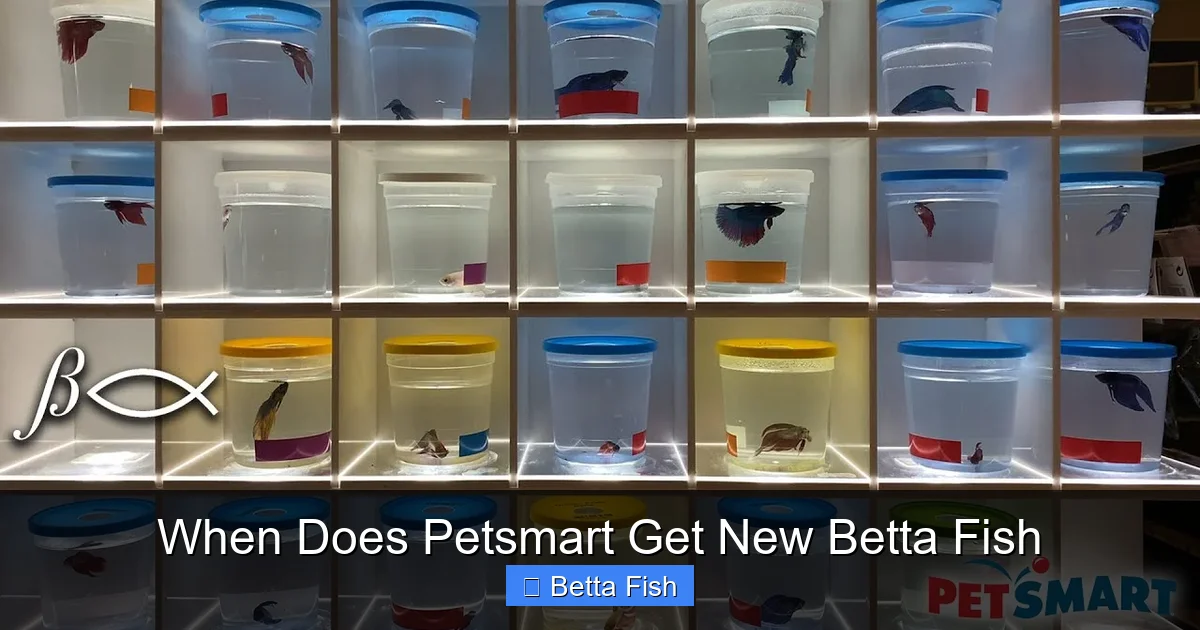
The display tanks and cup racks are your first clue. The single most reliable visual indicator of a very recent delivery is the exceptional clarity of the water. A tank or row of cups that has just been filled with new fish will have crystal clear water. There will be virtually no waste (feces or uneaten food) at the bottom of the cups or in the bottom of the community tanks where bettas are sometimes displayed. As the day progresses and fish are fed, that water will cloud slightly. If you visit first thing in the morning, especially on a day you suspect is a delivery day, and the water is pristine, that’s a huge red flag (in a good way) pointing to a new shipment.
Contrast this with tanks that have been populated for a week. You’ll see more detritus, maybe some algae starting on the cup walls, and the water may have a slight haze. Also, observe the fish’s behavior. New arrivals are often initially skittish and may hide at the bottom of the cup, but after a few hours of acclimation, they should become active. A tank where *all* the bettas are lethargic, clamped, or hiding could indicate a problem with that batch, regardless of its age. You want to see a mix of behaviors, but with many fish actively exploring, flaring at their reflections, or swimming with purpose.
The Power of Conversation: Talking to Store Associates
Do not underestimate this tactic. The pet care associates and managers have the insider knowledge. The best time to ask is not during the Saturday afternoon rush, but during a quieter period, like a Tuesday or Wednesday morning. Be polite and specific. Instead of “When do you get new fish?” try: “Hi, I’m looking for a betta. I was wondering what day of the week you usually receive your betta shipments? I’d like to come in when the new ones are available.”
Most knowledgeable employees will be happy to tell you. They know their delivery schedule. They might even point you to a specific cup and say, “These three just came in yesterday.” Building a rapport with the pet care team can be invaluable. They can also give you the Heads Up if a shipment had high mortality and the few survivors might not be the best choice, even if they are “new.”
Strategic Timing of Your Visit
Based on the clues above, you can develop a visit strategy. If you learn your store’s delivery day is Monday:
- Avoid Monday Afternoon/Evening: The new fish will be highly stressed from transit and acclimation. They may not be on display yet, or if they are, they might not be at their best.
- Target Tuesday Morning: This is the golden window. The fish have had a full night and morning to settle in the store’s water, recover from transit stress, and start eating. The water will still be relatively clear from the initial fill. You’ll see them at their post-delivery best, and selection will be highest.
- Wednesday is a Good Backup: By Wednesday, any weaker fish from the shipment have likely been removed. The remaining fish are the hardiest of the new batch. Water clarity may be starting to diminish, but the fish are more settled and their true personalities and health are evident.
If your visit is on a Saturday, you are largely seeing fish that have been in the store for at least a full week, potentially longer. Your selection of “new” fish will be minimal.
The Ultimate Checklist: Selecting a Healthy Betta, New or Not
Finding a new arrival is only half the battle. The ultimate goal is a healthy fish that will thrive in your care. This checklist applies whether the betta arrived at the store an hour ago or a month ago.
Physical Examination: What to Look For
Get face-to-face with the cup. A healthy betta is a sight to behold.
- Fins: They should be whole, undamaged, and flowing (for long-finned varieties). Look for no tears, fraying, blackened edges (sign of rot), or clumping (another rot sign). Fins should be held relatively open, not clamped tightly to the body.
- Body: The body should be symmetrical, without lumps, bumps, or sores. The scales should lie flat and smooth. No raised scales (a sign of dropsy, a serious condition).
- Eyes: They should be clear, bright, and bulging slightly (betta eyes are naturally prominent). Cloudy, gray, or sunken eyes are a major red flag.
- Gills: When the fish breathes, the gill covers should move rhythmically. They should not be constantly flared or red and inflamed.
- Color: Bettas come in every color, but the color should be vivid and saturated for its variety. Dull, faded, or pale coloring, especially if inconsistent (like a patchy red betta), can indicate stress, illness, or poor genetics.
Behavioral Assessment: The Activity Test
A healthy betta is an active, curious betta.
- Swimming: It should swim smoothly and purposefully. No darting, flashing (rubbing against objects), or swimming upside down/erratically.
- Response: Gently tap the cup or move your finger near the glass. A healthy betta will often flare its gills and follow your movement with interest. It should not be completely listless and unresponsive.
- Appetite: Ask an associate if they’ve fed the bettas recently. A fish that eagerly accepts food (they often use a pipette to feed) is a good sign. One that ignores food is concerning.
Remember: A new arrival might be a bit more subdued for the first 24 hours. Use the water clarity clue to gauge its true age. A lethargic fish in crystal clear water is a bad sign. A slightly shy but alert fish in slightly cloudy water (after 2 days) might just be settling in.
Questions to Ask the Pet Care Team
Don’t be shy. Empower yourself with information.
- “How long has this specific fish been here?” (They may not know exact dates, but can often point to the newest ones).
- “Has this batch had any health issues?” (Their answer will tell you volumes about the quality of that shipment).
- “What are you feeding them and how often?” (A store that feeds quality food and regularly is more likely to have healthier stock).
- “Can I see the water parameters for this tank/row?” (A store that monitors and maintains water quality will have better fish. They may not share numbers, but their willingness to answer is telling).
What To Do If Your Local Petsmart’s Betta Selection is Consistently Poor
You’ve followed all the advice. You’ve found the delivery day. You’ve visited at the optimal time. But the bettas still look tired, torn, or sickly. This is a frustrating reality for many shoppers and points to a systemic issue at that specific location—perhaps poor in-store husbandry, a consistently bad supplier batch, or a store manager who doesn’t prioritize the betta exhibit. What are your alternatives?
Exploring Other Retail Options
Not all Petsmarts are created equal, and neither are all chain pet stores. Consider visiting a different Petsmart location. Even within the same city, stores can have vastly different management and pet care standards. One might have a dedicated, betta-loving associate who ensures excellent care, while another’s fish area is neglected. Also, explore other national chains like Petco. Their supply chain and restocking schedules are different. You might find their betta health and selection to be superior in your area. The key is to become a regular at *one* store you trust, not just the one that’s closest.
Seeking Out Local Fish Stores (LFS) and Specialized Breeders
This is often the gold standard for betta enthusiasts. A reputable Local Fish Store (LFS) that specializes in freshwater fish, or even better, a dedicated betta breeder, will almost always have healthier, hardier, and more genetically diverse fish.
- Local Fish Stores: They often source from smaller, higher-quality breeders or even raise their own stock. The fish have usually been in the store for a while, are well-conditioned, and the staff are true experts who can give you detailed care advice. The fish are also often housed in proper filtered, heated tanks, not cups, which is a massive welfare improvement.
- Specialized Online Breeders: The internet has opened up a world of exceptional betta breeders. These are individuals who breed for specific traits, health, and vigor. They ship fish directly to you, usually in insulated containers with heat/cold packs and a guarantee of live arrival. While more expensive than a Petsmart betta (often $30-$100+ vs. $5-$15), you are getting a fish with a known pedigree, raised in pristine conditions, and with a much lower chance of underlying disease. This is the best route for serious hobbyists or anyone wanting a truly spectacular specimen.
Conclusion: Patience, Observation, and Responsible Choice
So, when does Petsmart get new betta fish? The definitive, honest answer is: it depends. It depends on your zip code, your regional distribution center’s schedule, the whims of international breeders, and the daily sales data of your local store. There is no secret nationwide day you can circle on your calendar. But the power to find a great fish is still very much in your hands. It comes from becoming an informed and observant customer.
Learn the rhythm of your specific store. Visit on a Tuesday morning. Look for the tell-tale signs of a fresh shipment: the sparkling clear water, the vibrant colors popping against a pristine background. Talk to the staff—they are your allies. Most importantly, use the comprehensive health checklist regardless of the fish’s “newness.” A fish that has been in the store for two weeks but is vibrant and active is a far better choice than a stressed, pale fish that just arrived that morning.
The betta fish trade, especially at the big-box level, has a complicated history concerning animal welfare. By choosing to be selective, by asking questions, and by supporting stores and sellers who prioritize fish health, you vote with your wallet. You encourage better practices. Whether you end up with a beautiful half-moon from your local Petsmart or a legendary koi betta from a specialist breeder, the reward is the same: the joy of caring for one of nature’s most fascinating and beautiful creations. Your journey to find that perfect fish starts not with a date on a calendar, but with knowledge, patience, and a keen eye.
Frequently Asked Questions
What is the most common day for Petsmart to receive new betta fish?
While not universal, Monday and Tuesday are the most frequent delivery days for the majority of Petsmart locations across the U.S., as this aligns with weekly distribution center schedules and prepares stores for the mid-week and weekend rush.
How can I be sure the betta I pick is healthy, not just new?
Focus on health indicators over age. Look for undamaged, flowing fins; a symmetrical, clean body; clear, bright eyes; and vibrant color. Behavior is key: the fish should be actively swimming and curious. A healthy fish that has been in the store for a week is a better choice than a new but lethargic or injured one.
Can I order a specific betta fish from Petsmart online for in-store pickup?
No. Petsmart’s website and app do not allow for the selection or reservation of specific individual betta fish from store inventory. Betta fish are considered “live animals” and must be selected and purchased in person at the store location to ensure their health and welfare at the point of sale.
Does Petsmart have a waiting list or can they hold a specific betta for me?
Generally, no. Petsmart does not offer a holding service for specific betta fish due to their high turnover and the ethical concern of removing a fish from its display environment prematurely. If you see a betta you love, you should purchase it that day.
Are there certain times of year when Petsmart has better betta stock?
Yes. Stock levels and variety typically peak from late winter through spring (January to May) due to increased breeding cycles in Southeast Asia to meet Valentine’s Day and spring holiday demand. Selection can be more limited during the summer and late fall.
What should I do if my local Petsmart never seems to have healthy or new bettas?
First, try a different Petsmart location if possible. If the issue persists, explore alternatives like a reputable local fish store (LFS) where fish are often kept in better conditions, or consider ordering from a specialized online betta breeder who guarantees live arrival and focuses on health and genetics.