Why Does My Betta Fish Stay at the Top

Betta fish often linger near the water surface for a few simple reasons—oxygen, temperature, stress, or curiosity. Understanding these cues helps you spot problems early and create a more comfortable home for your vibrant swimmer. Read on to learn practical fixes and when to seek help.
Key Takeaways
- Surface preference is normal: Healthy bettas may spend time at the top to gulp air or explore.
- Low oxygen or poor water quality: A stressed betta will surface more often if the tank lacks dissolved oxygen.
- Temperature issues: Water that’s too warm pushes bettas to the cooler surface layer.
- Stress signals: Over‑crowding, aggressive tank mates, or a too‑small tank can cause top‑dwelling behavior.
- Health red flags: Constant surfacing paired with gasping, faded colors, or bloating may indicate illness.
- Simple fixes work: Adding a gentle filter, aeration, or adjusting temperature often solves the problem.
- When to act: If behavior doesn’t improve in 48 hours, consider a vet or a more thorough tank overhaul.
📑 Table of Contents
Introduction
Betta fish are famous for their flamboyant fins and feisty personalities, but many new owners are puzzled when their pet seems to hover at the very top of the tank. “Why does my betta fish stay at the top?” is a question that pops up in forums, comment sections, and—yes—Google searches. The answer isn’t always a single cause; it’s usually a mix of environment, health, and natural behavior.
In this article we’ll break down the most common reasons bettas like to stay near the surface, show you how to tell a harmless habit from a warning sign, and give you easy‑to‑follow steps to create a balanced aquarium. By the end, you’ll be able to watch your betta swim confidently—not just float like a leaf.
1. Natural Surface‑Seeking Behavior
Why bettas are “air‑breathers”
Betta fish belong to the labyrinth family, which means they have a special organ called the labyrinth organ. This organ lets them gulp atmospheric air, a handy adaptation for living in shallow, oxygen‑poor waters in the wild. Because of this, it’s perfectly normal for a betta to swim up, take a quick breath, and then glide back down.

Visual guide about Why Does My Betta Fish Stay at the Top
Image source: fishtrivia.com
When surface trips are normal
- After feeding – they often go up to chase floating flakes.
- During play – a curious betta may explore the water‑air interface.
- When the tank is newly set up – they test water conditions by surfacing.
If your betta’s top‑dwelling is occasional and paired with bright colors and active swimming, you’re likely seeing natural behavior. For more detail on normal surface habits, see our guide on Do Betta Fish Sleep At The Top Of The Tank.
2. Oxygen Levels and Water Quality
Low dissolved oxygen = more surfacing
Even though bettas can breathe air, they still need dissolved oxygen in the water for metabolism. If the tank’s oxygen level drops—because of over‑feeding, a stagnant surface, or a weak filter—the fish will spend more time at the top to supplement its needs.
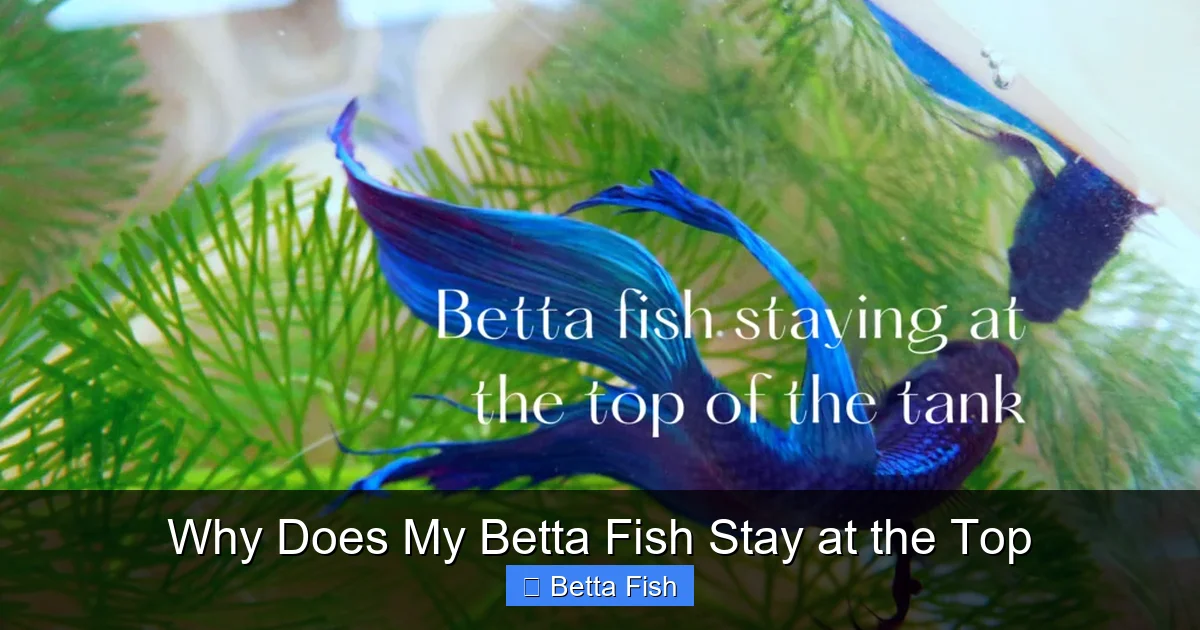
Visual guide about Why Does My Betta Fish Stay at the Top
Image source: fishkeepedia.com
How to test and improve oxygen
- Test kits: Use a dissolved oxygen test strip or a digital meter. Aim for at least 5 mg/L.
- Aeration: Add a gentle air stone or a small powerhead to create a subtle flow.
- Filter upgrade: A sponge filter or a low‑flow hang‑on filter provides both mechanical cleaning and oxygenation.
Remember, a strong current can stress a betta, so keep flow gentle—about the strength of a slow stream.
3. Temperature Troubles
Heat pushes bettas upward
Betta fish thrive in water that’s warm but not scorching—ideally 76‑82 °F (24‑28 °C). If the water gets too hot, the surface layer often stays cooler, and the fish will seek that refuge near the top.
Checking and correcting temperature
- Use a reliable aquarium thermometer.
- If the tank is above 82 °F, lower the heater setting by 1‑2 °F.
- Consider a small fan aimed at the water surface to increase evaporation and cool the top layer.
Consistent temperature also helps prevent disease, which can cause a betta to surface more often.
4. Stress and Tank Environment
Space matters
Betta fish need room to swim. A 2‑gal (8‑liter) tank is the absolute minimum; larger tanks give more stable water parameters and reduce stress. A cramped space can make a betta feel vulnerable, prompting it to stay at the top where it can watch the room.
Tank mates and aggression
Betas are solitary by nature. Placing other fish—especially fin‑nipping species—can cause the betta to hide or constantly surface to escape perceived threats. If you notice fin damage or frantic surfacing, it’s time to reconsider tank mates.
Lighting and décor
- Bright, direct light can make bettas seek shade near the surface.
- Provide floating plants or leaf litter to create natural cover.
- A smooth, dark bottom (like a black substrate) encourages bottom‑dwelling.
For more on tank‑mate stress, read Why Are My Two Female Betta Fish Fighting.
5. Health Issues That Trigger Surface Dwelling
Gasping and “bubble‑nest” problems
If your betta is gasping at the surface, coughing, or seems unable to stay submerged, it could be suffering from a bacterial infection, parasite, or poor water quality. A bloated abdomen, white spots, or torn fins are additional warning signs.
Common illnesses to watch for
- Ich (white spot disease): Tiny white dots, frantic swimming.
- Velvet disease: Gold‑brown dusting on the body.
- Swim bladder disorder: Fish floats upside down or drifts sideways.
If you suspect illness, perform a water change of 25‑30 % and treat with a broad‑spectrum medication. Persistent symptoms warrant a vet visit.
Read more about bubble‑nest issues in Why Did My Betta Fish Stop Making Bubble Nest.
6. Practical Tips to Encourage Balanced Swimming
Step‑by‑step tank makeover
- Upgrade filtration: Install a low‑flow sponge filter.
- Adjust temperature: Set heater to 78 °F and monitor daily.
- Increase aeration: Add a tiny air stone with a bubble diffuser.
- Enrich environment: Place a few floating plants (e.g., Salvinia or Duckweed).
- Perform regular water changes: 20 % weekly, testing for ammonia, nitrite, and pH.
- Observe feeding: Offer small portions twice a day; remove uneaten food after 5 minutes.
When to seek help
If after 48 hours your betta is still constantly at the top, showing labored breathing, or losing color, contact a fish‑health specialist. Early intervention can save a beloved pet.
Conclusion
Seeing your betta fish stay at the top isn’t automatically a cause for alarm, but it is a valuable clue about the tank’s condition and your fish’s well‑being. By checking oxygen levels, temperature, space, and health, you can quickly determine whether the behavior is normal or a signal to act. A clean, properly‑heated, and gently‑aerated aquarium will keep your betta swimming confidently throughout the water column, letting you enjoy its brilliant colors and personality for years to come.
Frequently Asked Questions
Why does my betta fish stay at the top after feeding?
Betta fish often surface to chase floating food particles. If the behavior stops once feeding is over, it’s normal.
Is it dangerous for a betta to stay at the top all the time?
Constant surface dwelling can indicate low oxygen, high temperature, or stress. Check water parameters and make adjustments.
Can water temperature cause my betta to stay at the top?
Yes. If the water is too warm, the cooler surface layer becomes a refuge. Keep the tank between 76‑82 °F.
What should I do if my betta gasps at the surface?
Perform a partial water change, add gentle aeration, and test for ammonia or nitrite spikes. If gasping continues, treat for potential infection.
Do bettas need a filter if they can breathe air?
Yes. A filter improves water quality, removes waste, and adds oxygen, all of which keep your betta healthy.
How can I tell if my betta’s surface habit is stress‑related?
Look for other stress signs: faded colors, torn fins, or erratic swimming. Reducing tank size, removing aggressive mates, and adding hiding spots can help.