What Can I Use to Condition My Betta Fish Water
Conditioning your betta fish water is one of the most important steps in keeping your fish healthy and thriving. You have several options, from liquid water conditioners to natural methods like using purified or filtered water. This guide covers everything you need to know about betta fish water conditioner products, safe water sources, and simple steps to make tap water safe for your betta.
If you own a betta fish, you already know how beautiful and lively these little creatures can be. But keeping them healthy starts with one simple thing: clean, safe water. The question what can I use to condition my betta fish water comes up all the time among new and experienced fish keepers alike. The good news is that you have plenty of options, and the process is easier than you might think.
Conditioning water means removing harmful chemicals like chlorine and chloramine that are commonly found in tap water. These substances can irritate your betta’s gills, damage their fins, and even shorten their lifespan. Whether you choose a liquid water conditioner, purified water, or another method, the goal is the same: create a safe betta fish habitat where your fish can thrive.
In this guide, we will walk through every option available to you. We will cover store-bought conditioners, natural alternatives, and common mistakes to avoid. By the end, you will feel confident about choosing the right method for your setup and your betta’s needs.
Key Takeaways
- Liquid water conditioners are the most popular and effective way to treat tap water for betta fish.
- Tap water contains chlorine and chloramine that can harm your betta, so it must be conditioned before use.
- Purified, filtered, and spring water are safe alternatives if you prefer not to use chemical conditioners.
- Over-conditioning or under-conditioning are common mistakes that can affect water quality and betta health.
- Regular water changes paired with proper conditioning keep your betta tank clean and safe.
- pH balance and temperature matter just as much as removing harmful chemicals from the water.
📑 Table of Contents
- Why Conditioning Betta Fish Water Matters
- Types of Water Conditioners You Can Use
- How to Condition Water for Your Betta Fish Tank
- Common Water Conditioning Mistakes to Avoid
- Best Water Sources for Betta Fish
- How Often Should You Condition Betta Fish Water
- Final Thoughts on Conditioning Betta Fish Water
Why Conditioning Betta Fish Water Matters
Water quality directly impacts your betta fish health. In the wild, bettas live in warm, slow-moving waters in Southeast Asia. These natural environments have specific water parameters for betta fish that keep them comfortable. When you bring a betta into a home tank, you need to recreate those safe conditions as closely as possible.
Most municipal water supplies treat drinking water with chlorine or chloramine to kill bacteria. These chemicals are safe for humans but harmful to fish. Even small amounts can cause stress, breathing difficulties, and long-term health problems for your betta. This is why water treatment for betta fish is not optional, it is essential.
What Harmful Chemicals Are in Tap Water?
Tap water contains several substances that can hurt your betta. Let us break them down:
- Chlorine: Added to kill germs, but it irritates fish gills and skin.
- Chloramine: A combination of chlorine and ammonia. It is even more stable and harder to remove than chlorine alone.
- Heavy metals: Trace amounts of copper, lead, and zinc can build up over time.
- Fluorescent whitening agents: These make water look clean but are toxic to fish.
Using a dechlorinator for fish tank water removes these dangers quickly and effectively. This is the most common reason fish keepers condition their water before adding it to the tank.
Types of Water Conditioners You Can Use
Not all conditioners work the same way. Some chemically neutralize harmful substances, while others simply provide a safer water source from the start. Let us look at the main types you can choose from.
Liquid Water Conditioners
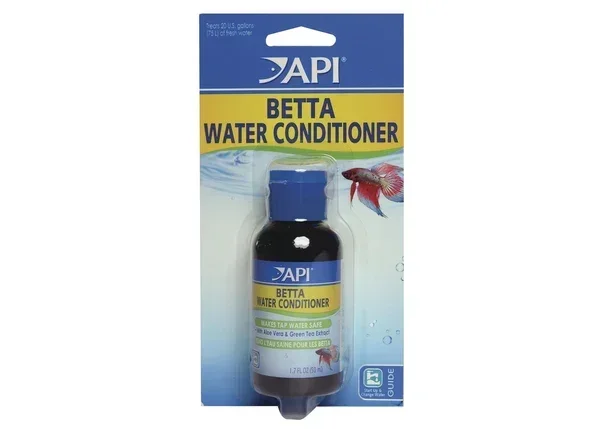
Liquid conditioners are the go-to choice for most betta owners. You add a few drops or a capful directly to the water, and the product neutralizes chlorine, chloramine, and heavy metals within minutes. Popular brands include Seachem Prime, Tetra AquaSafe, and Aqueon water conditioner. These products are affordable, easy to use, and highly effective.
When shopping for a liquid conditioner, look for one that specifically addresses chloramine, not just chlorine. Many basic products only handle chlorine, which leaves chloramine and ammonia untouched. A quality conditioner will detoxify all of these at once.
Water Conditioners for Tropical Fish
Betta fish are tropical fish, so they benefit from conditioners designed for tropical aquariums. These products often include added ingredients like aloe vera or electrolytes that support slime coat health and reduce stress. If you want a conditioner that does more than just remove chemicals, a water conditioner for tropical fish is a great choice.
You can also find conditioners that buffer pH and soften water. These are helpful if your tap water is particularly hard or has an unstable pH level. Always read the label to make sure the product is safe for bettas specifically.
Natural and Chemical-Free Alternatives
If you prefer to avoid chemical products, you have several natural options. Let us explore them below.
Purified water is one of the safest choices. It goes through reverse osmosis or distillation, which removes virtually all impurities. You can use purified water for your betta fish without worrying about chlorine or heavy metals. Many pet stores carry gallon jugs of purified water at very reasonable prices.
Filtered water is another excellent option. A good carbon filter removes chlorine, sediment, and many contaminants. If you already use a filtered water for your betta fish at home, you can safely use it in your tank without additional conditioning.
Spring water from a trusted source can also work well. However, not all spring water is the same. Some brands contain added minerals that may alter your tank’s pH balance for betta fish. Always check the mineral content before using spring water regularly.
| Conditioner Type | Removes Chlorine | Removes Chloramine | Removes Heavy Metals | Ease of Use | Cost |
|---|---|---|---|---|---|
| Liquid Water Conditioner | Yes | Yes | Yes | Very Easy | Low to Medium |
| Purified Water | Yes (Pre-treated) | Yes (Pre-treated) | Yes (Pre-treated) | Very Easy | Medium |
| Filtered Water | Yes | Partial | Partial | Very Easy | Low |
| Spring Water | No | No | No | Very Easy | Medium |
| Distilled Water | Yes (Pre-treated) | Yes (Pre-treated) | Yes (Pre-treated) | Very Easy | Medium |
As you can see, liquid conditioners offer the most complete protection. They handle all three major threats and are very affordable. Natural options work well too, but you need to verify that the water source is truly safe for your betta.
How to Condition Water for Your Betta Fish Tank
Conditioning water is simple, but doing it correctly makes all the difference. Here is a step-by-step guide to follow every time you prepare water for your betta.
Step 1: Gather Your Supplies
Before you start, make sure you have everything ready. You will need your chosen conditioner, a clean bucket or container, and a thermometer if you are using tap water that needs temperature adjustment. Having everything at hand prevents mistakes and keeps the process smooth.
Step 2: Add Water to Your Container
Pour the water into a clean bucket. If you are using tap water, let it sit for about 15 minutes before adding conditioner. This allows some volatile chemicals to begin dissipating. However, do not rely on this alone, as chloramine will not evaporate on its own.
Step 3: Add the Conditioner
Follow the dosage instructions on your conditioner bottle. Most liquid conditioners require one drop or one capful per gallon of water. Stir or swirl the water gently to distribute the product evenly. Wait the recommended time, usually around two to five minutes, before moving to the next step.
Step 4: Check Temperature
Bettas are sensitive to temperature changes. The ideal range is between 76 and 82 degrees Fahrenheit. Use a thermometer to check that your conditioned water matches the temperature in your tank. If it is too cold, let it warm up gradually. If it is too warm, add a small amount of room-temperature water to bring it down.
Step 5: Add the Water to the Tank
Slowly pour the conditioned water into your betta tank. Avoid pouring directly on your fish or disturbing the gravel too much. If you are doing a partial water change, remove about 25 percent of the old water first, then add the new conditioned water.
Following these steps every time you change water helps maintain stable water quality for betta fish. Consistency is key to preventing stress and illness.
Common Water Conditioning Mistakes to Avoid
Even experienced fish keepers make mistakes sometimes. Here are the most common errors and how to avoid them.
Using Untreated Tap Water Directly
This is the number one mistake new betta owners make. Pouring straight tap water into the tank exposes your fish to chlorine and chloramine immediately. Always condition tap water before adding it to the tank, no exceptions.
Over-Conditioning the Water
More conditioner does not mean better results. Using too much product can actually introduce new chemicals into the water. Stick to the recommended dosage on the label. If you are unsure, start with the minimum amount and increase only if needed.
Ignoring Water Temperature
Cold water shocks bettas and weakens their immune system. Always match the temperature of new water to the tank water. A small temperature difference of just a few degrees can cause stress.
Forgetting to Condition During Top-Offs
Some fish keepers only condition water during full water changes. But every time you add new water to the tank, including small top-offs to replace evaporated water, you should condition it. Evaporation leaves behind chemicals and minerals, so the replacement water needs treatment too.
Best Water Sources for Betta Fish
Choosing the right water source is just as important as using a conditioner. Let us compare the most popular options available to betta fish owners.
Tap water is the most accessible and affordable option. However, it requires conditioning every time. If you use tap water for your betta fish, invest in a reliable liquid conditioner and test your water regularly for pH and ammonia levels.
Purified water is pre-treated and ready to use. It removes the guesswork entirely. You can find purified water at most grocery stores and pet shops. It is slightly more expensive than tap water but eliminates the need for chemical conditioners.
Filtered water from a home filtration system works well if the filter is designed to remove chlorine and heavy metals. Standard carbon filters are effective for this purpose. If you already drink filtered water at home, you can safely use it for your betta tank.
Spring water can be a good option, but you need to check the label carefully. Some spring waters contain high mineral content that can raise pH levels in your tank. Look for low-mineral spring water that is close to neutral pH for the best results.
Distilled water is pure but lacks beneficial minerals. You can use it, but you may need to add a mineral supplement to ensure your betta gets the trace elements it needs. Distilled water is also more expensive than other options, so many fish keepers reserve it for top-offs or small tanks.
Each water source has its pros and cons. The best choice depends on your budget, your local water quality, and how much time you want to spend on water preparation.
How Often Should You Condition Betta Fish Water
Conditioning water is not a one-time task. It is part of regular tank maintenance. The frequency depends on your tank size, filter setup, and whether you keep other fish with your betta.
For most betta setups, a partial water change of 25 to 30 percent every one to two weeks is ideal. Each time you add new water, condition it properly. This routine helps maintain stable ammonia levels in fish tank environments and keeps the water fresh and safe.
If you notice your betta acting differently, such as staying near the surface or losing color, test the water immediately. Poor water quality is often the hidden cause behind these symptoms. A quick water change with properly conditioned water can make a big difference in your betta’s comfort and health.
Also, always condition new water before adding it to the tank, even if you only need to top off a few inches. Consistency in conditioning builds a reliable routine that protects your fish every day.
Final Thoughts on Conditioning Betta Fish Water
Conditioning your betta fish water does not have to be complicated. Whether you choose a liquid water conditioner, purified water, or filtered water for your betta fish, the most important thing is that you do it consistently. Safe water is the foundation of a healthy betta tank, and a little effort goes a long way.
Start with a quality conditioner if you use tap water. Test your water parameters regularly. And remember that every small step you take toward better water quality directly improves your betta’s life. Your fish will show the difference through vibrant colors, active swimming, and a healthy appetite.
Take what you have learned here and put it into practice today. Your betta deserves the best, and now you have the tools to give it. Happy fish keeping!
Frequently Asked Questions
Can I use tap water directly for my betta fish without a conditioner?
No, tap water contains chlorine and chloramine that are harmful to betta fish. Always use a water conditioner for betta fish or a dechlorinator before adding tap water to your tank. These products neutralize the harmful chemicals within minutes and make the water safe for your fish.
How long should I wait after adding conditioner before putting my betta in the water?
Most liquid conditioners work within two to five minutes. After adding the recommended dose, simply wait a few minutes and the water is ready. If you are using purified water or filtered water for your betta fish, no waiting time is needed since these sources are already treated.
Can I use bottled spring water for my betta fish tank?
Yes, you can use spring water for your betta fish, but check the mineral content first. Some spring waters have high mineral levels that can affect your tank’s pH. Choose low-mineral spring water with a neutral pH for the best results.
Is it safe to use purified drinking water for my betta fish?
Absolutely. Purified drinking water for betta fish is one of the safest options available. It has been through reverse osmosis or distillation, which removes chlorine, chloramine, heavy metals, and other contaminants. You can use it directly without any additional treatment.
What happens if I put too much water conditioner in my betta tank?
Over-conditioning can introduce excess chemicals that may stress your fish. If you accidentally add too much, perform a small water change to dilute the concentration. Always follow the dosage instructions on the product label and measure carefully to avoid this issue.
Do I need to condition water every time I do a water change?
Yes, every time you add new water to your betta tank, whether it is a full water change or a small top-off, you should condition it. This removes chlorine, chloramine, and heavy metals from the fresh water and keeps your betta fish environment consistently safe and healthy.