How to Tell If My Betta Fish Have Gold Dust
Gold dust disease (also called velvet disease) is a common parasitic infection that affects betta fish. If you notice tiny gold or rust-colored specks on your fish’s skin, rapid gill movement, or clamped fins, your betta may be infected. This guide walks you through every sign, cause, and treatment step so you can act fast and save your fish.
You’re admiring your betta fish when something catches your eye. Tiny golden specks cover its body like a dusting of glitter. Your heart sinks. What is that? Is your betta okay?
This is a scenario many betta owners face. Gold dust disease is one of the most common parasitic infections in freshwater aquariums. It spreads quickly and can turn deadly if you don’t act fast. But here’s the good news — if you catch it early, you can treat it successfully at home.
In this guide, I’ll show you exactly how to tell if my betta fish has gold dust. We’ll cover every symptom, the root causes, proven treatments, and simple prevention tips. Whether you’re a beginner or a seasoned fish keeper, this article will give you the confidence to protect your betta.
Key Takeaways
- Gold dust disease is caused by a parasitic protozoan called Oödinium that attaches to your betta’s skin and gills.
- Early signs include fine gold specks on the body, flashing against decorations, and lethargy.
- Poor water quality and stress are the top triggers for gold dust outbreaks in betta tanks.
- Treatment options include raising tank temperature, using aquarium salt, and medication like copper-based treatments.
- Prevention is easier than cure — maintain clean water, reduce stress, and quarantine new fish.
- Untreated gold dust can be fatal within days, so early detection is critical.
- Learn how to tell if my betta fish is sick to catch diseases like gold dust before they worsen.
📑 Table of Contents
- What Is Gold Dust Disease in Betta Fish?
- How to Tell If Your Betta Fish Has Gold Dust
- What Causes Gold Dust Disease?
- How to Treat Gold Dust Disease in Betta Fish
- Preventing Gold Dust Disease in Your Betta Tank
- When to See a Vet or Fish Health Specialist
- Common Mistakes When Treating Gold Dust Disease
- Key Takeaways
What Is Gold Dust Disease in Betta Fish?
Gold dust disease goes by several names. Hobbyists call it velvet disease, rust disease, or gold dust disease. The scientific name is Oödinium. It’s a single-celled parasitic protozoan that latches onto your betta’s skin and gills.
The parasite feeds on your fish’s cells. It burrows under the mucus layer and creates tiny cysts. These cysts look like fine gold or rust-colored dust — hence the name. Under a microscope, the parasite looks like a spinning top with tiny hair-like structures called flagella that it uses to move and attach.
Gold dust disease thrives in warm, stagnant water. Betta fish live in tropical environments, so they’re naturally susceptible. The parasite is always present in most aquariums but only causes problems when your fish is stressed or the water quality drops.
How Gold Dust Differs from Other Fish Diseases
Gold dust can look similar to a few other conditions. White spot disease (ich) creates white salt-like grains, not golden specks. Fungal infections appear as cotton-like growths. Bacterial infections cause redness and open sores. Gold dust has a distinctive golden or rusty sheen that sets it apart.
The best way to confirm gold dust is to dim the lights and shine a flashlight on your betta at night. The parasite will reflect light and appear like tiny gold particles scattered across the body. This simple test helps you distinguish gold dust from other betta fish symptoms.
How to Tell If Your Betta Fish Has Gold Dust
Spotting gold dust early makes all the difference. The parasite progresses through stages, and the symptoms become more severe as it spreads. Here’s what to watch for.
Visual Signs on the Body
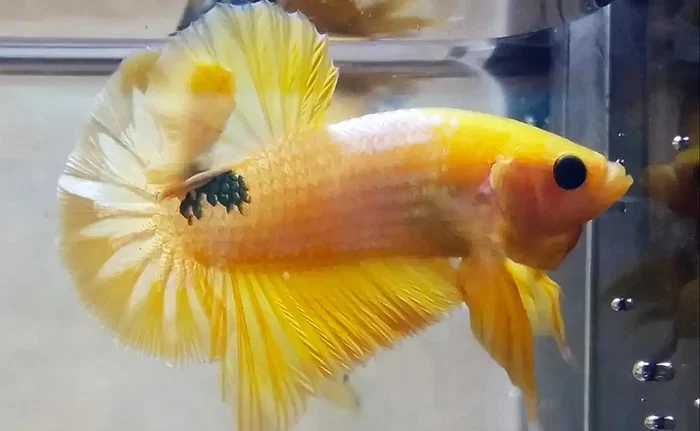
The most obvious clue is the golden or rust-colored dusting on your betta’s skin. It often starts on the gills and spreads to the fins and body. The specks are very fine — almost like a powder. In light-colored bettas, they’re easier to spot. In dark-colored fish, you may need to look closely.
Other visual signs include:
- Clamped fins — your betta holds its fins close to its body
- Faded or dull color — the vibrant colors fade as the parasite feeds
- Skin peeling or sloughing — advanced cases show patches of missing scales or mucus
- Rapid gill movement — your betta breathes faster than normal
Behavioral Changes to Watch For
Betta fish are active and curious. When gold dust strikes, their behavior changes noticeably. Flashing is a classic sign — your betta rubs its body against rocks, gravel, or decorations. It does this to relieve the irritation caused by the parasite burrowing into the skin.
You may also notice:
- Lethargy — your betta stays near the bottom or hides more than usual
- Loss of appetite — your betta refuses food or eats very little
- Breathing difficulty — gills work overtime as the parasite damages gill tissue
- Erratic swimming — uncoordinated or darting movements
If you notice a combination of these signs, it’s time to act. Learn how to tell if my betta fish is sick so you can catch not just gold dust but other illnesses early too.
Using the Flashlight Test
This is one of the most reliable ways to confirm gold dust. Turn off your aquarium lights and wait for total darkness. Shine a small flashlight or phone light against the side of the tank. The Oödinium parasites will reflect the light as tiny golden specks. You’ll see them moving slightly on your betta’s skin and gills.
This test works best in the early stages when the parasite load is still low. If you see the golden reflection, you’ve confirmed the diagnosis. Now you can move to treatment with confidence.
What Causes Gold Dust Disease?
Understanding the cause helps you prevent future outbreaks. Gold dust disease doesn’t appear out of nowhere. There are always underlying factors that trigger it.
Poor Water Quality
This is the number one cause. Dirty water weakens your betta’s immune system and creates the perfect environment for parasites to thrive. Ammonia and nitrite spikes are especially dangerous. When your fish tank care routine slips, the risk of gold dust skyrockets.
Common water quality mistakes include:
- Skipping water changes — let’s be honest, we’ve all been guilty of this
- Overfeeding — leftover food decays and pollutes the water
- Not testing water parameters — you can’t fix what you don’t measure
- Dirty filters — clogged filters reduce water flow and filtration
Stress and Temperature Fluctuations
Betta fish are sensitive to stress. Anything that disrupts their environment can trigger a gold dust outbreak. Sudden temperature drops, aggressive tank mates, or a noisy location near a window or speaker can all cause stress.
Temperature fluctuations are especially harmful. Gold dust parasites reproduce faster in cooler water (below 78°F). Keeping your tank at a stable tropical fish disease-preventing temperature of 78–80°F helps your betta stay healthy and fight off infections.
Introducing Infected Fish or Plants
New fish, plants, or decorations can carry the Oödinium parasite into your tank without you knowing. The parasite can hide on healthy-looking fish for weeks before showing symptoms. This is why quarantining new fish before adding them to your main tank is so important.
Live plants are another common culprit. They can carry dormant parasites in their crevices. Always rinse and quarantine plants before adding them to your betta’s home.
How to Treat Gold Dust Disease in Betta Fish
Once you’ve confirmed gold dust, you need to start treatment immediately. The longer you wait, the harder it becomes to save your fish. Here’s a step-by-step treatment plan that works.
Step 1: Raise the Water Temperature
Gradually increase the tank temperature to 82–84°F over 24 hours. The warmer water speeds up the parasite’s life cycle, making it more vulnerable to treatment. But be careful — raise the temperature slowly. A sudden jump can shock your betta.
While you’re at it, reduce the lighting. Oödinium parasites need light to photosynthesize and grow. Dimming the lights or keeping the tank dark for a few days helps slow the infection.
Step 2: Add Aquarium Salt
Freshwater aquarium salt is a gentle but effective treatment for gold dust. Add one teaspoon of salt per gallon of water. The salt disrupts the parasite’s osmotic balance and helps your betta’s gills function better.
Use aquarium salt specifically made for fish tanks. Avoid table salt — it contains additives like iodine and anti-caking agents that can harm your fish. You can also use aquarium salt baths as a short-term treatment for severe cases.
Step 3: Use Medication
If the salt and temperature method doesn’t work within 48 hours, it’s time for medication. Copper-based treatments are the most effective against Oödinium. Products like Seachem Cupramine or API Super Ick Cure target the parasite directly.
Follow the dosage instructions carefully. Overdosing copper can harm your betta and kill beneficial bacteria in your filter. Remove carbon from your filter during treatment — it absorbs the medication and reduces its effectiveness.
Step 4: Improve Water Quality
Treatment won’t work if the water stays dirty. Perform a 25–30% water change before starting treatment. This removes some of the free-floating parasites and reduces the toxin load on your betta’s system.
Continue with regular water changes during treatment. Test ammonia, nitrite, and nitrate levels daily. Clean water gives your betta the best chance of recovering from gold dust disease.
Step 5: Support Your Betta’s Recovery
Recovery takes time. Keep your betta in a calm, stress-free environment. Feed high-quality food like frozen bloodworms or brine shrimp to boost its immune system. Avoid handling the tank too much — let your betta rest and heal.
If your betta stops eating during treatment, try offering live food or soaking dry food in garlic juice. The garlic scent can stimulate appetite. Also, consider how to destress my betta fish by keeping the tank in a quiet area with consistent lighting.
Preventing Gold Dust Disease in Your Betta Tank
Prevention is always better than cure. A healthy betta in clean water rarely develops gold dust. Here’s how to keep your tank parasite-free.
Maintain Consistent Water Quality
Test your water parameters at least once a week. Keep ammonia and nitrite at zero. Nitrate should stay below 20 ppm. Perform regular water changes — 25% every week is ideal for most betta tanks.
A good aquarium maintenance routine includes:
- Vacuuming the gravel during water changes
- Cleaning the filter every 2–4 weeks (rinse media in old tank water)
- Removing uneaten food within 5 minutes of feeding
- Monitoring temperature with a reliable heater and thermometer
Quarantine New Additions
Always quarantine new fish, plants, and decorations for at least two weeks before adding them to your main tank. A separate quarantine tank lets you observe new arrivals for signs of disease without risking your betta’s health.
This simple step prevents parasitic infections like gold dust from entering your main display tank. It’s one of the most overlooked yet most effective prevention strategies in the hobby.
Reduce Stress in Your Betta’s Environment
A happy betta is a healthy betta. Provide plenty of hiding spots, gentle filtration, and stable water conditions. Avoid sudden changes in lighting, temperature, or tank setup.
If you notice your betta showing signs of stress — like hiding constantly or losing color — check the water parameters and look for early signs of illness. How to know if your betta fish is happy is a great resource for understanding your betta’s baseline behavior.
Feed a Balanced Diet
Good nutrition supports a strong immune system. Feed your betta a varied diet of high-quality pellets, frozen foods, and occasional live foods. Avoid overfeeding — uneaten food degrades water quality fast.
Feeding small amounts twice a day is ideal. Your betta should eat everything within 2–3 minutes. If food falls to the bottom and sits there, you’re giving too much.
When to See a Vet or Fish Health Specialist
Most gold dust cases can be treated at home. But some situations require professional help. If your betta isn’t improving after 5–7 days of treatment, it’s time to consult an expert.
Also seek help if your betta shows severe symptoms like open sores, complete loss of color, or inability to swim. These could indicate a secondary bacterial infection on top of the gold dust parasite. A vet can prescribe stronger medications or provide injections if needed.
Some local fish stores and online services offer fish health consultations. Can I take my betta fish to the vet Petco is a common question — and yes, Petco and some other stores do offer basic fish health services. Don’t hesitate to reach out if you’re unsure.
Common Mistakes When Treating Gold Dust Disease
Even experienced fish keepers make mistakes when treating gold dust. Here are the most common ones to avoid.
- Treating too late. By the time you see heavy gold dust coverage, the infection has been building for days. Start treatment at the first sign.
- Raising the temperature too fast. A rapid temperature spike stresses your betta. Increase by 1–2°F per hour until you reach 82–84°F.
- Using the wrong medication. Not all fish medications work on parasites. Make sure your treatment targets protozoan parasites specifically.
- Skipping water changes during treatment. Dead parasites and medication residue build up in the water. Regular water changes keep things safe.
- Ignoring the root cause. Treating the symptoms without fixing the water quality or stress trigger means the disease will come back.
Avoid these mistakes and you’ll give your betta the best shot at a full recovery. Remember, how to cure my betta fish swim bladder disease and other conditions require similar attention to detail — early action and clean water make all the difference.
Key Takeaways
Gold dust disease is treatable if you catch it early and act quickly. Watch for the golden specks, flashing behavior, and lethargy. Keep your water clean, your temperature stable, and your betta stress-free. With the right approach, your fish can make a full recovery and live a long, healthy life.
Take a few minutes each day to observe your betta. A quick look at your fish during feeding time can reveal changes in appetite, color, and energy level. These small observations add up and help you catch problems before they become serious.
Finally, remember that every betta is different. Some fish are more resistant to disease than others. The key is to stay proactive with tank maintenance and stay alert to any changes in your fish’s appearance or behavior. Your betta depends on you for its health — and with the knowledge you’ve gained here, you’re well equipped to keep it gold-dust-free.
Frequently Asked Questions
What does gold dust look like on a betta fish?
Gold dust looks like fine golden or rust-colored specks covering your betta’s skin and gills. The specks are very small and powdery, almost like a light dusting of gold paint. In dark-colored bettas, they may be harder to see, so use the flashlight test in a dark room to confirm.
Can gold dust disease kill a betta fish?
Yes, if left untreated, gold dust disease can be fatal. The parasite damages the gills and skin, making it hard for your betta to breathe and fight off secondary infections. However, with early detection and proper treatment, most bettas recover fully within 1–2 weeks.
How long does it take to treat gold dust disease?
Treatment typically takes 7–14 days depending on the severity. Mild cases may clear up in a week with temperature changes and aquarium salt. Severe cases may require copper-based medication and longer recovery time. Consistency with treatment is key.
Is gold dust disease contagious to other fish?
Yes, gold dust is highly contagious. The parasite spreads through direct contact or contaminated water. If you have other fish in the same tank, isolate the infected betta immediately. Always quarantine new fish before introducing them to your main tank.
Can I use the same treatment for gold dust and ich?
Some treatments overlap, but they’re not identical. Ich treatments target a different parasite. Gold dust responds best to copper-based medications and salt baths. Raising the temperature helps both, but always confirm which disease your fish has before choosing a treatment.
How can I prevent gold dust from coming back?
Maintain excellent water quality with regular changes and parameter testing. Reduce stress with stable temperatures and a calm environment. Quarantine all new fish and plants for two weeks before adding them to your tank. A strong immune system and clean water are your best defenses.