How to Mating Betta Fish
Mating betta fish requires patience, the right tank setup, and careful observation. This guide walks you through every step, from choosing a healthy breeding pair to raising betta fry successfully. You will learn how to create the perfect conditions for betta fish breeding and avoid common mistakes that beginners make.
Mating betta fish is one of the most exciting things you can do as a fish keeper. It takes patience, the right setup, and a good understanding of how bettas behave. Whether you are a beginner or have kept fish for years, breeding bettas can be a rewarding experience.
In this guide, we will walk you through every step of the mating process. You will learn how to pick the right pair, set up a breeding tank, spot courtship behavior, and care for baby bettas. We also share tips on betta fish breeding that even experienced hobbyists find useful.
The key to successful betta fish mating is preparation. When you get the tank, water, and fish ready beforehand, everything goes much smoother. Let us dive in and explore how to mate betta fish the right way.
Key Takeaways
- Set up a dedicated breeding tank: A separate tank with the right temperature and conditions keeps both fish safe and stress-free during mating.
- Choose healthy males and females: Look for vibrant colors, active behavior, and no signs of disease before introducing your breeding pair.
- Watch for courtship behavior: The male builds a bubble nest and flares to attract the female — this is a great sign things are going well.
- Remove the female after spawning: Male bettas can become aggressive, so separating the female protects her from harm.
- Care for betta fry carefully: Feed infusoria or baby brine shrimp and keep the water clean for healthy growth.
- Maintain warm water temperatures: A steady temperature around 80°F encourages successful mating and fry survival.
📑 Table of Contents
Understanding Betta Fish Mating Basics
Before you start, it helps to understand how bettas reproduce. Male and female bettas have different roles during the process. Knowing what to expect makes the whole experience less stressful for you and your fish.
Betta fish are known as bubble nest builders. The male creates a nest made of tiny bubbles on the surface of the water. This nest is where the eggs will be kept safe after spawning. Without a proper bubble nest, mating cannot succeed.
How Betta Fish Mate in the Wild
In their natural habitat, bettas mate in shallow, warm waters. The male builds a bubble nest among plants or debris. When a female is ready, she approaches the nest, and the male wraps his body around her to release eggs. This process is called betta fish spawning.
Wild bettas often mate during the rainy season when water conditions are stable. Mimicking these conditions in your aquarium greatly improves your chances of success.
Signs Your Betta Fish Is Ready to Mate
Not every betta is ready to breed at the same time. Look for these signs before you start:
- The male builds a bubble nest — this is the clearest sign he is ready.
- The female has a white dot on her belly — this is her ovipositor, meaning she is carrying eggs.
- Both fish show active, healthy behavior — lethargic or sick fish should not be bred.
- The female has a thicker body shape — this indicates she is full of eggs.
Setting Up the Breeding Tank
A proper tank setup is the foundation of successful betta fish mating. You cannot use a regular community tank for breeding. Bettas need a quiet, controlled environment where they feel safe.
If you are new to breeding, start by learning how to set up a fish tank for betta fish before adding a breeding pair. This ensures your base knowledge is solid.
Tank Size and Shape
Use a tank that is at least 10 gallons. A longer tank works better than a tall one because bettas stay near the surface. This makes it easier for the male to tend to the bubble nest.
Keep the tank simple. Add a few plants, a sponge filter, and a heater. Avoid sharp decorations that could hurt the fish during the mating process.
Water Temperature and Conditions
Temperature plays a huge role in betta fish breeding. The water should stay between 78°F and 82°F. Use a reliable aquarium heater to maintain a steady temperature.
For more tips on keeping the water warm, check out our guide on how to make my betta fish tank warmer. Consistent warmth encourages both fish to mate and helps the eggs develop properly.
The water should be soft and slightly acidic. Use a water prep method to remove chlorine and heavy metals before filling the tank. Clean, conditioned water is essential for healthy mating.
Adding Plants and Hiding Spots
Add floating plants like java moss or frogbit. These plants help the male build a stronger bubble nest. They also give the female places to hide if the male becomes aggressive.
A few broad-leaf plants work well too. The female needs somewhere to rest and feel secure during courtship.
Choosing the Right Breeding Pair
Picking the right pair is the most important step in mating betta fish. A healthy pair produces strong, vibrant fry. A poor pair can lead to failed mating or sick babies.
Male Betta Traits to Look For
The male is the one who builds the bubble nest and takes care of the eggs. Look for these qualities:
- Bright, vivid colors — this shows good health and strong genetics.
- Long, flowing fins — a sign of a well-cared-for fish.
- Active and alert behavior — avoids fish that seem lethargic.
- Age between 4 and 12 months — young, mature males breed best.
For more details on male betta care, read our article on how to take care of a betta male fish. A healthy male is the key to a successful mating experience.
Female Betta Traits to Look For
The female needs to be healthy and ready to produce eggs. Here is what to look for:
- White ovipositor dot on the belly — this is the sign she is ready.
- Rounder, thicker body — indicates she is carrying eggs.
- Good appetite and energy — avoid females that refuse food.
- Age between 4 and 12 months — young females produce more eggs.
Introducing the Pair
Never put the male and female in the same tank right away. Start by placing them in separate containers next to each other. This lets them see each other and get used to the presence without direct contact.
After a day or two, if both fish seem calm, you can introduce them into the breeding tank. Watch them closely for the first few hours. Some flaring is normal, but fighting means you need to separate them.
The Mating Process Step by Step
Once the pair is in the breeding tank, the actual betta fish courtship begins. This is the most exciting part, but it also requires patience.
Step 1: Bubble Nest Building
The male will start building a bubble nest at the surface. He blows tiny bubbles and wraps them with saliva to make them sticky. A good nest can take anywhere from a few hours to a couple of days.
Do not disturb the male during this time. Keep the lights dim and the tank quiet. Stress can cause him to abandon the nest.
Step 2: Courtship Display
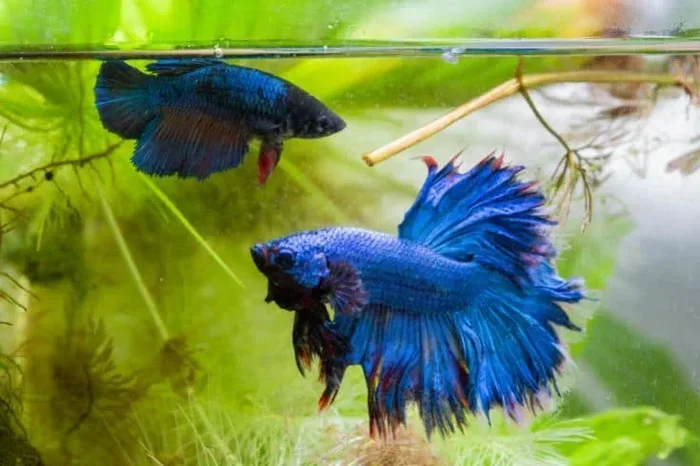
Once the nest is ready, the male will flare his fins and dance around the female. He will try to guide her toward the nest. This is called the betta fish courtship dance.
The female may respond by darkening in color and developing vertical stripes on her body. These stripes are called breeding bars, and they mean she is ready.
Step 3: Spawning
When both fish are ready, the male will wrap his body around the female. She will release eggs, and the male will fertilize them right away. He then collects the eggs and places them in the bubble nest.
This process can repeat several times over a few hours. The female may release anywhere from 100 to 500 eggs in a single session.
Step 4: Separating the Female
After spawning is complete, remove the female from the tank. The male can become aggressive and may harm her. Use a small net to transfer her gently to a separate container.
Leave the male alone with the bubble nest. He will guard and care for the eggs until they hatch. This usually takes 24 to 48 hours.
Caring for Betta Fish Fry
Once the eggs hatch, you have tiny betta fry to care for. This is the most delicate part of the entire process. Newborn fry are very small and need special attention.
Feeding Newborn Betta Fry
Fry cannot eat regular fish food. Start with infusoria or freshly hatched baby brine shrimp. These tiny foods are the perfect size for newborns.
Feed the fry several times a day in small amounts. Overfeeding can dirty the water quickly, which is dangerous for such small fish.
Water Maintenance for Fry
Keep the water clean by doing small, frequent water changes. Replace about 10 to 15 percent of the water every day. Use water that is the same temperature as the tank.
A gentle sponge filter works well for fry tanks. It keeps the water clean without creating strong currents that can harm the tiny fish.
Growing Strong Fry
As the fry grow, you can gradually introduce larger foods like crushed flakes and micro worms. By the time they are a month old, they will start to look like tiny versions of adult bettas.
For tips on helping your fish grow strong and healthy, check out our guide on how to raise a betta fish. Proper care from day one makes a big difference in the long run.
When to Separate Fry
Start separating fry into individual containers when they are about 3 to 4 weeks old. Males can become aggressive even at a young age. Separate containers prevent fighting and fin damage.
Common Mistakes to Avoid
Even experienced fish keepers make mistakes when mating bettas. Here are the most common ones and how to avoid them:
- Skipping the quarantine period. Always keep the breeding pair separate for a few days before introducing them. This prevents disease from spreading.
- Using a tank that is too small. A cramped tank causes stress and can stop the mating process entirely.
- Not monitoring water temperature. Fluctuating temperatures harm both the fish and the eggs. Use a reliable heater and thermometer.
- Leaving the female in the tank too long. The male can become violent after spawning. Remove her promptly to keep her safe.
- Overfeeding the fry. Excess food rots quickly and pollutes the water. Feed small amounts multiple times a day instead.
- Disturbing the bubble nest. Avoid tapping on the tank or making sudden movements near the nest. The male may destroy it if he feels threatened.
Expert Tips for Successful Betta Mating
Here are some extra tips from experienced breeders that can improve your results:
- Condition the pair before mating. Feed both fish high-quality live or frozen food for 1 to 2 weeks before introducing them. This prepares their bodies for breeding.
- Use dim lighting. Bright lights can stress bettas during courtship. A soft lamp or natural light from a nearby window works best.
- Be patient. Sometimes the pair needs a few days to adjust before mating begins. Do not rush the process.
- Keep a backup tank ready. If the male becomes too aggressive, you need a safe place to move the female immediately.
- Record the spawning date. This helps you track when the eggs should hatch and plan your fry care schedule.
Mating betta fish is a journey that requires care, attention, and love. Every step from setting up the tank to feeding the fry gives you a deeper connection with these beautiful creatures. Take your time, enjoy the process, and you will be rewarded with healthy, colorful baby bettas.
Remember that not every mating attempt will be perfect. Even experienced breeders face failed spawns or sick fry sometimes. What matters is that you learn from each experience and keep improving your setup and technique.
With the right knowledge and a little patience, you can successfully mate betta fish at home. Follow the steps in this guide, pay attention to your fish, and you will be well on your way to raising the next generation of beautiful bettas.
Frequently Asked Questions
How long does it take for betta fish to mate?
The entire mating process from introduction to spawning usually takes 2 to 5 days. The courtship dance can last several hours, and the male may wrap the female multiple times before all eggs are released. After spawning, the male takes about 24 to 48 hours to hatch the eggs.
How do I know if my betta fish is ready to breed?
Look for a bubble nest from the male and a white ovipositor dot on the female’s belly. Both fish should be active, eating well, and between 4 and 12 months old. Vibrant colors and a healthy appetite are good signs that your fish are ready for breeding.
Can I keep the male and female together after mating?
No, you should remove the female after spawning. The male becomes very protective and can become aggressive toward her. He will focus on guarding the eggs and fry, and keeping the female in the tank risks injury from his flaring and chasing behavior.
What should I feed betta fry?
Start with infusoria or freshly hatched baby brine shrimp. As the fry grow, you can introduce crushed flakes and micro worms. Feed small amounts several times a day to keep them growing steadily without polluting the water.
Why did my betta fish fail to build a bubble nest?
A bubble nest may not form if the water temperature is too low, the male is stressed, or he is not healthy. Make sure the water is between 78°F and 82°F, the tank is quiet, and the male is well-fed. Sometimes it takes a few attempts before a male builds a successful nest.
Is breeding betta fish difficult for beginners?
Breeding bettas is moderately challenging but very doable for beginners who prepare properly. Focus on setting up the right tank, choosing healthy fish, and maintaining stable water conditions. Start with a simple setup and learn as you go. Each breeding attempt teaches you something valuable.
=== CONCLUSION ===
Mating betta fish is a fascinating and rewarding part of fish keeping. With the right tank setup, a healthy breeding pair, and proper care, you can successfully raise betta fry at home. Remember to prepare everything in advance, monitor water conditions closely, and be patient throughout the process.
Every step you take — from building the bubble nest to feeding the tiny fry — brings you closer to a successful breeding experience. Use the tips in this guide, avoid common mistakes, and enjoy watching your bettas thrive. Happy breeding!