How to Mate Your Betta Fish
Mating your betta fish can be a rewarding experience when done right. This guide covers everything you need to know about betta fish breeding, from preparing your pair to raising healthy betta fry.
Key Takeaways
- Choose healthy bettas: A strong breeding pair starts with healthy, well-conditioned male and female bettas.
- Tank setup matters: A properly set up breeding tank with warm water and hiding spots boosts success.
- Watch courtship behavior: Male bettas build bubble nests and display vibrant colors to attract females.
- Separate after mating: Remove the female after spawning to protect her from aggressive male behavior.
- Raise fry carefully: Betta fry need tiny food, clean water, and separate care to survive their first weeks.
- Patience is key: Breeding takes time, and not every attempt will succeed the first time.
📑 Table of Contents
How to Mate Your Betta Fish
Breeding betta fish is one of the most exciting projects a fish keeper can take on. Watching your betta fish mating pair interact, spawn, and raise fry is truly something special. But it takes more than just tossing a male and female together. You need preparation, patience, and a solid plan.
This guide walks you through every step of the process. You will learn how to pick the right pair, set up the perfect breeding tank, manage their betta courtship, and care for newborn betta fry. Whether you are a beginner or a hobbyist looking to level up, this guide has you covered.
Understanding betta fish breeding behavior is the first big step. Bettas are labyrinth fish, meaning they breathe air and build bubble nests at the surface. The male takes the lead in nest building and fry protection. The female plays a key role by signaling readiness and laying eggs. Together, they complete one of nature’s more fascinating underwater rituals.
Understanding Betta Fish Mating Behavior
Before you do anything else, you need to understand how bettas behave during mating. Betta spawning is not like most fish. It involves complex displays, physical changes, and careful coordination between the pair.
Recognizing a Ready Male Betta
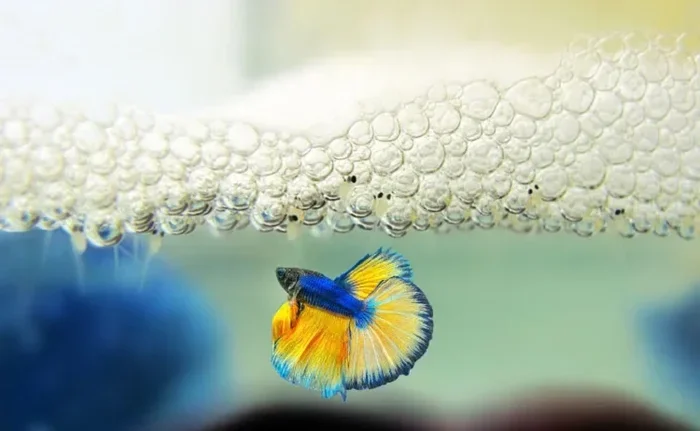
A male betta ready to breed shows clear signs. His colors become brighter and more intense. Fins flare wide, and he may pace the glass or swim in circles. The biggest clue is the bubble nest. A male who builds a nest at the surface is telling the world he is ready to mate.
The nest is made of tiny bubbles stuck together with saliva. It floats at the top of the tank and serves as a safe zone for eggs after spawning. If you see a well-built nest, your male is in breeding mode. You can also check for breeding pair readiness by offering live food. A male who eagerly feeds and shows off is in great condition.
Identifying a Ready Female Betta
Female bettas show different signals. Look for a betta conditioning routine first. A ready female will develop a visible ovipositor, a small white tube near her underside. Her body may swell slightly, and she may display vertical bars along her sides. These are called breeding stripes, and they signal she is prepared to spawn.
Female bettas also behave differently around a male. She may hide at first, then slowly approach. Some females flare back at the male. This is normal. A healthy betta behavior exchange between the pair is a good sign. If you want to better understand your betta’s overall health and mood, check out this guide on How to Know If Your Betta Fish Is Happy. Happy fish are more likely to breed successfully.
Preparing Your Betta Fish for Breeding
Preparation is everything in betta fish breeding. You cannot just pair any two fish and hope for the best. Both the male and female need to be in top physical and mental shape.
Conditioning the Breeding Pair
Betta conditioning means feeding high-quality food to boost health and energy. Start 1 to 2 weeks before breeding. Offer live or frozen foods like bloodworms, brine shrimp, and daphnia. These foods are rich in protein and help trigger breeding instincts.
You can also boost their strength by following tips in this helpful guide on How to Make Your Betta Fish Stronger. Strong fish handle the stress of mating better and produce healthier eggs and sperm.
Checking Health and Age
Only breed healthy fish. Look for clear eyes, smooth scales, and active swimming. Avoid fish with fin rot, ich, or other illnesses. Betta health should always come first.
Age matters too. Male bettas do best between 4 months and 1 year old. Females can breed from about 3 months old but do best between 4 and 8 months. Older fish can still breed, but success rates drop. Young, vibrant fish have the best chance at a strong spawn.
Quarantine and Acclimation
Keep your breeding pair separate from other fish. Quarantine each fish for at least two weeks before introducing them. This prevents disease spread and keeps water quality high. During quarantine, monitor each fish closely. Treat any issues before moving forward.
Setting Up the Breeding Tank
The tank you choose makes a big difference. A poorly planned setup leads to stress, failed spawns, or dead fry. The right environment encourages natural betta courtship and keeps everyone safe.
Tank Size and Layout
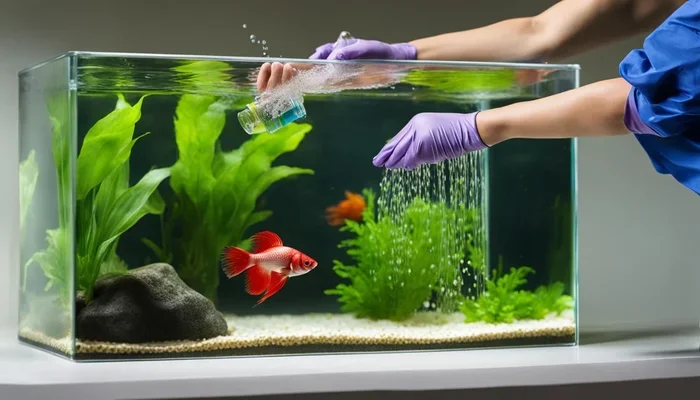
A 10-gallon tank works well for breeding. The male needs enough space to build a bubble nest and patrol his territory. Add plants, driftwood, and caves for hiding spots. The female needs places to retreat if the male gets too aggressive.
If you need help planning the perfect setup, this guide on How to Set Up a Fish Tank for Betta Fish covers all the basics. A well-decorated tank mimics their natural betta habitat and puts fish at ease.
Water Temperature and Quality
Keep water temperature between 78°F and 82°F (25.5°C to 28°C). Warm water encourages breeding activity and supports healthy egg development. Use a reliable heater and thermometer.
Maintain clean water through regular testing and partial changes. Ammonia and nitrite should always be at zero. Nitrate should stay under 20 ppm. Clean water reduces stress and supports strong betta fry development after spawning.
Comparison: Breeding Tank vs. Standard Tank
| Feature | Standard Tank | Breeding Tank |
|---|---|---|
| Tank Size | 5-10 gallons | 10-20 gallons |
| Temperature | 76-80°F | 78-82°F |
| Hiding Spots | Minimal | Heavy (plants, caves) |
| Bubble Nest Support | Not needed | Essential (surface access) |
| Filtration | Standard | Gentle (sponge filter) |
The Mating Process Step by Step
Now comes the exciting part. Introducing the pair and guiding them through betta spawning takes careful observation and quick action.
Step 1: Introduce the Female Visually
Start by placing the female in a clear container next to the male’s tank. Let them see each other for 1 to 2 hours. Watch their reactions. A male who flares and builds a nest is excited. A female who shows breeding stripes is ready. If either fish seems overly stressed, wait a day and try again. Managing betta stress is critical. If you are unsure how to handle stress, learn more with this guide on How to Treat a Stressed Betta Fish.
Step 2: Release the Female
Once both fish seem calm and interested, release the female into the breeding tank. Let them interact freely. The male will chase the female. This is normal. He is showing courtship behavior and guiding her toward the nest.
The pair may wrestle under the surface. Again, this is part of the process. The male wraps around the female and releases eggs. This happens multiple times over several hours. Each embrace releases a few eggs at a time.
Step 3: Egg Collection and Nest Guarding
After spawning, the male collects any eggs that fall and places them in his bubble nest. He fans them with his fins to keep them oxygenated. This is a crucial stage. The male becomes very territorial and may attack the female. Remove her gently using a net. Do not chase her, as this stresses both fish.
The male now takes full responsibility for the eggs. He guards the nest, repairs it, and tends to developing betta eggs. Leave him alone during this time. Let him do his job. Most eggs hatch within 24 to 48 hours.
Caring for Betta Fry After Mating
Once eggs hatch, your job is just beginning. Fry care is one of the most challenging parts of betta fish breeding. Tiny fry need very specific conditions to survive.
Hatching and First Days
Newly hatched fry are tiny and still carry their yolk sacs. Do not feed them for the first 24 to 48 hours. The yolk sac provides all the nutrition they need. Keep water conditions stable and avoid bright lights. The male will continue guarding them beneath the nest.
Feeding Betta Fry
After the yolk sacs disappear, start feeding. The best first foods are live infusoria, microworms, or baby brine shrimp. These are small enough for fry to eat. Feed tiny amounts multiple times per day. Uneaten food pollutes water quickly, so keep portions small.
As fry grow, gradually increase food size. You can offer freshly hatched brine shrimp and finely crushed flake food. Proper nutrition during this stage directly affects growth and color development.
Separating Fry
Remove the male once fry start swimming freely. He can accidentally eat them. Move fry to a separate rearing tank with gentle filtration. Keep water warm and clean. Performing regular betta tank cleaning in the fry tank prevents dangerous ammonia spikes. A separate grow-out tank gives fry the best shot at reaching adulthood.
Common Challenges and How to Overcome Them
Even experienced breeders face hurdles. Here are the most common problems and how to solve them.
Male Does Not Build a Bubble Nest
Some males skip nest building. This can happen due to stress, poor water conditions, or lack of conditioning. Try improving water quality and offering high-protein foods. Warm water around 80°F encourages nest building. Give the male privacy and reduce tank disturbances.
Female Is Aggressive or Refuses to Spawn
Not every female accepts a male. If she hides constantly or flares aggressively, remove her and try again later. Better conditioning and a more comfortable environment often help. Sometimes the pair simply is not compatible. Do not force it.
Eggs Fall and Are Not Collected
Eggs sometimes sink to the bottom. The male may not reach all of them. You can gently collect fallen eggs with a soft mesh net and place them in the bubble nest. Be very careful. Rough handling damages eggs. If the male is not tending the nest well, consider removing him and raising the eggs manually, though this requires advanced skills.
Fry Die Shortly After Hatching
Fry are fragile. Common causes include poor water quality, wrong temperature, or starvation. Test water daily. Feed appropriately sized food. Keep the tank warm and stable. Patience and consistency improve survival rates dramatically over time.
Quick Tips for Successful Betta Mating
- Always start with healthy, well-conditioned fish.
- Keep water warm (78-82°F) and crystal clean.
- Provide plenty of hiding spots and plants.
- Remove the female after spawning to prevent attacks.
- Feed fry live food as soon as yolk sacs disappear.
- Stay patient. Not every breeding attempt will succeed.
- Learn more about proper care by reading this comprehensive guide on How to Properly Take Care of Betta Fish.
Conclusion
How to mate your betta fish is a journey that rewards patience, preparation, and attention to detail. From betta conditioning and tank setup to managing betta spawning and raising betta fry, every step matters. Success comes from understanding natural betta courtship and creating the right environment for your fish to thrive.
Not every breeding attempt will be perfect, and that is okay. Learn from each experience. Adjust your approach based on what works. With time, you will build the skills and confidence to raise healthy fry from start to finish. The world of betta fish breeding is full of surprises, and every successful spawn reminds you why these fish are so captivating.
Now you have the knowledge to take the leap. Set up your tank, condition your pair, and enjoy the incredible process of bringing new life into your aquarium. Happy breeding!
Frequently Asked Questions
How do I know if my betta fish is ready to mate?
Look for clear signs. Males build bubble nests and show bright colors. Females develop a visible ovipositor and vertical breeding stripes. Both fish should be active, healthy, and well-fed. Proper betta conditioning through high-protein foods helps trigger readiness.
Can I keep the male and female together after mating?
No. After spawning, the male becomes aggressive. Remove the female immediately to prevent injury. The male guards the eggs and fry alone. Keeping them together leads to stress, chasing, and possible fin damage. Use a net for safe removal.
How long does betta spawning take?
The entire spawning process usually takes several hours. The pair may embrace and release eggs multiple times over 2 to 4 hours. After spawning, eggs take 24 to 48 hours to hatch. Total time from introduction to free-swimming fry is about 3 to 5 days.
What temperature is best for betta breeding?
Keep water between 78°F and 82°F (25.5°C to 28°C). Warm water speeds up metabolism and encourages breeding behavior. Use a reliable heater and thermometer. Stable temperature is just as important as the right range. Sudden changes stress the pair and can ruin a spawn.
How many eggs do betta fish produce during mating?
A typical spawn produces 100 to 500 eggs. The number depends on the female’s size, health, and conditioning. Not all eggs survive. Some may fall and not be collected by the male. With good care, you can expect 50 to 200 fry to reach free-swimming stage.
How do I feed betta fry after they hatch?
Start feeding 24 to 48 hours after hatching. Offer live infusoria, microworms, or freshly hatched brine shrimp. Feed tiny amounts several times a day. Avoid crushed flake food at first, as it is too large. As fry grow, slowly increase food size and feeding intervals.