How Much Plant Matter Needed for Betta Fish

Knowing how much plant matter is needed for betta fish can transform your aquarium into a thriving habitat. The right amount of plants reduces stress, improves water quality, and mimics your betta’s natural environment. This guide covers exact quantities, the best plant types, and practical setup tips you can use today.
Setting up a home for your betta fish goes far beyond just dropping them into a bowl with some water. One of the most important things you can do is add the right amount of plant matter. Plants create a healthier, more natural environment that keeps your betta active and comfortable. But here’s the question many new fish owners ask: how much plant matter is actually needed for betta fish? The answer depends on your tank size, the types of plants you choose, and what you want to achieve. In this guide, we’ll walk you through everything you need to know about adding plant matter to your betta setup. You’ll learn the ideal amounts, the best plants to use, and common mistakes to avoid along the way.
Betta fish come from the warm, slow-moving waters of Southeast Asia. In the wild, they live among dense vegetation, fallen leaves, and submerged roots. This natural habitat shapes their behavior, their stress levels, and even their coloration. When you replicate this environment in a home aquarium with the right plant matter, you’re giving your betta the best possible life. Let’s dive into why plant matter matters so much and how to get the balance just right.
Key Takeaways
- Live plants are essential: They improve water quality and provide natural hiding spots that reduce betta stress.
- Aim for 30-50% coverage: This balance gives your betta enough open swimming space while offering plenty of plant shelter.
- Plant matter decomposes slowly: It releases beneficial tannins and supports healthy bacteria growth in your tank.
- Choose soft-leafed plants: Plants like java fern and anubias won’t damage your betta’s delicate fins.
- Start simple: You don’t need a complex planted tank to give your betta a healthy, plant-rich environment.
📑 Table of Contents
Why Plant Matter Matters for Betta Fish
Many people think plants are just decoration. That’s far from the truth. Plant matter plays a vital role in your betta’s overall health and happiness. Understanding why plants are so important helps you make better decisions about how much to add to your tank.
Natural Habitat Replication
Betta fish evolved in environments rich with aquatic plants and organic debris. Dense vegetation gives them places to hide, rest, and explore. When you add plant matter to your aquarium, you’re recreating that natural setting. Your betta will feel safer and display more natural behaviors like nest building and foraging. Without enough plants, bettas can become stressed and develop health problems over time.
Water Quality Improvement
Plants are nature’s filtration system. They absorb harmful chemicals like ammonia and nitrates from the water. This means your betta swims in cleaner, healthier water. Living plants also oxygenate the water during photosynthesis, which supports better breathing for your fish. The more plant matter you have, the more these natural processes work in your favor. Just be careful not to overdo it, since too many plants can also trap debris and raise ammonia during decomposition.
Stress Reduction and Enrichment
A well-planted tank does wonders for your betta’s mental health. Plants break up lines of sight, which makes your fish feel secure. They provide surfaces for bubble nests and areas for resting. Betta fish in planted tanks show brighter colors and more energy. Adding the right amount of plant matter is one of the simplest ways to improve your fish’s quality of life.
How Much Plant Matter Is Needed for Betta Fish
The ideal amount of plant matter depends on several factors. Tank size, plant type, and your personal goals all play a role. Let’s break this down so you know exactly what to aim for.
General Rule of Thumb
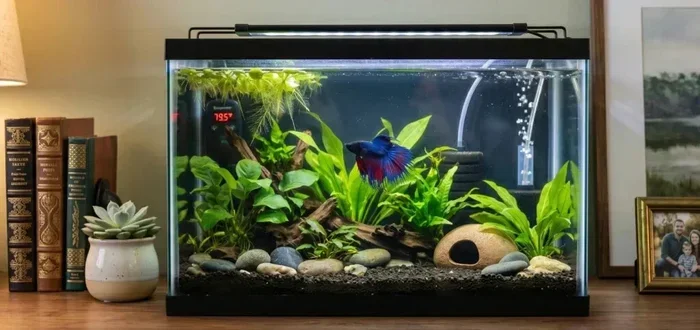
As a starting point, aim for 30 to 50 percent plant coverage in your betta tank. This means roughly one-third to half of the tank surface should have plants or plant matter. This range gives your betta enough open swimming space while providing plenty of natural shelter. For a standard 5-gallon betta bowl, this might mean two to three medium-sized plants and some floating plant matter on the surface.
Tank Size and Plant Amount
Your tank size directly affects how much plant matter you need. Here’s a simple breakdown to help you plan:
- 2.5-gallon tank: One small plant and a few floating leaves or plant matter pieces.
- 5-gallon tank: Two to three plants plus floating plant matter covering about 20 to 30 percent of the surface.
- 10-gallon tank: Three to five plants with moderate plant matter coverage across the substrate and surface.
- 20-gallon tank or larger: Five or more plants with generous plant matter, including submerged and floating varieties.
These numbers are flexible. You can always adjust based on how your betta responds. Some fish prefer more open space, while others love heavily planted environments. Watch your betta’s behavior to find the sweet spot.
Types of Plant Matter and Their Roles
Not all plant matter is the same. Different types serve different purposes in your betta tank. Understanding these differences helps you choose wisely.
Live plants are the gold standard. They actively filter water, produce oxygen, and grow over time. Popular choices for bettas include java fern, anubias, and java moss. These plants are soft and safe for delicate betta fins.
Dried plant matter like dried leaves and botanicals adds natural tannins to the water. Indian almond leaves and catappa leaves are favorites among betta keepers. These slowly release compounds that soften water and have mild antibacterial properties. You can add a few leaves to your tank and replace them every two to four weeks.
Floating plant matter such as duckweed or floating fern covers the water surface. This mimics the shaded, leafy canopy of a betta’s natural habitat. Floating plants also help dim bright tank lights, which bettas prefer since they come from murky, shaded waters.
Signs You Have Too Little Plant Matter
Your betta will tell you if it needs more plants. Look for these warning signs:
- Your betta seems restless and swims near the surface constantly.
- The fish hides behind the filter or heater instead of exploring.
- You notice faded colors or a loss of appetite.
- Your betta builds bubble nests less frequently.
- Algae blooms occur because there aren’t enough plants to absorb nutrients.
If you notice any of these issues, consider adding more plant matter gradually. You don’t need to make big changes all at once. Start with one new plant and observe how your betta responds over the next few days.
Signs You Have Too Much Plant Matter
Over-planting can cause problems too. Watch out for these signs:
- Your betta struggles to swim through open areas.
- Dead plant matter builds up and fouls the water.
- Water changes become difficult because plants take up too much space.
- Your filter can’t circulate water properly through dense vegetation.
If you see these issues, trim back your plants and remove any decaying matter. A good rule is to leave enough open swimming space for your betta to move freely without constant contact with leaves.
Best Plants for Your Betta Fish Tank
Choosing the right plants makes all the difference. Not every aquatic plant works well with bettas. You need species that are safe, easy to care for, and gentle on your fish’s fins.
Top Live Plants for Bettas
Java fern is one of the best plants for betta tanks. It grows slowly, needs minimal light, and its broad leaves provide excellent resting spots. Anubias is another great choice. It has thick, sturdy leaves that won’t break down quickly. Java moss creates a lush carpet that bettas love to explore and rest on. Marimo moss balls are fun, low-maintenance additions that also help filter the water naturally.
Floating Plants for Surface Coverage
Floating plants serve a special purpose in betta tanks. They block harsh light and create a sense of security. Frogbit and dwarf water lettuce are excellent floating options. Just be careful with growth speed. Floating plants can multiply quickly, so trim them regularly to keep the right balance of plant matter on the surface.
Botanicals and Dried Plant Matter
Indian almond leaves and catappa leaves are popular botanicals for betta tanks. They release tannins that mimic the natural blackwater environments bettas come from. These leaves also have mild antifungal and antibacterial properties. You can drop one or two leaves into your tank and let them sit as they soften and break down slowly. This adds natural plant matter without much effort on your part.
How to Add Plant Matter to Your Betta Tank
Adding plant matter properly is just as important as choosing the right amount. A few simple steps ensure your plants thrive and your betta stays healthy.
Step-by-Step Setup Process
First, decide on your plant layout before you start placing anything. Think about which areas need more coverage and where your betta likes to swim. Next, rinse new plants gently to remove any dirt or pests. For live plants, plant them in substrate or attach them to driftwood using fishing line. For dried botanicals, simply place them in the tank and let them sink naturally. Finally, fill your tank with properly treated water and monitor your betta’s behavior for the next 24 to 48 hours.
Before you add plants, make sure your tank is properly cycled. Adding plant matter to an uncycled tank can cause ammonia spikes as the plants and organic matter decompose. If you need guidance on setting up a new tank, check out this guide on how to set up a fish tank for betta fish to get started on the right foot.
Water Preparation Tips
Always treat your tap water before adding it to the tank. Chlorine and chloramine in untreated water can harm both your plants and your betta. Use a quality water conditioner to neutralize these chemicals. For best results, let your water sit for 24 hours before use, or treat it with a conditioner that works instantly. Proper water preparation ensures your plant matter thrives and your betta stays healthy.
If you want to learn more about preparing the right water for your setup, this guide on how to prepare water for a betta fish covers everything you need to know.
Ongoing Maintenance
Once your plants are in place, regular maintenance keeps everything balanced. Trim dead or yellowing leaves weekly. Remove any decaying plant matter before it breaks down and raises ammonia levels. Perform partial water changes every one to two weeks, replacing about 25 percent of the water. This removes excess nutrients and keeps your plants and fish thriving. For more details on water changes, see how to do a water change for betta fish.
Common Mistakes When Adding Plant Matter to a Betta Tank
Even experienced fish keepers make mistakes with plant matter. Knowing what to avoid saves you time, money, and stress for your betta.
Using the Wrong Plant Species
Some plants have sharp edges or rough textures that can tear betta fins. Avoid plants with stiff, spiky leaves. Stick to soft-leafed varieties like java fern, anubias, and mosses. These are gentle on your betta’s delicate fins and provide safe hiding spots without any risk of injury.
Overcrowding the Tank
It’s tempting to fill your tank with as many plants as possible. But overcrowding reduces swimming space and limits water flow. Your filter needs room to circulate water through the entire tank. Leave open areas where your betta can swim freely and access the surface for air. Remember, bettas are labyrinth fish and need easy access to the water’s surface.
Ignoring Plant Decay
Dead or decaying plant matter releases ammonia into the water. This is dangerous for bettas, even in small amounts. Check your plants regularly and remove any leaves that have turned brown or mushy. Healthy plants should look vibrant and firm. If a plant isn’t doing well, it’s better to remove it and replace it with a hardier species.
Skipping the Quarantine Step
New plants can carry pests, algae spores, or even pesticide residue. Always rinse new plants thoroughly and consider quarantining them in a separate container for a few days before adding them to your main tank. This simple step prevents many common problems and keeps your betta safe.
Benefits of the Right Plant Matter for Betta Fish Health
Getting the plant matter balance right brings a long list of benefits. Your betta will look better, act more naturally, and stay healthier over the long term.
Plants create a more stable environment by absorbing excess nutrients. This reduces algae growth and keeps water parameters more consistent. Betta fish in well-planted tanks show stronger colors and more vibrant fin displays. The natural tannins released by dried plant matter can also boost your betta’s immune system and create a soothing, soft-water environment that closely mimics their native habitat.
Beyond physical health, plant matter provides mental stimulation. Betta fish are curious creatures that enjoy exploring their surroundings. A tank rich with plant matter gives them places to investigate, hide, and claim as territory. This enrichment leads to a happier, more active fish that displays natural behaviors like exploring, foraging, and building bubble nests.
If you want to take your betta care to the next level, learning how to properly care for your betta fish overall is a great next step. A well-planted tank is just one piece of the puzzle, and combining it with proper feeding, water maintenance, and health monitoring gives your betta the best life possible.
Conclusion
Adding the right amount of plant matter to your betta fish tank is one of the best decisions you can make for your fish’s health and happiness. Aim for 30 to 50 percent plant coverage, choose soft and safe plant species, and maintain your plants regularly. The exact amount of how much plant matter is needed for betta fish depends on your tank size, plant types, and your betta’s individual preferences. Start simple, observe your fish, and adjust as needed. With the right balance of plants and care, your betta will thrive in a beautiful, natural environment that brings out its best colors and behaviors. Take the time to get your plant matter right, and you’ll enjoy a healthier, more vibrant aquarium for years to come.
Frequently Asked Questions
Can betta fish live without any plants?
Yes, bettas can survive without plants, but they thrive much better with them. Plants reduce stress, improve water quality, and provide natural enrichment. Even adding a few simple plants makes a noticeable difference in your betta’s behavior and overall health.
How often should I replace dried plant matter in my betta tank?
Replace dried botanicals like catappa leaves every two to four weeks. As they soften and break down, they release fewer beneficial compounds. Remove old leaves and add fresh ones to maintain the tannin levels and water quality your betta enjoys.
Do floating plants count toward the plant matter coverage?
Yes, floating plants are an important part of your total plant matter coverage. They provide surface shade, absorb nutrients, and create a natural canopy. Just make sure they don’t cover more than 30 to 40 percent of the surface, so your betta can still access the air easily.
What happens if I add too much plant matter at once?
Adding too much plant matter at once can cause ammonia spikes as the organic matter decomposes. It can also reduce water flow and make tank maintenance harder. Always add plants gradually and monitor your water parameters after each addition.
Are artificial plants a good substitute for real plant matter?
Artificial plants don’t offer the same benefits as live or dried plant matter. They don’t filter water, produce oxygen, or release beneficial compounds. However, silk artificial plants can provide some visual enrichment if you choose the right shapes and textures.
Can plant matter help with betta fish breeding?
Yes, plant matter plays an important role in betta breeding. Dense plants and floating vegetation give male bettas material for bubble nest building. They also provide hiding spots for female bettas and protect fry after hatching. Adding the right plant matter can encourage natural breeding behaviors.