How Many Time to Feed a Betta Fish
Feeding your betta fish the right number of times per day is one of the most important parts of betta care. Most experts recommend feeding adult bettas twice a day with small portions, while younger bettas may need three to four feedings daily. This guide covers everything you need to know about betta fish feeding frequency, portion sizes, and common mistakes to avoid.
Owning a betta fish is rewarding, but feeding them correctly can feel confusing at first. You might wonder, how many times should I feed my betta fish? The answer depends on your fish’s age, size, and overall health. Getting the feeding schedule right makes a huge difference in your betta’s energy, color, and lifespan.
Many new fish owners make the mistake of overfeeding or underfeeding their bettas. Both problems lead to serious health issues over time. Overfeeding can cause bloating, swim bladder disease, and dirty tank water. Underfeeding leaves your fish weak and stressed. This guide walks you through the exact feeding routine to follow so your betta stays healthy and happy.
In this article, we will cover everything from daily feeding frequency to portion sizes, best foods, and warning signs of feeding problems. Whether you are a complete beginner or a seasoned aquarist, you will find practical tips you can use right away. Let us dive in and make feeding your betta fish simple and stress-free.
Key Takeaways
- Feed adult bettas twice a day: Morning and evening meals work best for most bettas.
- Portion size matters: Only give what your betta can eat in two minutes to avoid overfeeding.
- Young bettas need more meals: Fry and juvenile bettas may need three to four feedings per day.
- Variety is key: Rotate between pellets, frozen foods, and occasional treats like bloodworms.
- Watch for overfeeding signs: Bloating, lethargy, and cloudy water are red flags you should not ignore.
- Skip a day if needed: A weekly fasting day helps your betta’s digestive system stay healthy.
📑 Table of Contents
- How Many Times a Day Should You Feed a Betta Fish?
- How Much Food Should You Give Per Feeding?
- Best Foods for Your Betta Fish
- Creating a Feeding Schedule That Works
- Common Feeding Mistakes and How to Avoid Them
- Signs Your Betta Is Not Being Fed Correctly
- Expert Tips for Perfect Betta Feeding
- Conclusion
How Many Times a Day Should You Feed a Betta Fish?
The standard recommendation for adult betta fish is two feedings per day. This means once in the morning and once in the evening. This schedule mimics what bettas would experience in their natural habitat, where they eat small meals throughout the day.
However, the answer is not always that simple. Several factors influence how often you should feed your betta:
- Age: Young bettas under six months old grow fast and need more fuel. Feed them three to four times a day with smaller portions.
- Activity level: Active bettas that swim around a lot burn more energy and may need slightly larger or more frequent meals.
- Water temperature: Warmer water speeds up metabolism, which means your betta may need a bit more food.
- Health status: Sick or recovering bettas may need adjusted feeding schedules. Always consult a vet if unsure.
If you are unsure about the right routine for your specific fish, check out our detailed guide on how often to feed a betta fish for more in-depth advice.
Why Twice a Day Works Best for Adult Bettas
Betta fish have small stomachs. Their stomach size is roughly the same as their eye, which gives you a clear picture of how much food they actually need. Feeding them twice daily with small portions prevents overeating and keeps their digestive system working smoothly.
Most bettas will finish their food within two minutes. If your fish is still eating after five minutes, you are giving too much. Remove any uneaten food immediately to keep the tank water clean. Leftover food decays quickly and raises ammonia levels, which is dangerous for your betta.
How Much Food Should You Give Per Feeding?
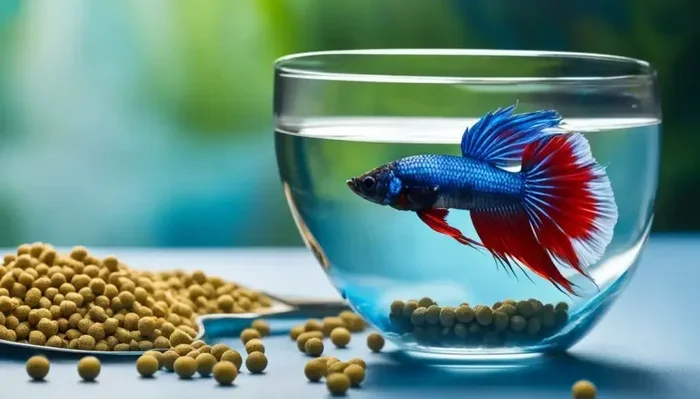
Portion control is just as important as feeding frequency. A good rule of thumb is to offer two to three pellets per feeding for adult bettas. If you use other food types like flakes or frozen brine shrimp, adjust the amount to what fits in your betta’s stomach size.
For young bettas and fry, the portions should be even smaller. They need more frequent meals but tiny amounts each time. Crushed pellets or baby brine shrimp work great for little ones.
Understanding Portion Sizes by Food Type
Different foods require different portion sizes. Here is a simple breakdown:
- Pellets: Two to three small pellets per feeding. Choose high-quality betta pellets with protein as the first ingredient.
- Flakes: A small pinch, roughly the size of your betta’s eye. Flakes expand in water, so less is more.
- Frozen foods (bloodworms, brine shrimp): One to two small cubes per feeding. Thaw before offering.
- Live foods: A few live brine shrimp or daphnia make excellent treats and mimic natural hunting behavior.
If you want more specific guidance on pellet feeding, our article on how many pellets to feed a betta fish covers this topic in detail.
Best Foods for Your Betta Fish
Not all fish food is created equal. Bettas are carnivorous by nature, which means they need a high-protein diet to thrive. Choosing the right food directly impacts your betta’s color, energy, and overall health.
Top Food Options for Bettas
- Betta-specific pellets: These are the foundation of a good betta diet. Look for brands with at least 35% protein content.
- Frozen bloodworms: A favorite treat for most bettas. Use them as a supplement, not a staple food.
- Brine shrimp: Rich in protein and great for stimulating natural hunting behavior.
- Daphnia: A natural laxative that helps with digestion. Good for occasional use.
- Mosquito larvae: Bettas love these in the wild. You can sometimes find them at pet stores or raise them yourself.
Variety keeps mealtime exciting and ensures your betta gets a balanced nutritional profile. For a complete list of food options, check out our guide on what to feed a betta fish.
Foods to Avoid
Some foods seem harmless but can cause serious problems for bettas. Stay away from these:
- Tropical flakes: These lack the protein levels bettas need and fill them up with empty calories.
- Bread or crackers: These expand in the stomach and cause dangerous bloating.
- Human food in general: Most processed foods contain ingredients that are harmful to fish.
- Overfeeding any single food type: Even good food becomes bad in excess. Variety and moderation are key.
Creating a Feeding Schedule That Works
Consistency is the secret to a healthy betta fish. Bettas thrive on routine, and a predictable feeding schedule reduces stress and improves their overall well-being. Here is how to set up a simple, effective routine.
Sample Daily Feeding Schedule
- Morning (8-9 AM): Offer two to three pellets or a small pinch of flakes. This kickstarts your betta’s metabolism for the day.
- Evening (6-7 PM): Repeat the same portion size. Feeding at the same time each evening helps your betta anticipate mealtime and stay active.
Stick to this schedule seven days a week. If you are going on vacation, consider using an automatic fish feeder or asking a friend to feed your betta. Our article on how to feed my betta fish has more tips for feeding while you are away.
Weekly Fasting Day
One important habit to build is a weekly fasting day. Pick one day per week where you do not feed your betta at all. This gives their digestive system a chance to process any remaining food and prevents constipation. Most bettas handle fasting days just fine and may even seem more eager to eat on feeding days afterward.
Common Feeding Mistakes and How to Avoid Them
Even experienced fish keepers make feeding mistakes. Being aware of these common errors helps you avoid them and keep your betta in top shape.
Overfeeding Your Betta
This is the number one mistake betta owners make. It is tempting to give your fish more food because they seem hungry or excited at feeding time. However, bettas will eat almost anything you offer, and their stomach cannot handle large amounts. Overfeeding leads to obesity, swim bladder issues, and poor water quality from uneaten food rotting in the tank.
Quick tip: If you are ever in doubt, feed less rather than more. Your betta will be just fine skipping a tiny portion.
Feeding at Inconsistent Times
Irregular feeding schedules stress bettas out. They are creatures of habit, and unpredictable mealtimes can make them anxious. Set alarms on your phone if you need to, and try to feed at the same times every day.
Ignoring Food Quality
Cheap fish food often contains fillers like cornstarch and wheat flour that offer little nutritional value. Invest in high-quality betta pellets or frozen foods. Your betta will show the difference through brighter colors, more energy, and a stronger immune system.
Not Adjusting for Seasonal Changes
Bettas may eat less during cooler months when their metabolism slows down. If your tank temperature drops below 76 degrees Fahrenheit, consider reducing portion sizes slightly. Conversely, warmer water means a faster metabolism and potentially slightly more food.
Signs Your Betta Is Not Being Fed Correctly
Your betta fish will tell you if something is wrong with their feeding routine. Learning to read these signs helps you adjust quickly and keep your fish healthy.
Signs of Overfeeding
- Bloating: A visibly swollen belly that does not go down after eating.
- Lethargy: Your betta stops swimming and stays at the bottom of the tank.
- Cloudy water: Uneaten food decays and clouds the tank water quickly.
- Loss of appetite: Ironically, overfed bettas sometimes refuse food because their stomach is already full.
Signs of Underfeeding
- Weight loss: Your betta looks thin and its body shape becomes elongated.
- Low energy: Reduced swimming and less interest in their surroundings.
- Dull color: A healthy betta has vibrant colors. Underfed bettas often look pale or faded.
- Aggression: Hunger can make bettas more aggressive toward tank mates or their own reflection.
If you notice any of these signs, adjust your feeding routine gradually. Sudden changes in diet or portion size can also stress your betta, so make adjustments slowly over a week or two.
Expert Tips for Perfect Betta Feeding
Here are some bonus tips from experienced betta keepers that make a real difference:
- Soak pellets before feeding: Dry pellets expand in water and can cause internal blockages. Soak them for a few minutes before offering them to your betta.
- Use a feeding ring: This keeps food in one spot and prevents it from getting sucked into the filter or settling in the substrate.
- Watch your betta during meals: Observing your fish eat helps you spot health problems early. If your betta refuses food for more than two days, investigate the cause.
- Rotate food types weekly: Switching between pellets, frozen foods, and live treats ensures balanced nutrition and keeps your betta interested in eating.
- Clean uneaten food within five minutes: This prevents water contamination and keeps your tank environment healthy.
For more detailed care advice, you may also want to explore our guide on how to feed a betta fish for comprehensive tips and tricks.
Conclusion
Feeding your betta fish the right number of times each day is one of the simplest yet most impactful things you can do for their health. Twice a day for adults and three to four times a day for young bettas is the sweet spot most experts agree on. Combine this with proper portion sizes, high-quality food, and a consistent schedule, and your betta will thrive for years to come.
Remember that every betta is unique. Some may need slightly more food, while others do perfectly well on smaller portions. Watch your fish closely, adjust as needed, and never be afraid to skip a meal if you are unsure. A little attention to your betta fish feeding routine goes a long way toward a happy, colorful, and energetic companion in your aquarium.
Frequently Asked Questions
Can I feed my betta fish once a day instead of twice?
Yes, once a day is acceptable for some adult bettas, especially if you give a slightly larger portion. However, most experts recommend twice a day for optimal nutrition and energy levels. Observe your fish and adjust if needed.
What happens if I overfeed my betta fish?
Overfeeding causes bloating, swim bladder disease, and poor water quality from uneaten food. It can also shorten your betta’s lifespan. Always offer small portions that your fish can finish within two minutes.
Can I feed my betta fish every other day?
Adult bettas can handle occasional every-other-day feeding, but this is not ideal for long-term health. A weekly fasting day is better than skipping regular meals frequently. Stick to a consistent daily routine whenever possible.
How do I know if I am feeding my betta enough?
A well-fed betta has a rounded but not bloated belly, vibrant colors, steady energy levels, and regular eating behavior. If your fish looks thin, lethargic, or loses its color, you may need to increase portions slightly or add variety to its diet.
Is it okay to feed betta fish treats every day?
Treats like bloodworms and brine shrimp should be given in moderation, not daily. They are high in fat and lack complete nutrition. Limit treats to two or three times per week alongside their regular pellet-based meals.
Should I feed my betta right after turning on the tank light?
It is best to wait 15 to 30 minutes after turning on the lights before feeding. Bettas need a few minutes to fully wake up and become active. Feeding too early can result in your betta ignoring the food or eating too quickly.