can you put a betta fish in a community tank successfully
Yes. You can put a betta fish in a community tank, but only when the tank size, water setup, and tank mates all match your betta’s needs. A calm betta may do well with small, peaceful fish, while a bold betta may need a species-only tank. Plan first, add fish slowly, and separate any fish that are hurt or under stress.
Can You Put a Betta Fish in a Community Tank Successfully?
A betta fish can live with other fish, but only when the setup is planned with care. A healthy tank, the right species, and a calm betta all play a part. Even then, success is never fully guaranteed.
Bettas are often called solitary fish. They may defend a space or chase fish with long, flowing fins. Some adjust well to shared water. Others see every new fish as a threat.
This guide explains how to build a safe community aquarium. You will learn which fish work best, what tank size to use, how to add new fish, and when to separate them.
Key Takeaways
- A betta can share a tank: Many Bettas do well with calm fish, but each betta has its own temperament.
- Size matters: A 10-gallon tank is a safer starting point for a small community setup.
- Pick tank mates by adult size: Choose small, peaceful fish that need the same water temperature and flow.
- Use plenty of cover: Plants, caves, and floating decor can lower stress and block line of sight.
- Add fish slowly: Quarantine new fish and add only one group at a time.
- Watch for danger signs: Torn fins, constant hiding, lost color, or refusal to eat may mean the betta needs to be moved.
- Never house two male Bettas together: This can lead to serious fights and even death.
📑 Table of Contents
Can You Put a Betta Fish in a Community Tank? The Honest Answer
Yes, you can put a betta fish in a community tank when the fish and setup are a good match. A betta should not be your first choice for every aquarium. It needs space, warmth, cover, and calm water.
The best candidates are Bettas that eat well, move around often, and react only with brief fin flares when they see new fish. A betta that hides all day or attacks the glass may not cope well with tank mates.
Expert insight: temperament beats the label
Two Bettas of the same type may act very differently. One may ignore small fish. Another may chase them nonstop. Use your fish’s behavior, not its name, as the final guide.
A shared tank is a better fit when:
- The tank is fully cycled and stable.
- You can keep the water warm enough for all the fish.
- The filter creates only a gentle current.
- There are plants and hiding spots.
- You can watch the fish for several days after each change.
A species-only tank is better when your betta is very bold, injured, sick, or under stress. A calm home is more important than filling every part of the tank.
Quick tips for a safer betta community tank
- Start with a larger tank, not a bowl.
- Choose small fish that stay away from the surface.
- Use a filter with a sponge to soften the flow.
- Add plenty of plants and hiding places.
- Keep a cover on the tank because Bettas can jump.
Pick Betta Tank Mates That Are Actually Safe
Good betta tank mates should be peaceful, active in a different tank area, and close in size. The best fish usually stay in the middle or lower part of the tank. This gives your betta more control of the open surface area.
| Tank Mate | Best Group Size | Fit With a Betta | Why It Works |
|---|---|---|---|
| Corydoras catfish | 6 or more | Excellent | They stay on the bottom and are usually calm. |
| Harlequin rasboras | 8 or more | Good | They are small, peaceful, and active in mid-water. |
| Cherry shrimp | 6 or more | Optional | Some survive, but many Bettas will hunt them. |
| Ember tetras | 8 or more | Possible | Their small size and calm nature may suit a large tank. |
| Malayan trumpet snails | 1 or more | Good | They clean leftover food from the substrate. |
Good fish for many community setups
Corydoras catfish are often a top choice. Keep at least six so they can form a group. They need a smooth tank floor, not sharp gravel.
Harlequin rasboras can work well in a planted tank. They need a proper school, so avoid buying only three or four. A group of eight or more looks calmer and reduces stress.
Cherry shrimp can add life to the tank. Still, treat them as extra fish, not guaranteed tank mates. A hungry betta may spend much of its day hunting shrimp.
Other possible choices include tiny loaches, nerite snails, and some small tetras. Always check adult size, water needs, and behavior before buying.
Fish to avoid
- Another male betta
- Gouramis, which can look and act much like Bettas
- Goldfish, which need cooler water and make more waste
- Aggressive cichlids
- Fast fin nippers
- Fancy guppies with long fins
- Fish that grow much larger than your betta
Never use a female betta as a easy way to create a community tank. Keeping a male and female together can lead to serious fights. Even two females need a large, well-planned tank and close watching.
Before adding any fish, review our guidelines for adding other fish to a betta tank.
Example: a safer 20-gallon setup
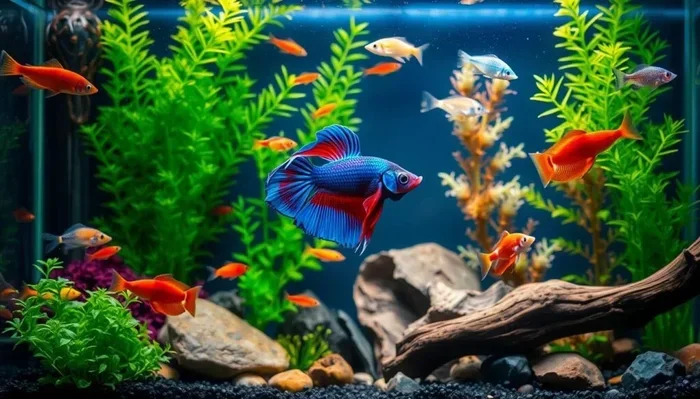
One possible setup is a 20-gallon long tank with six corydoras, eight harlequin rasboras, one betta, and two snails. Add plants, driftwood, and smooth rocks. This gives fish room to use different areas.
This does not mean every betta will accept the plan. It only gives you a better starting point. If your betta shows constant stress, reduce the stocking.
Build the Right Tank Size, Water, and Layout
Tank size is one of the biggest keys to success. A small bowl has little room for change. Waste can build fast, and the water may cool or heat too quickly. Bettas do best in a warm, stable, filtered tank.
A 5-gallon tank may suit one betta, but it leaves little room for other fish. A 10-gallon tank is a safer start for a small community. A 20-gallon long tank gives you more control and more peaceful swimming space.
For more detail, see this guide to a larger betta tank.
Use a fully cycled aquarium
A cycled aquarium has helpful bacteria that turn toxic waste into less harmful matter. Test the water before adding fish. Ammonia and nitrite must read zero. Nitrate should stay low, ideally below 20 parts per million.
Keep the water temperature near 78 to 80 degrees Fahrenheit. A gentle heater and thermometer help. Check the pH, but do not try to change it fast. Sudden shifts can cause more harm than a stable value.
Choose a gentle filter
Bettas do not need strong currents. A sponge filter is a safe choice for many setups. It filters the water and gives a soft flow. Place the outlet near the surface or use a pre-filter sponge to slow the stream.
Read more about a suitable betta filter before you buy one. The best filter keeps water clean without making your betta swim against a hard stream.
Create calm hiding places
Use live or silk plants rather than sharp plastic decor. Add caves, arches, and floating plants. These items break the view and give each fish a place to rest.
Leave some open swimming space. Do not fill the whole tank with decor. Bettas need room to stretch their fins and rise to the surface to breathe air.
Keep a lid in place. Bettas are known jumpers, especially when startled. Also, leave a small air gap above the water so the betta can reach the surface easily.
Do weekly water care
Test the water each week. Then do a 20% to 30% water change. Use a dechlorinator for tap water. Wipe the inside glass when needed and siphon waste from the bottom.
Do not clean every item at once. This can remove helpful bacteria. Rinse filter parts in old tank water, not fresh tap water.
Add New Fish Slowly and Watch Closely
Even safe fish can cause stress at first. The way you add them matters. Rushing this step is one of the most common causes of trouble in a betta community tank.
Quarantine before mixing fish
Keep new fish in a separate tank for two to four weeks. This helps you spot illness before it reaches your betta. It also lets you check feeding and behavior in a calm setting.
Do not add a fish just because it looks healthy at the store. Stress during travel can make illness appear days later.
Add tank mates in small groups
Start with hardy bottom dwellers or shrimp. Wait one to two weeks before adding more fish. If you add schooling fish, add the full school at once. A few fish alone may feel unsafe.
Add new fish in the evening. Turn off the lights after they settle. The dim light can lower stress and make the tank feel like a new place.
What to watch during the first days
- Does the betta eat normal amounts?
- Is it hiding all day?
- Is it chasing one fish in particular?
- Are the smaller fish staying together?
- Does anyone have torn fins or pale color?
- Is the betta flaring only for a few seconds?
A short flare is not always an attack. Bettas may flare at their reflection, in response to another fish, or when entering a new area. The problem is constant chasing, pinned fins, frantic swimming, or injury.
A simple add-on schedule
- Prepare and cycle the tank.
- Add the betta if it is not already settled.
- Add one shrimp or snail group.
- Wait one to two weeks.
- Add a full school of small fish.
- Watch the betta’s daily behavior.
- Wait several more weeks before adding anything else.
This slower plan gives you time to spot a problem early. It also helps each fish learn the new setup without too much change at once.
What Aggression and Stress Look Like
Not every chase means you must separate the fish at once. A brief chase may fade as the group finds its order. Ongoing pressure can still cause harm, so learn the warning signs.
Signs your betta may be too aggressive
- Chasing one fish again and again
- Cornering a smaller fish
- Constant flaring at the glass
- Jumping out of the water
- Attacking a reflection or bright fish
- Biting long fins
Betta aggression often focuses on bright color, fast movement, or long fins. A fish that stays near the bottom may be safer than one that swims across the betta’s space.
Signs your betta is under stress
A stressed betta may hide for long periods, lose color, refuse food, or press itself against the glass. Torn fins, clamped fins, and rapid breathing also matter. Illness, bad water, cold water, or bullying can all cause these signs.
Test the water before assuming the betta is simply mean. Poor water quality can make any fish irritable.
What to do when fish cannot get along
Separate the fish before serious injury occurs. Move the betta or the other fish to a clean, cycled hospital tank. Keep the water warm and provide a small hiding place.
Do not punish a betta by tapping the glass. This adds fear and can make behavior worse. Choose a species-only tank if your betta cannot share safely.
Common mistakes to avoid
- Using a bowl or tiny tank
- Adding too many fish at once
- Choosing fish with long fins
- Using a strong filter current
- Failing to quarantine new fish
- Buying schooling fish in too small a group
- Assuming a female betta will always be calmer
- Keeping a betta with another male
Final Checklist and Conclusion
Can you put a betta fish in a community tank successfully? The answer is yes for some Bettas, but only with the right plan. Start with a stable, warm, filtered tank. Give the fish plenty of cover and choose peaceful tank mates carefully.
Your final betta community tank checklist
- Tank size: Use at least 10 gallons for a small group, with 20 gallons giving more room.
- Water: Keep ammonia and nitrite at zero. Test weekly and change part of the water.
- Temperature: Keep the water near 78 to 80 degrees Fahrenheit.
- Flow: Use a gentle sponge filter and avoid strong currents.
- Tank mates: Choose small, peaceful fish from different tank levels.
- Decor: Add plants, caves, and open swimming space.
- Add-on plan: Quarantine fish and add them slowly.
- Emergency plan: Have a hospital tank ready if fights or injury occur.
Your betta’s safety comes first. A shared tank can be beautiful and lively when every fish fits. If your betta does not cope, a calm species-only tank is still a happy home.
Take time to learn your betta’s mood. Add only what the tank can support. With a stable setup and careful watching, you can give your betta a safe place to live with the right community tank mates.
Frequently Asked Questions
Can a betta fish live with other fish?
Yes, many Bettas can live with small, peaceful fish. Success depends on the betta’s mood, the tank size, and the other fish’s behavior. Some Bettas need a species-only tank.
What are the best betta tank mates?
Good choices often include corydoras catfish, harlequin rasboras, nerite snails, and cherry shrimp. Always buy schooling fish in proper numbers and check their adult size first.
How big should a betta community tank be?
A 10-gallon tank is a safer start for a small community. A 20-gallon long tank gives more space and helps keep water conditions stable. Tiny bowls are not a good option.
Can you keep two male Bettas in one community tank?
No. Two male Bettas should never share a tank. They may fight until one fish is badly injured or killed. A female may also cause trouble, so do not mix Bettas without expert care and a very large tank.
Why does my betta chase the other fish?
Your betta may see the fish as a threat, especially if it is bright, fast, or has long fins. Stress, poor water, or too little hiding space can also cause chasing.
How long should you watch after adding new fish?
Watch closely for the first 48 hours, then check daily for at least one to two weeks. Separate any fish that is injured, badly stressed, or unable to feed.