Can I Feed My Betta Fish Goldfish Flakes
Can you feed your betta fish goldfish flakes? Technically, yes — but you really shouldn’t make it a habit. Goldfish flakes lack the high protein content bettas need and contain too many carbohydrates. Feeding goldfish flakes regularly can lead to malnutrition, bloating, and a shorter lifespan for your betta. Stick with betta-specific pellets, frozen foods, and live treats for a happy, healthy fish.
Key Takeaways
- Goldfish flakes are not toxic to bettas — your betta can physically eat them without immediate harm, but they are not nutritionally appropriate.
- Bettas are carnivores requiring 40-60% protein in their diet, while goldfish flakes are formulated for omnivorous fish with much lower protein needs.
- Goldfish flakes contain excessive carbohydrates that bettas cannot properly digest, leading to bloating, constipation, and swim bladder issues.
- Emergency feeding is acceptable short-term — if you run out of betta food, goldfish flakes for one or two meals won’t cause lasting damage.
- Betta-specific pellets should be the dietary staple, supplemented with frozen or live foods like bloodworms and brine shrimp.
- Poor nutrition shows in your betta’s appearance — faded colors, lethargy, and fin deterioration can all signal an inadequate diet.
- Proper feeding amounts matter as much as food type — overfeeding with any food, including goldfish flakes, causes water quality problems and health issues.
📑 Table of Contents
- Can I Feed My Betta Fish Goldfish Flakes? The Honest Answer
- Understanding Your Betta Fish’s Natural Diet
- What’s Actually in Goldfish Flakes vs. Betta Food?
- What Happens If You Feed Goldfish Flakes to Your Betta?
- What Should You Feed Your Betta Instead?
- Emergency Situations: What to Do When You’re Out of Betta Food
- Signs Your Betta’s Diet Needs Improvement
- Common Myths About Feeding Bettas
- Creating the Perfect Feeding Routine
- Conclusion: Goldfish Flakes Are Not the Answer
Can I Feed My Betta Fish Goldfish Flakes? The Honest Answer
So you’ve just brought home a gorgeous betta fish, set up the tank, and then — panic. You open the cupboard and realize you’re out of betta food. But wait, there’s a container of goldfish flakes sitting right there. Your betta is staring at you with those big, curious eyes. You’re wondering, “Can I feed my betta fish goldfish flakes just this once?”
It’s one of the most common questions new betta owners ask, and honestly, it’s a fair one. After all, they’re both fish. They both eat flakes. How different can it be? The answer is more nuanced than a simple yes or no. Let’s break it all down so you can make the best decision for your finned friend.
In this article, we’ll explore exactly what happens when you feed goldfish flakes to a betta, why the nutritional needs of these two fish are so different, what you should feed instead, and what to do in an emergency when betta food isn’t available. By the end, you’ll have everything you need to keep your betta thriving.
Understanding Your Betta Fish’s Natural Diet
Bettas Are Carnivores — Not Omnivores
Here’s the thing most people don’t realize: betta fish are carnivorous insectivores. In the wild, bettas live in the shallow rice paddies, ponds, and slow-moving streams of Southeast Asia. Their natural diet consists almost entirely of insect larvae, small insects, zooplankton, and tiny crustaceans. They are predators by nature, designed to hunt and consume protein-rich prey.
This is fundamentally different from goldfish, which are omnivores. Goldfish eat a mix of plant matter, algae, small invertebrates, and detritus. Their digestive systems are built to process a wide variety of foods, including significant amounts of carbohydrates from plant material. Bettas simply aren’t built the same way.
What This Means for Feeding
Because bettas are carnivores, their digestive systems are short and efficient at breaking down protein. They lack the enzymes needed to properly process large amounts of plant-based carbohydrates. When you feed a betta food designed for an omnivore like a goldfish, you’re essentially giving it something its body wasn’t designed to handle.
Think of it this way: you could feed a cat dog food for a day or two, and it would probably be fine. But if you made dog food the cat’s permanent diet, you’d start seeing health problems pretty quickly. The same principle applies to bettas and goldfish flakes.
What’s Actually in Goldfish Flakes vs. Betta Food?
The Protein Problem
The biggest difference between goldfish flakes and betta-specific food comes down to protein content. Betta fish need a diet that’s roughly 40-60% protein to stay healthy, maintain their vibrant colors, and keep their fins in good condition. Quality betta pellets and flakes are formulated with this requirement in mind, using ingredients like fish meal, shrimp meal, and other animal-based proteins.
Goldfish flakes, on the other hand, typically contain only 25-35% protein. That’s a significant gap. When your betta doesn’t get enough protein, you’ll notice the effects over time: dull coloration, fin deterioration, muscle wasting, and a weakened immune system. Your betta might look fine at first, but chronic protein deficiency takes a real toll.
The Carbohydrate Overload
Goldfish flakes contain a much higher percentage of carbohydrates and plant-based fillers than betta food. Ingredients like wheat flour, soy meal, and spirulina are common in goldfish formulas because goldfish can digest these ingredients efficiently. Bettas? Not so much.
When bettas consume too many carbohydrates, several problems can arise:
- Bloating and constipation — excess carbs are difficult for bettas to process, leading to digestive discomfort
- Swim bladder disorder — a serious condition where the fish loses the ability to control its buoyancy
- Fatty liver disease — over time, the liver struggles to process the excess carbohydrates
- Poor water quality — undigested food breaks down in the tank, spiking ammonia levels
Vitamin and Mineral Differences
Beyond protein and carbs, goldfish flakes and betta food differ in their vitamin and mineral profiles. Betta-specific foods are fortified with nutrients that support color vibrancy, fin health, and immune function. Goldfish formulas prioritize nutrients that support the growth patterns and health needs of omnivorous coldwater fish. These aren’t interchangeable.
For example, betta foods often contain color-enhancing ingredients like astaxanthin and spirulina in small, appropriate amounts. Goldfish flakes may contain these too, but in ratios designed for a completely different species with different metabolic needs.
What Happens If You Feed Goldfish Flakes to Your Betta?
Short-Term Effects (One to Two Feedings)
Let’s be clear: if you feed your betta goldfish flakes once or twice in an emergency, your fish will almost certainly be fine. A single meal of goldfish flakes won’t cause immediate harm. Your betta might even eat them enthusiastically — bettas aren’t known for being picky eaters.
However, you might notice that your betta has a harder time digesting the flakes. Some bettas will experience mild bloating or constipation after eating goldfish flakes, even just once. Keep an eye on your fish and consider fasting for a day if you notice any digestive issues.
Long-Term Effects (Regular Feeding)
If goldfish flakes become a regular part of your betta’s diet, the consequences can be serious. Here’s what long-term feeding of inappropriate food looks like:
- Faded colors — that brilliant red or blue will start looking washed out and dull
- Lethargy — your betta will become less active and spend more time resting at the bottom or near the surface
- Fin deterioration — fins may become ragged, clamped, or show signs of rot due to a weakened immune system
- Digestive problems — chronic constipation, bloating, and swim bladder issues become more frequent
- Shortened lifespan — a betta fed improperly may live only 1-2 years instead of the 3-5 years it should
- Increased susceptibility to disease — poor nutrition weakens the immune system, making your betta vulnerable to ich, fin rot, and fungal infections
If you want to learn more about how diet affects your betta’s overall wellbeing, check out our guide on how to tell if your betta fish is happy. Nutrition plays a huge role in your betta’s happiness and health.
What Should You Feed Your Betta Instead?
High-Quality Betta Pellets: The Foundation
The cornerstone of a good betta diet should be high-quality betta-specific pellets. Look for pellets where the first ingredients are animal-based proteins — things like whole fish meal, shrimp meal, or salmon meal. Avoid pellets where the main ingredients are wheat, corn, or soy.
Good betta pellet brands typically contain:
- 40-55% crude protein
- 3-8% crude fat
- 2-5% crude fiber
- Added vitamins and minerals
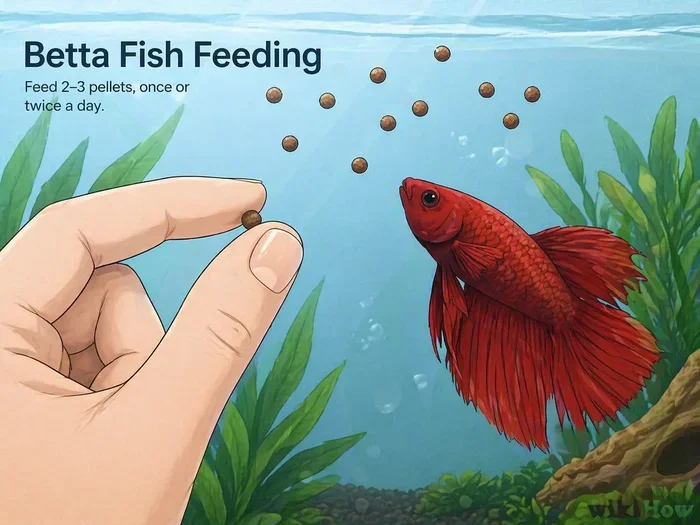
Feed your betta 2-3 pellets, once or twice a day. A betta’s stomach is roughly the size of its eye, so it doesn’t take much food to keep it satisfied. For more details on proper portions, read our article on how much you should feed your betta fish.
Frozen and Live Foods: The Perfect Supplements
To really make your betta thrive, supplement those pellets with frozen or live foods. These mimic what bettas eat in the wild and provide essential nutrients that processed foods can’t fully replicate.
Excellent options include:
- Bloodworms — a betta favorite, high in protein (feed 2-3 times a week as a treat)
- Brine shrimp — great for digestion and packed with nutrients
- Daphnia — acts as a natural laxative, helping prevent constipation
- Mysis shrimp — highly nutritious and easy to find frozen
These foods can be fed 2-3 times per week in place of a regular pellet feeding. Your betta will go absolutely crazy for them, and the nutritional boost is incredible.
Freeze-Dried Foods: A Convenient Alternative
If live or frozen foods aren’t practical for you, freeze-dried foods are a decent alternative. Just make sure to soak them in tank water for a few minutes before feeding. Freeze-dried foods can expand in your betta’s stomach and cause bloating if fed dry.
Emergency Situations: What to Do When You’re Out of Betta Food
Acceptable Short-Term Substitutes
Life happens. Sometimes you run out of betta food at the worst possible time. If you find yourself in this situation, here are some better alternatives than goldfish flakes:
- Uncooked, de-shelled peas — a small piece can actually help with digestion (though this is more of a remedy than a meal)
- Small pieces of raw shrimp — from the grocery store, unseasoned and finely chopped
- Tropical fish flakes — while not ideal, these generally have a higher protein content than goldfish flakes and are a better temporary option
- Freeze-dried bloodworms or brine shrimp — if you have any in the cupboard
If you absolutely must use goldfish flakes, limit it to one or two feedings maximum and get proper betta food as soon as possible. Crush the flakes into very small pieces since bettas have small mouths and prefer food they can easily consume.
Planning Ahead
The best strategy is to never run out of food in the first place. Keep a small backup container of betta pellets, or stock up on freeze-dried treats that have a long shelf life. A healthy diet is one of the simplest and most impactful things you can do for your betta’s longevity.
Signs Your Betta’s Diet Needs Improvement
Physical Warning Signs
Your betta’s appearance tells you a lot about its nutritional status. Watch for these signs that something is off:
- Pale or faded coloration — healthy bettas are vibrant and colorful
- Clamped fins — fins held tight against the body instead of flowing freely
- Thin or emaciated body — a sign of protein deficiency
- Bloating or swollen belly — could indicate constipation or digestive issues
- Torn or deteriorating fins — poor nutrition weakens tissue repair
Behavioral Warning Signs
Changes in behavior can also signal dietary problems:
- Loss of appetite — refusing food or spitting it out
- Excessive hiding — spending most of the time in one spot, not exploring
- Lethargy — lying at the bottom or floating listlessly
- Difficulty swimming — struggling to maintain position in the water
If you notice any of these signs, it’s time to evaluate what you’re feeding. For a deeper dive into health concerns, our article on how to tell if your betta fish is sick covers symptoms and solutions in detail.
Common Myths About Feeding Bettas
Myth: “Fish Food Is Fish Food”
This is probably the most dangerous myth in the fish-keeping hobby. Different fish species have vastly different nutritional requirements. What keeps a goldfish healthy can slowly starve a betta of the nutrients it needs. Always feed species-specific food whenever possible.
Myth: “Bettas Can Survive on Plant-Based Diets”
Some people believe bettas can live on algae wafers or vegetable-based foods. This is completely false. Bettas are obligate carnivores — they need animal protein to survive. A plant-based diet will lead to severe malnutrition and an early death.
Myth: “More Food Equals a Happier Fish”
Overfeeding is one of the most common mistakes betta owners make. Bettas will eat as much as you give them, but that doesn’t mean they should. Overfeeding leads to obesity, constipation, poor water quality, and ammonia spikes that can be deadly. Stick to small, measured portions.
Creating the Perfect Feeding Routine
A Sample Weekly Schedule
Here’s what an ideal betta feeding schedule might look like:
- Monday: Betta pellets (2-3 pellets, once in the morning)
- Tuesday: Frozen bloodworms (2-3 worms, thawed)
- Wednesday: Betta pellets
- Thursday: Frozen brine shrimp (small pinch, thawed)
- Friday: Betta pellets
- Saturday: Frozen daphnia or bloodworms
- Sunday: Fasting day (no food — this helps prevent constipation and gives the digestive system a break)
This variety ensures your betta gets a balanced mix of proteins, vitamins, and fiber. The weekly fasting day is especially important for preventing the digestive issues that bettas are prone to.
Tips for Successful Feeding
Keep these practical tips in mind:
- Remove uneaten food after 5 minutes — leftover food decays and pollutes the water
- Soak dry pellets for a few seconds — this prevents them from expanding in your betta’s stomach
- Feed at the same time each day — bettas are creatures of habit and will learn when to expect food
- Observe your betta while eating — this helps you catch any health issues early
- Store food properly — keep it in a cool, dry place and replace it every 3-6 months for maximum freshness
Conclusion: Goldfish Flakes Are Not the Answer
So, can you feed your betta fish goldfish flakes? The short answer is that while it won’t cause immediate harm in a one-off emergency, goldfish flakes should never be a regular part of your betta’s diet. The nutritional mismatch is simply too significant. Your betta needs high-quality, protein-rich food designed specifically for carnivorous tropical fish.
Investing in proper betta pellets, supplementing with frozen or live foods, and maintaining a consistent feeding routine will reward you with a vibrant, active, and long-lived betta. These beautiful fish deserve the best care we can provide, and nutrition is one of the most important pieces of that puzzle.
The next time you’re tempted to reach for that container of goldfish flakes, remember: your betta is a carnivore with specific needs. Give it the right food, and it will reward you with stunning colors, flowing fins, and a personality that makes bettas one of the most beloved pet fish in the world.
Frequently Asked Questions
Can betta fish eat goldfish flakes without getting sick?
Bettas can eat goldfish flakes once or twice without immediate harm, but regular feeding will lead to nutritional deficiencies and health problems over time. Goldfish flakes lack the high protein content bettas require and contain too many carbohydrates for their digestive systems to handle properly.
What happens if I accidentally fed my betta goldfish flakes?
If you accidentally fed your betta goldfish flakes once, don’t panic. Your fish will likely be fine. Just return to feeding proper betta food at the next meal and monitor for any signs of bloating or constipation. One meal won’t cause lasting damage.
Are tropical flakes better than goldfish flakes for bettas?
Tropical flakes are a somewhat better emergency option than goldfish flakes because they typically contain slightly more protein. However, they still aren’t formulated for bettas specifically. For the best health outcomes, stick with betta-specific pellets as your primary food source.
How often should I feed my betta fish?
Most bettas do well with one or two feedings per day, with one fasting day per week to aid digestion. Each feeding should be a small amount — typically 2-3 pellets or the equivalent in frozen food. Overfeeding is a common and serious mistake.
What is the best food for betta fish?
The best diet for bettas combines high-quality betta pellets as a staple with regular supplements of frozen or live foods like bloodworms, brine shrimp, and daphnia. Look for pellets with at least 40% protein and animal-based ingredients listed first.
Can I feed my betta fish only flakes?
While betta-specific flakes can be part of a healthy diet, they shouldn’t be the only food you offer. Flakes alone may not provide enough nutritional variety. A mix of high-quality pellets, frozen foods, and occasional live treats will keep your betta in the best possible health.