Yes, betta fish can physically sleep with the light on, but it is strongly discouraged for their health and well-being. In their natural habitat, betta fish rely on light cycles to regulate their internal clocks. Constant light causes stress, weakens their immune system, and disrupts their natural rest. This guide will explain exactly how bettas sleep, why darkness matters, and how to set up the perfect lighting schedule for your vibrant friend.
Key Takeaways
- Bettas Prefer Darkness: Betta fish are diurnal, meaning they are active in daylight and require periods of darkness to enter a proper, restful sleep state.
- Light Disrupts Sleep Cycles: Keeping the light on 24/7 disrupts their circadian rhythm, leading to chronic stress, which can cause health issues like fin rot.
- Natural Habitat Clues: In the wild, bettas live in shallow, vegetated waters in Southeast Asia that experience distinct day and night cycles, even if the water is murky.
- Ideal Lighting Schedule: Aim for 8-12 hours of light and 12-14 hours of darkness daily to mimic their natural environment and promote healthy behavior.
- Signs of Sleep Deprivation: A betta not getting enough quality rest may show dull colors, lethargy, increased aggression, or clamped fins.
- Practical Solutions: Use an automatic timer for your aquarium light, position the tank to get natural daytime light (but avoid direct sun), and turn lights off at bedtime.
- Sleep vs. Rest: Bettas don’t have eyelids, so they sleep while hovering or resting on surfaces. True sleep involves reduced awareness and muscle activity.
📑 Table of Contents
- Understanding Betta Fish Sleep: More Than Just Closing Their Eyes
- How Do Betta Fish Actually Sleep?
- Why Darkness is Crucial for Your Betta’s Health
- Recreating the Natural Habitat: Light in the Wild
- Setting Up the Perfect Lighting Schedule
- Signs Your Betta Isn’t Getting Proper Rest
- Common Lighting Mistakes and How to Avoid Them
- Creating an Ideal Sleep Environment Beyond Light
- Do Betta Fish Need a Night Light or Moonlight?
- What About Other Fish in the Community Tank?
- Conclusion: Embrace the Night for a Healthier Betta
Understanding Betta Fish Sleep: More Than Just Closing Their Eyes
Have you ever watched your betta fish hovering motionless near the bottom of the tank, or perhaps nestled delicately on a leaf, and wondered if it is sleeping? As a betta owner, observing these quiet moments is common. But a question that often puzzles both new and experienced aquarists is: can betta fish sleep with the light on? The answer is not a simple yes or no, because it involves understanding their biology, their natural environment, and what “sleep” really means for a fish.
Unlike humans, betta fish do not have eyelids. You will never see them close their eyes to block out the world. This fact alone makes their sleep patterns fascinating and sometimes confusing to us. They live in a state of constant visual awareness, yet their bodies still require periods of deep rest to function properly. Think of it like a human trying to sleep in a brightly lit room; it is possible, but the quality of that rest is severely compromised. For your betta, the presence of light is not just a minor inconvenience—it is a fundamental signal that dictates their entire daily rhythm.
In this comprehensive guide, we will dive deep into the world of betta fish sleep. We will explore how they rest, why darkness is so crucial for their health, and the practical steps you can take to ensure your aquatic companion gets the best possible sleep. A well-rested betta is a vibrant, active, and healthy fish. By understanding and respecting their need for a natural light cycle, you are not just keeping a pet; you are providing a habitat that allows them to thrive. Let us unravel the mystery and learn how to create the perfect environment for your betta’s slumber.
How Do Betta Fish Actually Sleep?
Visual guide about Can Betta Fish Sleep with the Light On
Image source: bettafish.org
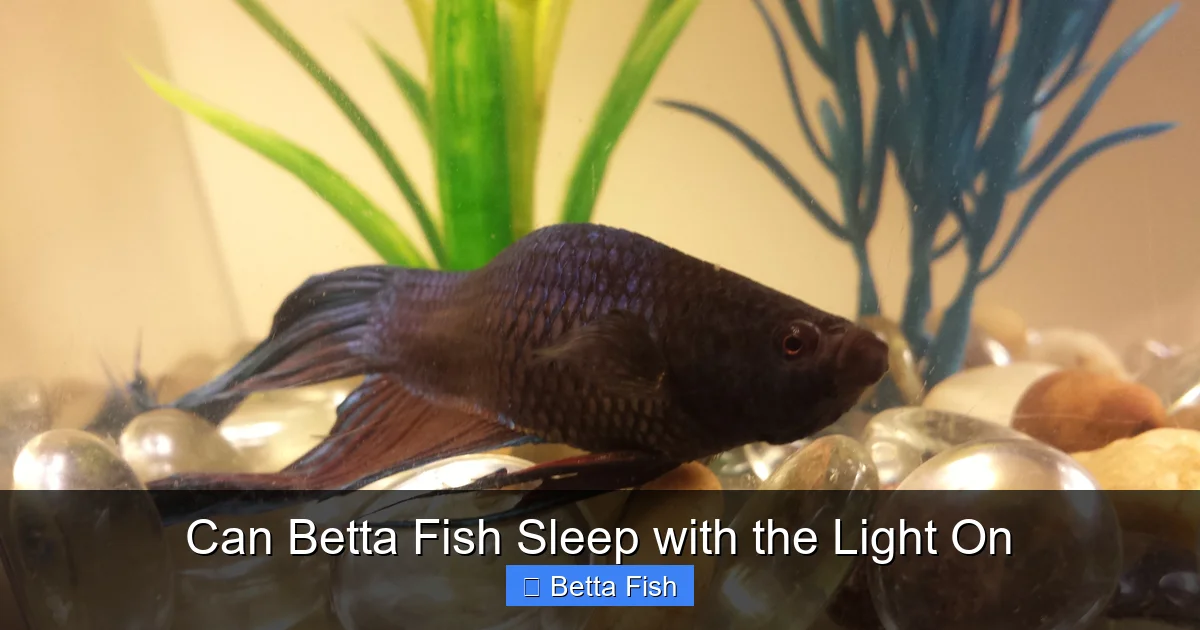
To understand the impact of light, we first need to understand the mechanics of betta fish sleep. Since they lack eyelids, their version of sleep is quite different from ours. It is more accurately described as a state of rest or reduced activity where their metabolism slows down, and they become less responsive to their surroundings. You might find them sleeping in some rather amusing positions, which is a normal and healthy behavior.
Common Sleeping Positions and Behaviors
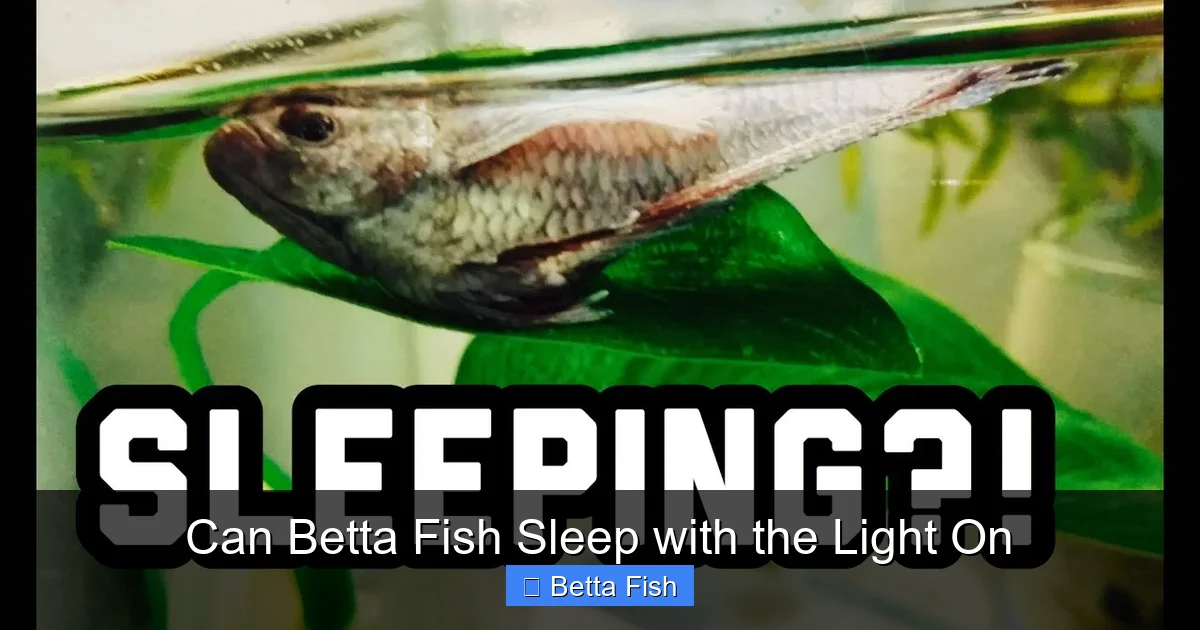
Betta fish are famous for their quirky sleeping habits. Do not be alarmed if you see your betta resting on the tank bottom, seemingly lifeless. This is perfectly normal. They often settle on the substrate, their fins splayed out, taking a break from constant swimming. Another favorite spot is resting on a broad leaf of a plant, either real or silk. Many betta owners provide a “betta hammock” or a broad-leafed plant near the surface for this exact purpose. You might also see them hovering in a corner, tucked behind a filter output, or even floating vertically with their head up. These positions allow them to conserve energy while feeling secure.
The Science of Fish Sleep: Rest vs. True Sleep
Scientists differentiate between quiet rest and true sleep in fish. During true sleep, the fish enters a state of unconsciousness where it is harder to arouse them. Bettas experience this, but because they are prey animals in the wild, their sleep is often light and punctuated by periods of wakefulness. Their natural instinct is to remain vigilant for danger. This is why providing hiding spots is so important; a betta that feels exposed will struggle to enter a deep sleep state. If you notice your betta is always hiding and never seems to rest, it might be a sign of stress from too much light or an exposed environment.
Why Darkness is Crucial for Your Betta’s Health
Visual guide about Can Betta Fish Sleep with the Light On
Image source: fishtanko.com
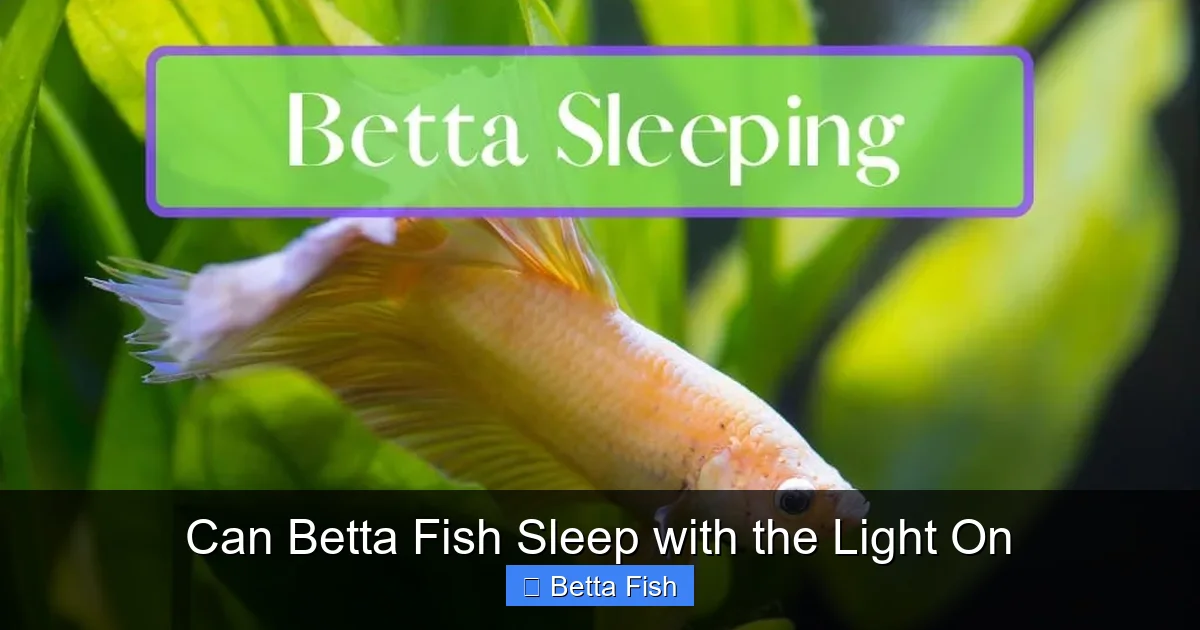
Now, let’s address the core question: can betta fish sleep with the light on? While they might enter a state of rest, keeping the aquarium light on continuously is detrimental to their health. Darkness is not just a preference for bettas; it is a biological necessity. It triggers hormonal cycles, supports immune function, and allows for cellular repair. Without a proper dark period, you are essentially subjecting your fish to a constant state of low-level stress.
Disruption of the Circadian Rhythm
Like humans, betta fish have an internal biological clock known as the circadian rhythm. This rhythm is synchronized primarily by light and dark cycles. When the light is on, their bodies are programmed to be active, hunt for food, and patrol their territory. When darkness falls, their bodies slow down, recognizing it is time to rest and recover. Constant light completely scrambles this internal clock. Imagine trying to live under permanent noon sunlight; your body would never know when to shut down. For your betta, this confusion leads to a weakened immune system, making them more susceptible to diseases like ich or fin rot.
Stress and Its Physical Manifestations
Chronic stress is a silent killer in aquarium fish. A betta that cannot experience true darkness will remain in a perpetual “fight or flight” mode. This constant state of alertness floods their system with stress hormones like cortisol. Over time, this has visible consequences. You might notice your betta’s vibrant colors becoming dull and pale. They may become lethargic, losing interest in food, or conversely, become hyper-aggressive. Physical signs include clamped fins (fins held tight against the body) and a general failure to thrive. Providing a consistent dark period is one of the simplest and most effective ways to prevent this stress cascade.
Recreating the Natural Habitat: Light in the Wild
To truly care for a betta fish, we must look to their origins. Wild bettas, the ancestors of our domestic pets, inhabit shallow, slow-moving waters in Southeast Asia. Think rice paddies, marshes, and floodplains in countries like Thailand and Cambodia. These waters are often tannin-stained, murky, and filled with dense plant life. While sunlight does penetrate, it is dappled and filtered through overhanging vegetation. Crucially, these environments experience a consistent and predictable 12-hour cycle of light and 12-hour cycle of darkness year-round near the equator.
What This Means for Your Home Aquarium
Your betta’s genetics are still wired for this natural cycle. They expect a period of light followed by a period of profound darkness. Simply turning the room light on and off is not enough, as the aquarium light is the primary source of illumination in their enclosed world. The goal is to mimic the stability of their natural environment. This consistency helps regulate their behavior, feeding response, and reproductive cycles. A tank with erratic lighting—sometimes on for 2 hours, sometimes for 14—is far more stressful than one with a simple, predictable schedule.
Setting Up the Perfect Lighting Schedule
Visual guide about Can Betta Fish Sleep with the Light On
Image source: i.ytimg.com
So, what is the ideal lighting setup for your betta tank? The good news is that it is simple and inexpensive to achieve. The key is consistency. You want to provide a clear distinction between day and night, allowing your betta’s internal clock to function optimally.
The Ideal Photoperiod: Hours of Light vs. Dark
The recommended photoperiod for a betta fish tank is 8 to 12 hours of light followed by 12 to 14 hours of darkness. This range perfectly mimics the tropical conditions of their homeland. A 10-hour light and 14-hour dark cycle is an excellent, balanced target. It provides ample time for your betta to be active and for you to observe them, while ensuring they get a long, uninterrupted rest period. Remember, the darkness must be complete; even a small nightlight in the room can be disruptive if it shines directly into the tank.
Using Timers for Consistency
The single best investment you can make for your betta’s sleep health is an inexpensive plug-in mechanical timer. You can find these at any hardware store. Plug your aquarium light into the timer, set it to turn on at a convenient morning time (e.g., 8 AM) and off at night (e.g., 10 PM), and you are done. This removes human error from the equation. You might forget to turn off the light before bed, but the timer never will. This simple device ensures your betta gets a perfect light cycle every single day, even when you are away on vacation. It is a small step that makes a monumental difference in their quality of life.
Signs Your Betta Isn’t Getting Proper Rest

Visual guide about Can Betta Fish Sleep with the Light On
Image source: fishlab.com
How can you tell if your lighting schedule is affecting your betta’s sleep? Your fish will communicate its distress through subtle and not-so-subtle behavioral and physical changes. Being a good observer is a key part of responsible fish keeping. If you notice any of the following signs, your first point of investigation should be the light cycle.
Behavioral Changes to Watch For
A sleep-deprived betta will often act strangely. You might see increased aggression, even for a typically feisty male betta. They may become hyperactive at all hours, never settling down, or conversely, become listless and unresponsive. Another common sign is “glass surfing,” where the fish swims repeatedly up and down the tank sides, often a sign of stress. A healthy betta with a good sleep schedule will have periods of activity and periods of calm rest. If your fish never seems to rest, it is a red flag.
Physical Symptoms of Stress
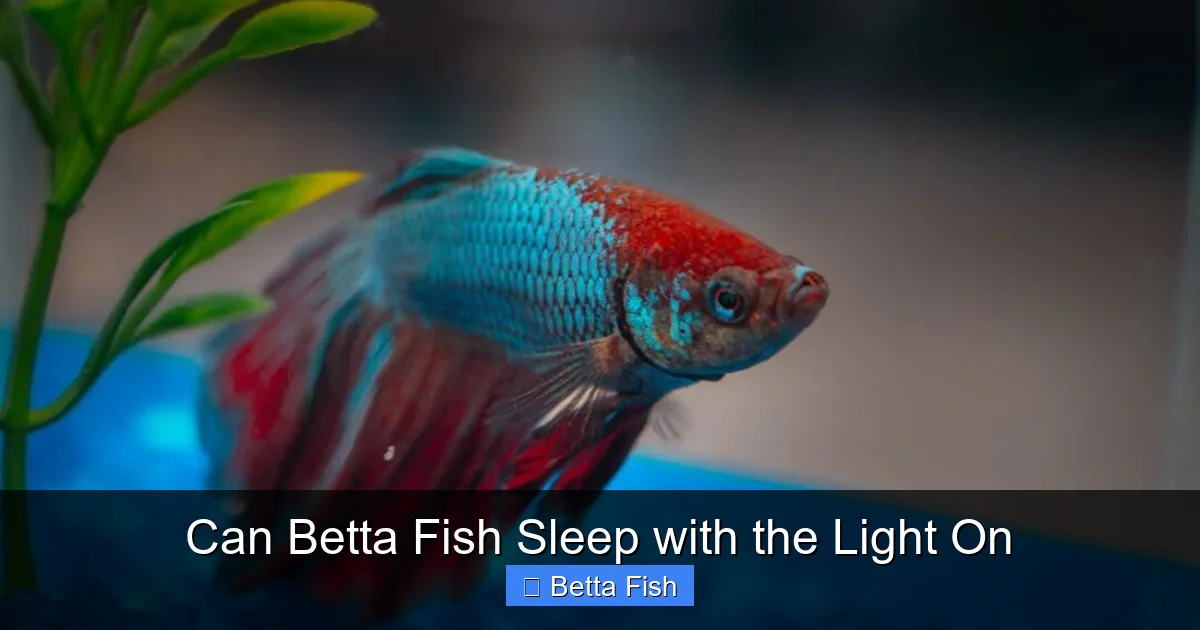
The physical signs are often more alarming. The most obvious is a loss of color. A brilliant red or blue betta may turn a washed-out, pale version of itself. You might also observe clamped fins, where the beautiful flowing fins are held tight against the body instead of being displayed openly. In severe cases, constant stress from lack of sleep can lead to stress stripes—vertical bars that appear on the body, similar to a juvenile betta’s coloring. If you see these signs, it is time to evaluate your tank conditions, starting with the lighting.
Common Lighting Mistakes and How to Avoid Them
Visual guide about Can Betta Fish Sleep with the Light On
Image source: aquariumbuddies.com
Even with the best intentions, betta owners can make lighting errors. Let’s review the most common pitfalls so you can avoid them. The goal is to create a stable, predictable environment, and these mistakes introduce instability.
Mistake 1: Using the Light as the Sole Source of Day/Night
Some keepers in rooms without windows rely entirely on the aquarium light to define day and night for their fish. This is fine, as long as the schedule is consistent. The mistake is when the schedule is erratic. If you turn the light on when you wake up and off when you go to bed, and your schedule changes on weekends, your betta will be confused. This is why a timer is essential. It provides the consistency that a human schedule cannot.
Mistake 2: Placing the Tank in Direct Sunlight
While natural light sounds ideal, placing a tank in direct sunlight is a recipe for disaster. Sunlight is incredibly strong and will cause massive algae blooms, turning your water green quickly. More importantly, it will cause extreme temperature fluctuations, heating the water during the day and cooling it at night. This is very stressful for bettas, which need stable warm temperatures. A tank near a window is fine for indirect light, but never in direct sunbeams.
Mistake 3: Never Turning the Light Off
Perhaps the most common mistake is simply leaving the aquarium light on 24 hours a day. Some owners think the fish need constant light, or they forget to turn it off. As we have discussed, this is one of the most stressful things you can do to a betta. It prevents them from ever entering a deep sleep state. If you currently do this, start turning it off tonight. Your betta will thank you with brighter colors and more active behavior during the day.
Creating an Ideal Sleep Environment Beyond Light
While a proper light cycle is the cornerstone of good sleep, it is not the only factor. A betta’s environment plays a huge role in how safe they feel, which directly impacts their ability to rest deeply. A fish that feels vulnerable will never fully relax. Let’s look at the other elements that create a perfect bedroom for your betta.
The Importance of Hiding Spots and Plants
In the wild, bettas rest hidden among dense plants to avoid predators. You must replicate this in your tank. Provide plenty of hiding places, such as caves, driftwood tunnels, and most importantly, dense vegetation. Live plants like Java fern, Anubias, and floating plants like frogbit or water lettuce are excellent choices. They provide cover, help maintain water quality, and make the tank feel more natural. Silk plants are a good alternative if you cannot keep live plants, but avoid sharp plastic plants that can tear your betta’s delicate fins. A betta with many secure hiding spots will sleep more soundly.
Water Quality and Temperature
Clean, warm water is non-negotiable for a healthy betta. The ideal temperature is a stable 78-80°F (25.5-26.5°C). A reliable heater and thermometer are essential. Cooler water slows their metabolism, making them lethargic and prone to illness. Ammonia or nitrite spikes from an uncycled tank are also major stressors that will prevent rest. Perform regular partial water changes to keep nitrates low. Think of it this way: you would not sleep well in a cold, dirty room. Your betta deserves a clean, comfortable bedroom too.
Do Betta Fish Need a Night Light or Moonlight?
This is a common follow-up question. If darkness is so important, should you use a small blue “moonlight” LED to see your fish at night? The short answer is: it is usually not necessary and can be counterproductive. While a very dim blue light is less disruptive than a bright white light, it is still light. For the deepest, most restful sleep, complete darkness is best. The only exception might be if you need to observe nocturnal behavior or if the complete darkness causes you to stumble around and disturb the tank. In that case, use the dimmest blue light possible and only for a few hours, not all night.
What About Other Fish in the Community Tank?
If you keep your betta in a community tank, lighting needs apply to all inhabitants. Most tropical fish and invertebrates also require a consistent day/night cycle. When researching what other fish can live with betta fish, always consider their environmental needs. For example, if you are wondering can you keep betta fish with shrimp or can you have snails with betta fish, remember that these creatures also need a proper light cycle. Snails are often more active at night, so darkness is crucial for their natural behavior. A well-planned community tank respects the biological rhythms of every inhabitant.
Conclusion: Embrace the Night for a Healthier Betta
Visual guide about Can Betta Fish Sleep with the Light On
Image source: a-z-animals.com
So, can betta fish sleep with the light on? Technically, they can enter a state of rest, but it is a poor, stressful substitute for true sleep in darkness. As responsible pet owners, our goal is not just to keep our pets alive, but to provide an environment where they can flourish. Respecting your betta’s need for a natural light-dark cycle is a fundamental part of that care. It is a simple, cost-free adjustment that yields profound benefits: a more vibrant color, a stronger immune system, and a more active, engaging personality.
By setting up a consistent lighting schedule with a timer, providing plenty of cozy hiding spots, and maintaining pristine water conditions, you are building a true home for your betta. You are allowing them to follow the ancient rhythms encoded in their DNA. Turn off the light tonight, and watch as your betta rewards you with its full, glorious beauty tomorrow. A happy betta is a well-rested betta, and a well-rested betta is a joy to own.
Frequently Asked Questions
Do betta fish sleep at the top or bottom of the tank?
Bettas can sleep anywhere they feel secure. Common spots include resting on the tank bottom, on a plant leaf near the surface, or tucked into a hiding spot. The location is less important than the fact that they are in a state of rest.
How can I tell if my betta fish is sleeping or sick?
A sleeping betta will be still but will react if you approach the tank. They will resume normal swimming. A sick fish may be lethargic, refuse food, show physical signs like clamped fins or spots, and not startle easily.
Can I use a regular room light instead of an aquarium light?
Yes, ambient room light can be sufficient for a betta tank, provided it follows a consistent day/night schedule. The key is ensuring the tank gets a period of complete darkness at night, regardless of the light source.
What happens if I forget to turn off the betta light one night?
One night of light will not cause permanent harm. However, make it a habit to turn it off. Consistency is key to preventing chronic stress. Using an automatic timer is the best way to avoid forgetting.
Do baby betta fish need a different light schedule?
No, juvenile bettas benefit from the same consistent light cycle as adults. A stable 8-12 hours of light supports their growth and development. Ensure they have plenty of hiding spots as they are more vulnerable.
Is it okay to have a completely dark tank during the day?
No, bettas need a light period to be active and maintain their circadian rhythm. A completely dark tank all day is as disruptive as a light tank all night. Aim for a balanced cycle of light and dark.

