Betta fish and mollies can share a tank, but success depends on careful planning. Key factors include tank size, gender, temperament, and water parameters. Follow these guidelines to create a peaceful community that keeps both species thriving.
Key Takeaways
- Tank size matters: A minimum of 20 gallons gives both species space to establish territories.
- Choose the right mollies: Peaceful, live‑bearing varieties are less likely to trigger a betta’s aggression.
- Monitor water conditions: Keep temperature around 78‑80°F and maintain stable pH (7.0‑7.5) for both fish.
- Gender considerations: A single male betta with a group of female mollies reduces fighting risk.
- Provide plenty of hiding spots: Plants, driftwood, and caves let mollies escape if the betta becomes territorial.
- Start with a quarantine: Observe behavior for a few days before fully committing to a mixed community.
- Alternative tank mates: If compatibility issues arise, consider snails or shrimp as peaceful companions.
📑 Table of Contents
- Introduction: Why the Question Comes Up
- Understanding Betta and Mollie Basics
- Tank Size and Layout: Giving Them Space to Breathe
- Choosing the Right Mollies for a Betta Tank
- Introducing Betta and Mollies: Step‑by‑Step Guide
- Potential Problems and How to Solve Them
- Alternative Tank Mates If Compatibility Fails
- Conclusion: Making an Informed Decision
Introduction: Why the Question Comes Up
If you’ve ever watched a vibrant male betta flare its fins, you know how striking these fish can be. At the same time, mollies—soft‑bodied, active live‑bearers—bring a splash of color and interesting behavior to a community tank. It’s natural to wonder whether these two popular species can coexist peacefully.
Many beginners ask, “Can a betta fish be put with mollies?” The answer isn’t a simple yes or no. Compatibility hinges on several variables: tank size, water parameters, individual temperaments, and even the gender of the fish involved. In this article we’ll break down each factor, give you step‑by‑step setup tips, and share real‑world examples so you can decide if a betta‑molly community is right for you.
Understanding Betta and Mollie Basics
Betta fish temperament
Betta splendens, commonly called Siamese fighting fish, are known for their bold personalities. Males are especially territorial and will often flare at any fish that resembles a rival—typically anything with bright colors or long fins.
Visual guide about Can a Betta Fish Be Put with Mollies
Image source: bettasource.com
Mollies’ natural behavior
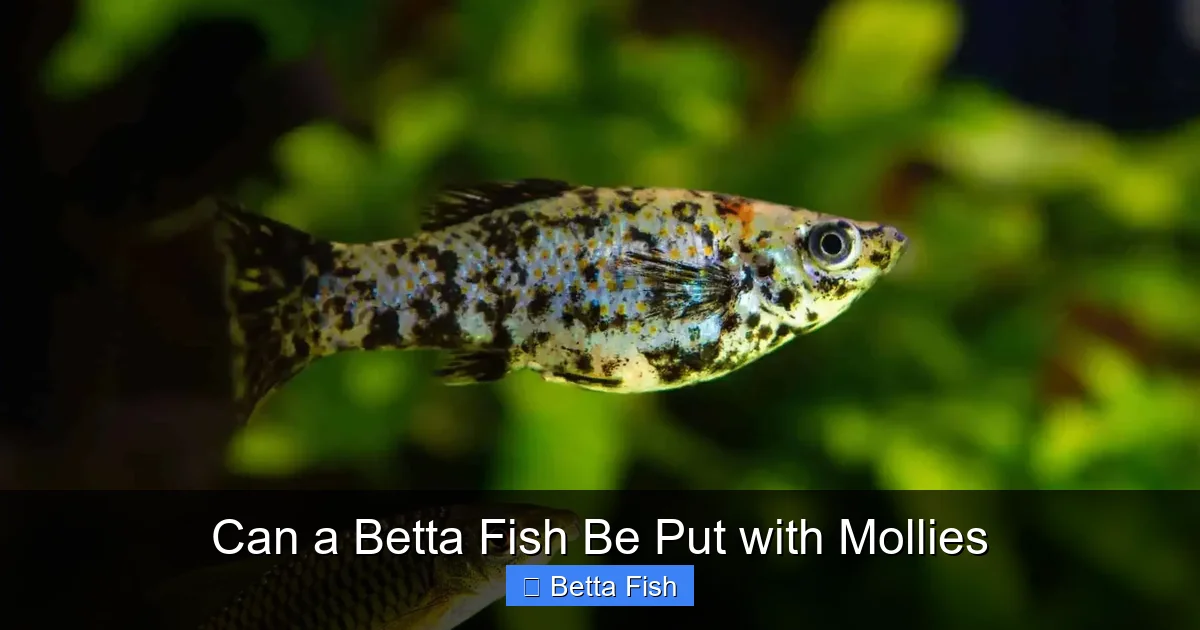
Mollies (Poecilia spp.) are live‑bearers that thrive in groups. They are active swimmers, love surface grazing, and are generally peaceful. However, their bright colors and flowing fins can sometimes be mistaken for a betta rival, which may provoke aggression.
Water parameter overlap
Both bettas and mollies prefer warm water (78‑82°F). Bettas tolerate a pH range of 6.5‑7.5, while mollies favor slightly higher pH (7.0‑8.0). Keeping the tank at 78‑80°F with a neutral pH of about 7.2 satisfies both species, making water chemistry one of the easier compatibility factors.
Tank Size and Layout: Giving Them Space to Breathe
Minimum tank volume
A single male betta can live in a 5‑gallon tank, but adding mollies changes the equation. Mollies need room to swim in groups—ideally at least 10 gallons for a small school. To avoid cramped conditions, aim for a 20‑gallon long tank. This provides enough horizontal swimming space and separate zones for each species.

Visual guide about Can a Betta Fish Be Put with Mollies
Image source: acaquarium.com
Decor and hiding places
Plants (real or silk), driftwood, and smooth rocks create visual barriers. These structures let mollies retreat when the betta becomes territorial. Floating plants like duckweed also give mollies surface cover, while bettas appreciate tall plants that break the line of sight.
Flow and filtration
Mollies produce more waste than a solitary betta, so a reliable filter rated for at least twice the tank volume is essential. Choose a gentle flow to avoid stressing the betta’s delicate fins. A sponge filter or a hang‑on‑back with adjustable flow works well.
Choosing the Right Mollies for a Betta Tank
Species selection
Common mollies include:
- Poecilia sphenops (Black Mollie) – dark coloration reduces visual triggers.
- Poecilia latipinna (Yarra Valley Mollie) – calmer temperament.
- Poecilia velifera (Swordtail Mollie) – longer tail may be mistaken for a betta rival, so use with caution.
Opt for the calmer, darker varieties when first mixing with a betta.
Gender balance
Mollies are social and feel safest in groups of at least six. A ratio of 1 male to 5‑6 females works well, reducing the chance of a single aggressive male mollie harassing the betta.
Health checks
Quarantine new mollies for at least two weeks. Look for signs of disease—white spots, fin rot, or abnormal swimming. Healthy mollies are less likely to stress the betta.
Introducing Betta and Mollies: Step‑by‑Step Guide
1. Prepare a fully cycled tank
Run the filter for 4‑6 weeks, test ammonia, nitrite, and nitrate levels. Only proceed when ammonia and nitrite are zero and nitrate is below 20 ppm.
2. Add the betta first
Acclimate the betta using the drip method. Let it settle for 24‑48 hours while you observe its behavior. This gives the betta a chance to claim its territory before introducing other fish.
3. Introduce mollies gradually
Use a transparent bag to float the mollies in the tank for 15‑20 minutes, equalizing temperature. Then release them slowly near a plant or decoration, not directly in the betta’s line of sight.
4. Monitor for aggression
For the first week, watch for flaring, chasing, or fin nipping. If the betta shows persistent aggression, consider adding more visual barriers or rearranging decorations.
5. Adjust as needed
Sometimes a single aggressive betta simply isn’t compatible. In that case, it may be kinder to rehome the betta or move the mollies to a separate community tank.
Potential Problems and How to Solve Them
Aggression from the betta
If the betta constantly attacks mollies, increase hiding spots, lower the lighting, and consider a taller tank to give vertical separation. Adding a floating leaf or a piece of PVC pipe can create a “no‑fly‑zone” for the betta.
Overcrowding and water quality
Mollies are prolific breeders. A sudden population boom can overload the filter, leading to cloudy water and disease. Use a fine‑mesh net to remove excess fry or keep a single male with several females to control breeding.
Temperature fluctuations
Both species need stable warmth. Use a reliable aquarium heater with a thermostat and place it in a spot where water circulates evenly.
Alternative Tank Mates If Compatibility Fails
Should you find that bettas and mollies just don’t get along, there are other peaceful companions:
- Snails such as nerite or mystery snails are excellent cleaners and rarely provoke bettas.
- Shrimp like cherry shrimp can add color and help with algae, though larger bettas may see them as food.
- Small, fast‑moving tetras (e.g., neon tetras) in a well‑planted, heavily filtered tank can coexist if the betta is calm.
Always research each new species’ needs before adding them to the community.
Conclusion: Making an Informed Decision
Can a betta fish be put with mollies? Yes—under the right conditions. A spacious, well‑filtered tank, careful selection of mollies, and vigilant monitoring are key. By respecting each fish’s natural behavior and providing plenty of hiding places, you can enjoy the dazzling colors of a betta alongside the lively antics of mollies.
If you’re new to community tanks, start small and be prepared to adjust. Remember, the health and happiness of your fish are the ultimate measures of success.
Frequently Asked Questions
Do bettas and mollies need the same water temperature?
Both thrive at 78‑80°F, making temperature compatibility easy. Keep the tank heater set within this range for optimal health.
Can a female betta live with mollies?
Female bettas are generally less aggressive than males, so they may tolerate mollies better. Still, provide plenty of plants and monitor interactions.
How many mollies can I keep with one betta?
A small school of 4‑6 mollies is ideal. This number gives them social structure while preventing overcrowding.
What signs indicate the betta is stressed?
Frequent flaring, loss of color, hiding constantly, or rapid breathing are warning signs. Reduce stressors immediately.
Do I need a special filter for a betta‑molly tank?
A filter rated for twice the tank volume with adjustable flow is sufficient. Avoid strong currents that can damage betta fins.
Can I add live plants to help the community?
Yes! Live plants improve water quality, provide hiding spots, and create natural barriers that reduce aggression.

