Are There Male and Female Betta Fish
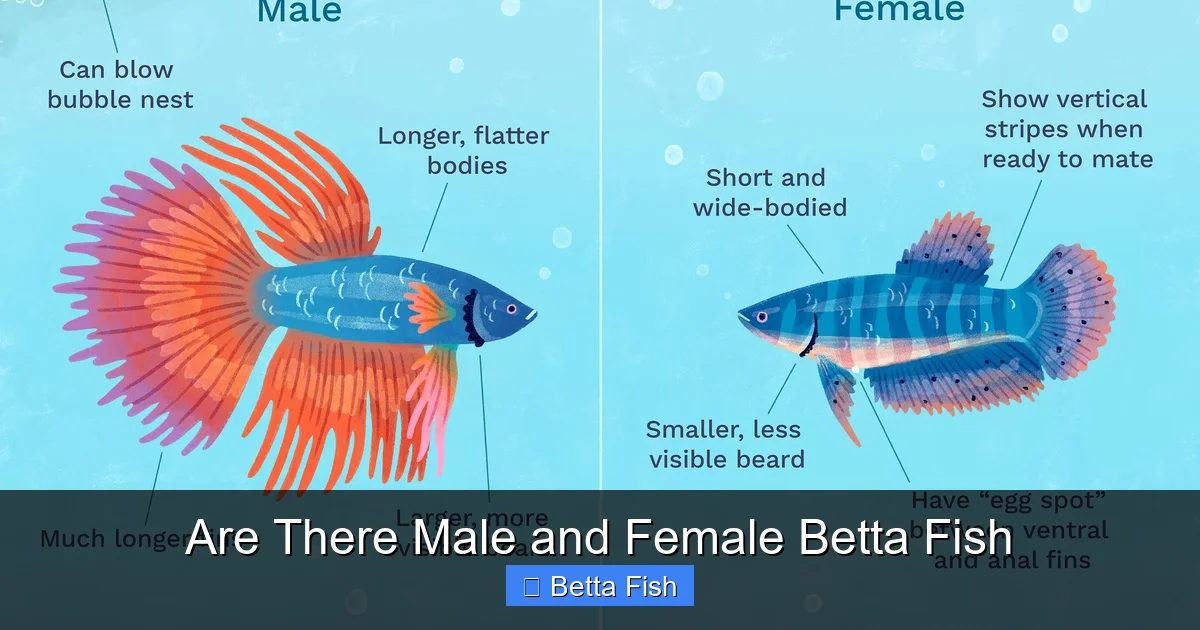
Yes, betta fish come in both male and female forms, and they look quite different once you know what to watch for. Understanding these differences helps you choose the right companion, set up the perfect tank, and avoid unnecessary fights.
Key Takeaways
- Both sexes exist: Betta fish are not all male; females are common and have distinct traits.
- Physical clues: Males have larger, flowing fins and a more vivid “beard,” while females have shorter fins and may show a “egg spot.”
- Behavior matters: Males are typically more aggressive, especially toward other males, while females can be semi‑aggressive but are often calmer.
- Housing options: Single males need separate tanks; females can sometimes share a community tank if space and plants are ample.
- Breeding basics: A male builds a bubble nest; a female lays eggs that the male fertilizes and guards.
- Health considerations: Proper sex identification prevents stress, injuries, and breeding mishaps.
- Helpful resources: Use reliable guides to learn how to tell sex, set up a tank, and keep bettas peacefully together.
📑 Table of Contents
- Introduction: Why Knowing the Sex of Your Betta Matters
- 1. The Biology Behind Male and Female Betta Fish
- 2. How to Tell If Betta Fish Are Male or Female
- 3. Setting Up the Perfect Home for Each Sex
- 4. Keeping Males and Females Together—or Not?
- 5. Breeding Male and Female Betta Fish
- 6. Common Questions and Troubleshooting
- Conclusion: Embrace the Diversity of Betta Sexes
Introduction: Why Knowing the Sex of Your Betta Matters
When you first walk into a pet store and see those dazzling, long‑tailed betta fish, it’s easy to think they’re all the same. The bright colors and flowing fins are mesmerizing, but behind the beauty lies a simple fact: bettas are either male or female, and each gender has its own personality, care needs, and social rules. Knowing are there male and female betta fish isn’t just trivia—it shapes how you set up the tank, choose tank mates, and even decide whether you want to breed them.
In this guide we’ll walk through everything you need to know about male and female bettas. From spotting the differences to creating a safe home, you’ll finish reading with confidence that you can give your fish the best possible life.
1. The Biology Behind Male and Female Betta Fish
1.1. Natural Habitat and Evolution
Betta splendens, the Siamese fighting fish, originates from the shallow, warm waters of Thailand, Cambodia, and Laos. In the wild, males defend territories that contain bubble nests, while females wander to find a mate. This division of labor created distinct physical and behavioral traits that we still see today.

Visual guide about Are There Male and Female Betta Fish
Image source: ekk4j69ebaa.exactdn.com
1.2. Genetic Sex Determination
Like many fish, bettas have a genetic sex‑determination system (XX for females, XY for males). The difference is not visible at birth, but as the fish matures, hormones trigger the development of sex‑specific features.
2. How to Tell If Betta Fish Are Male or Female
2.1. Visual Cues
The easiest way to answer “are there male and female betta fish?” is to look at the fish:

Visual guide about Are There Male and Female Betta Fish
Image source: hepper.com
- Fin length and shape: Males sport long, flowing dorsal and caudal fins that can be dramatically elaborate. Females have shorter, more rounded fins.
- Body size: Males are often slightly larger and more robust.
- Beard (labial teeth):> When excited, males flare a bright, pinkish “beard.” Females may flare a much thinner, less colorful beard.
- Egg spot: Mature females develop a small, dark spot near the vent (the “ovipositor”) where eggs are released.
For a deeper dive, see our article on how to tell if betta fish are male or female. It includes photos and a step‑by‑step checklist.
2.2. Behavioral Indicators
Males are territorial. If you place two males in the same tank, they will flare, flare, and often fight. Females, while sometimes aggressive toward each other, are generally less confrontational and may coexist in a well‑planted tank.
3. Setting Up the Perfect Home for Each Sex
3.1. Tank Size and Layout
Regardless of gender, a minimum of 5 gallons is recommended for a single betta. However, the layout differs:

Visual guide about Are There Male and Female Betta Fish
Image source: a-z-animals.com
- Male tanks: Provide plenty of hiding spots and a surface for a bubble nest. Use a solid lid because males love to jump.
- Female tanks (or groups): Add dense vegetation, driftwood, and caves to break lines of sight. This reduces aggression when multiple females share a space.
3.2. Water Parameters
Both sexes thrive in warm water (78‑82°F), slightly acidic to neutral pH (6.5‑7.5), and soft to medium hardness. Regular water changes (25 % weekly) keep ammonia and nitrite at zero.
3.3. Lighting and Filtration
Gentle LED lighting for 8–10 hours a day mimics natural daylight. A low‑flow sponge filter works well—strong currents stress bettas, especially males building nests.
4. Keeping Males and Females Together—or Not?
4.1. The Myth of “Male‑Female Pairs”
Many beginners think a male and female can live together peacefully forever. In reality, once a male builds his bubble nest, he becomes highly protective and may become aggressive toward the female, especially during spawning.
For a concise answer on compatibility, read Can You Keep Male And Female Betta Fish Together. It explains why most keepers separate them after breeding.
4.2. Safe Co‑habitation Strategies
- Supervised breeding tank: Use a separate breeding tank with a divider. After spawning, remove the female to prevent the male from attacking her.
- Female‑only community: A heavily planted 10‑gallon tank can house 3–4 females if you provide enough visual barriers.
- Male‑only solitude: Keep each male in its own tank or a divided tank with solid partitions.
5. Breeding Male and Female Betta Fish
5.1. Preparing the Breeding Pair
Choose a healthy, vibrant male with a strong bubble nest and a mature female showing an egg spot. Condition both fish with high‑protein foods (brine shrimp, bloodworms) for a week.
5.2. The Spawning Process
- Introduce the female into the male’s tank using a clear divider.
- Allow a few hours of visual contact; the male will display his flaring fins.
- When the female is ready, she will approach the nest and release eggs; the male fertilizes them immediately.
- The male gathers the eggs into the nest, caring for them until they hatch (2‑3 days).
- After hatching, the male continues to guard the fry for about a week before you can safely remove him.
5.3. Raising the Fry
Use a separate rearing tank with fine‑mesh lids. Feed newly hatched fry infusoria for the first week, then transition to microworms and baby brine shrimp.
6. Common Questions and Troubleshooting
6.1. “Why is my male betta fighting his reflection?”
Male bettas are naturally territorial. Mirrors trigger a false‑territory response. Use the mirror test sparingly—no more than 30 seconds—to gauge temperament.
6.2. “My two females keep fighting—what’s wrong?”
Even females can be aggressive if the tank is too small or lacks hiding places. Add more plants, caves, and visual barriers, and ensure the tank is at least 10 gallons.
6.3. “Can a male lay eggs without a female?”
No. Males can only produce a bubble nest; egg production requires a female. See Can Male Betta Fish Lay Eggs Without A Female for details.
Conclusion: Embrace the Diversity of Betta Sexes
Answering the question “are there male and female betta fish” opens a world of thoughtful care. By recognizing the visual and behavioral differences, setting up gender‑appropriate habitats, and respecting each fish’s natural instincts, you’ll enjoy healthier, happier bettas. Whether you choose a single flamboyant male, a graceful group of females, or you venture into breeding, the key is to stay informed and observant. Happy fish‑keeping!
Frequently Asked Questions
Are there male and female betta fish?
Yes. Betta fish exist as both males and females, each with distinct physical traits and behaviors.
How can I tell a male betta from a female?
Look for longer, flowing fins and a larger, brighter beard in males; females have shorter fins, may show an “egg spot,” and have a less pronounced beard.
Can male and female bettas live together long‑term?
They can share a tank for short breeding periods, but after spawning the male often becomes aggressive. It’s safest to keep them separate.
Do female bettas fight each other?
Females can be semi‑aggressive, especially in small tanks. Providing plenty of plants and hiding spots reduces fighting.
What size tank is best for a single male betta?
A minimum of 5 gallons with a lid, gentle filtration, and a surface for a bubble nest is ideal.
Can I keep multiple female bettas together?
Yes, in a well‑planted 10‑gallon tank with visual barriers, several females can coexist peacefully.