Yes, platy fish can often live with bettas, but it’s not guaranteed and requires careful planning. The success hinges on the individual betta’s temperament, a properly sized and decorated tank, and a meticulous introduction process. Platys are active, peaceful livebearers that can sometimes cope with a betta’s territorial nature, especially in a spacious, well-planted environment. However, you must be prepared to separate them immediately if aggression occurs.
Key Takeaways
- Betta temperament is the #1 factor: A peaceful or older betta has a higher chance of coexisting with platys than a young, aggressive male.
- Tank size is non-negotiable: A minimum of 20 gallons is strongly recommended to provide enough space for territories and evasion.
- Aquascaping is critical: Dense plants, driftwood, and decorations create visual barriers and break lines of sight, reducing stress and chasing.
- Platys are ideal due to their speed and shape: Their quick, darting movement and torpedo-shaped bodies make them harder for a betta to target than slower, flowy fish.
- Introduction must be done with extreme care: Using a tank divider for the first 1-2 weeks is the safest method to allow acclimation without physical contact.
- Always have a backup plan: Be ready with a separate hospital tank to rehome one species immediately if persistent aggression or fin-nipping is observed.
- Water parameters must suit both: Platys prefer slightly cooler water (68-78°F) than bettas (76-82°F), so finding a stable mid-range temperature (around 78°F) is key.
📑 Table of Contents
- Can Platy Fish Live with Bettas? Unpacking the Famous Pairing
- Understanding Your Betta: The Temperament Wildcard
- Why Platys Are a Contender: Their Advantageous Traits
- The Foundational Rule: Tank Size and Aquascaping
- The Step-by-Step Introduction Protocol: Patience is Everything
- When It Goes Wrong: Recognizing and Solving Problems
- FAQ: Your Burning Questions Answered
Can Platy Fish Live with Bettas? Unpacking the Famous Pairing
So, you’ve got a beautiful, flowing betta in a standalone tank, or you’re planning your first community aquarium and have your heart set on the vibrant, active platy. The question inevitably pops up: can these two popular fish share the same aquatic home? It’s one of the most common questions in the fishkeeping world, and for good reason. Both are stunning, relatively hardy, and beginner-friendly. The idea of a colorful, peaceful community with a betta is incredibly appealing.
The honest answer is: sometimes, yes, but it’s a calculated risk, not a guaranteed rule. Unlike pairing two inherently peaceful community fish, you are introducing a known territorial fish—the betta, or Siamese fighting fish—to a potential tankmate. Success depends entirely on understanding betta behavior, providing an optimal environment, and executing a patient, careful introduction. This guide will walk you through every single factor that determines whether your platy fish can live with your betta, turning hope into a well-informed plan.
Understanding Your Betta: The Temperament Wildcard
Before we even talk about platys, we must talk about bettas. Your betta’s personality is the single most unpredictable variable in this equation. Bettas are intelligent, curious, and possess a strong sense of territory. Their famous aggression is a product of centuries of selective breeding for combat, but that doesn’t mean every betta is a killer. They exist on a vast spectrum.
Visual guide about Can Platy Fish Live with Bettas
Image source: aquariumnexus.com
Reading Betta Body Language
You need to become a betta behavior expert. Key signs of a potentially aggressive or stressed betta include:
- Flaring: The iconic gill and fin expansion. Occasional flaring at a reflection is normal, but constant flaring at tankmates is a red flag.
- Hiding: While all fish need hiding spots, a betta that is perpetually tucked away in the back corner, refusing to explore, is likely stressed by tankmates or environment.
- Chasing: Any consistent, rapid pursuit of another fish is a major warning sign. One or two curious chases might happen during initial settling, but relentless chasing leads to exhaustion and injury.
- Nipping: If you see your betta dart in and nip at the fins or body of a platy, the experiment is over. This will escalate quickly.
Conversely, a curious betta that observes from a distance, flares only occasionally, and then goes about its business is showing a more tolerant disposition.
Age and Experience Matter
Older bettas (over a year) are often less reactive and more settled than young, virile males in their prime (4-8 months). A betta that has previously lived in a community tank without issue is a much better candidate than a betta that has been isolated its whole life. If possible, observe your betta in a store or previous home with other fish around.
Why Platys Are a Contender: Their Advantageous Traits
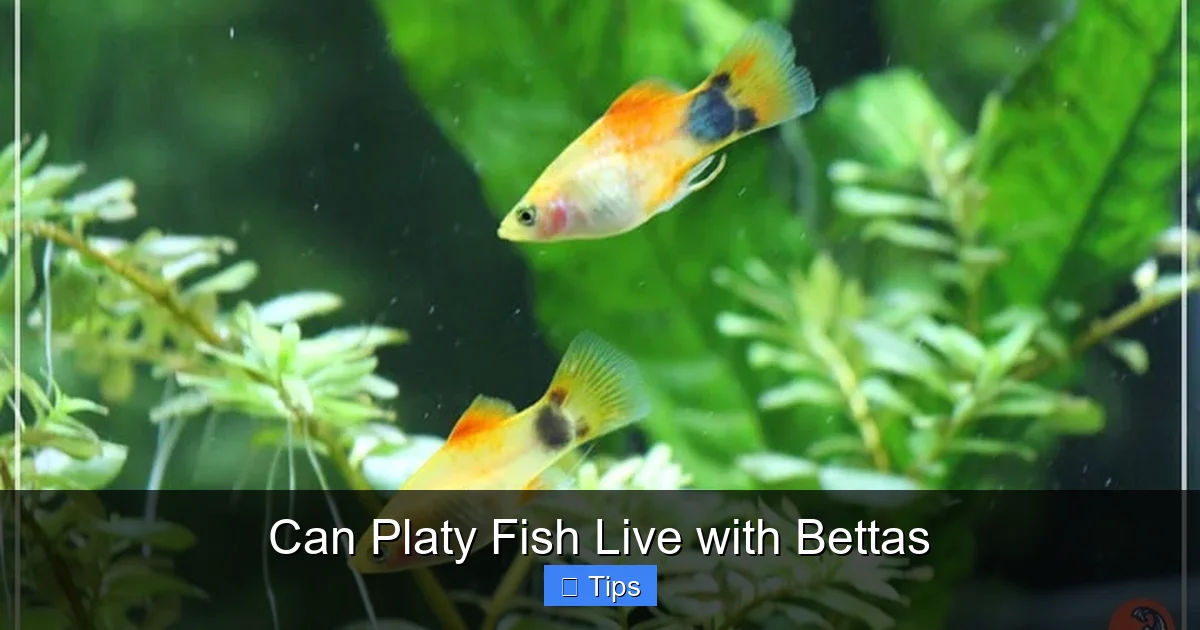
Platys (Xiphophorus maculatus) are frequently recommended as betta tankmates for several specific reasons that give them a leg up in this high-stakes pairing.

Visual guide about Can Platy Fish Live with Bettas
Image source: aquariumnexus.com
Speed and Agility
Platys are incredibly active, quick swimmers. They are constantly on the move, darting around the tank in short bursts. This makes them notoriously difficult for a betta to catch. A betta is a slow, deliberate ambush predator. It targets slow-moving, flowing fish with long fins (like guppies or fancy goldfish). A platy’s torpedo-shaped body and rapid movements are simply not appealing or easy prey for most bettas. They can usually outmaneuver a lunge.
Peaceful and Social Nature
Platys are the definition of peaceful community fish. They are not nippy, they don’t school aggressively, and they mind their own business. They are too busy exploring, grazing on algae, or socializing with their own kind to provoke a betta. Their lack of aggression means they won’t be the instigator, which is crucial. The onus is entirely on the betta to leave them alone.
Hardiness and Water Parameter Overlap
Both species are quite hardy, but their ideal water conditions have a workable overlap. Bettas need warm, clean water (76-82°F / 24-28°C). Platys are more temperate, comfortable from 68-78°F (20-26°C). The safe, stable target temperature for a community tank is around 78°F (25.5°C). This is warm enough to keep a betta’s metabolism active but not so hot as to overly stress a platy. Both require clean, filtered water with a stable pH between 7.0 and 8.0.
The Foundational Rule: Tank Size and Aquascaping
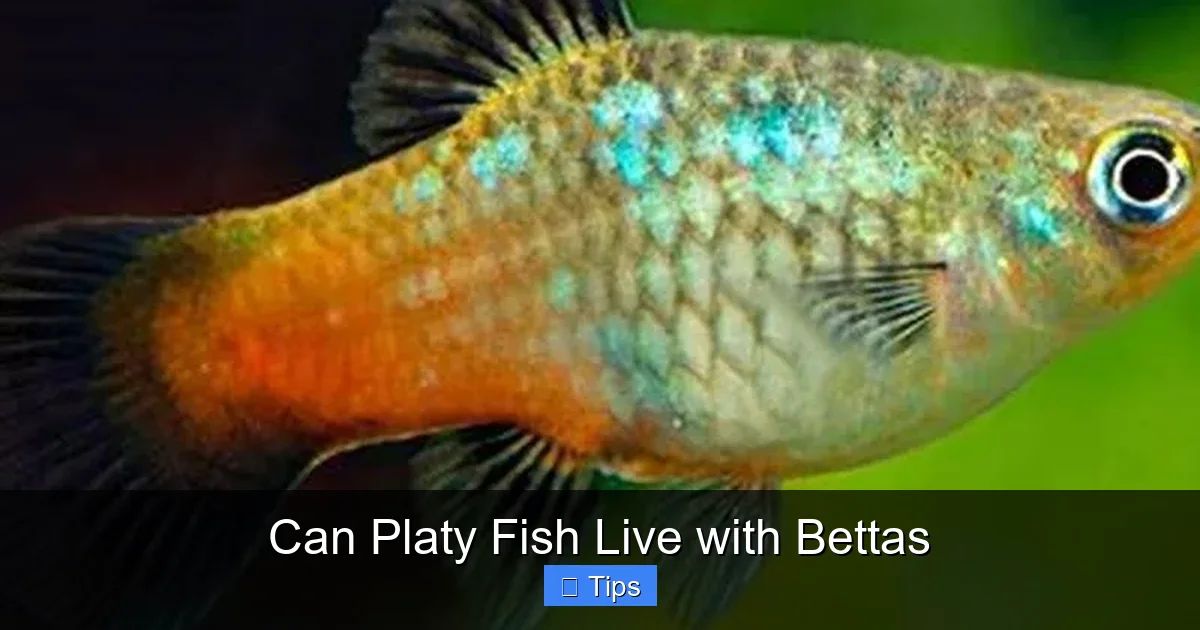
If you are considering this mix, you must commit to the right environment. A 5-gallon betta tank is a fantasy for a community. It’s a confinement sentence. The absolute minimum tank size is 20 gallons (long or standard), with 30+ gallons being ideal and far safer. This space is not a luxury; it’s a necessity for providing distinct territories and escape routes.
Visual guide about Can Platy Fish Live with Bettas
Image source: diyseattle.com
The Art of Breaking the Line of Sight
The goal is to prevent the betta from seeing the platy as a constant, looming intruder. You must break the visual line between them constantly.
- Dense Planting: Use live plants like Java fern, Anubias, Amazon swords, and floating plants like frogbit or water lettuce. These create a 3D forest where fish can disappear. Silk or plastic plants can be used, but live plants offer superior water quality benefits.
- Hardscape is Key: Driftwood, large rocks, and ceramic castles provide solid, permanent barriers. Position them so they create separate “zones” in the tank.
- Open Swimming Space: While breaking sightlines, ensure there is still a clear central area for active swimming. Don’t overcrowd the tank to the point where it’s a maze with no room.
Think of it like designing an apartment with multiple rooms and hallways instead of one large, open-plan studio. Privacy reduces conflict.
The Step-by-Step Introduction Protocol: Patience is Everything
Rushing this process is the #1 reason for failure. You must assume your betta is aggressive until proven otherwise over time.
Phase 1: Quarantine and Observation
First, your platys must be fully quarantined for at least 4 weeks in a separate tank. This ensures they are disease-free before entering your main display. During this time, observe your betta in its own tank. Is it flaring at its reflection? Is it active and curious or lethargic? This gives you a baseline.
Phase 2: The Tank Divider Method (Strongly Recommended)
This is the gold standard for a safe introduction.
- Set up your fully aquascaped 20+ gallon community tank and let it cycle completely.
- Place your betta in one side of the tank, separated by a clear, solid divider (commercial or DIY with acrylic and sealant). The divider must go all the way to the substrate to prevent fish from slipping under.
- Place the platys (in a group of 3-5, as they are social) on the other side.
- For 1-2 weeks, let them see each other but have zero physical contact. Observe through the divider. Does the betta immediately flare and posture? Or does it show mild curiosity and then ignore them? The goal is desensitization.
- After a week of calm behavior, you can try removing the divider during a feeding time to see if they ignore each other. Have a net and a backup tank ready to instantly re-separate them if chasing begins.
Phase 3: The “Inside the Divider” Method (Alternative)
Place a large, opaque breeding box or a second smaller tank inside the main community tank. House the betta in this inner container for a week. This allows water parameters to equalize while the platys get used to the betta’s presence and scent without seeing it directly. Then, proceed to the divider method or a very cautious direct introduction.
When It Goes Wrong: Recognizing and Solving Problems
Even with perfect planning, the betta’s personality may not be compatible. You must be a vigilant observer, especially in the first 72 hours after any direct introduction.
Signs of Failed Coexistence
- Persistent Chasing: The betta relentlessly pursuing one or more platys around the tank, cornering them.
- Fin Nipping: Visible tears, frays, or shredded fins on the platy. Betta bites are precise and damaging.
- Platys Hiding Constantly: If they never come out to eat or swim in the open, their stress levels are critically high.
- Betta’s Fins Are Torn: While less common, a large group of platys might occasionally nip back if severely provoked, though this is rare.
Your Immediate Action Plan
If you see any of the above, act immediately.
- Re-separate: Use a net to gently remove the platy(s) being targeted. If the betta is the aggressor, it’s almost always the platy that needs removal, as the betta will likely continue the behavior.
- Have a Hospital Tank Ready: This is non-negotiable. A simple 10-gallon filtered and heated tank must be on standby to house the platy group or the betta permanently.
- Do Not “Hope It Gets Better”: It won’t. Stress and aggression only escalate. Prolonged stress kills fish by weakening their immune system.
- Rehome Responsibly: If you cannot keep the separated fish long-term, have a local fish store or experienced hobbyist lined up to take them. Never release them into the wild.
FAQ: Your Burning Questions Answered
Can female bettas live with platys?
Yes, female bettas are generally much less aggressive and territorial than males. A sorority of 4-6 females in a heavily planted 20+ gallon tank often coexists beautifully with a peaceful platy group. However, individual female bettas can still be assertive, so the same careful introduction and tank setup rules apply.
What about a betta with a single platy?
This is a very bad idea. A single platy has no “safety in numbers” and will be singled out as the sole target by a curious or aggressive betta. Always keep platys in a group of at least 3-5, as they are social and a group diffuses attention.
My betta ignores the platys after introduction. Is it safe?
Ignorance is the best outcome, but continue monitoring for at least 2-3 weeks. Bettas can be unpredictable. Maintain the dense aquascape permanently. Ensure the platys have multiple escape routes and hiding places at all times. Never assume “ignoring” means “friendship.” It means “indifference,” which is acceptable.
Will the betta eat the platy’s babies?
Almost certainly, yes. Bettas are opportunistic feeders. If your platy gives birth (they are livebearers), the fry will be seen as food by both the betta and even the adult platys. To save any fry, you must use a breeding trap or separate nursery tank immediately upon noticing a pregnant female.
What other fish are better betta tankmates than platys?
Excellent, peaceful, fast-moving options include: Corydoras catfish (school of 6+), Harlequin rasboras (school of 8+), Chili rasboras, and Kuhli loaches. Always research any potential tankmate for water parameter compatibility and temperament.
My tank is only 10 gallons. Can I try it?
We strongly advise against it. A 10-gallon tank offers almost no room for error or territory establishment. The risk of stress, aggression, and poor water quality is extremely high. Please choose either a single betta with snails and shrimp, or a peaceful community of very small, non-aggressive fish like ember tetras (in a group of 8+) for a 10-gallon, but do not mix with a betta.
Frequently Asked Questions
How long should I use a tank divider before introducing my betta and platys?
A minimum of 1-2 weeks is recommended. Use this time to observe their behavior through the divider. The betta should show only mild curiosity or indifference before you consider a supervised, direct meeting. If flaring and posturing are constant after 7 days, the pairing is unlikely to succeed.
Can I keep a group of platys with a betta in a 10-gallon tank?
No, a 10-gallon tank is too small for this mix. The minimum recommended size is 20 gallons to provide adequate space for territories and to dilute the betta’s focus. In a 10-gallon, the betta will have nowhere to retreat, and the platys will have no escape routes, leading to almost certain stress and conflict.
What should I do if my betta starts chasing my platys after removing the divider?
Act immediately. Use a net to remove the platy being targeted to a separate hospital tank. The betta should remain in the main tank. This is a clear sign of incompatibility. Reintroduction attempts are not advisable. The platy group should be rehomed permanently or kept in the backup tank.
Do platys need a heater if kept with a betta?
Yes, but the temperature must be a compromise. Bettas require 76-82°F. Platys are comfortable down to 68°F. Set the heater to a stable 78°F (25.5°C). This is warm enough for the betta’s metabolism but safe for the platys. Always use a reliable aquarium thermometer to verify the temperature.
Should I feed my betta and platys separately?
It’s a very good practice. Bettas are prone to overeating and can be greedy. Use a betta-specific pellet or frozen food and target feed the betta with tweezers or a syringe near the water surface first. Then, sprinkle a high-quality flake or micro-pellet for the platys. This ensures the betta doesn’t gobble all the food and reduces competition stress.
Are there any signs that a platy is stressed by the betta’s presence even if there’s no chasing?
Absolutely. Constant hiding, clamped fins, rapid breathing, loss of color, and a refusal to eat are all major signs of chronic stress. If your platys exhibit these behaviors consistently, the tank environment is not suitable for them, even without overt aggression. You should consider rehoming them to a quieter community.