Can neon fish live with bettas? The short answer is: it’s extremely risky and generally not recommended for beginners. While neon tetras share similar water parameter needs with bettas, the betta’s notorious aggressive and territorial nature—especially in males—poses a severe threat to these small, peaceful schooling fish. Success requires a large, heavily planted tank (30+ gallons), a proper introduction sequence, and constant vigilance. For most hobbyists, keeping them separate is the safest and most humane choice to prevent stress, injury, or death.
So, you’ve got a stunning, flowing betta fish, perhaps a vibrant blue or a dramatic red, and you’re dreaming of a lively community tank. The thought of a shimmering school of neon tetras—those tiny, electric blue and red streaks of light—dancing through the water alongside your majestic betta is incredibly appealing. It’s a classic aquarium image. But before you grab that net and head to the pet store, we need to have a serious talk. The question, “Can neon fish live with bettas?” is one of the most common and debated in the freshwater hobby, and the answer is layered with crucial caveats. This guide will dive deep into the realities of this pairing, moving beyond simple “yes” or “no” answers to give you the actionable knowledge you need to make a responsible, informed decision for your aquatic pets.
Key Takeaways
- High Risk, Not Guaranteed: Co-housing neon tetras with a betta is a high-risk endeavor with no guarantee of success, largely due to the betta’s instinctual aggression toward smaller, brightly colored fish with long fins.
- Tank Size is Non-Negotiable: A minimum of 30 gallons is strongly advised to provide ample space for neon tetras to school and evade a betta’s attention, reducing territorial disputes.
- Aquascaping is Critical: Dense planting (live or silk), numerous hiding spots, and vertical layers are essential to break line-of-sight and give neon tetras refuge from a curious or aggressive betta.
- Introduction Order Matters: Always establish the neon tetra school (minimum 10-15) in the tank for several weeks before introducing a betta, allowing the tetras to feel secure in their environment first.
- Constant Observation is Required: Even in a perfect setup, you must monitor for signs of stress (hiding, faded colors, torn fins) or aggression (chasing, nipping) daily and be prepared to separate them immediately.
- Consider a Female Betta: Female bettas are often less aggressive than males, but individual temperaments vary wildly; they are not a foolproof solution but may offer slightly better odds.
- Always Have a Backup Plan: Before attempting this mix, you must have a fully cycled spare tank or a reliable method to quickly separate the fish if conflicts arise.
📑 Table of Contents
The Betta’s Nature: Understanding the Instinct
To even begin contemplating a betta community, you must first understand the animal you’re working with. The betta splendens, or Siamese fighting fish, has been selectively bred for centuries for its aggression and beautiful fins. This history is etched into its DNA.
The Territorial Instinct
Male bettas, in particular, are fiercely territorial. In the wild, they claim a small patch of reeds or plant matter and defend it vigorously from rival males. In your aquarium, that entire tank—or at least the prime real estate near the surface—becomes their territory. Anything that enters this space, especially something small, colorful, and with flowing movements, is seen as an intruder or a threat. This isn’t malice; it’s instinct. The neon tetra’s iridescent blue stripe and active, darting swimming style can trigger a betta’s prey drive or territorial aggression.
Individual Personalities Vary Wildly
This is the most important nuance. Not all bettas are the same. Some are laid-back “dudes” who seem barely aware of their tank mates. Others are relentless, fin-nipping terrors who will attack anything that moves. You cannot predict this until you see the fish interact. Your peaceful betta might suddenly decide a neon tetra is an enemy after months of coexistence. This unpredictability is the core of the risk.
Female Bettas: A Slightly Different Story?
Female bettas, while still capable of aggression, are generally less intensely territorial than males. They lack the dramatic, flowing fins that often trigger a male betta’s aggression (a male might see a fancy-tailed neon as a rival male). A female in a well-planted, spacious tank with a proper neon school *might* coexist more peacefully. However, females can and do establish pecking orders and can be bullies. Never assume a female betta is automatically “safe” for neon tetras.
The Neon Tetra’s Needs: Fragile Schoolers
On the other side of this potential equation is the neon tetra (Paracheirodon innesi). These are not robust, hardy fish. They are sensitive, active schooling fish with very specific needs that can be easily disrupted.

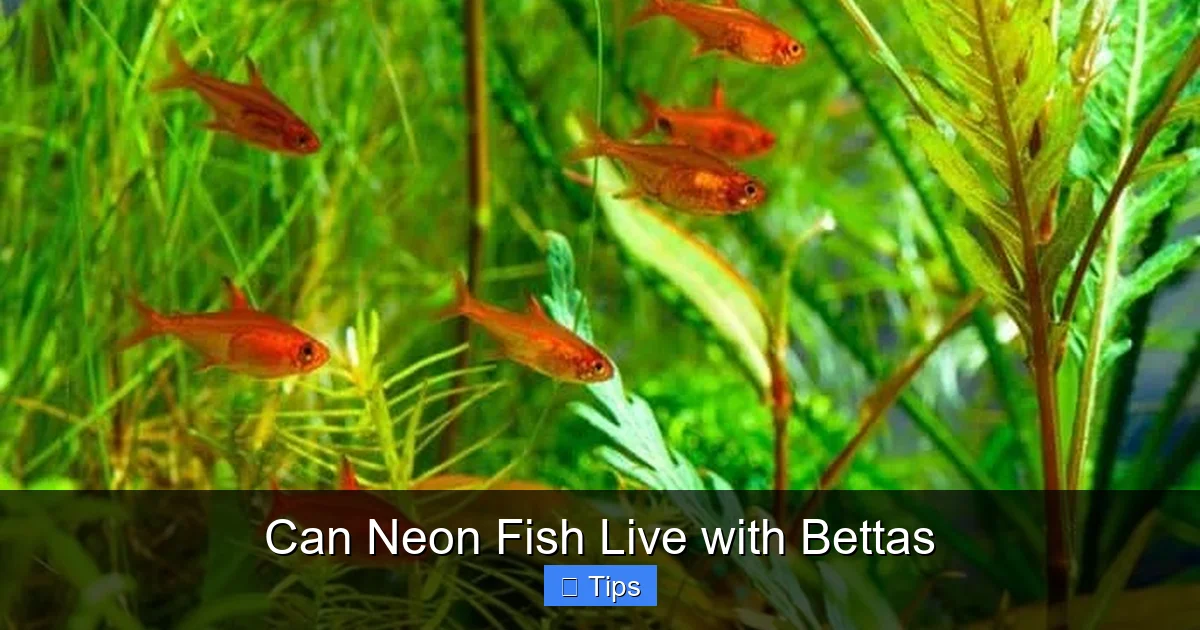
Visual guide about Can Neon Fish Live with Bettas
Image source: tetra-fish-care.com
Essential Schooling Behavior
Neon tetras are a true schooling species. They are psychologically and physically stressed when kept alone or in small groups (fewer than 6-8). A proper school of 10-15 or more provides security, reduces stress, and allows them to exhibit natural behaviors. When threatened by a betta, a tight school is their primary defense mechanism. If the school is too small, individuals are picked off more easily. A large, cohesive school is a non-negotiable requirement for any chance of success.
Sensitivity to Water Quality and Environment
Neons are native to the blackwater streams of the Amazon basin. They thrive in soft, slightly acidic, very clean water. They are extremely sensitive to ammonia, nitrite, and nitrate spikes. A betta tank, especially one understocked for the betta alone, can have unstable water parameters. The bioload of a large neon school actually helps stabilize a tank, but the initial cycling must be impeccable. Any water quality issue will hit neons first and hardest, leading to disease like neon tetra disease or ich.
Stress is a Killer
Constant harassment from a betta, even if no physical injury occurs, creates chronic stress in neon tetras. Stressed fish have weakened immune systems, fade in color, hide constantly, and lose appetite. This chronic stress is a slow, silent killer, making them susceptible to opportunistic infections. A successful tank must minimize stress for the neons above all else.
Tank Setup: The Foundation for Peace (If You Dare)
If you are an experienced hobbyist considering this mix, your tank setup is 90% of the battle. A standard 10-gallon betta tank is a death sentence for neon tetras. Here is the blueprint for a *potential* success story.
Visual guide about Can Neon Fish Live with Bettas
Image source: petpad.net
Size: Bigger is Infinitely Better
The absolute minimum recommended is a 30-gallon long tank. A 40-gallon breeder is even better. Why? Space. In a larger volume, a betta’s territory is diluted. Neons have room to school and swim at mid-levels away from the betta’s surface-level patrol. More space also means more stable water parameters, which is critical for sensitive neons. A long tank provides more horizontal swimming territory, which is more valuable to neons than vertical height.
The Art of Aquascaping: Breaking the Line of Sight
Your goal is to make the tank a maze, not an open arena. You must physically obstruct the betta’s view of the neon school at all times.
- Dense Planting: Use live plants like Java moss, Anubias, Cryptocorynes, and floating plants like water lettuce or duckweed. These create thick forests where neons can dart and hide. Silk plants are a viable alternative if you lack a green thumb.
- Hardscape: Driftwood, large rocks, and clay pots create caves, crevices, and visual barriers. Position these to divide the tank into zones.
- Vertical Layers: Ensure plants and structures fill all levels—surface, mid-water, and substrate. This gives neons escape routes in three dimensions.
Tank Mates as “Dither Fish”
Some aquarists introduce other peaceful, fast, non-flashy schooling fish *before* the betta and neons to distract the betta and occupy its attention. Good candidates include harlequin rasboras or a large school of ember tetras (which are less likely to trigger aggression due to their plain color). These “dither fish” can establish a routine that the betta gets used to before the neons are added, potentially reducing the novelty factor. This is an advanced tactic with its own risks.
The Introduction Protocol: A Delicate Dance
How you introduce the fish is as important as the tank itself. Rushing this process is a common cause of failure.

Visual guide about Can Neon Fish Live with Bettas
Image source: fishtankexpert.com
Step 1: The Neon School First
Cycle your large, heavily planted tank fully. Then, add your school of 10-15 neon tetras. Let them acclimate for at least 2-4 weeks. During this time, they will explore, claim their spaces, and feel secure in their environment. They will learn where the plants and hiding spots are. This is critical. You are giving them home-field advantage before the “bully” arrives.
Step 2: The Betta’s Introduction
When adding the betta, use the drip acclimation method to equalize water parameters. Once in the tank, observe immediately from outside the tank. Do not use a divider initially. Watch for the first 24-48 hours with extreme attention.
- Signs of a Potential Problem: Immediate, relentless chasing; the betta flaring its gills and fins constantly at the neons; the betta cornering a neon; neons frantically hiding and not coming out to feed.
- Acceptable Behavior: Occasional, curious investigation that the neons easily evade by darting into plants; the betta mostly minding its own business near the surface while neons school in the mid-water column.
Step 3: The Long Observation Period
Even if the first 48 hours seem calm, the real test comes over the next 2-3 weeks. Bettas can be sneaky. Watch for subtle signs: a neon with a torn fin, a neon that is consistently pale and isolated, or the betta “hovering” near a plant where neons are hiding. Be prepared to intervene at any moment.
When It Goes Wrong: Recognizing and Acting on Stress
Despite your best efforts, this pairing often fails. You have a moral responsibility to recognize suffering and act.
Neon Tetra Stress Signals
- Fading Color: Their brilliant blue and red stripes become dull and grayish.
- Constant Hiding: They do not come out to feed or school, even when the betta is not in sight.
- Rapid Breathing or Clamped Fins: Signs of poor water quality or extreme stress.
- Physical Injury: Torn fins, missing scales, or bite marks.
- Isolation: A single neon separated from the school is a target.
The Betta’s Aggression Signals
- Persistent flaring (gills puffed out) directed at neons.
- Chasing neons to the point of exhaustion.
- Nipping at fins or bodies.
- Patrolling a specific area of the tank aggressively.
The Only Humane Response: Separation
If you see consistent signs of stress or aggression, you must separate them immediately. This is not a “wait and see” situation. Have a backup plan: a separate 10+ gallon hospital/quarantine tank ready. Move the neons to their own tank or move the betta to a separate tank. Do not hope it will get better. Chronic stress will kill the neons, and a persistent betta will eventually succeed in harming one.
The Verdict and Safer Alternatives
After this deep dive, the verdict is clear: Can neon fish live with bettas? Yes, it is physically possible under a very specific, resource-intensive set of circumstances. But is it a good idea or a recommended practice? For 95% of hobbyists, especially beginners, the answer is a resounding no. The risks to the neon tetras—chronic stress, physical injury, and death—are simply too high, and the margin for error is razor-thin.
Recommended Safer Tank Mates for Bettas
If you want a community tank with your betta, choose species that are less likely to trigger aggression and are hardier:
- Bottom-Dwellers: Corydoras catfish, Kuhli loaches, or Bristlenose plecos. They occupy a different tank layer and are armored.
- Non-Flashy, Fast Schoolers: Ember tetras (small and plain), harlequin rasboras, or cherry barbs (in a large school).
- Snails and Shrimp: Nerite snails, Malaysian trumpet snails, or large Amano shrimp can be good cleanup crew (though some bettas will still hunt shrimp).
The Ethical Choice: Separate Tanks
The most responsible and stress-free approach is to keep your betta in its own beautifully aquascaped tank, where it can be the majestic centerpiece it was bred to be. Then, set up a separate, species-only tank for your neon tetras. This allows you to provide each species with its ideal, stress-free environment: a warm, spacious, planted tank for the betta, and a soft, acidic, heavily-planted school for the neons. You get the joy of two stunning tanks, and your fish get the peaceful, healthy lives they deserve.
In the end, a beautiful aquarium is not just about the visual spectacle. It’s about creating a balanced, safe ecosystem where all inhabitants can thrive without fear. While the image of a betta and neons together is iconic, the reality is often one of conflict and suffering. As a fish keeper, your priority is the welfare of your animals. Making the tough choice to keep them separate is not a failure; it’s a mark of an experienced and compassionate aquarist.
Frequently Asked Questions
What size tank do I need for neon tetras and a betta?
An absolute minimum of 30 gallons is strongly recommended, with a 40-gallon breeder being ideal. This provides enough space for the neon school to evade the betta’s territory and for water parameters to remain stable.
Can a female betta live with neon tetras?
Female bettas are often less aggressive than males and may have a slightly higher chance of cohabiting with a large neon tetra school. However, individual personalities vary, and female bettas can still be bullies. It is not a guaranteed safe pairing.
How many neon tetras should I keep with a betta?
If you attempt this mix, you must keep a large, proper school of at least 10-15 neon tetras. A larger school makes it harder for a betta to single out an individual and provides the neons with necessary security.
What are the first signs my betta is harassing the neon tetras?
Look for relentless chasing, the betta flaring its gills constantly at the neons, the betta cornering a neon against the glass, or neons frantically hiding and refusing to come out to eat. Any consistent chasing is a major red flag.
My betta seems calm. Can I leave the neons unsupervised?
No. You must observe the tank daily, especially after introduction and for the first few weeks. Bettas can be sneaky and may appear calm until they decide to act. Constant vigilance is required for the safety of the neons.
What should I do if my betta starts attacking the neon tetras?
You must separate them immediately. Have a backup cycled tank ready. Move the neon tetras to their own tank or move the betta to a separate tank. Do not hope the behavior will stop on its own; it will almost certainly escalate and result in injury or death.