How to Take Care of Your Betta Fish Part 2

Taking care of your betta fish part 2 dives deeper into water quality, feeding routines, tank decorations, and common health issues. This guide builds on the basics and gives you practical steps to keep your betta thriving long-term. You will learn how to maintain clean water, choose the right food, spot early signs of illness, and create a stimulating habitat.
So you have already learned the basics of how to take care of your betta fish part 2 builds on that foundation. In part one, we covered the essentials like choosing the right tank and understanding basic betta behavior. Now it is time to go deeper. You will learn about water quality management, feeding strategies, tank decorations, common health problems, and how to build a care routine that actually sticks.
Betta fish are beautiful, lively creatures that bring joy to any room. But they need more than just a bowl of water and a pinch of flakes. Without proper care, even the hardiest betta can develop health issues. This guide gives you the next level of knowledge. Think of it as your go-to reference for keeping your betta happy, colorful, and active for years to come.
Whether you are a beginner or already have some experience, these tips will help you improve your setup and avoid common mistakes. We keep things simple and practical here. No jargon, no confusing advice. Just clear steps you can follow today.
Key Takeaways
- Water quality is everything: Regular water changes and proper temperature keep your betta healthy and stress-free.
- Feeding matters more than you think: A balanced diet with the right portions prevents common health problems.
- Tank setup affects happiness: Decorations, hiding spots, and gentle filtration make a big difference in your betta’s well-being.
- Early detection saves lives: Knowing the signs of common betta diseases helps you act fast and treat issues before they worsen.
- Consistency beats perfection: A simple daily and weekly routine keeps your betta fish care efforts sustainable and effective.
📑 Table of Contents
Water Quality and Temperature Management
Water quality is the single most important factor in betta fish care. Your fish lives in the same water every single day. If that water is dirty or the wrong temperature, your betta will get stressed. Stressed fish get sick more easily and their colors fade.
Start with the basics. Betta fish need a water temperature between 76 and 82 degrees Fahrenheit. Use a small fish tank heater to maintain a steady temperature. Room temperature water can swing too cold or too warm, especially in winter. If you want extra guidance, check out our article on how to keep your betta fish warm for seasonal tips.
How Often Should You Change the Water?
Aim for a 25 to 30 percent water change every week. This removes waste, excess food, and harmful chemicals. Use a gravel vacuum to clean the substrate at the same time. Always treat new water with a water conditioner before adding it to the tank. Tap water contains chlorine and chloramine that can harm your fish.
Testing Water Parameters
Invest in a simple liquid test kit. You want to monitor ammonia, nitrite, and nitrate levels. Ammonia and nitrite should always read zero. Nitrates should stay below 20 parts per million. Testing takes just a few minutes each week but prevents many problems down the road. Clean water quality leads directly to a happier, healthier betta.
Feeding Your Betta Fish the Right Way
Feeding seems simple, but it is one of the areas where most betta owners make mistakes. Overfeeding is the number one cause of health issues in captive bettas. A proper feeding schedule keeps your fish at a healthy weight and maintains clean water.
What Should You Feed Your Betta?
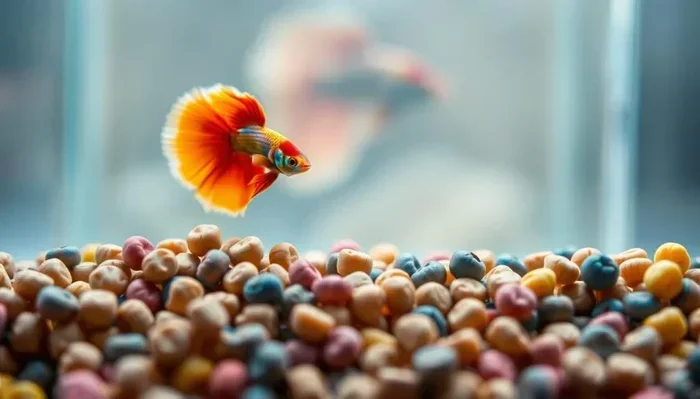
Betta fish are carnivores. They need protein-rich food. High-quality betta pellets should be your staple food. Look for pellets where the first ingredient is fish meal or shrimp. You can also offer frozen or live foods like bloodworms, brine shrimp, and daphnia as treats. These make a great betta fish diet supplement two to three times a week.
How Much and How Often?
Feed your betta two small meals per day. Give only what your fish can eat in two minutes. If there is leftover food in the tank, you have given too much. Excess food decays quickly and spikes ammonia levels. A good fish feeding schedule helps you stay consistent and prevents overfeeding.
Skipping Days for Digestive Health
Here is a tip many new owners do not know. Skipping one feeding day per week helps your betta digest food properly. It also gives the beneficial bacteria in your tank a break. Your fish will not starve from one missed day. In fact, it mimics their natural eating patterns in the wild.
Tank Setup and Decorations
A well-designed tank does more than look pretty. It reduces stress and encourages natural behavior. Your betta needs hiding spots, open swimming areas, and gentle water flow. Getting the tank setup right makes a noticeable difference in your fish’s mood and energy levels.
Choosing the Right Tank Size
A 5-gallon tank is the minimum recommended size for a single betta. Larger tanks are even better because they provide more stable water parameters. A 10-gallon tank gives you more room for decorations and makes maintenance easier. Avoid tiny bowls or vases. They limit movement and make it hard to maintain water quality.
Adding Decorations and Plants
Use silk plants rather than sharp plastic ones. Betta fins are delicate and can tear on rough edges. Live plants like java fern, anubias, and amazon sword work great. They also help absorb nitrates naturally. Add caves, driftwood, and gentle hiding spots. Your betta will appreciate having places to rest and explore.
For more ideas on creating a beautiful and functional habitat, visit our guide on how to decorate your betta fish tank. It is full of creative and practical tips.
Filtration and Water Flow
Betta fish prefer gentle water flow. Strong filters can tire them out. Use a sponge filter or adjust the flow with a baffle. The filter should run quietly and keep the water circulating without creating strong currents. Good filtration supports the aquarium maintenance routine and keeps your tank cycled properly.
Common Health Issues and Prevention
Even with the best care, betta fish can get sick. The good news is that most common problems are preventable. Learning to recognize early warning signs gives you a big advantage. Quick action can mean the difference between a minor issue and a serious illness.
Signs Your Betta Is Unhealthy
Watch for these warning signs:
- Clamped fins: Fins held close to the body instead of spread out
- Loss of color: Fading or dull appearance
- Loss of appetite: Refusing food for more than a day
- Lethargy: Spending most of the time at the bottom or hiding
- White spots on the body: A sign of ich or fungal infection
- Bulging eyes: Could indicate dropsy or infection
If you notice any of these symptoms, act quickly. Check the water parameters first. Often, poor water quality is the root cause. If the problem persists, consider using aquarium salt or a targeted treatment. For more serious cases, our article on how to make your betta fish healthy again offers detailed recovery steps.
Preventing Disease Before It Starts
Prevention is always easier than treatment. Keep these habits in mind:
- Perform weekly water changes consistently
- Do not overfeed your fish
- Quarantine new fish before adding them to your main tank
- Wash your hands before and after tank maintenance
- Keep the tank away from direct sunlight and drafts
- Monitor water temperature daily
These simple habits build a strong defense against disease. They also support your betta fish tank ecosystem and keep the environment stable.
Building a Daily and Weekly Care Routine
Consistency is the secret to successful betta fish care. A routine takes the guesswork out of daily maintenance. Once it becomes habit, you will not even think about it. Your fish benefits from the stability, and you stay confident that you are doing everything right.
Your Daily Betta Care Checklist
Spend just a few minutes each day on these tasks:
- Feed your betta at the same times each day
- Observe your fish for any unusual behavior
- Check that the heater and filter are working
- Look for any uneaten food and remove it
- Enjoy watching your betta and notice any changes in appearance
Your Weekly Care Routine
Set aside 20 to 30 minutes once a week for these tasks:
- Perform a 25 to 30 percent water change
- Vacuum the gravel to remove debris
- Test water parameters with your test kit
- Rinse filter media in old tank water (not tap water)
- Wipe down the inside glass to remove algae
- Trim any live plants if needed
Following this routine keeps your tank in great shape. It also helps you catch small problems before they become big ones. A consistent aquarium maintenance schedule is the backbone of long-term betta health.
Seasonal Adjustments
Your care routine should shift slightly with the seasons. In colder months, your tank heater works harder to maintain temperature. You may need to check the heater more frequently. In warmer months, evaporation increases, so top off the water more often. If you live in a region with harsh winters, our article on how to take care of betta fish in winter provides valuable seasonal guidance.
Final Thoughts on Long-Term Betta Care
Caring for a betta fish is a rewarding journey. Each day you learn something new about your fish and their needs. The betta fish care tips in this guide give you a solid path forward. From water quality to feeding, decorations to health monitoring, you now have the tools to provide excellent care.
Remember that every betta is unique. Some are active and playful, while others are calm and quiet. Pay attention to your individual fish and adjust your approach accordingly. With patience and consistency, your betta will thrive. You will enjoy watching their colors deepen, their fins flow gracefully, and their personality shine through.
Start with one or two changes today. Do not try to fix everything at once. Small, steady improvements lead to the best results. Your betta fish will thank you with years of companionship and beauty.
For a complete overview of all the fundamentals, revisit our guide on how to properly take care of betta fish. It pairs perfectly with this guide and covers the full spectrum of care topics.
Frequently Asked Questions
How often should I clean my betta fish tank?
Perform a partial water change of 25 to 30 percent every week. This removes waste and keeps water quality stable without disrupting the beneficial bacteria in your tank.
Can I keep my betta fish in a bowl without a filter?
While bettas can survive in small bowls, a 5-gallon tank with a gentle filter is much better. It provides more stable conditions and makes betta fish care easier and more effective.
What is the best food for betta fish?
High-quality betta pellets should be the foundation of their diet. Supplement with frozen or live foods like bloodworms and brine shrimp a few times a week for a balanced betta fish diet.
How can I tell if my betta fish is happy?
A happy betta has vibrant colors, spread fins, a good appetite, and active swimming behavior. If your fish is hiding constantly or has clamped fins, check the water conditions and look for signs of stress.
Do betta fish need a heater?
Yes, betta fish need a heater to maintain a steady temperature between 76 and 82 degrees Fahrenheit. Temperature swings can weaken their immune system and lead to illness.
What should I do if my betta fish stops eating?
First, check the water temperature and quality. Then try offering a different food type. If your betta still refuses food for more than two days, look for other symptoms and consider consulting a fish health guide or how to make your betta fish healthy again for recovery tips.
=== CONCLUSION ===
Learning how to take care of your betta fish part 2 gives you the confidence to provide a truly great home for your fish. Focus on water quality, feeding routines, tank setup, and health monitoring. Build a consistent schedule and stick with it. Your betta will reward you with vibrant colors, playful behavior, and years of companionship. Start today, stay patient, and enjoy every moment of this rewarding hobby.