How to Bring a Betta Fish Home

Bringing a betta fish home is exciting, but it takes the right preparation to keep your new pet healthy and stress-free. This guide covers everything you need to know, from choosing the right tank and setting up water conditions to safely transporting your betta fish and helping it adjust to its new environment. Follow these simple steps to give your betta fish the best start in its new home.
Bringing a betta fish home is one of the most rewarding experiences for any fish lover. These colorful, lively creatures make wonderful pets, but the transition from the pet store to your home can be a big adjustment for them. The way you handle this first journey sets the tone for your betta fish care routine for years to come.
Many beginners make the mistake of rushing the process. They grab a betta fish from the store shelf, toss it in a bag, and head home without a second thought. That approach often leads to stress, illness, or even loss. Taking a few extra steps to prepare makes all the difference.
This guide walks you through every stage of bringing your betta fish home safely. You will learn what to buy before the trip, how to transport your fish properly, and how to help your new pet settle in. By the end, you will feel confident and ready to give your betta fish the best possible start.
Key Takeaways
- Plan ahead: Set up your betta fish tank and water conditions before bringing your fish home.
- Transport safely: Use a proper container and keep the journey short and stress-free for your betta fish.
- Acclimate slowly: Gradually adjust your betta fish to new water temperature and conditions over 15-30 minutes.
- Choose the right setup: A minimum 5-gallon tank with a heater and filter gives your betta fish the best chance to thrive.
- Monitor closely: Watch for signs of stress or illness during the first few days after bringing your betta fish home.
📑 Table of Contents
- Why Bringing Your Betta Fish Home Right Matters
- What You Need Before Bringing Your Betta Fish Home
- How to Transport Your Betta Fish Safely
- Acclimating Your Betta Fish to Its New Home
- Setting Up the Perfect Environment for Your Betta Fish
- What to Expect During the First Few Days
- Final Thoughts on Bringing Your Betta Fish Home
Why Bringing Your Betta Fish Home Right Matters
Betta fish are sensitive creatures. They respond strongly to changes in their environment, especially water temperature, water quality, and surrounding noise. When you bring a betta fish home the right way, you reduce stress and lower the risk of common health problems like ich, fin rot, and bacterial infections.
Think of it this way. Imagine being dropped into a completely new country with no preparation. You would feel overwhelmed and disoriented. Your betta fish feels the same way when it enters a new tank for the first time. The acclimation process gives your fish time to adjust gradually.
A smooth transition also helps your betta fish build a stronger immune system. Stressed fish are more prone to disease. A calm, well-prepared environment lets your fish focus on exploring, eating, and thriving rather than surviving.
What You Need Before Bringing Your Betta Fish Home
Before you even step foot in the pet store, you should have your setup ready. Walking in unprepared often leads to impulse buys and poor decisions. Here is a checklist of everything you need.
Choose the Right Tank Size
Many people still believe betta fish thrive in tiny bowls. That is a myth. A betta fish needs at least a 5-gallon tank to stay healthy and active. Larger tanks provide more stable water conditions and room for swimming. Check out our guide on how big a betta fish tank needs to be for more details on sizing.
Set Up Your Filtration and Heating
Betta fish need warm water between 76 and 82 degrees Fahrenheit. A small heater and a gentle filter keep the environment stable. Avoid strong filters that create too much current, as bettas prefer calm water. A sponge filter works great for most setups.
Prepare Your Water
Tap water contains chlorine and chloramines that harm betta fish. You need to treat your water with a dechlorinator before adding it to the tank. Our article on how to prepare water for a betta fish covers the best water treatment methods and testing tips.
Gather Essential Supplies
- Tank and lid: Betta fish are jumpers, so a secure lid is essential.
- Heater: A 25-50 watt adjustable heater works well for 5-gallon tanks.
- Filter: A gentle sponge filter keeps water clean without strong currents.
- Thermometer: You need to monitor water temperature daily.
- Dechlorinator: Treats tap water before adding it to the tank.
- Substrate: Gravel or sand designed for freshwater tanks.
- Decorations: Plants and hiding spots reduce stress.
- Net: For gentle handling and water changes.
How to Transport Your Betta Fish Safely
The journey home matters more than most people realize. A bumpy car ride or a long trip can stress your betta fish out significantly. Here is how to make the transport as smooth as possible.
Use the Right Container
Most pet stores provide a small plastic bag filled with water for transport. This works fine for short trips. Place the bag in a sturdy, opaque container to block out light and reduce shock. Avoid carrying the bag by the top alone, as it can easily tip over.
For longer trips, consider a small plastic container with a secure lid. Poke a few small holes for air. Do not fill it to the top, as this gives the water room for oxygen exchange. Keep the container steady and level during the drive.
Keep the Journey Short and Calm
Try to make the trip home as brief as possible. Ideally, your betta fish should spend less than one hour in the transport container. Drive smoothly and avoid sudden stops or sharp turns. Keep the container away from direct sunlight and hot car seats.
Do not open the bag during the ride. Opening it introduces new water conditions too quickly and can spill the contents. Keep the bag sealed and the environment calm until you are ready to begin the acclimation process at home.
Acclimating Your Betta Fish to Its New Home
Acclimation is the most important step in bringing a betta fish home. This process slowly adjusts your fish to the new water conditions in your tank. Skipping or rushing this step can cause temperature shock and chemical stress.
The Float Method
The float method is the most common and effective acclimation technique. Follow these steps carefully:
- Turn off the tank lights. Bright light can startle your betta fish during adjustment.
- Float the sealed bag on the tank surface. Let it sit for 10-15 minutes. This equalizes the temperature between the bag water and tank water.
- Open the bag and add a small cup of tank water. Wait another 10 minutes. Repeat this two more times over the next 20-30 minutes.
- Gently net the betta fish into the tank. Do not pour the bag water into your tank, as it may contain contaminants from the store.
- Let the fish explore. Keep the lights dim for the first few hours.
For more detailed acclimation techniques, you can also check our guide on how to transfer a betta fish to a bowl if you are using a bowl setup.
Alternative: The Drip Method
The drip method provides an even slower and gentler transition. You use a tube to slowly drip tank water into the bag over 30-60 minutes. This method works well for sensitive fish or when the store water conditions differ greatly from your home setup. It takes more patience but offers the safest adjustment for your betta fish.
Setting Up the Perfect Environment for Your Betta Fish
Once your betta fish is in the tank, you want to make sure the environment supports good health. A well-planned setup reduces stress and encourages natural behavior like swimming, exploring, and building bubble nests.
Water Conditions Matter
Betta fish thrive in clean, warm, and gently filtered water. Test your water parameters regularly. The ideal range is:
- Temperature: 76-82 degrees Fahrenheit
- pH: 6.5-7.5
- Ammonia: 0 ppm
- Nitrite: 0 ppm
- Nitrate: Below 20 ppm
For ongoing water care tips, see our article on how to take care of betta fish water to keep your tank in top condition.
Add Plants and Hiding Spots
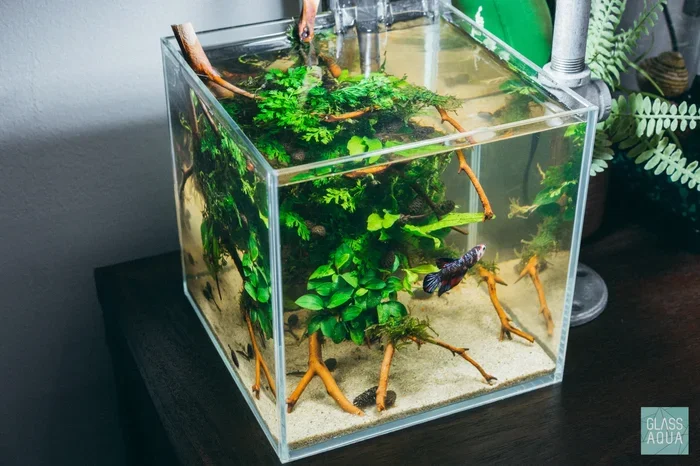
Live or silk plants give your betta fish places to rest and explore. Bettas love gentle plants like java fern, anubias, and silk floating plants. Avoid sharp plastic decorations that can tear delicate fins. Adding hiding spots helps shy bettas feel secure, especially during the first few days at home.
Feed Properly from Day One
Offer your betta fish a small amount of high-quality betta pellets or flakes once or twice a day. Soak dry food before feeding to prevent bloating. You can also treat your fish with a pea or a frozen bloodworm occasionally. Avoid overfeeding, as uneaten food fouls the water quickly.
What to Expect During the First Few Days
Your betta fish may act differently during the first 48-72 hours at home. Some fish hide constantly, while others explore right away. Both behaviors are normal responses to a new environment.
Watch for these signs of a healthy adjustment:
- Eating within 24 hours: A good appetite shows your betta fish is feeling comfortable.
- Bright colors: Vibrant color returns as stress fades.
- Active swimming: Exploring the tank and building bubble nests are positive signs.
- Fins held open: Clamped fins can indicate stress or illness.
If your fish refuses food for more than two days or shows signs of white spots, lethargy, or rapid breathing, check your water parameters immediately. Early detection of problems leads to faster treatment and better outcomes.
Common Mistakes to Avoid
- Skipping the acclimation process entirely.
- Placing the tank in direct sunlight or near drafts.
- Overfeeding during the first few days.
- Cleaning the filter too aggressively, which removes beneficial bacteria.
- Adding other fish too quickly without a quarantine period.
Final Thoughts on Bringing Your Betta Fish Home
Bringing a betta fish home is a journey that starts long before you pick up your new pet. Preparation, patience, and gentle handling are the keys to success. Every step you take from the pet store to the first week at home shapes your betta fish health and happiness.
Remember that a well-settled betta fish can live five years or more with proper care. The effort you put into this transition pays off in the form of a vibrant, active, and engaging companion. Take your time, follow these guidelines, and enjoy the wonderful experience of welcoming a betta fish into your home.
For more tips on betta fish care, browse our collection of guides covering everything from tank setup to feeding routines. Your journey as a betta fish owner starts with these first steps, and we are here to help you every step of the way.
Frequently Asked Questions
How long does it take for a betta fish to adjust to a new home?
Most betta fish take 3-7 days to fully adjust to a new home. During this time, they may hide, refuse food, or seem less active. Providing a calm environment with dim lighting and stable water conditions helps speed up the adjustment process significantly.
Can I put my betta fish directly into the tank without acclimation?
You should never skip the acclimation process. Dumping a betta fish directly into new water can cause temperature shock, pH stress, and chemical exposure. Even if the water looks the same, gradual adjustment gives your fish time to adapt safely and reduces the risk of illness.
What should I feed my betta fish the first day at home?
Offer a small amount of high-quality betta pellets or flakes on the first day. Your betta fish may not eat right away, which is normal. Wait until the second day if needed. Soaking dry food before feeding helps prevent digestive bloating and keeps water quality stable.
Do I need a heater for my betta fish tank?
Yes, a heater is essential for betta fish. They need warm water between 76 and 82 degrees Fahrenheit to stay healthy. Without a heater, room temperature water is often too cold, which weakens the immune system and makes betta fish vulnerable to disease and lethargy.
How do I know if my betta fish is stressed after bringing it home?
Signs of stress include clamped fins, hiding constantly, refusing food, faded colors, and rapid breathing. Check your water parameters first, as poor water quality is the most common cause. Reducing noise and light levels around the tank also helps calm a stressed betta fish quickly.
Can I add other fish with my new betta fish right away?
It is best to wait at least two to four weeks before introducing tank mates. This gives your betta fish time to settle in and recover from transport stress. Always research compatibility carefully, as betta fish can be territorial and may not get along with all species.