How Many Times per Day to Feed Betta Fish
Feeding your betta fish the right number of times per day is one of the most important parts of betta fish care. Most experts recommend feeding adult bettas two to three times per day in small portions. Overfeeding is the biggest mistake new fish owners make, and it can lead to serious health problems. This guide covers the ideal feeding frequency, portion sizes, best foods, and warning signs to watch for.
Keeping a betta fish healthy starts with one simple thing: knowing how many times per day to feed betta fish. It is tempting to toss in a handful of food whenever you walk past the tank. But the truth is, betta fish feeding schedule matters a lot more than most people realize. Too much food leads to bloating, dirty water, and a shortened lifespan. Too little, and your fish loses energy and color. This guide breaks down exactly what you need to know about feeding frequency, portion sizes, and the best foods for your betta.
Whether you just brought home your first betta or you have had one for years, understanding how often to feed betta fish can make all the difference. In this article, we will cover everything from daily feeding routines to special situations like fasting days and vacation feeding. By the end, you will feel confident about your betta fish diet and know exactly how to keep your fish thriving.
Key Takeaways
- Feed adult bettas 2-3 times per day with small portions sized to their eye.
- Overfeeding is the #1 danger and can cause bloating, constipation, and poor water quality.
- A varied diet of pellets, flakes, bloodworms, and brine shrimp keeps bettas healthy and vibrant.
- Watch for hunger and fullness cues like begging behavior or a swollen belly.
- Adjust feeding based on age — fry need more frequent meals, while older bettas may need less.
- Skip one feeding day per week to support digestion and prevent overeating.
- Consistency matters more than quantity — stick to a regular feeding schedule every day.
📑 Table of Contents
- How Many Times per Day to Feed Betta Fish
- What Happens If You Overfeed Your Betta Fish
- Best Foods for Your Betta Fish
- Creating the Perfect Feeding Schedule
- Signs Your Betta Fish Is Hungry or Full
- Special Feeding Situations
- Common Mistakes to Avoid
- Final Thoughts on How Many Times per Day to Feed Betta Fish
How Many Times per Day to Feed Betta Fish
The Short Answer: Two to Three Times Daily
The standard recommendation for adult betta fish is to feed them two to three times per day. Each feeding should be a small portion — roughly the size of your betta’s eye. This is a general guideline that works for most healthy adult bettas. But there is a bit more to it than just counting meals.
Feeding frequency depends on several factors. These include your betta’s age, activity level, water temperature, and overall health. A young, active betta in warm water will burn through energy faster than an older, less active fish. That means younger bettas sometimes do well with three small meals a day, while older bettas may thrive on just two.
Many beginners wonder about how much to feed betta fish at each sitting. The golden rule is simple: give only what your fish can eat in two to three minutes. If there is leftover food after that time, you have given too much. Remove any uneaten food right away to keep the tank water clean.
Why Feeding Frequency Matters
Betta fish have small stomachs. Their digestive system is not built to handle large meals. In the wild, bettas eat small amounts throughout the day. They snack on insects, larvae, and tiny organisms that they find in the water. Replicating this pattern at home means offering small, frequent meals rather than one big feeding.
Feeding your betta the right number of times per day also supports stable energy levels. A well-fed betta is active, curious, and displays bright colors. An overfed betta becomes lethargic and may develop swim bladder issues. An underfed betta becomes thin, pale, and stressed. Finding the sweet spot in your feeding routine is key to long-term health.
What Happens If You Overfeed Your Betta Fish
The Dangers of Too Much Food
Overfeeding is the most common mistake betta owners make. It is easy to do because bettas are enthusiastic eaters. They will often beg for food even when they are full. But giving in to those begging behaviors can cause real harm.
When a betta eats more than its stomach can handle, the excess food sits in the digestive tract. This leads to bloating, constipation, and a condition called swim bladder disease. In serious cases, overfeeding can even be fatal. The symptoms of an overfed betta include a swollen belly, difficulty swimming, and loss of appetite.
How Overfeeding Ruins Water Quality
Uneaten food does not just disappear. It sinks to the bottom of the tank and starts to decompose. This process releases ammonia and nitrites into the water. Even small amounts of these chemicals can be toxic to bettas. Over time, overfeeding leads to spikes in ammonia levels, which can cause gill damage and respiratory problems.
This is why how many times to feed betta fish is so closely tied to tank maintenance. If you feed too often, you will need to change the water more frequently. A good betta fish feeding schedule naturally keeps waste production low and water quality stable.
Signs You Are Overfeeding
Watch for these warning signs that you might be giving your betta too much food:
- Cloudy water that needs frequent changes
- A bloated or rounded belly that does not go down
- Food left uneaten after several minutes
- Lethargy or loss of interest in swimming
- Floating at the top or struggling to stay upright
If you notice any of these signs, reduce your portion size immediately. You might also want to skip one feeding day to let your betta’s digestive system reset.
Best Foods for Your Betta Fish
High-Quality Pellets: The Staple Diet
Betta pellets should form the foundation of your fish’s diet. Look for pellets specifically made for bettas, not generic tropical fish food. Quality betta pellets are packed with protein and have the right nutritional balance. They also sink or float at a rate that makes it easy for your betta to eat.
When it comes to how many pellets to feed betta fish daily, a good starting point is three to five pellets per feeding. You can adjust this based on how quickly your betta eats and how its body condition looks over time. How many pellets to feed a betta fish is a common question, and the answer depends on the pellet size and brand. Always check the feeding instructions on the package as a baseline.
Live and Frozen Foods for Variety
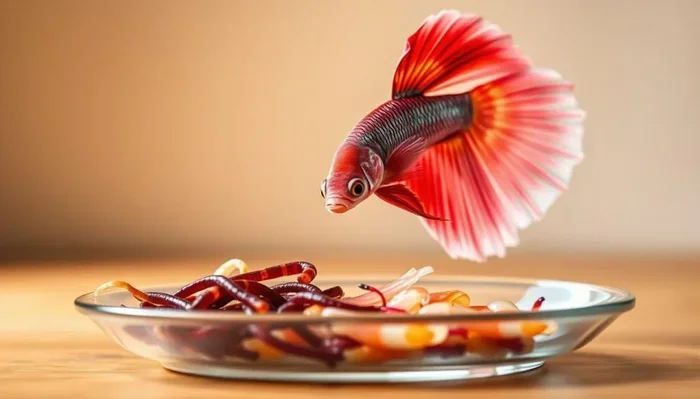
Betta fish are natural hunters. They enjoy the challenge of catching live food. Bloodworms and brine shrimp are two of the best options. These foods are rich in protein and mimic what bettas would eat in the wild. Offer live or frozen treats two to three times per week as part of your betta fish diet.
Freeze-dried foods are a convenient alternative. They have a long shelf life and are easy to store. Just make sure to soak them in tank water before feeding. Dry foods can expand in your betta’s stomach, which may cause digestive discomfort.
Fish Flakes: A Convenient Option
While pellets are generally preferred, fish flakes can work as part of a varied diet. Flakes tend to break apart quickly and can cloud the water. If you use flakes, give only a tiny pinch and remove any uneaten flakes after a few minutes. Many experienced betta keepers prefer pellets because they are less messy and more nutritionally dense.
Foods to Avoid
Not all human foods are safe for bettas. Avoid feeding bread, crackers, or processed snacks. These foods contain fillers and additives that bettas cannot digest. Some owners wonder about can you feed earthworms to betta fish or other insects. The answer is yes, in moderation, as long as the food is clean and free of pesticides.
Creating the Perfect Feeding Schedule
A Sample Daily Routine
Consistency is the secret to a healthy betta. Pick two or three feeding times and stick to them every day. Here is a simple routine that works well for most bettas:
- Morning feeding (8-9 AM): Give a small portion of pellets. Watch your betta eat for two to three minutes.
- Afternoon feeding (1-2 PM): Offer a second small meal, especially if your betta is young and active.
- Evening feeding (6-7 PM): Provide a light third feeding if needed, or skip it and let your betta fast overnight.
This routine mirrors natural feeding patterns and keeps your betta’s metabolism steady. If you are away from home during the day, two feedings — morning and evening — are perfectly fine.
What About Weekends and Vacations?
Life gets busy, and sometimes you cannot feed your betta at the exact same times. That is okay. Bettas are resilient fish that can handle a missed feeding here and there. If you are going on vacation, you have options like automatic feeders or asking a friend to feed your fish. A weekend without food will not hurt your betta in the slightest.
The Fasting Day: Why One Day Off Matters
Many experienced betta keepers recommend fasting your fish one day per week. This means no food at all for 24 hours. Fasting helps clear the digestive system and prevents constipation. It also mimics the natural eating patterns bettas experience in the wild, where food is not always available every single day.
Some owners ask can you feed betta fish every other day as an alternative to daily feedings. While this is not ideal for most adult bettas, it can work for fish that are prone to overeating or bloating. The key is to monitor your betta’s body condition and adjust accordingly.
Signs Your Betta Fish Is Hungry or Full
Understanding Hunger Cues
Betta fish are expressive creatures. They quickly learn when feeding time approaches. You may notice your betta swimming near the top of the tank or hovering at the water’s surface when it is time to eat. These behaviors are normal and expected.
However, some hunger signs can be misleading. A betta that constantly begs for food is not necessarily hungry. Bettas learn to associate their owner’s presence with feeding time. They will often act hungry even if they just ate. This is why it is important to stick to a schedule and resist the urge to feed extra portions outside of mealtimes.
Recognizing Fullness Signals
A full betta fish will slow down or stop eating altogether. If your betta spits out food or ignores pellets that it normally devours, it is probably full. A slightly rounded belly is normal and healthy. But if the belly looks tight, swollen, or distended, your betta may be overfed.
Paying attention to these cues helps you fine-tune your betta fish feeding routine. Over time, you will learn your individual fish’s appetite and adjust portions accordingly.
Special Feeding Situations
Feeding Baby Betta Fish (Fry)
Young betta fish, also called fry, have very different nutritional needs than adults. Fry need to eat much more frequently — up to three to four times per day in tiny portions. Their stomachs are tiny, and they need constant energy to grow. Specialized fry food or finely crushed pellets work well for baby bettas.
For more detailed guidance on raising young bettas, check out our guide on how to feed betta fish fry. It covers portion sizes, food types, and growth milestones in detail.
Feeding Sick or Recovering Bettas
A sick betta may lose its appetite or need a special diet to recover. If your fish is recovering from an illness, offer easily digestible foods like soaked pellets or a small piece of blanched pea. Peas are a natural remedy for constipation in bettas. Just make sure to remove the outer skin before feeding.
Adjusting for Water Temperature
Water temperature affects your betta’s metabolism. In warmer water (around 78-80°F), bettas digest food faster and may need slightly more frequent feedings. In cooler water, their metabolism slows down, and they need less food. Always keep your tank at the right temperature to support healthy digestion and a stable feeding routine.
Common Mistakes to Avoid
- Feeding too much at once: This is the number one mistake. Small portions prevent bloating and keep water clean.
- Skipping water changes: Even with perfect portions, uneaten food degrades water quality. Regular maintenance is essential.
- Relying only on flakes: Flakes lack the protein density bettas need. Pellets should always be the main food source.
- Ignoring hunger cues: Both overfeeding and underfeeding have consequences. Learn to read your fish’s body language.
- Changing foods too often: Sudden diet changes can upset your betta’s stomach. Transition slowly when switching foods.
Final Thoughts on How Many Times per Day to Feed Betta Fish
The answer to how many times per day to feed betta fish is simpler than you might think. For most adult bettas, two to three small meals per day is the sweet spot. Pair this with high-quality pellets, occasional treats like bloodworms, and one fasting day per week. Your betta will stay healthy, active, and beautifully colored for years to come.
Remember that every betta is an individual. Some fish eat more, some eat less. The key is to observe your fish, adjust portions as needed, and maintain a consistent routine. With the right betta fish care and feeding habits, you will set your fish up for a long and happy life.
Take what you have learned from this guide and start applying it today. Your betta fish will thank you with vibrant colors, energetic swimming, and a healthy appetite. A well-fed betta is a happy betta, and that is exactly what every fish owner wants.
Frequently Asked Questions
How many times should I feed my betta fish each day?
Most adult bettas do well with two to three feedings per day. Each meal should be small — about the size of your fish’s eye. Younger bettas may need three meals, while older fish can thrive on two. Consistency matters more than the exact number.
What is the best time to feed my betta fish?
Feed your betta at the same times each day to build a routine. Morning and evening feedings work well for most owners. If you can fit in a midday feeding, that is great too. The key is to keep the schedule regular and predictable.
Can I feed my betta fish once a day instead?
Feeding once a day is not ideal for most bettas. They thrive on multiple small meals that mimic their natural eating patterns. However, some owners do feed once a day with larger portions. If you choose this route, make sure the single meal is high quality and watch your fish for signs of hunger or malnutrition.
How do I know if I am feeding my betta fish too much?
Signs of overfeeding include a swollen belly, uneaten food in the tank, cloudy water, and lethargy. If your betta leaves food behind after a few minutes, you are giving too much. Reduce the portion size and consider adding a fasting day to your weekly routine.
What should I do if I accidentally overfed my betta fish?
Remove any uneaten food from the tank immediately. Skip the next feeding to give your betta’s digestive system time to process the excess food. Check your water parameters to make sure ammonia levels have not spiked. Your betta should recover within a day or two with no lasting effects.
Is it okay to skip feeding my betta fish for a day?
Yes, skipping one feeding day per week is actually beneficial. It helps prevent constipation and gives the digestive system a rest. Bettas can easily go a day without food without any negative effects. In fact, many experienced keepers make fasting a regular part of their betta fish care routine.