How Long Can a Betta Fish Live Without a Filter Guide
How long can a betta fish live without a filter depends on many factors like tank size and water changes. A betta fish can survive a few days without filtration, but long-term health needs clean water. This guide explains the risks of unfiltered tanks and how to keep your fish safe. Learn practical tips for maintaining water quality without a strong filter.
Key Takeaways
- Survival Time: A betta fish can live a few days without a filter, but poor water quality will harm them quickly.
- Tank Size Matters: Smaller tanks get dirty faster, making filtration more important for survival.
- Water Changes Help: Regular water changes can replace filtration in small setups if done carefully.
- Stress Factors: Dirty water causes stress, disease, and shorter lifespans for betta fish.
- Alternative Options: Sponge filters and gentle flow options work well for bettas who dislike strong currents.
- Monitoring Signs: Watch for lethargy, clamped fins, or cloudiness as signs your tank needs better filtration.
- Long-Term Health: Consistent filtration supports a healthier environment and helps your betta thrive for years.
📑 Table of Contents
- Introduction
- Understanding the Role of Filtration in Betta Tanks
- How Long Can a Betta Fish Live Without a Filter?
- Can a Betta Fish Live in a Tank Without a Filter?
- Water Quality Signs That Your Betta Needs Filtration
- Alternatives to Traditional Filters for Betta Care
- Best Practices for Keeping a Betta Healthy Without Strong Filtration
- Common Mistakes When Keeping Betta Fish Without a Filter
- Expert Insights on Betta Filtration and Lifespan
- Conclusion
Introduction
Many new fish owners ask how long can a betta fish live without a filter. It is a common question because bettas are often sold in small cups or bowls. These setups rarely include filtration. People assume the fish can handle it since they survive shipping and store displays. The truth is more complex. Betta fish can survive short periods without a filter, but long-term health depends on clean water. This guide will explain the risks, survival timelines, and better care options. You will learn how to protect your fish even if you skip a traditional filter.
Understanding the Role of Filtration in Betta Tanks
Filters do more than just move water around. They create a home for beneficial bacteria. These bacteria break down harmful waste like ammonia and nitrites. Without this process, toxins build up fast. Betta fish are sensitive to water quality. Their gills and immune systems suffer when the water gets dirty. A filter also helps oxygen exchange at the surface. Still water can become stagnant and low in oxygen. This matters because bettas need clean, oxygenated water to thrive. If you wonder how long can a betta fish live without a filter, the answer starts with understanding these basic needs. A tank without filtration is not automatically deadly. It just requires much more attention from you.
The Nitrogen Cycle and Why It Matters
The nitrogen cycle is the heart of a healthy aquarium. Fish waste turns into ammonia. Ammonia is toxic. Beneficial bacteria convert ammonia into nitrites. Nitrites are also toxic. Then another group of bacteria turns nitrites into nitrates. Nitrates are less harmful but still need control. Filters provide surface area for these bacteria to grow. Without a filter, the cycle still happens, but it is harder to manage. You must remove waste manually. You also need to add fresh water often. This process takes time and consistency. Many beginners underestimate how fast ammonia spikes in small tanks. A single day of poor water quality can stress a betta. Several days can cause serious illness.
Stagnant Water and Oxygen Levels
Still water creates another problem. Oxygen enters water mainly at the surface. Movement helps gas exchange. A filter creates gentle flow that keeps water mixing. Without flow, the top layer can become oxygen-poor. Betta fish have a special organ called the labyrinth. It lets them breathe air from the surface. This helps them survive in low-oxygen water. It does not mean they prefer it. Chronic low oxygen can still weaken them. It also encourages harmful algae and bacteria growth. You may notice your fish gasping more often if the water is too still. This is a clear sign the environment needs improvement.
How Long Can a Betta Fish Live Without a Filter?
The short answer is that a betta fish can survive a few days to a week without a filter in some cases. Survival depends on tank size, water temperature, feeding habits, and how often you change the water. A larger tank with fewer fish will stay cleaner longer. A tiny bowl with leftover food will degrade very fast. If you ask how long can a betta fish live without a filter, think about water quality more than the filter itself. The filter is a tool. Clean water is the goal. You can reach that goal with or without a filter if you stay consistent. Still, skipping filtration makes the job much harder.
Short-Term Survival vs Long-Term Health
A betta can live through a weekend without a filter if the tank is already cycled and you do not overfeed. Short-term survival is possible. Long-term health is the real concern. Dirty water causes chronic stress. Stress weakens the immune system. Weak fish get sick more easily. Fin rot, fungal infections, and bacterial issues become more common. A fish might look fine for a week and then decline quickly. This is why many owners see problems after the first month. The fish survived, but the environment was slowly wearing it down. Good care means thinking beyond survival. It means creating a stable home.
Factors That Change the Timeline
Several things affect how long a betta can handle an unfiltered tank. Tank volume is the biggest factor. More water dilutes waste better. Feeding amount matters too. Extra food rots and raises ammonia. Temperature also plays a role. Warmer water speeds up bacterial activity and metabolism. This can increase waste production. Stocking level is another key point. A single betta is easier to manage than a crowded tank. Live plants can help a little by absorbing some nitrates. They do not replace filtration, but they support water quality. If you understand these factors, you can make smarter choices. You can also see why some tanks fail faster than others.
Can a Betta Fish Live in a Tank Without a Filter?
People often search for can a betta fish live in a tank without a filter because they want a simpler setup. A filter can seem noisy, complicated, or too strong for a betta. These concerns are valid. Some filters create currents that stress bettas. Some owners also want a low-maintenance tank. The reality is that a filter-less tank is not automatically easier. It usually needs more water changes and closer monitoring. If you choose this route, you must stay disciplined. You also need to keep the tank small enough to manage but large enough to stay stable. A balanced approach works better than guessing.
When a Filter-Free Setup Might Work
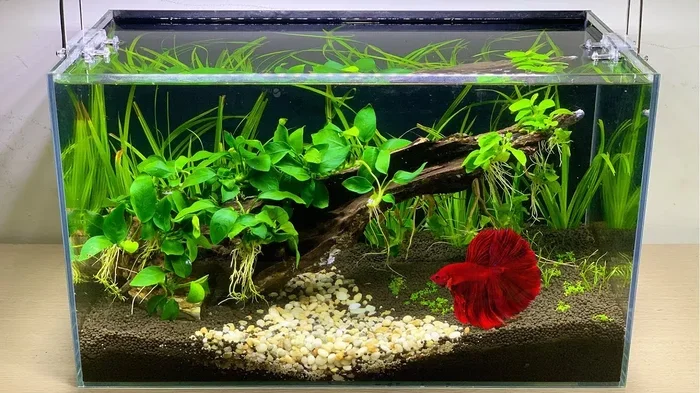
A filter-free setup can work for a short period or in very specific conditions. A larger tank with live plants and light feeding may stay stable longer. Weekly water changes can keep nitrates under control. Some owners use sponge filters or air-driven filters that create very gentle flow. These options are still filters, but they are quiet and betta-friendly. If you want minimal equipment, a gentle filter is often better than none. It reduces your daily workload and protects water quality. If you truly want no filter, plan for frequent maintenance. Test the water often. Watch for cloudiness, smell, or fish behavior changes.
When It Becomes Risky
An unfiltered tank becomes risky when waste builds up faster than you can remove it. This happens quickly in small bowls and nano tanks. It also happens if you overfeed or skip water changes. High ammonia levels can burn gills and damage internal organs. Nitrite spikes interfere with oxygen transport in the blood. These problems can appear before the water looks bad. Clear water is not always safe water. That is why testing matters. If you cannot commit to regular testing and cleaning, a filter is the safer choice. Your betta will thank you with better color, activity, and lifespan.
Water Quality Signs That Your Betta Needs Filtration
It helps to know when the tank environment is slipping. Water quality issues often show up slowly. You may notice the water turning cloudy or developing a bad smell. Leaves, food, and waste may collect at the bottom. Your betta might swim less or hide more. Fins may clamp close to the body. Appetite can drop. These are warning signs. They do not always mean immediate death, but they do mean the tank needs help. If you see these signs, test the water right away. Ammonia and nitrite should stay at zero. Nitrates should stay low. If the numbers are high, improve the setup quickly.
Testing and Monitoring Basics
You do not need fancy equipment to start. A simple liquid test kit is more accurate than strips. Test for ammonia, nitrite, nitrate, and pH. Keep a log of your results. This helps you spot trends. If ammonia rises after two days, your tank needs more help. If nitrates climb every week, you need bigger water changes or better filtration. Monitoring also helps you learn your tank’s rhythm. Every setup is different. A busy household, sunlight, and feeding habits all change water quality. Testing removes guesswork. It also helps you answer how long can a betta fish live without a filter in your specific tank.
Common Warning Signs in Betta Behavior
Behavior changes are often the first clue. A healthy betta explores the tank and reacts to you. A stressed betta may sit on the bottom all day. It may breathe heavily at the surface. It may flare less or seem dull. Color loss can also happen. Some bettas develop spotty coloration when stressed. Others get pale. These changes can come from poor water, low oxygen, or temperature swings. If you notice them, do not wait. Improve the water right away. A partial water change can help in the short term. Long-term, consider adding filtration or reducing waste.
Alternatives to Traditional Filters for Betta Care
If you worry about strong flow, there are gentler options. Sponge filters are a favorite for bettas. They provide biological filtration and mild water movement. They are also cheap and easy to maintain. Air-driven filters are another option. They can be quiet and gentle. Some hang-on-back filters have adjustable flow. You can turn the flow down to suit a betta. You can also baffle the output with a sponge or plant to soften the current. These solutions give you filtration without harsh flow. They also make the tank easier to manage. If you are asking how long can a betta fish live without a filter, consider that a gentle filter may solve your real concern.
Gentle Filtration Options
Sponge filters work well because they do not create strong currents. They also host beneficial bacteria very well. This helps keep ammonia and nitrite under control. Another option is a small internal filter with a flow control. You can aim the output toward the water surface or a wall. This reduces direct current. Live plants can also help smooth flow while improving water quality. Plants like anubias, java fern, and floating plants are good choices. They do not replace filtration, but they support the tank. A balanced setup often includes gentle filtration, stable temperature, and regular maintenance.
Maintenance Tips for Low-Filtration Tanks
If your tank has little or no filtration, maintenance becomes the key to success. Remove uneaten food quickly. Do not overfeed. Feed only what your betta can eat in a few minutes. Siphon waste from the substrate during water changes. Replace a portion of the water regularly with dechlorinated water. Match the temperature to avoid shock. Clean decorations and glass when needed. Keep the tank out of direct sunlight to reduce algae. If you use live plants, trim them so they do not decay. Consistency matters more than perfection. Small, regular efforts keep the water safer than occasional big cleanups.
Best Practices for Keeping a Betta Healthy Without Strong Filtration
You can keep a betta healthy with careful habits even if your setup is low-filtration. Start with a tank that is large enough for stability. Five gallons is a common minimum for many betta keepers because it gives water more room to stay balanced. Use a heater to keep temperature steady. Betta fish are tropical fish and prefer warm water. Stable temperature reduces stress. Use a water conditioner to remove chlorine and chloramine. Add beneficial bacteria if you are starting a new tank. Feed high-quality food in small amounts. Remove leftovers. Watch your fish daily. Small problems are easier to fix early.
Tank Size and Stability
Tank size affects everything. Small volumes change fast. A tiny tank can swing in temperature and chemistry quickly. A larger tank buffers those changes. It also gives you more time between water changes. That does not mean a small tank is impossible. It means it needs more attention. If you want a simpler routine, choose a larger tank with gentle filtration. If you keep a smaller tank, be ready to test and change water often. Stability is the goal. A stable tank supports a stronger immune system and better behavior.
Feeding, Cleaning, and Routine Care
Good feeding habits reduce waste. Overfeeding is one of the fastest ways to dirty a tank. Use small portions and observe your fish. If food sinks and stays uneaten, remove it. Clean the substrate gently during water changes. Do not replace all the water at once unless you have a reason. Large changes can stress the fish and disrupt bacteria. Keep a routine you can follow. A predictable schedule helps you stay on track. It also helps your betta adjust to a steady environment. Routine care is the real secret behind long-term success.
Common Mistakes When Keeping Betta Fish Without a Filter
Many problems come from simple mistakes. One big mistake is assuming the fish can live in dirty water because it survived before. Survival is not the same as thriving. Another mistake is using a bowl that is too small. Small bowls make water quality hard to control. Overfeeding is also common. Extra food decays and raises toxins. Skipping water changes is another issue. Some owners wait until the water looks bad. By then, the chemistry may already be stressful. A third mistake is ignoring temperature. Cold water slows the fish and weakens its system. Avoid these mistakes and you will reduce many risks.
Quick Mistakes to Avoid
- Using a tank that is too small: Small water volume becomes toxic faster.
- Overfeeding: Extra food creates waste and raises ammonia.
- Skipping water changes: Stale water allows nitrates and toxins to build up.
- Ignoring testing: Clear water can still contain harmful chemicals.
- Letting temperature drift: Unstable heat stresses betta fish.
- Assuming plants fix everything: Plants help, but they do not replace good maintenance.
Expert Insights on Betta Filtration and Lifespan
Experienced keepers usually recommend some form of filtration for long-term care. The goal is not to make the tank look fancy. The goal is to reduce risk. Filtration supports stable water, better oxygen exchange, and less manual cleanup. Many bettas live longer when their environment stays consistent. Good care also includes proper acclimation, safe decorations, and compatible tank mates if any. If you want to learn more about filter use, you may find it helpful to read about can you use a filter with betta fish. If you are curious about keeping a betta in a bowl, check can my betta fish live in a bowl. If you want to understand feeding during busy weeks, see can betta fish survive a week without food. These related topics can help you build a fuller care plan.
When to Add a Filter Later
You can start without a strong filter and add one later if needed. Many owners do this when they notice water quality slipping. A gentle filter can be added without completely restarting the tank. Just introduce it slowly and keep maintenance steady. If the tank already has beneficial bacteria, the new filter can help increase biological filtration. This is often easier than trying to manage a failing tank alone. Adding filtration is not a failure. It is a smart upgrade. It can make your routine easier and your fish healthier.
Long-Term Care Mindset
Think of betta care as a long-term relationship. A fish can survive a rough start, but steady care creates a better life. Focus on clean water, stable warmth, and low stress. Choose a setup you can maintain consistently. If that includes a filter, great. If it does not, be honest about the work involved. The best setup is the one you can care for properly. A well-maintained tank gives your betta a chance to show its full personality. Bright color, active swimming, and a healthy appetite are all signs you are on the right track.
Conclusion
So, how long can a betta fish live without a filter? In the short term, a betta can survive without one if the water stays clean and the tank is managed carefully. In the long term, filtration makes care easier and safer. The filter itself is not the magic part. Clean, stable water is what keeps your betta healthy. If you choose a low-filtration setup, stay proactive with testing, water changes, and feeding control. If you want less stress and better stability, consider a gentle filter. Your betta fish will do best in a setup that matches both its needs and your ability to maintain it. Good care is not about perfection. It is about consistency, awareness, and a tank environment that supports a long, healthy life.
Frequently Asked Questions
How long can a betta fish live without a filter in a small tank?
In a small tank, a betta fish may only stay healthy for a few days to a week without a filter if you do not change the water. Waste builds up faster in small volumes, so water quality drops quickly. Regular water changes are essential if you skip filtration.
Can a betta fish live without a filter if I change the water often?
Yes, a betta fish can live without a filter if you perform consistent water changes and keep the tank clean. This approach takes more effort because you must remove waste manually. Testing the water regularly helps you stay ahead of toxic buildup.
Do betta fish need a filter if they can breathe air?
Betta fish can breathe air, but they still need clean water and good oxygen exchange. A filter helps maintain water quality and keeps the environment stable. Air breathing does not protect them from ammonia, nitrites, or dirty water.
What kind of filter is best for a betta fish?
A gentle filter is usually best for a betta fish because strong currents can stress them. Sponge filters and low-flow options are popular choices. The best filter is one that keeps water clean without creating harsh flow.
How can I tell if my betta tank needs better filtration?
You may notice cloudy water, bad odors, leftover food buildup, or a lethargic betta fish. Heavy breathing at the surface and clamped fins can also be warning signs. Testing for ammonia and nitrite is the best way to confirm water quality problems.
Can live plants replace a filter for a betta fish tank?
Live plants can help absorb some waste and improve the tank, but they do not fully replace filtration. They work best as part of a larger care routine with water changes and stable conditions. Plants are helpful, but they are not a complete solution on their own.