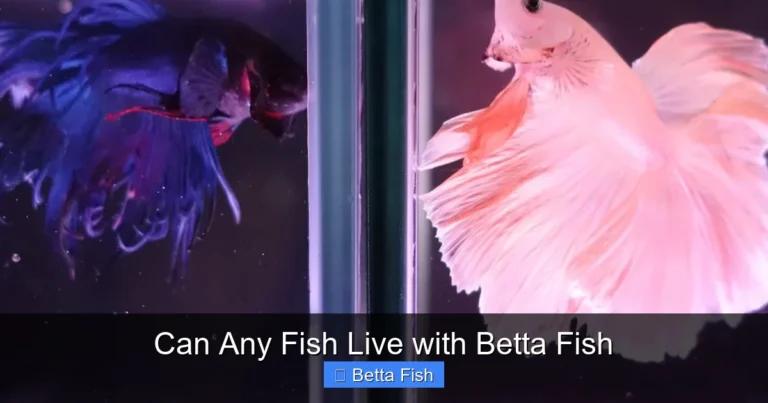
Can Bettas Be with Any Other Fish

Can bettas be with other fish? Yes, but not just any fish will do. Male bettas are territorial and aggressive, so choosing the right tank mates is critical for a peaceful aquarium. With proper planning, a large enough tank, and the right companions, your betta can thrive in a community setting.
- Bettas are not community fish by default: Male bettas are territorial and aggressive, especially toward fish with bright colors or long fins.
- The right tank size matters: A minimum of 20 gallons is recommended when housing bettas with other fish to reduce territorial behavior.
- Some fish make excellent tank mates: Bottom dwellers like corydoras catfish and peaceful schooling fish like ember tetras are great options.
- Never house two male bettas together: Male bettas will fight to the death if placed in the same tank.
- Female bettas can live in sororities: Groups of five or more female bettas can sometimes coexist in a heavily planted 30+ gallon tank.
- Always have a backup plan: Keep a separate tank or divider ready in case your betta doesn’t accept its new tank mates.
- Monitor behavior closely: Watch for signs of stress, fin nipping, or aggression during the first few weeks after introducing new fish.
📑 Table of Contents
- Can Bettas Be with Any Other Fish? The Complete Guide to Betta Tank Mates
- Understanding Betta Fish Behavior
- What Makes a Good Tank Mate for Bettas?
- Best Fish to Keep with Bettas
- Fish You Should Never Keep with Bettas
- How to Introduce New Fish to Your Betta
- Signs Your Betta Is Not Getting Along with Tank Mates
- Setting Up the Perfect Betta Community Tank
- Frequently Asked Questions About Bettas and Other Fish
- Final Thoughts: Can Bettas Be with Other Fish?
Can Bettas Be with Any Other Fish? The Complete Guide to Betta Tank Mates
If you have ever walked into a pet store, you have seen them. Those beautiful, flowing fins. That vibrant personality packed into a tiny cup. Betta fish are one of the most popular freshwater fish in the world. And one of the most common questions new betta owners ask is simple: can bettas be with other fish?
The short answer is yes. But the long answer is much more complicated. You cannot just toss any fish into a tank with your betta and hope for the best. Bettas have a reputation for a reason. They are also known as Siamese fighting fish. That name did not come from nowhere. Male bettas, in particular, are territorial and can be downright aggressive toward the wrong tank mates.
Here is the good news. With the right knowledge, the right setup, and the right fish, you can absolutely create a peaceful community tank featuring your betta. In this guide, we will walk you through everything you need to know. We will cover which fish work, which ones do not, how to set up your tank, and what to do when things go wrong.
Understanding Betta Fish Behavior
Why Are Bettas So Aggressive?
To understand whether bettas can live with other fish, you first need to understand why they behave the way they do. In the wild, bettas live in shallow rice paddies, ponds, and slow-moving streams across Southeast Asia. These spaces are small and resources are limited. Male bettas evolved to defend their territory fiercely. Any intruder, especially another male betta or a fish that looks like one, is seen as a threat.
When a male betta sees another fish with bright colors or long, flowing fins, its instinct kicks in. It thinks it is looking at a rival. The betta will flare its gills, spread its fins, and attack. This is why placing a betta with guppies or angelfish can be a recipe for disaster. The betta sees those flashy fins and thinks it needs to defend its space.
Male vs Female Betta Aggression
Not all bettas are created equal when it comes to aggression. Male bettas are significantly more territorial than females. A male betta will often attack anything it perceives as competition. This includes other male bettas, brightly colored fish, and even fish that are simply too active or fast.
Female bettas, on the other hand, tend to be less aggressive. They can sometimes be kept together in groups called sororities. However, this still requires careful planning. A female betta sorority needs a large, heavily planted tank with at least five females to spread out aggression. Even then, sororities can fail. You need to watch for bullying and be ready to separate fish if necessary.
Individual Personality Matters
Here is something many guides do not tell you. Every betta has its own personality. Some male bettas are surprisingly chill and will ignore tank mates completely. Others will terrorize anything that moves. You will not know which type you have until you try. This is why having a backup plan is so important. Always be prepared to separate fish if aggression becomes a problem.
What Makes a Good Tank Mate for Bettas?
The Golden Rules of Choosing Betta Tank Mates
Before we get into specific fish species, let us talk about the general rules. When choosing tank mates for your betta, you want fish that check all of these boxes:
- Not brightly colored: Avoid fish with red, blue, or other vivid colors that might trigger your betta’s aggression.
- Do not have long fins: Flowing fins look too much like another betta. Stick with short-finned species.
- Peaceful temperament: You want calm, non-aggressive fish that will not bother your betta or nip at its fins.
- Different swimming level: Fish that stay at the bottom or middle of the tank are less likely to invade your betta’s personal space near the surface.
- Similar water parameters: The fish need to thrive in the same temperature and pH range as your betta.
Tank Size and Setup
You cannot keep a betta with other fish in a tiny bowl. That is a hard rule. When you add tank mates, you need space. A minimum of 20 gallons is strongly recommended for a community tank with a betta. The larger the tank, the better. More space means your betta can establish its territory without feeling the need to chase away every other fish in sight.
Plants, caves, and decorations are also essential. These create hiding spots and break up sight lines. When fish can hide and get away from each other, aggression goes down dramatically. Live plants like java fern, anubias, and amazon sword are excellent choices. They also help maintain water quality, which keeps everyone healthy.
Best Fish to Keep with Bettas
Corydoras Catfish
If there is one tank mate that almost every betta keeper recommends, it is corydoras catfish. These little bottom dwellers are peaceful, hardy, and mind their own business entirely. They spend their time scavenging the substrate for food. Your betta will hardly notice they are there.
Corydoras are schooling fish, so you should keep them in groups of at least six. They stay small, usually around 2 to 2.5 inches. Panda corys and bronze corys are popular choices. They prefer the same warm water temperatures as bettas, around 76 to 80 degrees Fahrenheit.
Ember Tetras
Ember tetras are tiny, peaceful schooling fish that make excellent companions for bettas. They are small enough not to be threatening and their muted orange-red coloration usually does not trigger aggression. Keep them in groups of at least eight to ten. Their small size means they will not compete with your betta for food or space.
One thing to watch for is fin nipping. While ember tetras are generally peaceful, some individuals may nip at a betta’s long fins. This is rare but possible. Monitor the situation closely during the first week.
Harlequin Rasboras
Harlequin rasboras are another fantastic option. They are peaceful, mid-level swimmers that stay out of the betta’s way. Their silver and black coloration is subtle enough that most bettas ignore them entirely. Keep them in schools of at least six for their own well-being and to create a beautiful display in your tank.
They are slightly larger than ember tetras, reaching about 2 inches. They are also very hardy and adaptable, making them great for beginners. For more ideas on compatible species, check out this guide on what fish can bettas live with.
Kuhli Loaches
Kuhli loaches are quirky, eel-like fish that spend most of their time hiding in the substrate or under decorations. They are nocturnal and very peaceful. Because they stay at the bottom and are mostly active at night, they rarely cross paths with your betta in any meaningful way.
Keep kuhli loaches in groups of at least three, though five or more is better. They love a soft substrate like sand and plenty of hiding places. They are sensitive to water quality, so make sure your tank is well-cycled before adding them.
Neon Tetras
Neon tetras are a classic community fish, and they can work with bettas under the right conditions. They are small, fast, and peaceful. Their blue and red stripe can sometimes trigger aggression in bettas, so proceed with caution. A large, well-planted tank helps reduce the chances of problems.
Always keep neon tetras in schools of at least eight. They are fast enough to avoid a betta most of the time, but a particularly aggressive betta may still chase them. Watch carefully during the introduction period.
Otocinclus Catfish
Otocinclus, or otos, are tiny algae eaters that are perfect for a betta community tank. They are peaceful, stay small at about 1.5 to 2 inches, and spend their time clinging to glass and plant leaves. They are so small and unobtrusive that most bettas completely ignore them.
Keep otos in groups of at least three. They need a well-established tank with plenty of natural algae growth. If your tank is too clean, you may need to supplement their diet with algae wafers or blanched vegetables.
Fish You Should Never Keep with Bettas
Other Male Bettas
This should go without saying, but it needs to be said anyway. Never, ever put two male bettas in the same tank. They will fight. And they will not stop until one is dead. There is no exception to this rule. Male bettas are solitary by nature. They do not get lonely. They do not need a buddy. They need their own space.
If you want to keep multiple bettas, the only safe option is a female betta sorority in a very large, heavily planted tank. Even then, it requires experience and careful monitoring.
Guppies
Guppies might seem like a good choice because they are small and peaceful. But their bright colors and flowing fins are a major problem. Your betta will see a guppy and think it is looking at a rival betta. The result is almost always aggression. Many betta owners have learned this the hard way. Avoid guppies entirely.
Angelfish
Angelfish are beautiful, but they are a terrible match for bettas. They are semi-aggressive, they have long flowing fins that will attract your betta’s attention, and they can grow large enough to bully or even eat smaller tank mates. The combination of a betta and an angelfish usually ends badly for one or both fish.
Fin Nippers Like Tiger Barbs
Tiger barbs are notorious fin nippers. They are fast, active, and love to chase fish with long fins. A betta with its flowing tail is basically a target. Tiger barbs will stress your betta out and can cause serious damage to its fins. Other nipping species like serpae tetras and some types of danios should also be avoided.
Goldfish
Goldfish and bettas have completely different care requirements. Goldfish are cold water fish that produce a lot of waste. Bettas need warm, clean water. Putting them together means one or both will be living in unsuitable conditions. Goldfish also grow large and can be aggressive eaters, leaving your betta without food.
How to Introduce New Fish to Your Betta
Quarantine First
Before adding any new fish to your betta’s tank, quarantine them in a separate container for at least two weeks. This helps you spot any diseases or parasites before they spread to your betta. Skipping quarantine is one of the biggest mistakes new fish keepers make.
Use a Tank Divider or Breeder Box
When you are ready to introduce the new fish, do not just drop them in. Place the new fish in a breeder box or use a tank divider for a few days. This lets your betta see the new arrivals without being able to attack them. It gives everyone time to adjust to each other’s presence.
Watch your betta’s reaction during this period. If it is constantly flaring, ramming the glass, or showing extreme aggression, that is a red flag. You may need to choose different tank mates.
Rearrange the Tank
Before releasing the new fish, rearrange the decorations and plants in your tank. This disrupts your betta’s established territory. When everything looks new, your betta is less likely to be territorial because it has to re-explore and re-establish its space. This simple trick can dramatically reduce aggression.
Feed Your Betta First
This is a small but effective tip. Feed your betta right before introducing the new fish. A well-fed betta is a calmer betta. It is less likely to be aggressive when it is not hungry and stressed at the same time.
Monitor Closely for the First Week
The first week is critical. Watch for signs of aggression like chasing, biting, or flaring. Also watch for signs of stress in the new fish, such as hiding constantly, refusing to eat, or showing damaged fins. If things are not working out, separate the fish immediately. Do not wait and hope things will get better. They usually do not.
Signs Your Betta Is Not Getting Along with Tank Mates
Even with the best planning, sometimes things do not work out. Here are the warning signs that your betta and its tank mates are not compatible:
- Constant chasing: Some initial curiosity is normal. Relentless chasing is not.
- Fin damage: Torn or ragged fins on your betta or other fish indicate fighting.
- Hiding fish: If your new fish never come out from hiding, they are too stressed.
- Loss of color: Stress causes fish to lose their vibrant coloration.
- Refusal to eat: A stressed fish will often stop eating.
- Your betta stops eating too: Sometimes the betta is the one stressed by the new additions.
If you see any of these signs, act fast. Remove the aggressive fish or the bullied fish. It is better to have a solo betta than a tank full of stressed, injured fish.
Setting Up the Perfect Betta Community Tank
Tank Size Recommendations
Here is a quick guide to tank sizes for betta community setups:
- 10 gallons: Betta only, or betta with a single snail or shrimp.
- 20 gallons: Betta with a small school of one compatible species, like corydoras or ember tetras.
- 30 gallons or more: Betta with multiple species of tank mates. This is the ideal setup for a true community tank.
Water Parameters
Bettas thrive in water temperatures between 76 and 80 degrees Fahrenheit. The pH should be between 6.5 and 7.5. Make sure any tank mates you choose can handle these same conditions. Consistency is key. Sudden changes in temperature or pH stress all fish and can lead to illness.
Filtration and Flow
Bettas prefer calm water. Strong currents stress them out and make it hard for them to swim. Use a filter with an adjustable flow, or baffle the output with a sponge. Sponge filters are excellent for betta tanks because they provide gentle filtration and are safe for all fish.
Lighting and Plants
Bettas appreciate a natural day-night cycle. Use a timer on your aquarium light to provide 8 to 10 hours of light per day. Live plants are highly recommended. They provide hiding spots, reduce stress, and improve water quality. Some of the best plants for betta tanks include java fern, anubias, java moss, and floating plants like frogbit or water lettuce.
Frequently Asked Questions About Bettas and Other Fish
Many wonder if male bettas can live with other fish at all. The answer is yes, but it depends on the individual betta and the specific tank mates chosen. Some male bettas are more tolerant than others. The key is careful selection, a large enough tank, and close monitoring.
Another common question is about tank size. People often ask if a 5-gallon tank is big enough for a betta with friends. It is not. A 5-gallon tank is perfect for a single betta. But once you add other fish, you need significantly more space. Think of it this way: more water means more diluted aggression and more room for everyone to have their own space.
Final Thoughts: Can Bettas Be with Other Fish?
So, can bettas be with other fish? Absolutely. But it is not as simple as picking any fish off the shelf and dropping it in the tank. You need to understand your betta’s temperament. You need to choose the right tank mates. You need a large, well-planted tank. And you need to be ready to separate fish if things go wrong.
The best tank mates for bettas are peaceful, dull-colored, short-finned fish that occupy different areas of the tank. Corydoras catfish, ember tetras, harlequin rasboras, kuhli loaches, and otocinclus are all excellent choices. Avoid other male bettas, guppies, angelfish, fin nippers, and goldfish at all costs.
Remember, every betta is different. What works for one betta might not work for another. Be patient. Be observant. And always prioritize the health and safety of your fish. A happy betta in a well-planned community tank is one of the most beautiful sights in the aquarium hobby. With the right approach, you can make it happen.
Frequently Asked Questions
Can bettas live with other betta fish?
Male bettas should never be housed together, as they will fight aggressively and often to the death. Female bettas can sometimes be kept in groups of five or more in a large, heavily planted tank called a sorority, but this requires careful monitoring and experience.
What is the best tank size for a betta with other fish?
A minimum of 20 gallons is recommended when keeping bettas with other fish. Larger tanks of 30 gallons or more are even better, as they provide more space for territories and reduce aggression significantly.
Can bettas live with guppies?
Guppies are not recommended as tank mates for bettas. Their bright colors and flowing fins often trigger aggression in bettas, who mistake them for rival bettas. This combination frequently leads to fighting and stress.
How do I introduce new fish to my betta safely?
Use a breeder box or tank divider to let your betta see the new fish without contact for a few days. Rearrange the tank decorations before releasing the new fish to disrupt established territories. Monitor closely for the first week and separate fish if aggression occurs.
What are the easiest tank mates for bettas?
Corydoras catfish are widely considered the easiest and most reliable tank mates for bettas. They are peaceful, stay at the bottom of the tank, and are generally ignored by bettas. Ember tetras and harlequin rasboras are also excellent choices.
Will my betta get lonely if kept alone?
No, bettas do not get lonely. They are solitary fish by nature and actually prefer living alone. A single betta in a properly sized, well-decorated tank will live a perfectly happy and healthy life without any tank mates.